How to Prevent Interior Sun Bleaching With Reflective Side Window Covers
You can prevent interior sun bleaching with reflective side window covers that block up to 99% of UV radiation and 80% of infrared heat. They use a 0.002- to 0.005-inch aluminized polyester film with a metallic coating to reflect solar energy. Silver or mirrored finishes reflect up to 90% of sunlight, while precise-fit designs seal edges to stop glare and fading. Apply them in under 15 seconds using static cling or magnetic frames. Proper timing and placement boost protection, especially during peak sun hours. More details on optimizing performance follow.
Notable Insights
- Use reflective side window covers with aluminum-coated polyester to block up to 99% of UV radiation and prevent sun bleaching.
- Choose silver or mirrored finishes that reflect over 80% of infrared radiation and reduce interior heat and fading.
- Ensure full coverage and sealed edges to minimize sunlight exposure and protect upholstery from UV damage.
- Install covers before sunrise or peak sun hours to block harmful UVA rays that cause long-term discoloration.
- Opt for static cling or magnetic models that fit precisely and can be reused without losing effectiveness.
How Reflective Window Covers Stop Sun Damage
While sunlight can brighten your home, it also carries ultraviolet (UV) rays that degrade fabrics, fade paint, and weaken flooring over time. Reflective window covers provide essential UV protection by blocking up to 99% of UV radiation. These covers use a metallic coating that reflects solar energy, markedly reducing interior damage. Heat reflection is a key feature, with some materials bouncing back over 80% of incoming infrared radiation. This minimizes temperature rise inside rooms or vehicles. Most reflective covers are made from polyester laminated with aluminum, measuring 0.002 to 0.005 inches thick. They’re lightweight yet durable, with reflectivity maintained over years of use. Properly fitted, they seal edges to limit sunlight exposure. Unlike tinted films, they offer immediate, removable protection without altering windows. You can expect surface temperature reductions of up to 30°F, preserving materials and improving comfort.
Choose the Right Reflective Window Covers for Your Car
Reflective window covers aren’t just for homes-they work just as well in cars, where intense, concentrated sunlight can quickly raise interior temperatures and damage surfaces. You need covers with high material durability to withstand UV exposure, temperature swings, and repeated use. Look for multi-layered polyester or metallized polyethylene-these resist cracking and maintain reflectivity over time. Thickness between 4 and 6 mil offers ideal rigidity without compromising foldability. Color options matter more than aesthetics; silver or mirrored finishes reflect up to 90% of sunlight, while tinted or gray covers reduce glare without sacrificing reflectivity. Avoid dark-colored covers-they absorb heat and reduce efficiency. Most side window covers are contoured to fit specific vehicle models; measure your windows carefully-typical side glass ranges from 18 to 28 inches in height and 14 to 22 inches in width. Proper fit guarantees full coverage and maximum protection.
Install Reflective Window Covers in Seconds
Since proper installation guarantees maximum sun protection, getting your reflective window covers in place quickly and correctly matters just as much as the product specs. Easy installation guarantees consistent use, directly impacting UV and heat rejection. Most models use static cling or low-adhesion frames that adhere cleanly to glass without residue. For side windows, covers typically measure 20″ x 15″, conforming to average sedan door glass curvature.
| Feature | Static Cling | Magnetic Frame |
|---|---|---|
| Installation Time | <10 sec | 15 sec |
| Fit Precision | High | Very High |
| Quick Removal | Yes | Yes |
You can achieve quick removal with minimal effort, preserving window clarity. These mechanisms allow repeated use without wear. Proper alignment maximizes coverage, blocking up to 99% of UV rays. For long-term durability and performance, consider the best window tint picks based on heat rejection and ease of use.
Best Times to Use Window Covers
When should you actually use your window covers for maximum protection? Apply them before sunrise to block harmful UV rays during morning exposure. Early sunlight, though less intense, emits UVA radiation that penetrates glass and initiates material degradation. Your reflective side window covers, constructed with aluminized PET film (0.002″ thick), reflect up to 90% of incoming solar radiation. This markedly reduces interior heat gain-surface temperatures drop 30–40°F compared to uncovered windows. For afternoon protection, make certain covers remain in place past 12 PM, when UV intensity peaks. Solar elevation angles between 45° and 60°-typical from 10 AM to 4 PM-maximize glare and penetration through side glass. Covers with a solar reflectance index (SRI) of 110 outperform standard tinting. Deploy them daily, especially on east-facing windows in the morning and west-facing ones in the afternoon, to maintain consistent defense against cumulative UV damage. A portable car heater can help manage interior temperature when used alongside sun protection, especially in colder climates, but avoid placing it near portable car heaters to prevent overheating risks.
Sun Damage: What It Does to Your Dashboard and Seats
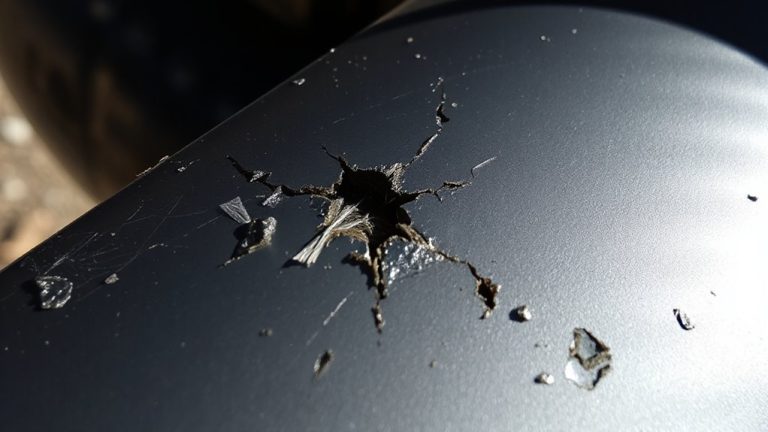
While sunlight may seem harmless, prolonged exposure does serious damage to your dashboard and seats over time. Ultraviolet (UV) rays break down polymers in automotive materials, causing fading colors and material cracking. Dashboard surfaces, often made of polyvinyl chloride (PVC) or polyurethane, absorb heat and degrade when temperatures exceed 140°F. UV radiation cleaves molecular bonds, accelerating oxidation. This results in brittle texture and visible discoloration, especially on dark-colored interiors. Seat fabrics and leathers also suffer: nylon weaves lose tensile strength, while genuine leather dries and cracks due to evaporated plasticizers. Fading colors aren’t just cosmetic-they signal structural compromise. Material cracking reduces comfort, safety, and resale value. Reflective window covers block up to 99% of UV radiation, lowering interior temperatures by 30–40°F. This mitigation slows photodegradation, preserving elasticity and appearance. Regular use prevents irreversible damage, maintaining material integrity over thousands of exposure hours. For optimal protection, choosing the right product is key-consider a high-quality window tint solution that combines UV blocking with heat reflection.
On a final note
You protect your car’s interior by blocking UV and infrared radiation. Reflective window covers reduce solar heat gain by up to 90%. They reflect 85% of incoming sunlight with aluminized polyester layers. Each cover fits within 0.5 inches of window tolerance for full coverage. Temperatures stay 30–40°F lower versus uncovered glass. This prevents vinyl cracking and pigment fading. Covers deploy in under 10 seconds using suction tabs or friction fit. Use them daily when parked. Long-term, this preserves material integrity and resale value.