Why Some Chrome Wheels Develop Bubbles and How to Fix Them
Your chrome wheels develop bubbles when moisture seeps through micro-cracks, corroding the metal beneath. This trapped rust expands, lifting the 0.0002–0.0005-inch chrome layer like a blister. Contaminants during plating or acid residue can worsen adhesion failure. For minor bubbling, clean with alcohol, sand lightly, and seal with acrylic enamel. Severe damage with cracks or flex means the base metal is compromised. Proper triple-layer plating and regular sealing help prevent future issues-knowing the extent of damage guides whether repair or replacement is best.
Notable Insights
- Chrome bubbles form due to trapped moisture causing subsurface corrosion from plating defects or contaminants.
- Inadequate rinsing during plating leaves acid residue that corrodes metal and lifts the chrome layer.
- Minor bubbling can be repaired by cleaning, sanding, and sealing with automotive-grade enamel.
- Severe bubbles or cracks require stripping, buffing, and re-electroplating to restore structural integrity.
- Prevent bubbling by using sealants, avoiding harsh cleaners, and ensuring triple-layer plating during manufacturing.
What Causes Chrome Bubbling on Wheels?
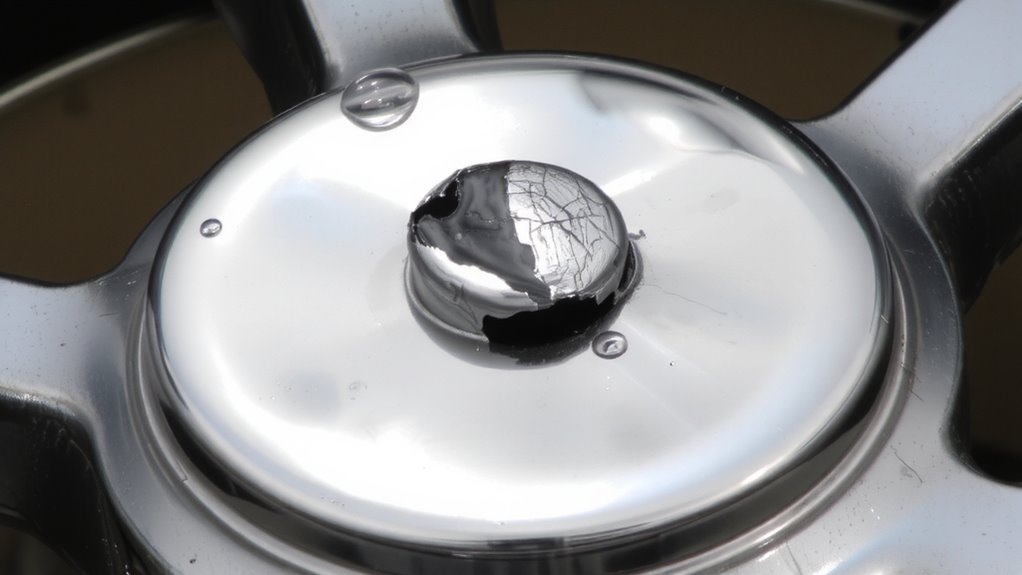
While chrome wheels look sleek and glossy at first, they can develop unsightly bubbling over time due to flaws in the plating process or environmental damage. Electroplating defects are a leading cause, occurring when layers of nickel and chromium aren’t bonded properly during application. If the metal surface isn’t cleaned thoroughly before plating, contaminants prevent adhesion, creating weak spots. Acid residue left behind from inadequate rinsing during manufacturing eats away at underlying metal, accelerating corrosion. This trapped corrosion pushes against the chrome, forming visible bubbles. Bubbles typically appear within 1–3 years of exposure to road salts or moisture, especially in climates with frequent freeze-thaw cycles. The plating thickness-usually 0.0002 to 0.0005 inches-is insufficient to contain internal pressure from subsurface rust. Once bubbling starts, it indicates the chrome layer has been compromised. Environmental factors worsen existing microfractures.
Assess Early vs. Severe Chrome Damage
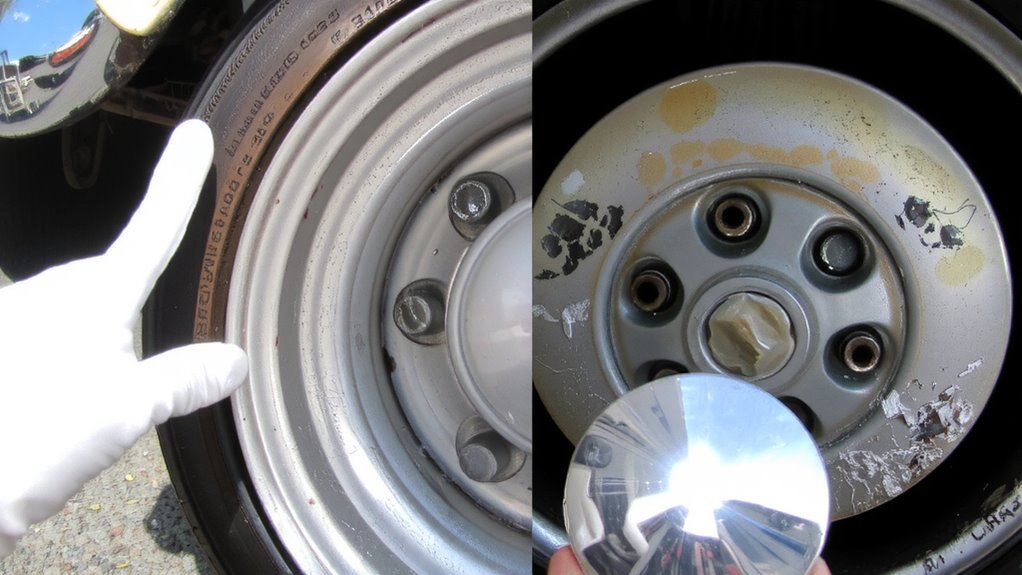
How can you tell if your chrome wheels are salvageable or beyond repair? Early damage typically shows surface abrasions-minor scratches that haven’t breached the chrome layer. These don’t compromise integrity and often stem from road debris or improper cleaning. At this stage, reflectivity remains mostly intact, with depth under 0.1mm. But if you see raised bubbles larger than 3mm, especially near the rim edge, corrosion is likely spreading beneath the plating. That’s a red flag. Severe damage involves structural fatigue-micro-fractures in the base metal from impacts or stress. These weaken the wheel, making it unsafe. You’ll notice cracks radiating from the hub or irregular warping. Once structural fatigue sets in, plating repair won’t cut it. The metal itself is compromised. Check for flex when pressure is applied; any give means replacement is necessary. Don’t risk failure at speed.
Fix Minor Chrome Bubbling at Home
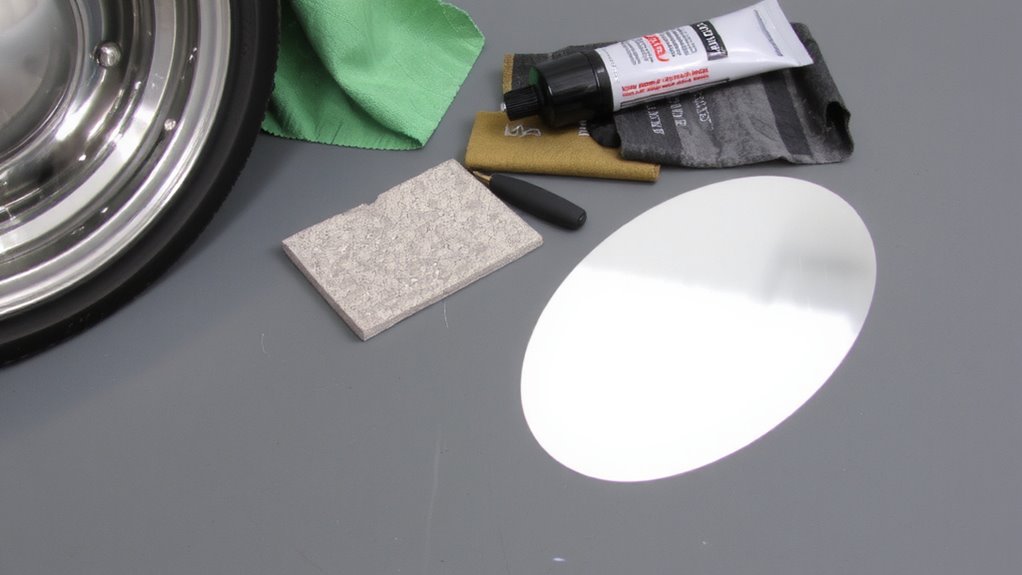
A small bubble in your chrome wheel’s surface doesn’t mean it’s time to replace the whole thing-if the damage is minor and caught early, you can fix it at home with the right tools and approach. Start with thorough DIY cleaning using isopropyl alcohol to remove grease and contaminants. Dry the area completely. Lightly sand the bubbled section with 1,200-grit sandpaper to smooth the raised edge without cutting through the chrome layer. Wipe again with alcohol. Apply a clear, automotive-grade acrylic enamel sealant designed for chrome surfaces-it acts as a protective coating that blocks moisture and UV exposure. Let it cure 24 hours. This sealant typically resists temperatures up to 250°F and lasts six months to a year under normal driving conditions. Reapply annually for sustained protection.
Polish, Repair, or Replace Damaged Wheels
You’ve handled minor bubbling with a sealant fix, but now you’re facing deeper damage that goes beyond surface-level protection. Surface pitting or peeling means the chrome layer is compromised, requiring more than a quick patch. If corrosion hasn’t penetrated the base metal, chrome restoration can save the wheel. This process involves stripping damaged plating, buffing flaws, and reapplying a 0.0002- to 0.0005-inch chrome layer through electroplating. For extensive flaking or structural dents, wheel refinishing is better-professionals sand, weld, and rebuild surfaces before applying new chrome. Refinished wheels regain OEM tolerance within ±0.01 inches. Deep cracks or weakened rims compromise safety; replacement is the only reliable fix. Evaluate each wheel individually, using depth gauges and straight-edge tests. You can’t restore structural integrity chemically-know when to repair and when to replace. Regular maintenance with a high-quality chrome wheel cleaner helps prevent buildup that can accelerate damage.
Stop Moisture From Causing Chrome Bubbling
Underneath the gleam of chrome plating, moisture is the primary enemy driving bubbling failures. Water intrusion occurs when micro-cracks in the chrome allow humidity or road liquids to reach the underlying metal. Once inside, trapped moisture promotes corrosion, forcing the plating to lift and bubble. You can prevent this by ensuring proper surface sealing during manufacturing or repair. A high-quality sealant blocks pores and joints where water might enter. Look for wheels with triple-layer plating: copper, nickel, then chrome-this combination enhances sealing and durability. Chrome layers should measure 0.0002 to 0.0003 inches thick for ideal protection. Avoid harsh cleaners that degrade the sealant over time. Park indoors or use wheel covers in wet climates. Consistent maintenance preserves surface sealing integrity. Preventing moisture damage is cheaper and more effective than fixing it later.
Re-Chroming vs. Replacement: Which Is Worth It?
How long should you keep trying to restore a damaged chrome wheel before it makes more sense to replace it? A cost analysis and durability comparison help you decide. Re-chroming can cost $150–$300 per wheel, requires stripping, buffing, and multi-layer plating, but won’t fix structural damage. Replacement wheels start around $100 for basic models and offer new warranties.
| Option | Cost & Durability |
|---|---|
| Re-Chroming | $150–$300; lasts 3–5 years |
| Steel Wheel | $100–$200; lasts 7–10 years |
| Alloy Wheel | $200–$500; lasts 10+ years |
| OEM Chrome | $250–$600; factory finish |
| Aftermarket | $150–$400; varies by brand |
Severe pitting or cracks reduce re-chrome durability. Replacement offers better long-term value.
On a final note
You can prevent chrome bubbling by maintaining a protective sealant layer. Moisture intrusion under the plating causes oxidation, leading to bubbles. Minor bubbling may be polished with chromium-safe compounds. Severe damage requires professional re-chroming or replacement. Re-chroming costs $150–$300 per wheel and restores factory-like 0.0005–0.001 inch plating thickness. Replacement offers modern alloy benefits. Assess cost, wheel value, and long-term durability before deciding.