How to Register Custom Wheels With Your Vehicle’s Maintenance Log
You must log your custom wheels with accurate specs: record diameter, width, bolt pattern, offset (stay within ±5mm of stock), and center bore to maintain alignment and prevent wear. Include installation date, torque specs (80–100 ft-lbs), and tire size. Add proof of purchase, DOT certification, and photos showing fitment. Update your insurance with load ratings and wheel details. Proper logging guarantees compliance, supports warranty claims, and preserves resale value-key details follow for full documentation.
Notable Insights
- Record wheel specifications including diameter, width, bolt pattern, offset, and center bore in the maintenance log.
- Document installation date, torque settings used, and tire fitment to ensure ongoing service accuracy.
- Retain proof of purchase, manufacturer certifications, and DOT compliance labels for validation and warranty needs.
- Log wheel material type and load rating to confirm alignment with vehicle safety and performance standards.
- Update maintenance records with photos, service stamps, and alignment checks to support resale and inspections.
Understand Why Custom Wheel Registration Matters
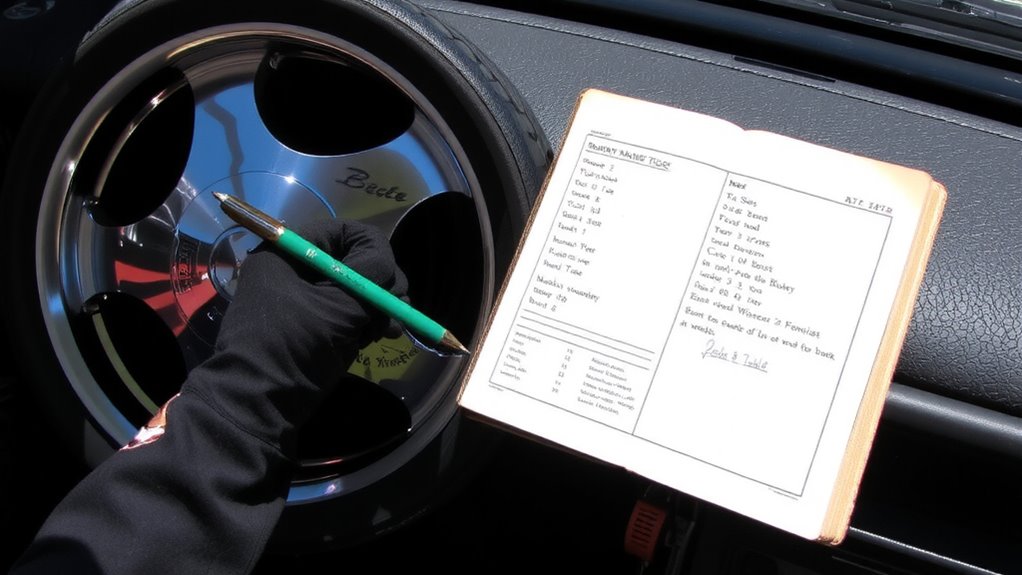
While it might seem like just another bureaucratic step, registering custom wheels is essential for both legal compliance and vehicle safety. You must guarantee your wheels meet DOT standards, including load ratings and dimensional tolerances, to avoid failing inspection. Legal compliance isn’t just about avoiding fines-it confirms your setup matches manufacturer safety parameters. Unregistered wheels may void critical warranty implications tied to your suspension, braking, and alignment systems. Most OEM warranties require modifications to be documented; failure to register can lead to denied claims. Custom wheels must adhere to precise bolt patterns, offset ranges (typically ±5mm of stock), and hub bore diameters to maintain drivability and safety. Think of registration as a technical audit-your vehicle’s performance data needs alignment with real-world hardware. Without it, you risk instability, inaccurate speedometer readings, and premature wear. Registering guarantees traceability, proper maintenance logging, and long-term reliability.
Gather Wheel and Vehicle Paperwork
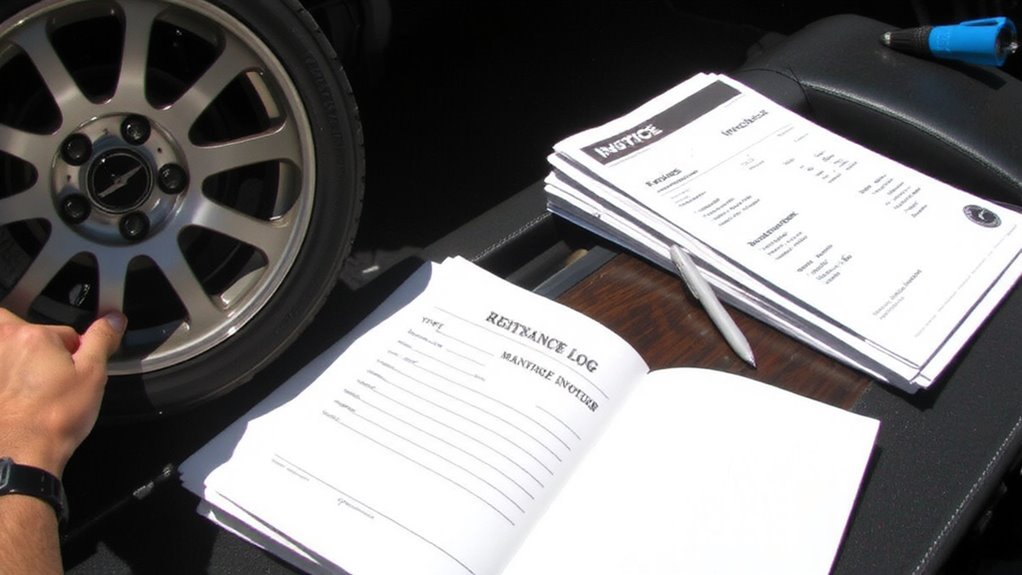
The right documents act as your vehicle’s identity toolkit. You’ll need the vehicle identification number (VIN) and current registration to begin. Gather your custom wheel specifications: diameter, width, bolt pattern, offset, and center bore. These numbers guarantee vehicle compatibility and correct fitment. Include proof of purchase for the wheels and any manufacturer certification labels. Verify load rating and recommended tire size match your vehicle’s requirements. Mismatched specs can affect handling and safety. Your owner’s manual contains factory wheel data, making comparisons easier. Keep all paperwork organized-digital and physical copies. Accurate records support legal compliance and resale value. Without correct documentation, registration could be delayed or denied. You’re not just proving ownership; you’re confirming technical alignment between your wheels and your vehicle’s design. Proper paperwork prevents costly errors down the road.
Check Local Laws for Modified Wheels
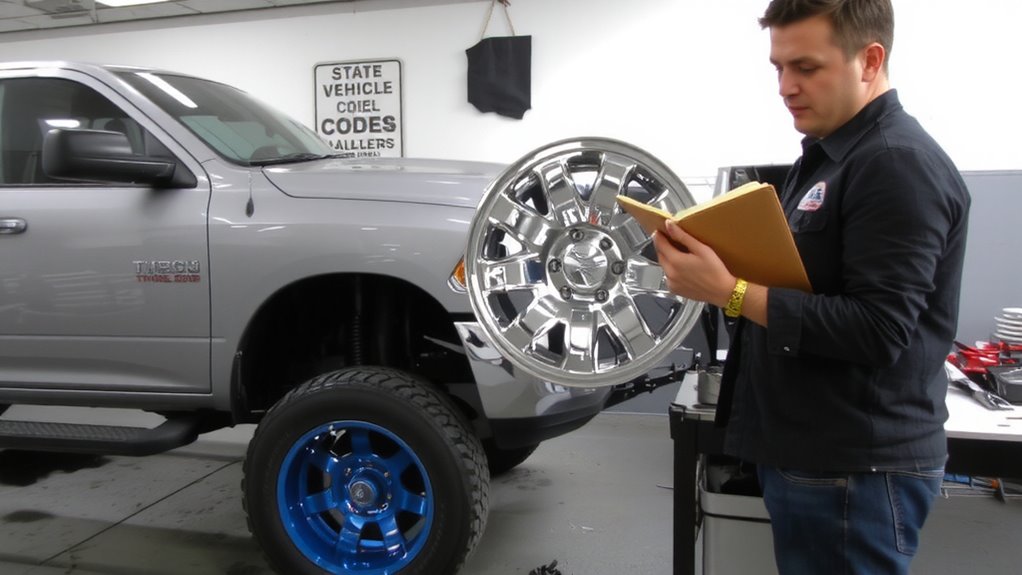
What’s legal in one state might be illegal in another-where do your custom wheels stand? You must verify local wheel regulations before installing aftermarket rims. States regulate factors like wheel size, offset, bolt pattern, and how far wheels extend beyond fenders-sometimes limiting protrusion to 1 inch or less. Legal compliance isn’t optional; non-compliant setups can fail inspection or draw fines. For example, California requires DOT-approved wheels with proper certification stamps, while other states restrict load ratings below the vehicle manufacturer’s specification. Offset changes over 5mm may affect alignment legality. Some regions mandate that tires don’t interfere with suspension travel or body panels. Always consult your Department of Motor Vehicles or state vehicle code for exact rules. Ignoring these details risks safety and compliance. Check now-don’t assume your setup qualifies.
Log Your Custom Wheels the Right Way
Why risk running custom wheels that don’t meet legal standards? Logging them correctly guarantees compliance and safety. You must document wheel history to verify fitment, load ratings, and alignment with OEM specifications. Start by recording key details: bolt pattern, offset, diameter, and material type-steel or forged alloy. Accurate maintenance tracking helps monitor wear, balance, and alignment intervals. Use your vehicle’s maintenance log to note installation dates, torque specs (typically 80–100 ft-lbs), and tire rotation history. This log acts like a mechanical biography-critical during inspections or resale. Each entry supports long-term reliability. Proper records also simplify troubleshooting vibrations or handling issues. Don’t overlook technical consistency: mismatched specs can stress suspension components. When documented thoroughly, your custom wheels aren’t just stylish-they’re traceable, legal, and engineered for performance. Stay precise. Stay compliant.
Save Proof: Photos and Receipts
Keep every receipt and snap detailed photos the moment your custom wheels arrive-this isn’t just good record-keeping, it’s evidence of compliance. Photo documentation provides visual proof of wheel model, finish, size, bolt pattern, and offset, all of which are critical for accurate vehicle registration. Capture images from multiple angles: front, side, and back, with clear focus on serial numbers or manufacturer engravings. Receipt retention verifies purchase date, cost, and authenticity, supporting warranty claims and resale value. Store digital copies in encrypted folders labeled by date and wheel model (e.g., “2023-09-15-Vossen-CV3-20in”). Print duplicates and keep them in your glove compartment and home safe. Standardized records reduce disputes during inspections. Think of these records like firmware logs-essential, traceable, and immutable. Missing data risks noncompliance. Your documentation is as crucial as the hardware.
Update Insurance With Custom Wheel Details
A custom wheel upgrade demands more than just aesthetic appreciation-it requires immediate action on your insurance policy to guarantee full coverage and compliance. Failing to file an insurance update leaves you financially exposed in the event of damage or theft. Contact your provider promptly to report the change in vehicle specifications. Use this table to organize critical details for accurate coverage verification:
| Wheel Brand | Diameter x Width (in) | Offset (mm) |
|---|---|---|
| Rotiform | 19×9.5 | +35 |
| BBS | 18×8.5 | +40 |
| O.Z. Racing | 20×10.0 | +30 |
Specify bolt pattern, finish, and tire size during the insurance update. Providers base premiums on equipment value and performance specs. Accurate reporting guarantees claims reflect true replacement costs. Coverage verification confirms your modified wheels are explicitly listed under all-inclusive and collision provisions.
Keep Records for Resale or Service
Your custom wheel investment deserves meticulous documentation-treat it like the vehicle’s extended warranty. Keep receipts, fitment specs, and installation dates in a dedicated folder. This record supports your car’s service history, showing consistent care. Log wheel specifications: diameter, width, bolt pattern, offset, and load rating. Include tire size, UTQG ratings, and alignment settings. Future mechanics need this data for accurate servicing. When selling, well-maintained records boost resale value. Buyers verify modifications were performed correctly and parts are traceable. A complete file-with dated photos and service stamps-acts like a vehicle’s CV. It proves the wheels weren’t involved in accidents or improper repairs. Digital backups safeguard against loss. Treat every adjustment as part of the permanent file. Documentation isn’t optional; it’s proof of ownership, performance, and professionalism. Every detail matters. Resale value hinges on it.
On a final note
You must document custom wheels accurately to maintain vehicle integrity. Record wheel specifications: diameter, width, bolt pattern, and offset. Include manufacturer details and part numbers. This guarantees compatibility during service. Log installation dates and keep receipts. Accurate data prevents fitment issues. It also supports insurance claims. Updated records boost resale value. Proper documentation acts like a technical blueprint-essential for performance and safety. Protect your investment with precision.