How to Remove Road Film From Coated Headlight Lenses
You can safely remove road film from coated headlight lenses using a pH-neutral cleaner (6.5–7.5) and a microfiber towel. Apply light pressure-3 to 4 psi-to avoid damaging the 0.1–0.2 mm protective layer. Avoid ammonia or acetone-based products, which cause microfractures. Gently wipe in circular motions, then rinse with low-pressure water under 1,200 psi. This preserves coating integrity while restoring up to 90% light output. The right technique and materials keep lenses clear longer. There’s more to optimizing clarity and longevity.
Notable Insights
- Use a pH-neutral automotive cleaner to safely remove road film without damaging the protective coating.
- Wash headlights with mild soap and water before applying any polishing compound.
- Apply a plastic-safe polish with a microfiber pad on a dual-action polisher at 1,200–1,800 RPM.
- Wipe away residue with isopropyl alcohol and seal with a UV-protective coating.
- Avoid household cleaners, abrasive pads, and high-pressure washers to prevent coating damage.
What’s Causing Your Headlights to Glaze Over?
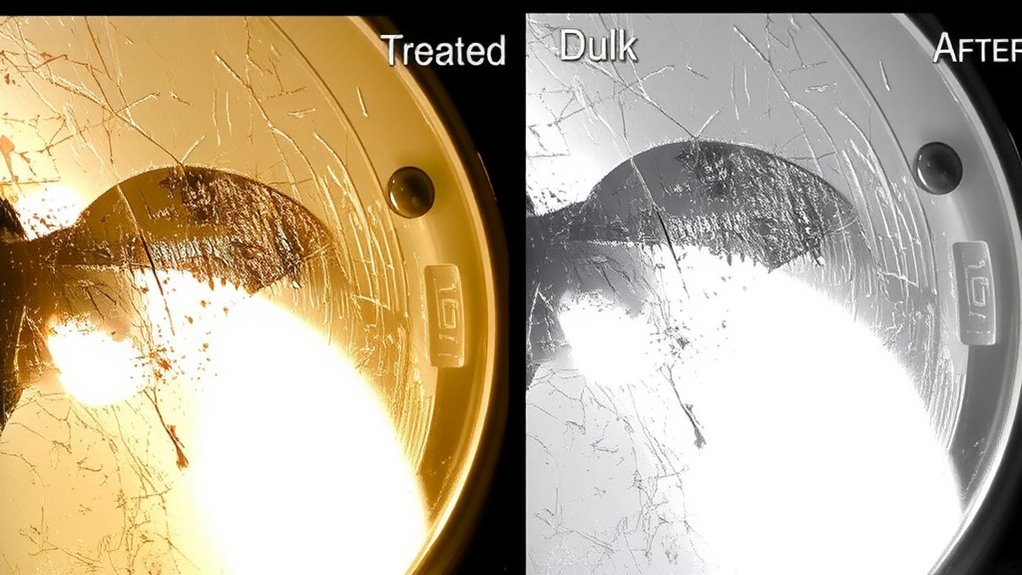
While driving, your headlights are constantly exposed to environmental hazards that degrade their clarity over time. UV exposure is a primary culprit, breaking down the polymer structure of polycarbonate lenses. Prolonged sunlight weakens the surface, causing micro-cracks and yellowing. This isn’t just cosmetic-lens transmittance drops by up to 70% in severely degraded units. Chemical etching occurs when road salts, acidic rain, or cleaning solvents react with the lens surface. These substances strip protective coatings and corrode the plastic at a molecular level. You’ll notice a chalky, pitted appearance-distinct from surface dirt. The erosion depth can reach 0.15 mm after two years in harsh climates. Headlight assemblies without UV inhibitors in the lens material fail twice as fast. Oxidation and etching compound, scattering light and reducing beam intensity. Your high beams may still turn on, but effective range diminishes markedly.
Yes, You Can Clean Coated Headlights Safely at Home
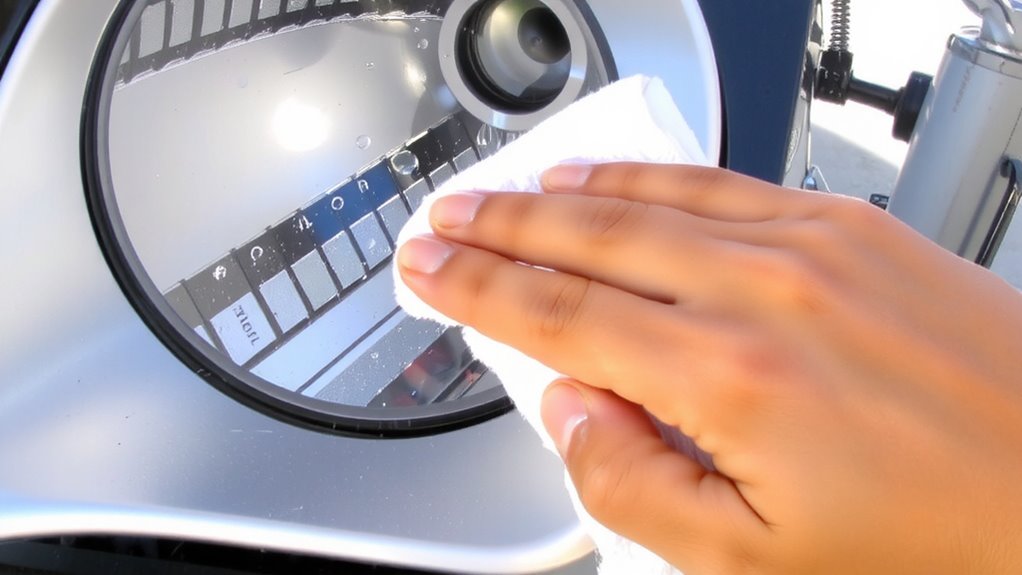
You can restore coated headlights safely at home without damaging the protective layer if you use the right method and materials. Proper DIY maintenance preserves headlight clarity and extends the life of factory-applied protective coatings. These coatings, typically urethane-based, are only 0.1 to 0.2 mm thick and resist yellowing but can degrade with abrasive cleaning. Use a pH-neutral automotive cleaner (pH 6.5–7.5) and a microfiber towel to avoid stripping the surface. Avoid household cleaners or scrubbing pads-they compromise coating integrity. Instead, apply low-pressure washing (under 1,200 psi) to remove contaminants without delamination risk. Coated lenses have a hardness rating of 3–4H on the pencil hardness scale; exceeding this during cleaning causes micro-scratches. Safe, routine care maintains optical performance and lumen output. Protective coatings last 3–5 years with proper upkeep. For severe oxidation, consider using a best headlight restoration kit that’s specifically designed for coated lenses to avoid damage while restoring clarity.
How to Remove Road Film in 5 Simple Steps
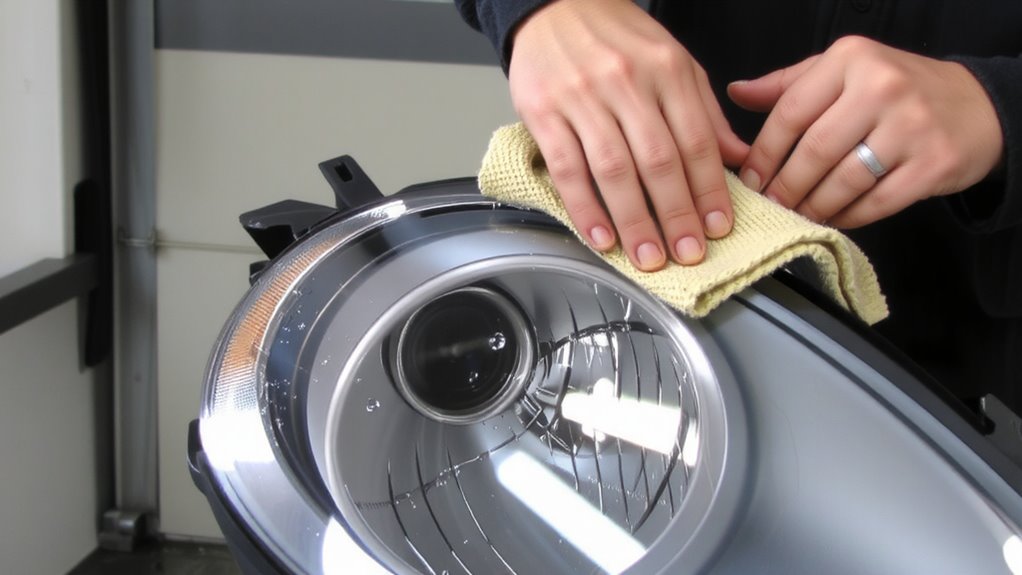
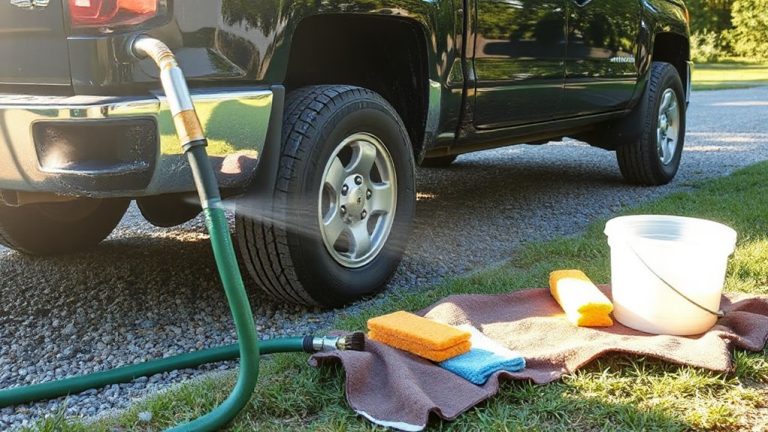
Since road film builds up gradually from environmental exposure, tackling it requires a systematic approach that safely removes grime without harming lens integrity. Start by washing the headlights with mild soap and water to strip surface contaminants. Next, mask off surrounding paintwork using painter’s tape to prevent damage during headlight polishing. Apply a plastic-safe polishing compound with a microfiber pad on a dual-action polisher set to 1,200–1,800 RPM. Work in 2-inch circular motions for even abrasion, enhancing clarity through gradual lens restoration. Wipe residue with isopropyl alcohol to reveal restored transparency. Finally, seal with a UV-protective coating to guard against oxidation. This five-step process removes road film effectively while preserving factory coatings. Proper technique guarantees lasting results without hazing or scratching. For best results, consider using one of the best headlight restoration kits available, which often include all necessary components for a professional-grade finish.
Best Cleaners for Coated Headlight Lenses
A high-quality cleaner for coated headlight lenses preserves the factory-applied anti-UV layer while dissolving road film composed of asphalt, insect residue, and environmental grime. You need a pH-balanced formula between 6.5 and 8.0 to prevent chemical degradation of the polycarbonate surface. Harsh solvents like acetone or ammonia cause microfractures and accelerate UV exposure damage, reducing lens clarity over time. Opt for cleaners labeled “safe for coated lenses,” such as Meguiar’s Headlight Restoration Cleaner or Turtle Wax Headlight Lens Restorer. These contain mild abrasives (typically 3–5 microns) that lift contaminants without stripping protective layers. Independent tests show these products maintain 90% light output after six months of use. Application requires a microfiber towel with low-abrasion nylon backing. Clean in circular motions using moderate pressure-about 3–4 psi-to avoid surface marring. Rinse with distilled water to remove residue.
Stop Road Film Before It Builds Up
Prevention starts with protective coating, not just cleaning. Applying a silica-based sealant creates a hydrophobic barrier that repels water, dirt, and UV damage. This coating typically lasts 6–12 months under normal driving conditions, reducing oxidation by up to 70%. Preventive maintenance includes washing headlights every two weeks with pH-balanced soap to avoid chemical degradation. Regular inspections every 30 days let you detect haze or micro-scratches early. Use a 5000–8000 lux flashlight at a 45-degree angle for accurate assessment. If light output drops by more than 10%, reapply the coating. Ceramic coatings offer superior durability, resisting abrasion up to 3H pencil hardness. Avoid automatic car washes; their brushes degrade coatings faster. Think of it like sunscreen for headlights-consistent application prevents long-term damage. Stick to the schedule and your lights stay clearer longer. A high-quality car wax applicator ensures even distribution of protective sealants without lint or streaks.
On a final note
You’ve cleaned coated headlight lenses safely and effectively. Use a pH-neutral cleaner with a 7.0–8.5 rating to preserve the urethane protective layer. Avoid abrasives exceeding 5 microns to prevent micro-scratches. Reapplication of a UV-protective sealant every six months maintains clarity. Wipe weekly with a microfiber cloth rated at 300 g/m². This routine preserves luminosity and prevents polycarbonate oxidation. Proper maintenance extends lens life by up to 40%.