Inspecting Brake Pad Abutment Tabs on Caliper for Broken Snap Features
You must inspect your brake pad abutment tabs for broken snap features after every pad change. These stamped steel tabs-2–3 mm thick-secure pads laterally in the caliper under 1,000+ psi of braking force. Cracks, deformation, or corrosion above 500°F weaken the snap tangs, reducing clamping efficiency. A failed snap allows pad movement, causing noise, uneven wear over 2 mm, and misalignment beyond 0.5 mm. Check for flex and return during a manual snap test-proper retention is critical. Missing or damaged clips compromise stopping power. Use OEM-spec zinc-plated replacements installed with calibrated pliers. More details on failure thresholds and torque specs follow.
Notable Insights
- Visually inspect abutment tabs for cracks, deformation, or corrosion after removing brake pads.
- Check for loose pad movement or rattling, indicating worn or broken snap tangs.
- Confirm caliper slides freely and is properly aligned to prevent false failure indications.
- Perform a manual snap test to ensure tabs flex and return to position without breaking.
- Replace damaged tabs immediately to maintain pad stability and optimal braking performance.
What Abutment Tabs Do (And Why They Break)
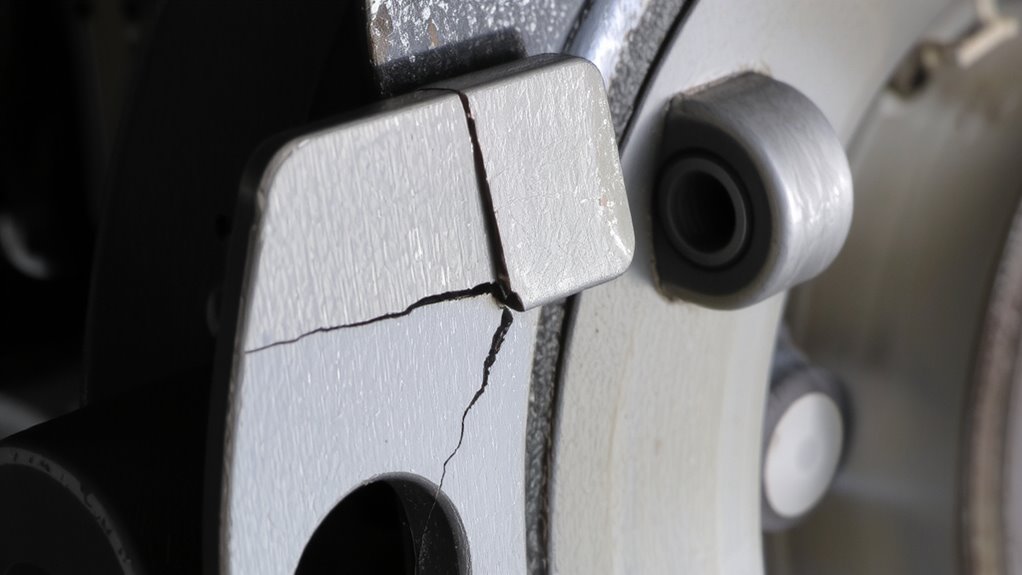
Abutment tabs are small metal protrusions on the back of brake pads that keep the pad properly seated in the caliper. They prevent lateral movement and guarantee consistent contact with the rotor. Over time, heat corrosion weakens the metal, especially in high-performance or stop-and-go driving conditions. Repeated exposure to temperatures exceeding 500°F accelerates oxidation, reducing structural integrity. Mechanical stress from braking forces-often over 1,000 psi-further strains the tabs. Each application cycles the tabs through tension and compression, promoting fatigue. Most tabs are stamped from 2–3 mm steel, but low-quality variants use thinner stock, increasing failure risk. Cracks typically begin at stress points near bends or mounting points. When tabs break, pads shift, causing uneven wear, noise, and reduced stopping power. Failure also increases caliper contact wear. You must inspect tabs during pad replacement. They’re small, but their role is critical.
How to Spot a Broken Snap Feature in 3 Steps
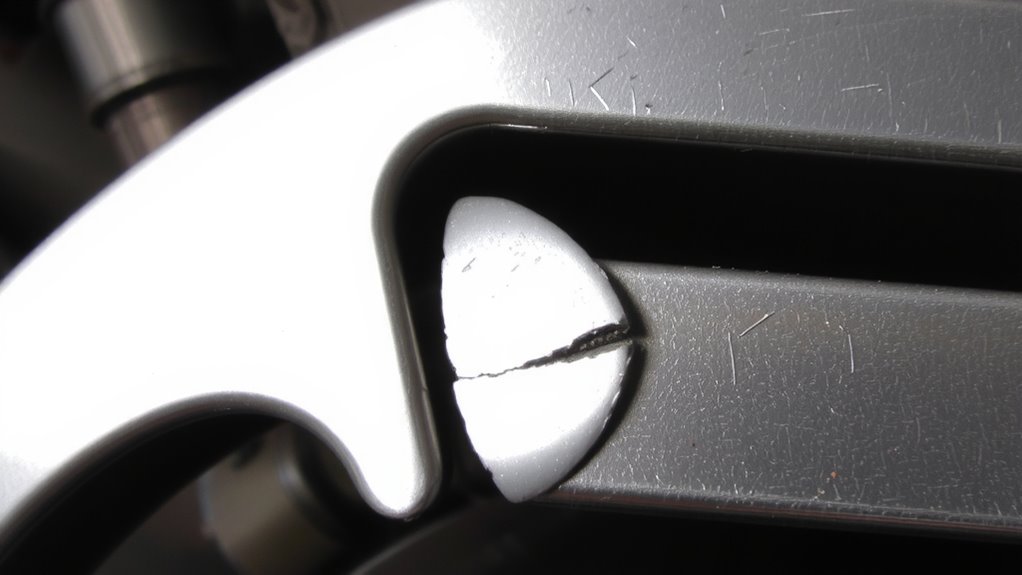
While inspecting brake pads, you’ll want to pay close attention to the snap feature-a small, tongue-like tab that locks the pad into the caliper bracket. First, remove the brake pad and visually examine the snap feature for cracks or deformation. A broken snap often shows a jagged edge or missing segment. Second, check caliper alignment; misalignment can stress the tab, leading to failure. Verify the caliper slides freely and mounting bolts torque to specification-typically 22–26 ft-lbs. Third, perform a manual snap inspection by gently pressing the tab; it should flex slightly and return to position. If it wobbles or doesn’t engage, it’s likely broken. These steps help verify proper pad retention and prevent rattling. A functional snap feature maintains consistent pad positioning, essential for even wear and maximum braking performance.
7 Signs Your Caliper’s Snap Feature Is Failing
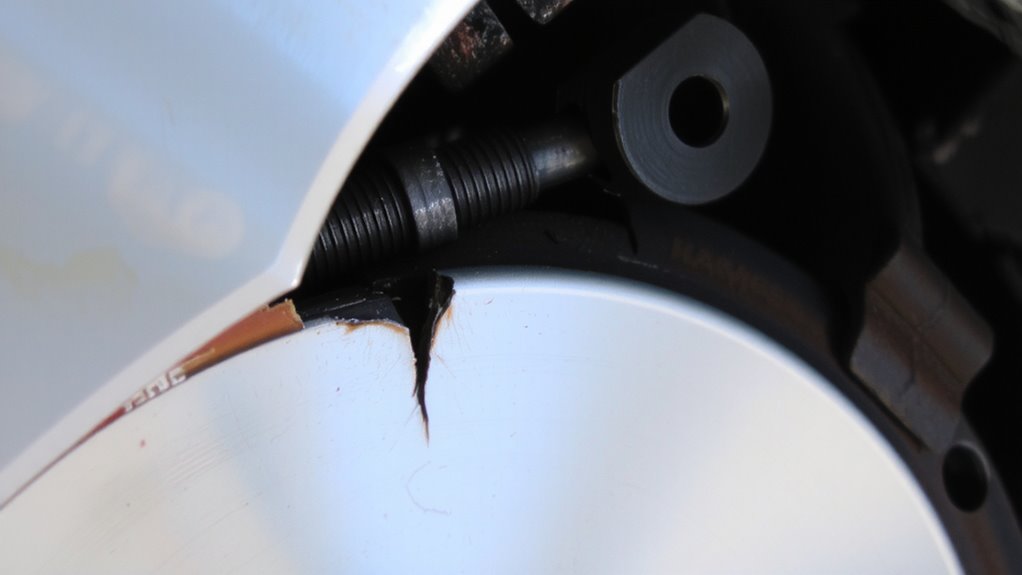
If you notice unusual noises or movement when braking, the caliper’s snap feature may be failing. You might hear metallic squeaking or feel vibration under light to moderate pressure. This instability often stems from loose pad movement, caused by worn snap tangs on the abutment tabs. Inspect for corroded brackets-common in humid or winter climates-as rust undermines metal integrity and reduces clamping efficiency. Also look for uneven wear on the inner and outer pads, typically appearing as asymmetrical friction material loss exceeding 2 mm difference. This occurs when pads shift during engagement instead of pressing uniformly against the rotor. The snap feature guarantees precise pad alignment, maintaining a 0.003-inch clearance tolerance. When fatigued or cracked, alignment fails. Check for micro-movement by wiggling the pad; any discernible play indicates degradation. Early detection prevents excessive hardware wear and maintains braking performance.
What Happens When a Snap Feature Breaks?
What happens when that tiny but critical snap feature finally gives out? The brake pad loses its secure fit, leading to caliper misalignment. Without the snap tab holding the pad in place, the pad shifts during operation. This movement causes uneven braking across the rotor surface. You’ll notice reduced stopping power and increased brake fade under heavy use. Misaligned pads can also create excess heat, accelerating wear on both pads and rotors. The caliper may piston unevenly, worsening performance. Left unchecked, the loose pad rattles, creating noise and further instability. Caliper misalignment stresses mounting hardware and can damage slide pins. Uneven braking increases stopping distances and compromises safety, especially in wet or emergency conditions. The system operates outside design tolerances, defeating OEM engineering. Even slight pad movement disrupts force distribution. Think of it like a tire with bad alignment-small issue, big consequences.
Replace These Tabs Immediately If You See This
Every brake pad abutment tab showing visible cracks, deformation, or missing material must be replaced immediately. These damage signs compromise the tab’s ability to secure the pad within the caliper. Without intact snap features, you’re at risk of brake pad vibration, which leads to uneven wear and reduced stopping power. Vibration also accelerates deterioration of pad insulation shims and backing plates. More critically, damaged tabs can cause caliper misalignment. Even 0.5 mm of lateral shift disrupts force distribution across the rotor surface, increasing brake fade and pedal pulsation. Factory specs require tabs to maintain precise pad positioning-typically within ±0.2 mm tolerance. Replacing worn or broken tabs guarantees proper pad seating and prevents metal-to-metal contact. Use OEM-spec replacement clips with zinc plating for corrosion resistance. Install with calibrated pliers to avoid over-bending. Immediate replacement isn’t optional-it’s essential for safe, reliable braking performance.
On a final note
You must inspect the abutment tabs closely. A broken snap feature compromises caliper stability. The tabs secure the brake pad to the caliper body using a precision-fit tang that locks into a 0.062-inch (1.57 mm) wide slot. If cracked or deformed, pads shift, causing uneven wear. This leads to reduced braking efficiency, increased noise, and potential pad dislodgement under load. Replace damaged tabs immediately. Use OEM-spec components rated for 12,000 psi shear strength.