How to Remove Water Spots From Chrome Wheels Using Vinegar and Baking Soda
Mix one cup white vinegar with two tablespoons baking soda to create a fizzing reaction that dissolves calcium and magnesium deposits. Apply the solution with a microfiber cloth using circular motions, letting it sit no longer than five minutes to avoid finish damage. Rinse thoroughly with distilled water to remove all residue and prevent re-spotting. For best results, follow with a pH-neutral wheel cleaner and dry using the dual-towel method. Further techniques improve long-term protection.
Notable Insights
- Mix one cup white vinegar with two tablespoons baking soda to create a fizzing paste that dissolves mineral deposits.
- Apply the solution with a microfiber cloth using circular motions, focusing on water spot areas.
- Let the paste sit for no more than five minutes to avoid damaging the chrome finish.
- Rinse thoroughly with distilled water to remove all residue and prevent new spots.
- Dry with a 100% polyester microfiber towel using the dual-towel method to eliminate streaks.
Remove Water Spots With Vinegar and Baking Soda
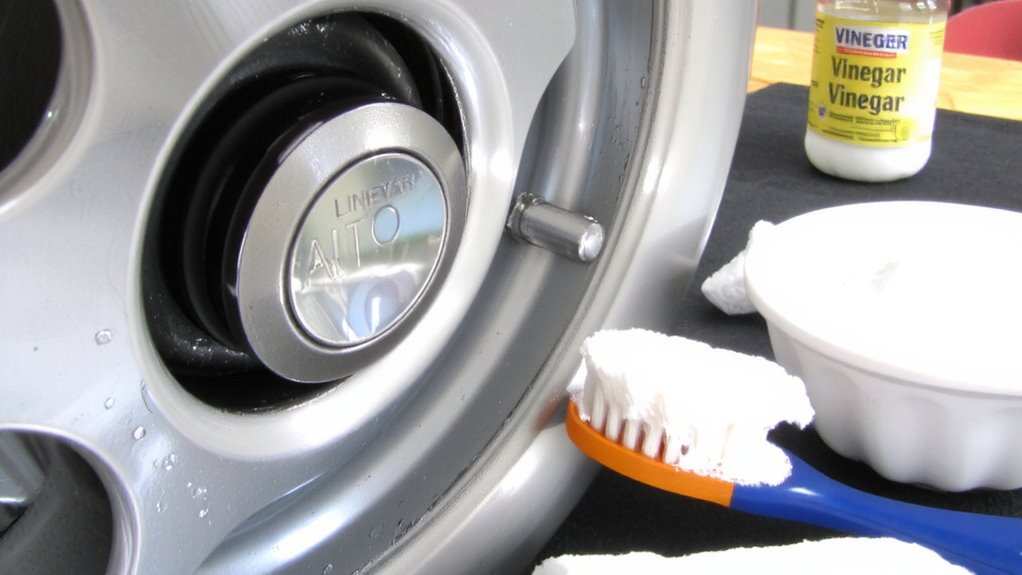
One effective method uses a simple mixture of white vinegar and baking soda to dissolve mineral deposits left by water spots. You combine one cup of white vinegar with two tablespoons of baking soda to initiate a chemical reaction that lifts calcium and magnesium buildup. This solution targets spot formation caused by evaporated water droplets. These deposits form due to imbalances in water chemistry, particularly high pH and total dissolved solids. The acetic acid in vinegar reacts with alkaline minerals, breaking down crusty residues on the chrome surface. Apply the fizzing paste with a microfiber cloth, working it into affected areas in circular motions. Let it sit for no more than five minutes-longer exposure risks damaging the finish. Rinse thoroughly with distilled water to prevent new spot formation. The method achieves up to 90% removal efficiency on light to moderate mineral deposits. For tougher buildups, consider using a dedicated chrome wheel cleaner for more effective results.
What You Need to Clean Chrome Wheels
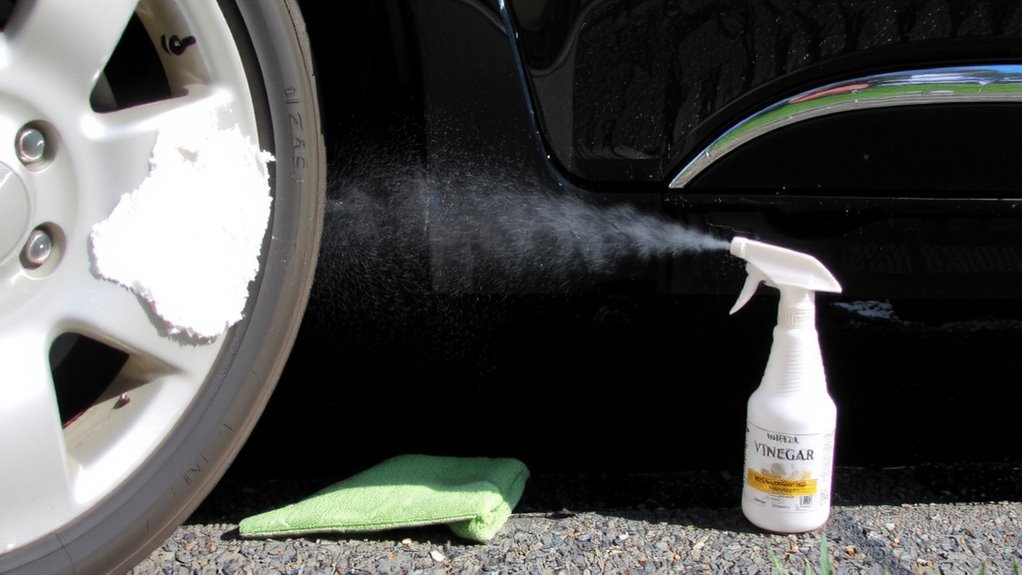
Start by gathering the right tools and solutions designed specifically for chrome surfaces to guarantee effective cleaning without damage. For proper chrome care, use a pH-neutral wheel cleaner to avoid etching the finish. You’ll need a microfiber towel-80/20 polyester-rayon blend with at least 300 GSM density-to prevent micro-scratches. Include a soft-bristled detailing brush with nylon bristles (0.005-inch diameter) to reach tight areas without abrasion. Distilled white vinegar (5% acetic acid) removes mineral deposits, while baking soda acts as a mild abrasive (Mohs hardness of 2.5). A spray bottle (16 oz capacity) guarantees even vinegar application. Wear nitrile gloves (6 mil thickness) for chemical resistance. These supplies support long-term wheel maintenance and preserve reflectivity. Always pre-rinse wheels to remove loose debris before chemical use. Precision in material selection prevents corrosion and maintains protective plating integrity. For tougher brake dust buildup, consider using a dedicated rim cleaner for brake dust that safely dissolves metallic particles without harming the chrome surface.
Scrub Chrome Wheels Safely and Effectively
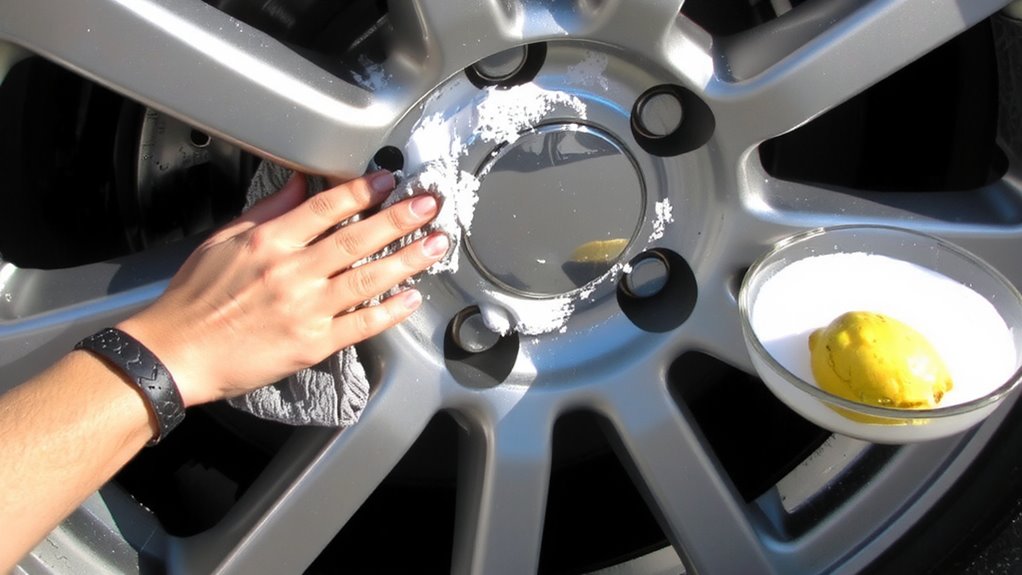
A well-executed scrubbing routine preserves the mirror-like finish of chrome wheels while removing bonded contaminants. Use a pH-neutral wheel cleaner and a soft-bristle brush with nylon fibers no harder than 60 durometer to avoid micro-scratches. Apply gentle, circular motions at 3–5 pounds of pressure per square inch-excessive force damages chrome plating. Focus on one section at a time, especially behind spokes where brake dust accumulates. For stubborn deposits, a vinegar-soaked pad softens minerals in 60–90 seconds. Always use microfiber or non-abrasive pads during chrome polishing to maintain luster. Avoid steel wool or wire brushes-they destroy the surface. This step is critical in wheel restoration, as improper technique accelerates oxidation. Use a dual-action polisher at 1,200–1,800 RPM with a foam pad when refining finish. Regular maintenance prevents pitting and extends chrome longevity. For optimal results, choose a best car wheel brush that balances softness and cleaning efficiency.
Rinse and Dry Without Streaks
After thoroughly scrubbing your chrome wheels, rinse them immediately with low-pressure water to prevent residue buildup. Use a gentle stream between 40–60 psi to avoid forcing water into bearings or seals. Guarantee all vinegar and baking soda residue is removed, as leftover particles can lead to spotting during drying. Immediately after rinsing, blot excess water with a lint-free microfiber towel to minimize the need for extensive wiping. For maximum clarity, follow with microfiber polishing using a dual-towel method: one to absorb moisture, a second for final buffing. Avoid air drying, as evaporation leaves behind mineral deposits and causes streaks. Even deionized water benefits from physical removal. Microfiber polishing reduces static and lifts water without abrasion. Use 100% polyester microfiber with a 300–400 GSM weight for superior absorbency. This guarantees a spot-free, streak-free finish every time.
When to Repeat for Tough Water Spots
If the water spots persist despite your initial cleaning, it’s likely due to mineral buildup that requires a more targeted approach. Repeat the vinegar and baking soda treatment if spot analysis shows residual calcium or magnesium deposits. Perform frequency testing every 10 minutes during treatment to assess progress without damaging the chrome. Agitate gently with a microfiber pad to avoid surface marring.
| Treatment Stage | Time Elapsed | Action Required |
|---|---|---|
| First pass | 0–10 min | Apply paste, scrub lightly |
| Second pass | 10–20 min | Reapply to stubborn zones |
| Assessment | 20–30 min | Conduct spot analysis |
| Final repeat | 30–40 min | Focus on high-mineral areas |
Reapplication is necessary only when visual inspection confirms remaining spots. Overuse increases abrasion risk. Limit repetitions to three unless facing extreme buildup. Consistent frequency testing guarantees effective, safe removal.
How to Prevent Water Spots on Chrome Wheels
Preventing water spots on chrome wheels starts with immediate and proactive maintenance after exposure to moisture. You must dry your wheels thoroughly using a microfiber towel to prevent water hardness residues from forming. Hard water contains dissolved minerals like calcium and magnesium that lead to visible mineral buildup when water evaporates. Over time, repeated exposure accelerates etching and dulls the chrome finish. Apply a protective chrome sealant every 3–4 months; quality products provide a hydrophobic barrier measured at 90+ water contact angles. This reduces surface adhesion, causing water to bead and roll off. Wash wheels weekly with distilled water if possible, especially in areas with high water hardness (over 7 grains per gallon). Using a pH-neutral wheel cleaner prevents film residue. Regular maintenance disrupts mineral accumulation before it bonds to the metal, preserving reflectivity and finish integrity.
On a final note
You’ve successfully removed water spots using vinegar and baking soda. This mild acid-base reaction dissolves mineral deposits without harming chrome. Rinse thoroughly to prevent residue. Dry with a microfiber towel to avoid streaks. Repeat if hard water stains persist. For ongoing protection, apply a silica-based sealant every 3 months. Prevent spots by drying wheels promptly after exposure to water. Regular maintenance preserves reflectivity and surface integrity.