Leak-Down Testing Protocol Specific to Supercharged Cylinder Heads
You must pressurize the cylinder to 100 psi to simulate real boost conditions, as standard 50–60 psi tests miss critical sealing flaws. Supercharged engines run 8.5:1 to 10.5:1 compression and see combustion pressures over 180 psi. At 100 psi input, a leak that reads 8% at idle can exceed 26% under load. Position piston at TDC with both valves closed, seal the crankcase, and use a calibrated 200 PSI-rated tester. Check for air escaping intake, exhaust, or oil fill-each points to specific faults. Accurate results demand exact tool specs and setup precision. There’s more to mastering test accuracy than pressure alone.
Notable Insights
- Use a high-pressure leak-down tester rated for at least 200 PSI to simulate real boost conditions accurately.
- Pressurize the cylinder to 100 psi to replicate typical supercharger boost pressure during testing.
- Position the piston at TDC on the compression stroke using a positive-locking stop for precise valve closure.
- Check valve clearances carefully, as deviations as small as 0.002 inch can compromise seal integrity.
- Interpret results with forced induction standards: below 8% leak-down is acceptable, over 12% indicates concern.
Why Standard Leak-Down Tests Fail on Supercharged Engines
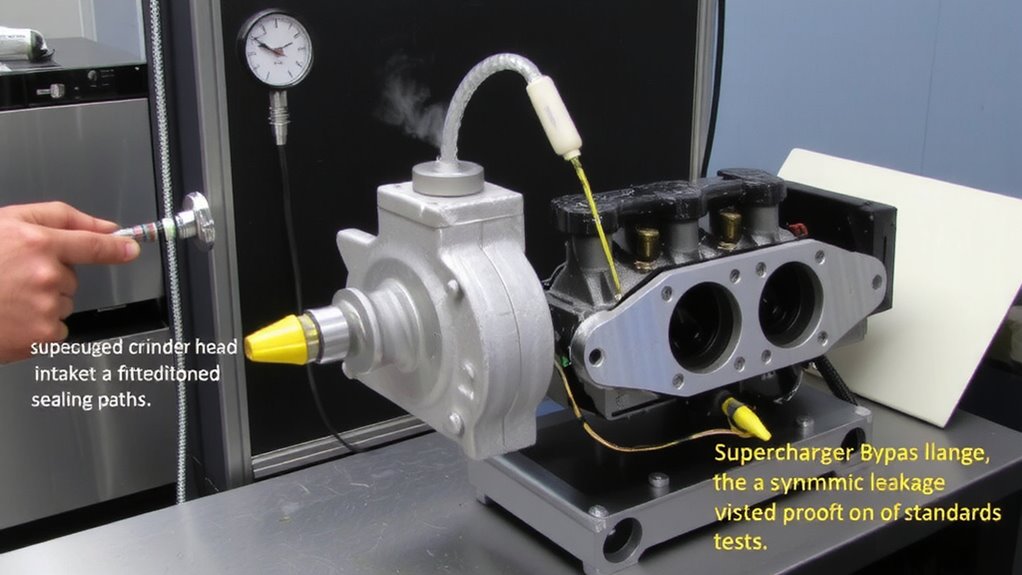
While standard leak-down tests work well for naturally aspirated engines, they often fall short when applied to supercharged cylinder heads due to the increased cylinder pressure these engines are designed to handle. You’re testing components under conditions that don’t reflect real-world operation. Supercharged engines run higher compression ratios, often between 8.5:1 and 10.5:1, making valve seal integrity critical. At high RPM, valve float becomes a risk-typically above 6,500 RPM-compromising cylinder sealing during the test. Standard testers can’t replicate the dynamic stresses these components endure. Ignition timing, often advanced in supercharged applications for ideal combustion, further increases cylinder pressure. If your leak-down gauge reads 15%, that might seem acceptable, but under boost, leakage paths expand. What looks minor at 100 psi input could become severe at 180 psi. You need a test protocol matching the engine’s actual operating environment, not outdated norms.
How Boost Pressure Skews Cylinder Leak-Down Readings
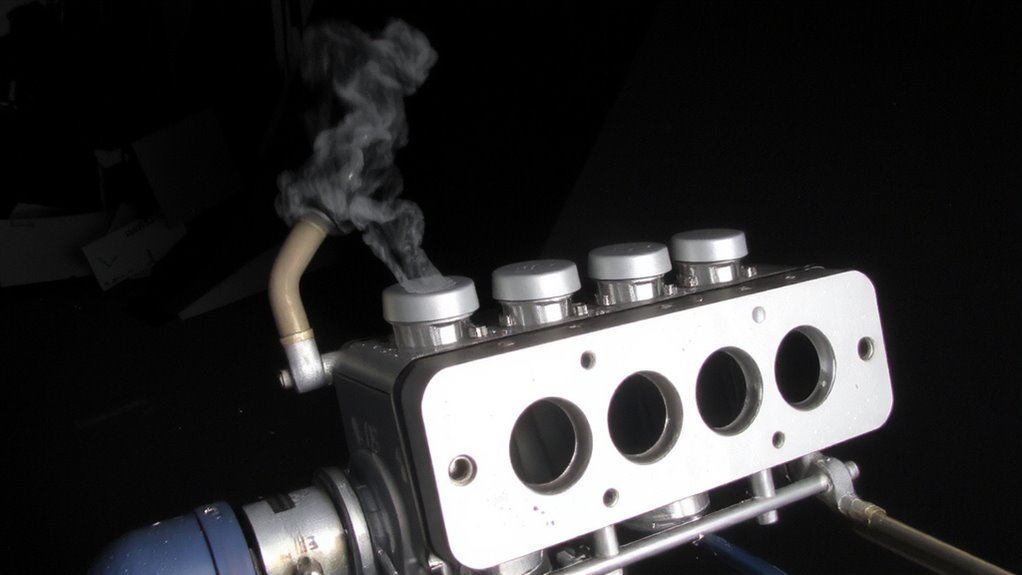
Because supercharged engines operate under positive pressure, your standard leak-down test results can’t accurately reflect real-world sealing performance. Atmospheric testing creates false positives by ignoring the pressure differentials present during actual operation. Boost pressure forces seals open under load, but without simulated back-pressure, your test assumes sealing integrity that may not exist. These discrepancies misrepresent leakage paths, especially past the rings or valves.
| Condition | Leak-Down Reading |
|---|---|
| Atmospheric (No Boost) | 8% |
| Simulated 10 psi Back-Pressure | 14% |
| Simulated 15 psi Back-Pressure | 22% |
| Actual Boost (18 psi) | 26% |
| Post-Correction | 9% |
You’ll see higher, more accurate leakage when replicating boost-side pressure differentials. Without this, you risk clearing an engine with compromised sealing. False positives are common-don’t be misled by ambient-only tests.
Set Up a Leak-Down Test for a Boosted Engine
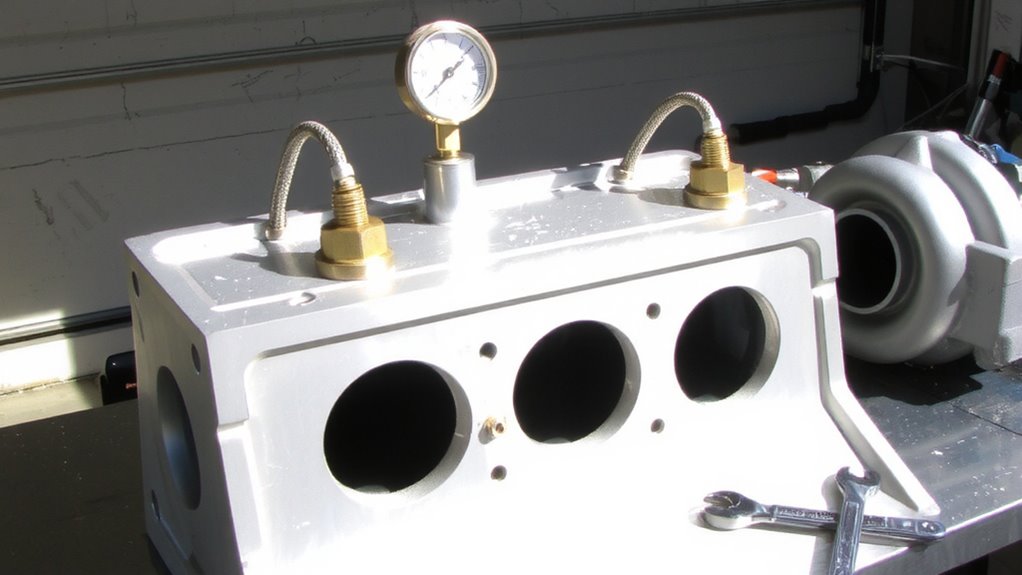
When testing a supercharged cylinder head, you need to simulate operating conditions to get meaningful results. Start by pressurizing the cylinder to 100 psi, matching typical boost levels to assess cylinder sealing accurately. Use a leak-down tester with adjustable input pressure and a precision gauge for reliable readings. Position the piston at top dead center (TDC) on the compression stroke to guarantee both intake and exhaust valves are fully closed. Check valve clearance before testing; incorrect lash can skew results by preventing proper valve seating. Even a 0.002-inch deviation affects sealing integrity. Seal the crankshaft area to prevent false leakage paths. Focus air pressure solely on the combustion chamber. Listen for leaks at the intake, exhaust, and coolant passages. Proper setup guarantees you’re diagnosing actual cylinder sealing issues, not assembly errors.
How to Read Leak-Down Results on Forced Induction Engines
You’ve pressurized the cylinder to 100 psi, confirmed the piston is at TDC on the compression stroke, and sealed all unintended air paths. Now, read the leak-down percentage on the gauge. Forced induction engines typically show acceptable results below 8%, but over 12% indicates concern. High compression ratio and aggressive valve timing stress components, so even small leaks matter. If you hear air escaping through the intake, the intake valve isn’t sealing-possibly due to timing misalignment or seat wear. Air from the exhaust points to exhaust valve issues. Leakage into the crankcase suggests head gasket failure or damaged piston rings. Listen carefully; each sound gives a clue. Remember, supercharged engines run higher cylinder pressures, so seal integrity is critical. Compare all cylinders. Uniform readings mean the engine’s healthy. Discrepancies reveal localized problems needing further inspection. Always interpret results within design limits.
5 Mistakes That Skew Supercharged Leak-Down Tests
Why do some leak-down test results leave you chasing ghosts instead of real problems? You might be overlooking thermal expansion. If the engine isn’t at operating temperature, metal components won’t be at correct operating clearances, skewing readings. Testing a cold supercharged head often mimics leak symptoms that disappear once the engine warms up. You need consistent cylinder sealing under pressure, but cold valves and bores distort actual performance. Also, avoid testing after aggressive dyno pulls where valve float occurred. That condition can temporarily damage or misalign valvetrain components, leading to false leakage paths. Even minor guide wear worsens under high boost and can bleed air during testing if valves didn’t seat properly post-float. Always let the engine cool to stable temps after operation, then retest. Skipping this step gives misleading data. Accurate leak-down values depend on realistic thermal and mechanical conditions. Assume nothing-verify every variable.
Must-Have Tools for High-Pressure Leak-Down Testing
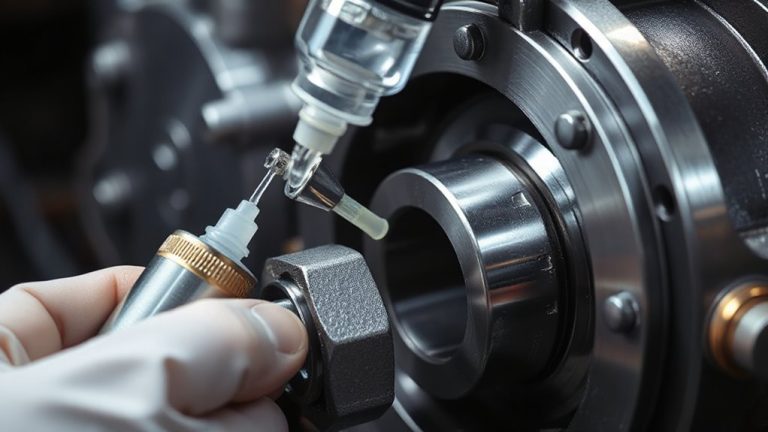
A reliable high-pressure leak-down tester is the cornerstone of accurate cylinder diagnostics, especially for supercharged engines operating under extreme combustion pressures. You’ll need a tester rated for at least 200 PSI to simulate real-world conditions. Precision matters-choose a model with certified pressure calibration to guarantee repeatable, laboratory-grade results. Inaccurate gauges lead to false diagnoses, so annual recalibration is non-negotiable. Fitting compatibility is equally critical; your kit must include threaded adapters for common spark plug threads (14mm and 18mm) and O-ring seals to prevent false leaks. Use a positive-locking piston stop to hold the piston at top dead center-any movement skews readings. Pair the tester with a differential pressure sensor for detecting subtle flow changes. These tools, combined, isolate actual cylinder leakage from measurement error. Skimping on quality compromises data integrity. You’re not just testing seals-you’re validating engine health under stress.
On a final note
You must modify standard leak-down procedures for supercharged cylinder heads. Normal tests fail under boost conditions. Use a high-pressure regulator to simulate operating pressure-typically 20–30 psi feed. Monitor airflow in cubic feet per minute, not just percentage leakage. Accurate results require stabilized cylinder pressure and a calibrated meter. Avoid unpressurized testing; it ignores boost-induced seal distortions. Tools like adjustable leak-down testers and pressure transducers are essential.