Lubricating Steering Intermediate Shaft on a 2013 Toyota Tacoma for Smooth Turning
Your 2013 Tacoma needs NLGI #2 lithium-based grease with a dropping point above 260°F to lubricate the steering intermediate shaft. Apply 2–3 pumps via a high-pressure grease gun to the 1/8-inch NPT zerk fitting near the firewall. Over-greasing can rupture the boot. Proper lubrication reduces metal-on-metal wear in the slip and universal joints. Use marine-grade grease to prevent corrosion and binding. Check for play or vibration-excess movement means replacement is due. Symptoms persisting after greasing suggest deeper inspection is needed.
Notable Insights
- Locate the zerk fitting on the intermediate shaft near the firewall behind the steering gear.
- Use a high-pressure grease gun with a needle tip to apply 2–3 strokes of NLGI #2 lithium-based grease.
- Ensure grease has a dropping point over 260°F and worked penetration between 265–295 at 60 strokes.
- Inspect the rubber boot for damage before greasing to prevent contamination and seal failure.
- Lubricate every 15,000 miles to prevent binding, vibration, and accelerated wear on steering components.
Why Your 2013 Tacoma’s Steering Is Stiff or Noisy
Have you noticed a gritty resistance when turning the wheel or heard a faint creaking with each rotation? These symptoms often point to mechanical issues in your 2013 Tacoma’s steering system. Ball joint wear is a common culprit, reducing pivot smoothness and allowing play in the control arm. Worn joints increase friction and create clunking noises, especially over bumps. Another cause could be steering column misalignment, where angular deviation exceeds the acceptable 0.5-degree tolerance, straining universal joints. Misalignment accelerates wear on intermediate shaft components and disrupts steering feedback. You may also experience increased steering effort or off-center handling. These issues aren’t related to shaft lubrication but precede it. Diagnosing play in ball joints-using a pry bar test with over 0.05 inches of movement-confirms wear. Correcting alignment and replacing degraded joints restores integrity before lubricating the intermediate shaft.
How a Dry Intermediate Shaft Hurts Steering
When the intermediate shaft lacks proper lubrication, friction between its internal components increases, leading to degraded steering performance. You’ll notice steering vibration, especially at low speeds or when turning the wheel fully. This vibration stems from uneven movement in the shaft’s slip joint and universal joint, which should operate smoothly under normal conditions. Without grease, metal-on-metal contact accelerates wear and promotes joint corrosion, particularly in humid or coastal environments. Corrosion pits the joint surfaces, creating rough spots that worsen vibration and binding. The intermediate shaft’s torque capacity doesn’t change, but efficiency drops due to internal resistance. Over time, this increases steering effort and wear on the rack and pinion. Left unattended, the shaft may develop play, causing noticeable looseness in the steering wheel. Lubrication prevents these issues by maintaining a protective film between moving parts, ensuring consistent, reliable operation.
Tools and Grease for Lubricating the Shaft
Though lubricating the intermediate shaft might seem straightforward, using the right tools and grease guarantees lasting protection and smooth operation. Proper grease consistency secures even distribution and resistance to fling-out under rotational forces. You need an NLGI #2 grease, lithium-based, with good water resistance and thermal stability. Tool compatibility is essential-use a standard needle-tip grease gun that fits most zerk fittings without leakage. Avoid makeshift tools that compromise seal integrity.
| Tool/Grease | Specification |
|---|---|
| Grease Type | Lithium-based, NLGI #2 |
| Dropping Point | Minimum 260°F (127°C) |
| Penetration (Worked) | 265–295 @ 60 strokes |
| Grease Gun | Manual, high-pressure, needle nozzle |
| Coupler Size | 1/4″ NPT, flexible hose compatible |
Use only fresh grease to maintain performance and longevity.
Find the Zerk Fitting on Your Tacoma
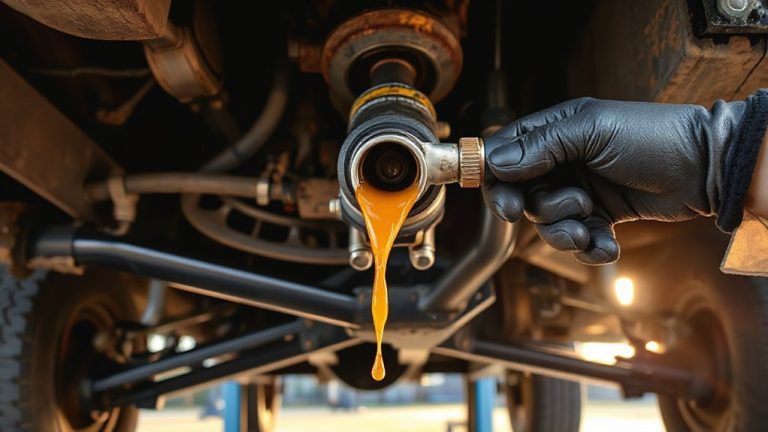
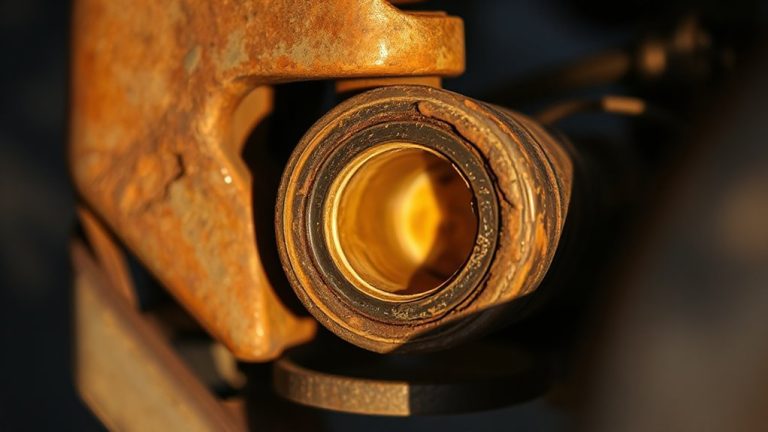
Where’s the zerk fitting on your 2013 Tacoma? It’s located on the steering intermediate shaft, near the firewall, just behind the steering gear. You’ll see a small grease nipple pointing downward or slightly rearward-this is the zerk fitting. It’s typically 1/8-inch NPT and accepts a standard grease gun coupler. Access is easiest from beneath the driver’s side, using a flashlight for visibility. Proper lubrication here supports consistent steering feel and helps maintain steering alignment over time. Ignoring it can lead to binding, which may mimic issues related to tire pressure or worn steering components. Unlike tire pressure, which affects handling and wear, dry steering joints impact mechanical movement directly. Inspect the fitting for damage before greasing. If missing or stripped, replacement fittings are available as OEM part number 08858-01010. Confirm the zerk is clean before attachment to avoid introducing debris.
Grease the Steering Intermediate Shaft
Once you’ve located the zerk fitting, attach your grease gun securely to begin lubrication. Pump high-quality marine-grade grease until you see slight resistance, typically 2–3 full strokes. Proper lubrication reduces friction in the steering intermediate shaft, preventing premature suspension wear. Over time, dry or gritty movement degrades components, potentially shifting steering alignment. A well-greased shaft guarantees smooth, precise turning response. The 2013 Tacoma’s intermediate shaft uses a splined coupling that must move freely; grease helps maintain that motion without binding. Avoid over-greasing-excess pressure can damage the rubber boot. Check for play in the joint after lubricating; any looseness may indicate worn parts affecting steering alignment. Lubricating every 15,000 miles supports overall steering integrity. Clean the zerk fitting before and after use to prevent debris entry. Proper maintenance prevents drivetrain vibration and extends component life. A reliable mini grease gun makes it easier to reach tight spaces like the intermediate shaft zerk fitting with precision and control.
Common Mistakes When Lubricating the Shaft
Why do some DIYers still struggle with a task as straightforward as lubricating the steering intermediate shaft? Overgreasing joints is a common error. Excess grease increases internal pressure, which can rupture the boot. Toyota specifies a high-quality lithium-based grease, applied until slight resistance is felt-usually 5 to 7 pump strokes. More than that risks damage. Ignoring boot damage is equally problematic. A torn or cracked boot exposes the joint to dirt and moisture, accelerating wear. Inspect the rubber boot closely before greasing; if you see cracks, splits, or missing sections, contamination is likely. Even with fresh grease, a compromised boot renders lubrication ineffective. Always make certain the zerk fitting is clean and functional. Use a hand-operated grease gun for better control. Precision matters-proper lubrication extends shaft life and maintains steering accuracy.
When to Replace the Intermediate Shaft
A steering intermediate shaft doesn’t last forever, and knowing when to replace it can prevent dangerous handling issues down the road. Persistent steering vibration or recurring alignment issues are red flags. If you feel shaking through the wheel above 45 mph or notice uneven tire wear despite proper alignment, inspect the shaft. Internal wear or damaged U-joints disrupt smooth input from steering column to gear.
| Symptom | Likely Cause |
|---|---|
| Steering vibration at highway speeds | Worn U-joint or imbalance |
| Clunking during turns | Excessive play in joint |
| Misalignment after tire work | Shaft binding or damage |
| Reduced steering response | Internal splined sleeve wear |
Replace the shaft if play exceeds 5mm when tested by hand. Use OEM-spec replacement (Toyota part #52112-0K010) for exact fitment and balanced operation.
On a final note
You’ve addressed a common cause of stiff or noisy steering in your 2013 Tacoma. The intermediate shaft’s zerk fitting allows grease injection, restoring smooth articulation. Use lithium-based, NLGI #2 grease compatible with rubber boots. Over-greasing can rupture the boot, so apply only until resistance eases. A properly lubricated shaft reduces wear and maintains steering response. Replace the shaft if play or binding persists.