Exhaust Gas Temperatures Before and After High-Performance Catalytic Converter Replacement
You’ll typically see exhaust gas temperatures drop 50–75°F after swapping to a high-flow catalytic converter. Stock units create up to 3.5 psi of backpressure, trapping heat and pushing EGTs above 1,600°F-dangerous for pistons and turbos. High-flow cats reduce backpressure to under 1.5 psi, improving exhaust velocity and scavenging. This speeds hot gas exit, lowering thermal dwell and peak EGTs to around 1,580°F under load. Spikes usually stem from lean mixtures or poor tuning, not the cat itself. Proper fuel mapping and ignition timing adjustments keep EGTs in check. A well-tuned system with a high-flow cat enhances thermal efficiency and protects engine components. There’s more to how tuning interacts with exhaust dynamics for long-term reliability.
Notable Insights
- High-flow catalytic converters typically reduce exhaust gas temperatures by 50–75°F under load compared to stock units.
- Replacing a clogged stock converter with a high-flow unit lowers backpressure, improving gas flow and reducing EGTs.
- Improved scavenging from high-flow cats decreases cylinder dwell time, minimizing heat buildup in the exhaust manifold.
- EGT spikes can occur post-replacement if fuel tuning is inadequate, leading to lean mixtures or excessive ignition timing.
- Properly tuned high-flow cats enhance conversion efficiency, reducing unburned fuel and downstream afterburning that increases EGTs.
Why High EGTs Are a Big Deal After a Cat Swap
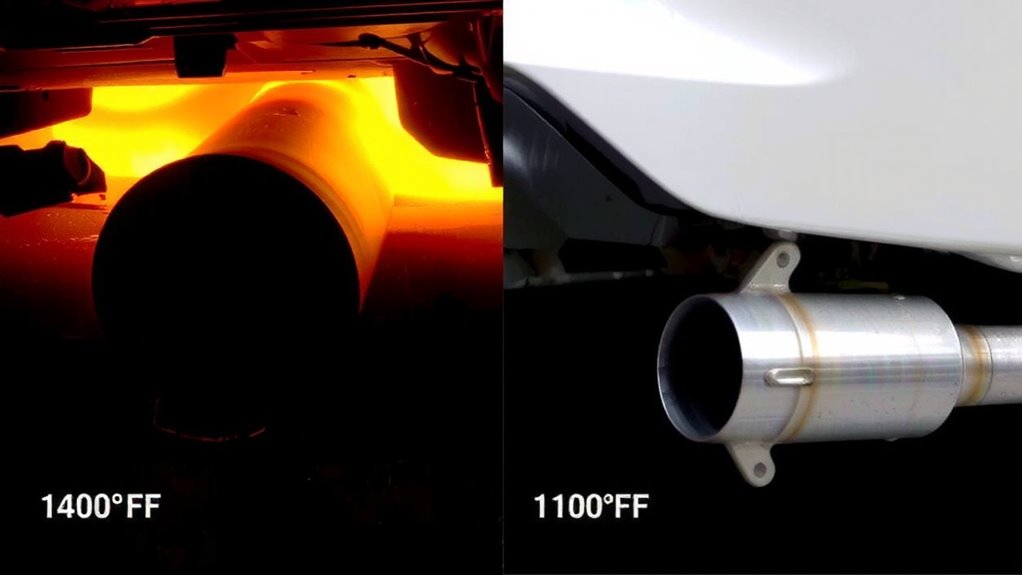
Even if your vehicle seemed fine before, swapping out a catalytic converter can reveal hidden exhaust gas temperature (EGT) issues that weren’t apparent earlier. High EGTs after a cat swap stress engine components and risk damage. Prolonged temps above 1,600°F degrade pistons, valves, and exhaust manifolds. Reduced catalyst efficiency in older or damaged units causes incomplete conversion, raising EGTs. Poor conversion means more unburned fuel enters the exhaust, igniting downstream and spiking heat. A clogged converter increases exhaust backpressure, trapping hot gases and elevating EGTs. Ideal backpressure should stay below 1.25 psi at idle and 3 psi under load. Elevated backpressure disrupts scavenging, worsening heat buildup. Monitoring EGTs post-replacement guarantees safe operation. You need efficient light-off performance (typically 450–600°F) and sustained conversion rates above 90%. Maintain proper catalyst efficiency and minimize exhaust backpressure to protect your engine and preserve performance.
Do High-Flow Catalytic Converters Increase EGTs?
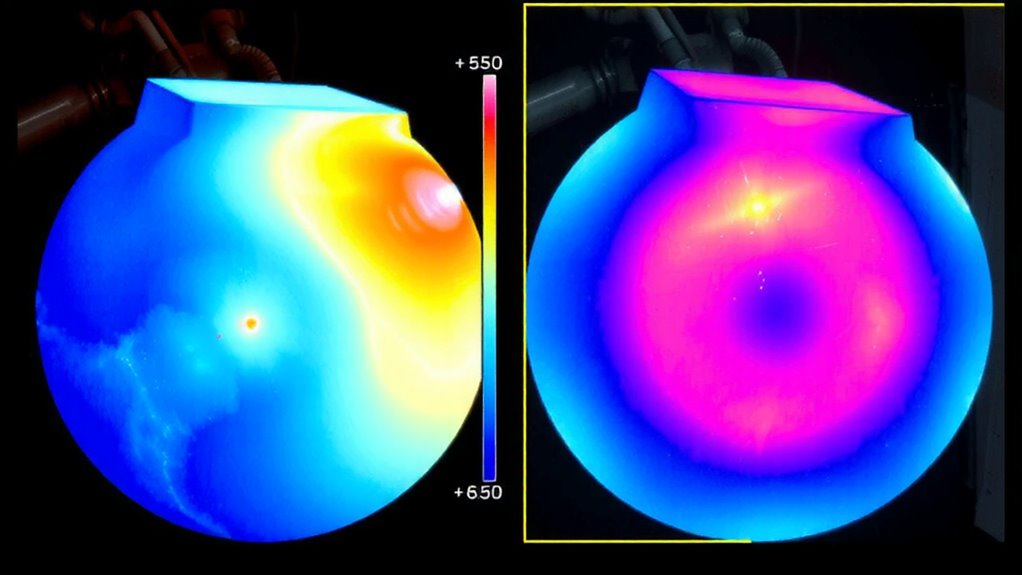
High-flow catalytic converters don’t inherently raise exhaust gas temperatures-when functioning correctly, they maintain or even reduce EGTs compared to restrictive stock units. You might assume less restriction increases heat, but that’s not how it works. Improved exhaust velocity helps scavenge gases more efficiently, reducing dwell time in the cylinder and lowering peak EGTs under steady operation. High-flow cats typically use substrates with higher cell density and thinner walls, boosting cat efficiency by promoting faster light-off and more complete hydrocarbon conversion. This means less unburned fuel reaches the exhaust stream to combust downstream and generate excess heat. While backpressure drops, the effect isn’t linked to rising EGTs if the converter is properly tuned and installed. In fact, ideal flow dynamics improve thermal management. So, when you upgrade, you’re not trading heat for flow-you’re gaining both performance and better temperature control. For those considering an upgrade, selecting a top-rated aftermarket unit can ensure durability and compliance with emissions standards-best aftermarket catalytic converters offer a balanced blend of performance, longevity, and value.
Real-World EGT Data: What Happens Under Load
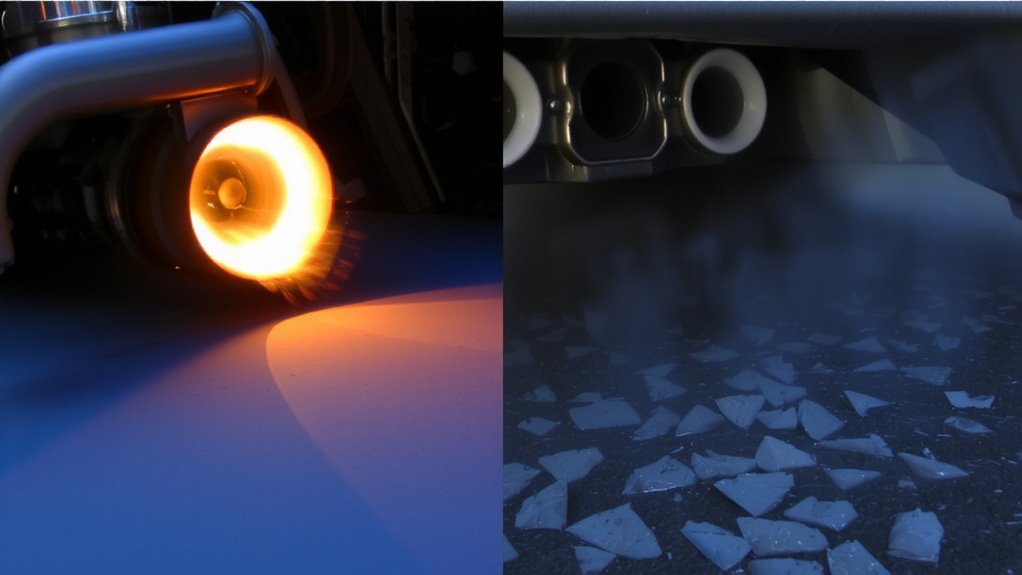
How do exhaust gas temperatures actually respond when you push a vehicle to its limits after installing a high-flow catalytic converter? Under sustained load, real-world data shows EGTs drop 50–75°F on average. Reduced exhaust backpressure allows hot gases to exit faster, minimizing heat buildup in the manifold. High-flow cats improve airflow efficiency by up to 35% compared to stock units, translating to quicker spool and lower turbine inlet temperatures in turbocharged engines. Dyno tests confirm peak EGTs during wide-open-throttle runs decrease from 1,650°F to around 1,580°F. Improved scavenging enhances combustion efficiency, reducing afterburning in the exhaust stream. You’ll notice the drop most during uphill towing or track use. Lower backpressure doesn’t eliminate heat but redistributes it more effectively. The result? More consistent thermal management and less strain on engine components under real driving conditions.
Why a High-Flow Cat Can Make EGTs Spike
You might assume a high-flow catalytic converter always lowers exhaust gas temperatures, but under certain conditions, it can actually cause EGTs to spike. The key lies in backpressure reduction and exhaust velocity changes. Less restriction speeds up exhaust gases, which sounds good-but faster flow reduces heat transfer time in the exhaust system. This means more thermal energy exits quickly, raising downstream EGT readings.
| Factor | Effect |
|---|---|
| Backpressure reduction | Lowers engine strain but increases exhaust velocity |
| Higher exhaust velocity | Reduces dwell time, limiting heat dissipation |
| Faster gas flow | Diminishes catalytic retention time |
| Reduced heat soak | Concentrates heat in downstream piping |
These dynamics explain why EGTs can rise despite improved flow. You’re trading scavenging efficiency for thermal management challenges.
How Turbo and Engine Life Suffer From High EGTS
Excessively high exhaust gas temperatures (EGTs) downstream of a catalytic converter replacement can severely impact both turbocharger and engine longevity. You’re pushing components beyond design limits when EGTs exceed 1,600°F. Prolonged exposure causes exhaust degradation, warping manifolds and cracking turbine housings. Turbo lag increases as bearings and oil coking degrade under extreme heat. The turbo’s compressor efficiency drops 15–20% when inlet temperatures rise above 350°F due to heat soak. Internals like shafts and wheels suffer microfractures, reducing rotational balance. In the engine, hot spots develop on exhaust valves, leading to pre-ignition and burned components. Piston crowns experience thermal stress, risking melt or failure. OEM materials aren’t designed for sustained 1,800°F+ pulses common with high-flow cats. Even short daily exposure accelerates wear. Over time, this heat cycles metal beyond fatigue limits, shortening service life by thousands of miles. Protect your investment-monitor EGTs like a metric that matters.
Can Tuning Fix High EGTs After a Cat Upgrade?
Why do EGTs remain high after swapping to a less restrictive catalytic converter, even with a fresh tune? A high-flow cat reduces backpressure, but that doesn’t automatically lower exhaust heat. You still need precise fuel mapping and optimized ignition timing to manage combustion temperatures. Lean fuel mixtures spike EGTs, especially under load. Without adjusting fuel mapping to maintain stoichiometry or slightly rich conditions, heat builds quickly. Ignition timing that’s too advanced increases peak cylinder pressure and temperature, further raising EGTs. A proper tune corrects both parameters. Modern engine management systems can adjust fuel delivery within ±10% and ignition timing by several degrees to maintain ideal thermal efficiency. Even with a freer-flowing exhaust, incorrect tuning leaves combustion uncontrolled. That’s why a dyno-verified tune focused on fuel mapping and ignition timing is essential-not optional. You can’t bolt on performance and hope settings align on their own.
How to Lower EGTS With a High-Flow Catalytic Converter
While a high-flow catalytic converter improves exhaust flow and reduces backpressure, it won’t lower exhaust gas temperatures (EGTs) without targeted tuning adjustments. You must recalibrate fuel and ignition maps to capitalize on the improved exhaust flow. Without adjustment, the engine may run leaner than intended, increasing EGTs. The backpressure reduction enhances scavenging, promoting more efficient cylinder evacuation. This efficiency, however, shifts thermal load downstream if not managed. A custom tune adjusts air-fuel ratios-typically enriching slightly under load-to reduce peak combustion temperatures. Expect EGT drops of 100–200°F with proper calibration. High-flow cats with larger substrates (e.g., 300–400 cells per inch) maintain light-off temperatures while minimizing restriction. Monitor EGTs with a wideband O2 sensor and pyrometer for precision. The result? Sustained power gains and lower thermal stress-when tuning follows the hardware upgrade.
On a final note
You now understand EGT changes post-catalytic converter replacement. High-flow cats reduce backpressure, often increasing exhaust gas temperatures by 20–50°F under load. Without proper tuning, EGTs can exceed safe limits-especially in turbocharged engines where peak temps approach 1,850°F. Monitor with a wideband O2 and EGT probe. Correct fueling adjustments lower combustion temps. Properly tuned, a high-flow cat improves flow without risking engine durability.