Understanding Dwell Time Chemistry in Surface Coating Applications
You control coating performance by managing dwell time-the 15–30 minute window at 2cxx°C and 50% RH when wet film spreads, solvent evaporates, and crosslinking begins. Too short, and beading occurs on low-energy surfaces, cutting bond strength by up to 40%. Too long, and over-curing increases brittleness. Surface energy, porosity, and viscosity interact to affect wetting and reaction kinetics. Proper dwell guarantees full functional group bonding and film densification. The right conditions prevent adhesion loss under thermal stress-there’s more to mastering this balance.
Notable Insights
- Dwell time is the wet-coating duration before curing begins, critical for adhesion and film formation.
- Proper dwell time enables complete crosslinking, molecular alignment, and solvent evaporation in coating chemistry.
- Short dwell time reduces cross-linking by up to 40%, weakening bond strength and causing delamination.
- High humidity or porous substrates alter dwell time, requiring adjustments in viscosity or priming.
- Epoxy systems need at least 10 minutes at 25°C to reach gelation and optimal performance.
What Is Dwell Time in Coatings?
Precision matters when applying surface coatings, and dwell time is a key factor you can’t ignore. Dwell time refers to the duration a coating remains wet on a surface before drying or curing begins. You need ideal dwell time to guarantee proper adhesion and uniform coverage. If it’s too short, surface tension can cause beading or uneven spreading, especially on low-energy substrates. Too long, and you risk chemical degradation from environmental exposure or premature reaction. Most industrial coatings perform best with a dwell time of 15 to 30 minutes under standard conditions-25°C and 50% relative humidity. This window allows the coating to level properly and penetrate micro-irregularities. You must adjust for temperature, humidity, and substrate type. Proper dwell time guarantees film integrity, corrosion resistance, and long-term durability. It’s a small variable with large consequences.
What Happens When Dwell Time Is Off?
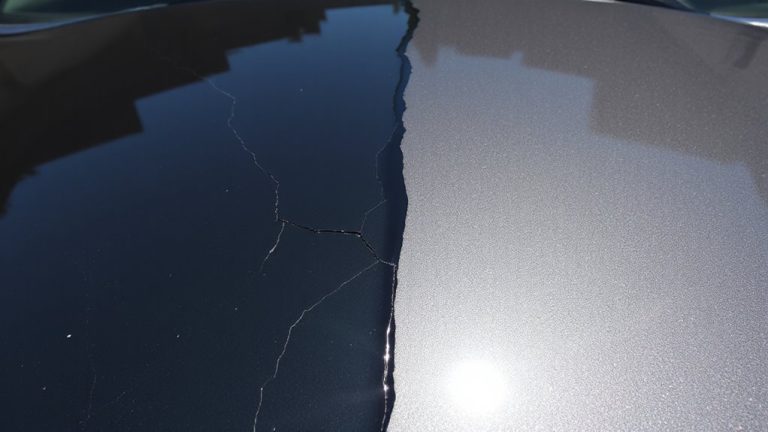
What happens when dwell time slips outside the ideal range? You risk coating failure and adhesion loss, compromising long-term performance. If dwell time is too short, chemical reactions don’t complete-cross-linking drops by up to 40%, weakening the bond. This leads to poor film formation and premature delamination. When dwell time is too long, over-curing occurs, making the coating brittle and prone to microcracking. Adhesion loss follows, especially under thermal cycling or mechanical stress. For example, epoxy systems require 10–30 minutes at 25°C for ideal cure; exceeding this by 50% increases modulus by 20%, reducing flexibility. Even slight deviations disrupt intermolecular bonding. Coating failure isn’t always immediate-it may appear during environmental exposure testing. Maintaining precise dwell time guarantees maximum cross-link density, surface wetting, and interfacial strength, preventing field defects and costly rework.
What Actually Affects Dwell Time?
How do environmental and material factors shape dwell time in surface coatings? Ambient humidity directly influences evaporation rates-high moisture slows solvent release, extending dwell time. You’ll see delays of 20–40% in humidity above 70% RH compared to 40% RH. Surface porosity determines how rapidly a coating penetrates or remains on top. Dense, non-porous materials like metal or glass retain coatings longer on the surface, promoting even film formation. In contrast, porous substrates like untreated wood absorb coating quickly, reducing effective dwell time by up to 50%. Temperature plays a role, but you must control it alongside humidity for predictable results. Surface energy and coating viscosity also interact, altering spreadability. Proper substrate prep adjusts porosity effects. You need to measure ambient humidity in real time and evaluate surface porosity before application. These factors aren’t secondary-they’re central to accurate dwell time control.
Why Chemistry Needs the Right Dwell Time
When you give coating chemistry enough time on the surface, it can fully develop the properties engineers designed into it. Proper dwell time guarantees maximum surface reactivity, allowing functional groups in the coating to bond effectively with the substrate. Without sufficient contact time, reactions like crosslinking or curing remain incomplete, weakening adhesion. You need this window for molecular alignment and solvent evaporation, both critical for film formation. Chemical stability improves when the coating fully densifies, reducing permeability to moisture and corrosive agents. Think of it like concrete curing-rushed, it crumbles. Industry standards often require 5–20 minutes depending on resin type and ambient conditions. Epoxy systems, for example, need at least 10 minutes at 25°C to reach gelation. Ignoring dwell time compromises barrier performance and long-term durability. You’re not just applying a layer-you’re enabling a chemical process. Get it right, and the coating performs as tested.
Dwell Time Too Short or Too Long?
Insufficient or excessive dwell time disrupts the chemical and physical development of surface coatings. If dwell time is too short, the coating doesn’t level properly, leading to poor film formation and weak adhesion. Low dwell time limits solvent evaporation, especially under high ambient humidity, which traps moisture and alters coating viscosity. This causes defects like blistering or orange peel. When dwell time is too long, the coating skin forms prematurely, reducing intercoat adhesion and increasing surface tension issues. Excessive exposure to ambient humidity during prolonged dwell alters crosslinking kinetics, compromising final cure. Coating viscosity rises past ideal application range, making uniform spraying difficult. Ideal dwell time balances evaporation rate and reactivity. You need to align it with ambient humidity levels and specified coating viscosity to guarantee proper flow, coalescence, and film integrity. Deviations risk performance and durability.
3 Ways to Optimize for Better Adhesion
You can substantially improve adhesion by starting with proper surface preparation. Clean the substrate thoroughly to remove oils, dust, and contaminants that compromise bond strength. Increasing surface energy enhances wettability, allowing coatings to spread uniformly and anchor effectively. Use corona or plasma treatment on low-energy surfaces like plastics to raise surface energy above 38 dynes/cm for best results. Material porosity also plays a critical role-porous surfaces provide mechanical interlock, but excessive porosity can lead to uneven coating penetration. Pre-condition porous substrates with a primer to seal voids without overfilling. Adjust coating viscosity to match the substrate’s pore structure, typically between 15–25 seconds on a #4 Zahn cup for medium porosity. These steps guarantee intimate contact, promote uniform dwell time, and maximize interfacial stability-critical for long-term adhesion in demanding environments.
Field-Tested Tips to Control Dwell Time
How do you guarantee consistent coating performance across variable job site conditions? You adjust dwell timed based on real-time environmental humidity and surface tension. High humidity slows solvent evaporation, extending ideal dwell time by 20–40%. You monitor levels with a portable hyg slogan, targeting 40–60% RH for best results. Low surface tension substrates, like plastics, require shorter dwell times to prevent coating creep. You measure surface energy with a dyne test kit, maintaining 38–42 dynes/cm. Applying infrared thermography helps you track substrate temperature, which should stay within ±5°F of ambient. You use timed spray passes, holding 90 seconds ±10 as baseline. Adjust to 70 seconds in high humidity or above 85°F. Field tests show dwell deviations beyond ±15 seconds reduce adhesion by up to 30%. You calibrate application intervals using these field-proven benchmarks.
On a final note
You must control dwell time to guarantee peak coating performance. Dwell time directly affects chemical cross-linking and adhesion. Too short, and resins won’t coalesce; too long, and surface skins form, reducing bond strength. Ideal dwell ranges from 15 to 45 minutes, depending on humidity and film thickness. Use infrared thermometers and dew-point calculators to monitor conditions. Proper dwell guarantees cohesive strength, minimizes pinholes, and meets ASTM D4541 pull-off adhesion standards of 300 psi or higher.