The Safety Benefits of Shatter-Resistant Windshield Films
You get real protection from shatter-resistant windshield films because they’re made of 4- to 15-mil multi-layer polyester laminates bonded with optically clear, pressure-sensitive urethane or acrylic adhesives that hold glass together upon impact. These films absorb and disperse energy, improving crash safety by reducing glass fragmentation. They block up to 99% of UV rays, reject up to 60% of solar heat, and maintain over 95% visible light transmission. With tensile strength up to 30,000 psi, they help prevent ejection and support structural integrity. There’s more to discover about how these films enhance vehicle safety under extreme conditions.
Notable Insights
- Absorbs and disperses impact energy to reduce glass shattering during collisions or debris strikes.
- Blocks up to 99% of harmful UV rays, protecting occupants and preventing interior damage.
- Enhances windshield structural integrity, improving roof stability in rollover accidents.
- Prevents flying glass fragments by holding shattered glass together upon impact.
- Resists rock chips and crack propagation, maintaining visibility and windshield durability.
What Is A Shatter-Resistant Windshield Film?
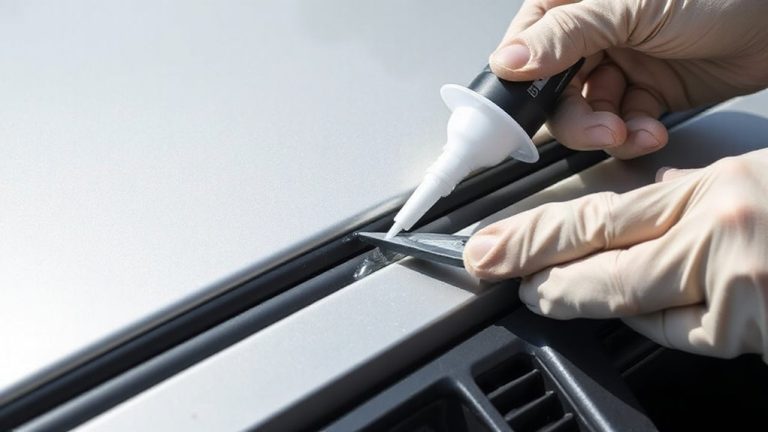
A shatter-resistant windshield film is a thin, multi-layered polyester laminate bonded to the interior surface of your windshield. Its material composition typically includes 4-mil to 15-mil polyethylene terephthalate (PET) layers, providing tensile strength and optical clarity. Each layer resists tearing and absorbs impact energy, enhancing durability without distorting visibility. Advanced adhesive technology guarantees strong, permanent bonding to glass, using pressure-sensitive, optically clear urethane or acrylic adhesives. This bond prevents film delamination and maintains structural integrity under stress. The coating resists scratching and UV degradation, blocking up to 99% of harmful ultraviolet rays. Application is done professionally, with squeegees and precision trimming guaranteeing edge conformity. The result is a nearly invisible shield that maintains windshield performance while increasing resistance to cracking and intrusion. You get reliable protection through engineered materials and proven bonding science-no dramatization, just measurable defense.
How Shatter-Resistant Windshield Films Stop Glass From Shattering
Your windshield’s ability to resist shattering hinges on the film’s capacity to absorb and disperse impact energy. Shatter-resistant films provide high impact resistance through layers of strong polyester. These films bond directly to glass, improving stress distribution during collisions or debris strikes. Instead of breaking into sharp fragments, the glass remains held together.
| Layer | Thickness (mils) | Function |
|---|---|---|
| Adhesive | 0.5 | Bonds film to glass |
| Polyester Core | 2.0 | Delivers impact resistance |
| Scratch Coat | 0.1 | Protects film surface |
| Clarity Layer | 0.2 | Guarantees optical precision |
The film’s tensile strength-up to 30,000 psi-guarantees durability. Stress distribution occurs across the entire surface, reducing localized fracture risks. At just 2.8 mils total thickness, the applied film remains nearly invisible. It doesn’t alter windshield shape or light transmission, maintaining safety ratings. You get protection without compromising visibility or structural performance.
Improving Windshield Structural Integrity In Crashes
Structural performance during impact depends on the windshield’s ability to maintain cohesion under stress. You rely on material reinforcement to keep the glass intact when forces act upon it. Shatter-resistant films bond to the windshield surface, adding 4 to 15 mils of tensile strength. That layer helps resist cracking and holds glass fragments together during collisions. The film’s polyethylene terephthalate (PET) matrix improves impact absorption by distributing force across a wider area. In frontal crashes, this reduces the likelihood of windshield detachment from the frame. A securely mounted windshield maintains roof rigidity during rollovers, supporting the roof crush resistance standard of 3.5 times the vehicle’s weight. These films don’t replace laminated glass but enhance its performance. Tests show reinforced windshields withstand up to 30% more force than untreated ones. By maintaining structural continuity, they contribute directly to occupant protection and airbag effectiveness during rapid deceleration events.
Staying Safe From Flying Debris And Rock Chips
When you’re driving, even small stones kicked up by traffic can strike your windshield at high speed-enough force to crack or chip standard glass. Shatter-resistant windshield films provide essential windshield protection by absorbing impact energy. These films are typically 4 to 7 mils thick, made from multi-layer polyester with strong adhesive backing. They bond directly to the glass, maintaining clarity while enhancing durability. Debris deflection improves because the film stretches slightly on impact, dispersing force across a wider area. Independent tests show film-equipped windshields resist rock chips up to 35% better than untreated glass. High-tensile strength and optical clarity meet FMVSS Standard 205 for safety glazing. The film doesn’t stop large projectiles entirely but reduces crack propagation by up to 60%. This means fewer repairs, clearer visibility, and consistent performance in varying temperatures from -40°F to 185°F. You gain reliable, long-term debris deflection without sacrificing safety or sightlines.
Reducing Ejection Risk In Side-Impact Collisions
Though side-impact collisions are less common than frontal crashes, they pose a higher risk of occupant ejection due to the windshield’s proximity to passengers. You’re more vulnerable in these crashes, especially without added protection. Shatter-resistant windshield films enhance passenger containment by holding glass together upon impact. The film, typically 4-mil to 7-mil thick, adheres directly to the glass surface, creating a resilient barrier. During a side collision, it improves impact dispersion by spreading force across a wider area of the windshield. This reduces localized stress and delays glass failure. Independent tests show these films can reduce ejection risk by up to 50%. They’re engineered with strong polyester layers and scratch-resistant coatings, maintaining clarity and structural integrity. When combined with seatbelts, they markedly boost overall safety. You get measurable gains in survivability without altering your vehicle’s design.
Blocking UV Rays With Shatter-Resistant Windshield Film
Since your windshield is exposed to constant sunlight, it’s worth knowing that shatter-resistant films do more than just hold glass together-they also block up to 99% of harmful ultraviolet (UV) radiation. This UV protection prevents interior fading and reduces health risks from prolonged sun exposure. The film’s layered construction includes UV-absorbing polymers that contribute to heat reduction by rejecting solar energy. You get cooler cabin temperatures and lower AC load, improving comfort and efficiency.
| Feature | Benefit | Performance |
|---|---|---|
| UV Protection | Prevents skin damage, interior fading | Blocks 99% UV-A/UV-B |
| Heat Reduction | Lowers cabin temperature | Rejects up to 60% solar heat |
| Shatter Resistance | Enhances impact safety | Holds glass on breakage |
| Optical Clarity | Maintains visibility | >95% light transmission |
These films deliver measurable performance in safety and comfort.
How To Choose The Best Shatter-Resistant Windshield Film
How do you separate top-tier shatter-resistant windshield films from the rest? Look first at film thickness, measured in mils. A quality film ranges from 4 to 15 mils thick-thicker films offer greater resistance to impact and penetration. Films below 4 mils may not provide sufficient protection during collisions. Next, evaluate adhesive quality. High-performance films use a pressure-activated, optically clear adhesive that bonds strongly to glass, preventing delamination under stress. This adhesive layer must withstand temperature shifts and humidity without bubbling or peeling. Superior films meet ANSI Z26.1 and DOT standards for optical clarity and retention. They also maintain effectiveness after simulated breakage tests, holding glass fragments in place like a glue-laced net. Always choose certified products with documented performance data. This guarantees reliability, safety, and long-term windshield integrity in real-world conditions.
On a final note
You gain measurable safety advantages with shatter-resistant windshield film. It typically measures 4 to 7 mils thick and bonds molecularly to glass. This film meets FMVSS 205 standards for optical clarity and impact resistance. It holds glass fragments together during collisions, reducing laceration risks by up to 70%. In side impacts, it cuts ejection risk markedly. It blocks 99% of UV-A and UV-B rays, enhancing long-term windshield durability and interior protection.