Shielding Alternators From Corrosion Using Dielectric Grease on Connector Pins
You protect alternator connector pins from corrosion by applying dielectric grease, a non-conductive silicone-based sealant that blocks moisture and contaminants. It forms a waterproof barrier, resisting temperatures from -40°C to 200°C and staying stable under hood heat and road splash. Apply a pea-sized drop per pin after cleaning, ensuring full coverage without pooling. The grease seals connections once mated, maintaining conductivity while preventing oxidation. Use a product meeting GM 603A or MS-5919 specs with 300–600 centistokes viscosity for ideal performance. Reapply every 24–36 months or when grease shows signs of drying or contamination. This simple step maintains low contact resistance and prevents premature alternator failure. There’s more to optimizing this protection based on environment and vehicle use.
Notable Insights
- Dielectric grease forms a waterproof barrier that protects alternator connector pins from moisture and corrosion.
- It is non-conductive, so it must be applied only after connections are mated to avoid interrupting electrical contact.
- Apply a pea-sized amount evenly using a non-metallic tool to ensure full coverage without excess.
- Use silicone-based dielectric grease with temperature resistance from -40°C to 200°C for under-hood durability.
- Reapply every 24–36 months or during routine maintenance, especially in wet or corrosive environments.
How Dielectric Grease Stops Alternator Corrosion
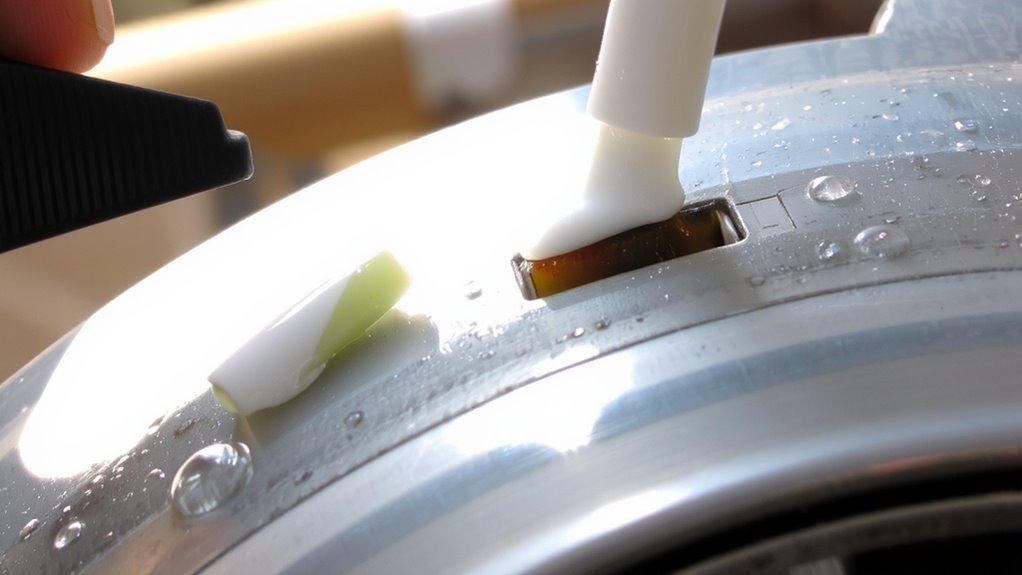
Dielectric grease works by forming a waterproof barrier that blocks moisture and contaminants from reaching sensitive electrical connections. You apply it to alternator connector pins to guarantee long-term electrical insulation and reliable performance. The grease repels water, providing strong moisture resistance even in high-humidity or wet environments. It doesn’t conduct electricity, so it won’t interfere with signal transmission. Instead, it seals connections once mated, preventing corrosion without disrupting current flow. Made from silicone oil and thickening agents, it remains stable from -40°C to 200°C. Its dielectric strength exceeds 15 kV, making it ideal for high-voltage applications. Unlike ordinary greases, it doesn’t degrade rubber or plastic insulation. A thin layer is all you need-excess can attract dust. Proper application guarantees consistent connectivity, reduces failure risk, and extends alternator life under harsh conditions.
Why Corrosion Targets Alternator Connector Pins
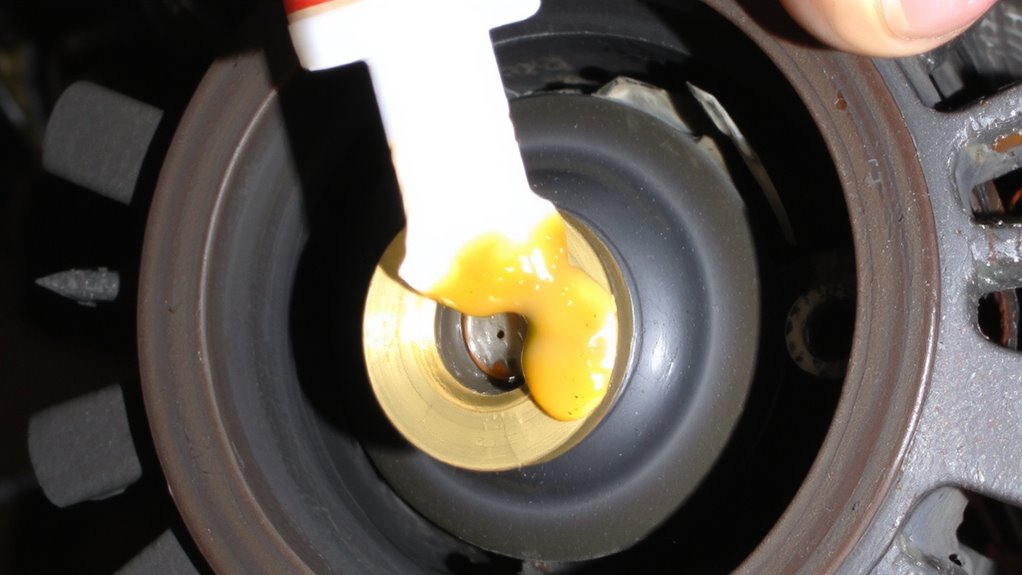
Why do alternator connector pins seem to attract corrosion so easily? Their location under the hood exposes them to road splash, humidity, and temperature swings. These conditions encourage moisture ingress, especially where seals degrade or fit loosely. Once water enters the connector, it bridges the metal contacts, starting electrochemical reactions. Most pins are made of copper alloy, which corrodes when exposed to oxygen and electrolytes. Corrosion builds up as resistive oxides, increasing electrical resistance at the connection. Even a thin layer can raise resistance from 0.02 ohms to over 1.5 ohms, disrupting voltage regulation. High resistance causes heat, further degrading the connection. Since alternators cycle on and off, thermal expansion worsens moisture ingress over time. The result? Intermittent charging issues or complete failure. These pins are critical yet vulnerable, making them prime corrosion targets in engine bays. Using a dedicated battery terminal cleaner can help prevent similar corrosion issues in related electrical connections.
How to Apply Dielectric Grease to Alternator Pins
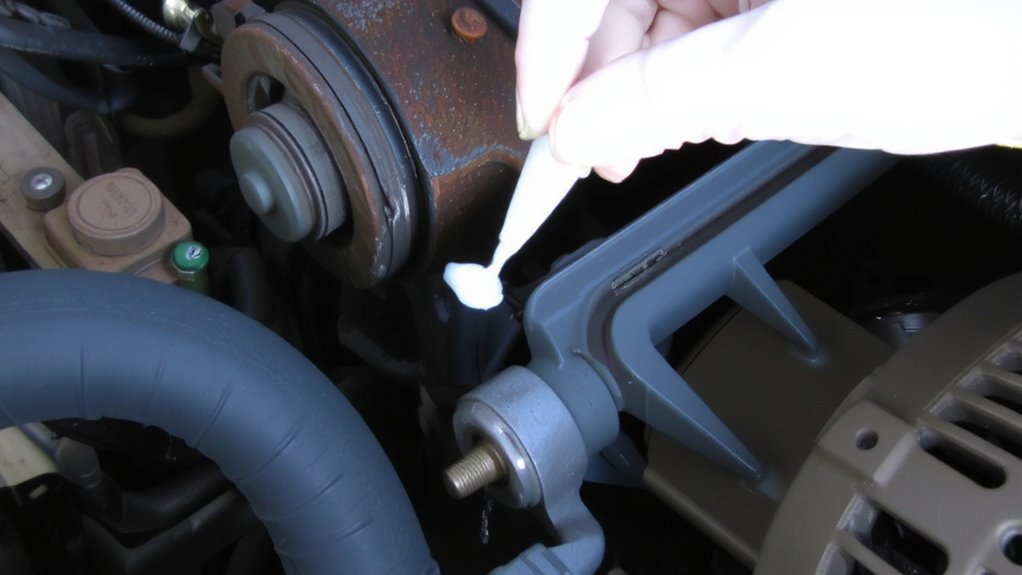
You can stop corrosion in its tracks by protecting the connector pins before it takes hold. Use a clean, lint-free cloth to wipe each pin free of dirt and moisture. Your application technique matters-apply grease with a non-metallic tool to avoid contamination. Use just enough grease quantity to coat each pin evenly; a pea-sized drop suffices for most connectors. Too much grease can attract debris or cause connector misalignment. Spread the grease evenly, guaranteeing full coverage without pooling. Dielectric grease doesn’t conduct electricity, so it must stay on the outer surface of the pins, not inside metal contacts. Reapplication isn’t needed often-once every two years or during routine maintenance is sufficient. Properly applied, the grease forms a sealed barrier resistant to moisture, salt, and temperature extremes up to 500°F. This simple step guarantees long-term electrical reliability.
Best Dielectric Grease for Alternator Connectors
While not all dielectric greases perform equally under extreme underhood conditions, selecting the right one can make a critical difference in protecting your alternator connectors. You need a grease with outstanding temperature resistance, ideally rated from -40°C to over 200°C. This guarantees performance during engine startup and sustained high-heat operation. Look for silicone-based formulations, which provide superior chemical stability and resist degradation from oil, coolant, and road salts. A viscosity between 300 and 600 centistokes ensures easy application without dripping. Greases containing inert thickeners like silica maintain integrity over time. Avoid petroleum-based products-they can degrade rubber seals and lose insulating properties. The best options meet OEM standards like GM 603A or Chrysler MS-5919, guaranteeing compatibility and long-term reliability. Choose a product that stays pliable and non-conductive.
Common Mistakes When Sealing Alternator Connectors
Proper sealing of alternator connectors protects against moisture, corrosion, and electrical failure, but even with the right dielectric grease, mistakes in application can compromise the entire system. You often overlook improper cleaning, leaving dirt, grease, or oxidation on connector pins. This reduces conductivity and negates the protective benefits of dielectric grease. Always clean pins with electrical contact cleaner and a soft brush before application. Another common error is overfilling connector housings. Excess grease creates pressure during mating, potentially displacing internal seals or forcing material into pin sockets. This can lead to poor connections or short circuits. Apply a thin, even layer-about 0.5 mm thick-covering only the pin surfaces. Use only UL-listed, non-conductive dielectric grease rated for 200°C and 600V to guarantee compatibility. Avoid silicone migration into non-silicone-based rubber seals, which can cause degradation over time.
When to Reapply Dielectric Grease
Typically, dielectric grease should be reapplied every 24 to 36 months, depending on environmental exposure and operating conditions. This reapplication frequency guarantees reliable protection against moisture and corrosion. You should perform a visual inspection during routine maintenance to assess grease condition. If the grease appears dry, cracked, or contaminated with dirt or oil, it’s time to clean and reapply.
| Condition | Action Needed |
|---|---|
| Grease intact, no discoloration | Monitor at next service |
| Slight drying at edges | Reapply grease |
| Heavy contamination | Clean & reapply immediately |
| Corrosion present | Inspect connector, repair if needed |
Always use a silicone-based dielectric grease with operating temperatures from -40°C to 200°C. Proper application maintains electrical integrity and seals out corrosive elements.
Why Dielectric Grease Extends Alternator Life
Dielectric grease plays a direct role in extending your alternator’s service life by blocking the primary cause of electrical failure-corrosion. You maintain reliable electrical conductivity by sealing connector pins from moisture and contaminants. The grease doesn’t conduct electricity but fills microscopic gaps, ensuring metal-to-metal contact only at intended points. This barrier provides superior oxidation prevention, stopping electrochemical reactions that degrade copper and aluminum terminals. Corrosion increases resistance, leading to voltage drops and overheating-dielectric grease mitigates this risk. It remains stable from -40°C to 200°C, resisting melting or hardening over time. A 0.5 mm application is sufficient; excess grease can attract debris. You’ll notice fewer intermittent failures and consistent alternator output. By preserving clean connections, dielectric grease reduces wear on internal components. This simple step enhances durability and maintains peak performance, directly contributing to longer alternator service intervals and improved system reliability in harsh environments.
On a final note
You protect alternator pins from corrosion using dielectric grease. It seals out moisture and oxygen, preventing electrochemical degradation. Apply a thin layer-0.5 to 1.0 mm-on clean, dry pins. Use silicone-based grease with operating temperatures from -40°C to 200°C. Reapply every 12 months or during routine maintenance. Proper application reduces electrical resistance, maintains conductivity, and extends alternator life by minimizing pin degradation.