Stockpiling Non-Woven Polypropylene Socks for Curbing Accidental Gearbox Leaks
Keep non-woven polypropylene socks stocked near gearboxes for immediate leak control. These 3″ diameter × 48″ socks absorb up to 1.2 gallons of oil, wicking lubricants fast through capillary action in their high-porosity microfibers. Oil-only sorbents repel water, maintaining 18–22 times their weight in saturation capacity, even in damp areas. Store them in labeled wall pouches within arm’s reach. They’re designed to prevent slips, contamination, and downtime-there’s more to how they integrate into compliance and maintenance workflows.
Notable Insights
- Store non-woven polypropylene socks within arm’s reach of gearboxes for sub-60-second spill response.
- Use wall-mounted, labeled pouches to protect socks and enable quick identification during leaks.
- Choose oil-only sorbent socks to repel water and maintain absorption efficiency in wet conditions.
- Stock 2–3 socks per gearbox, each absorbing up to 1.2 gallons of lubricant when fully deployed.
- Inspect socks monthly for saturation, UV damage, and fastener integrity to ensure readiness and compliance.
Why Gearbox Leaks Require Fast Spill Control
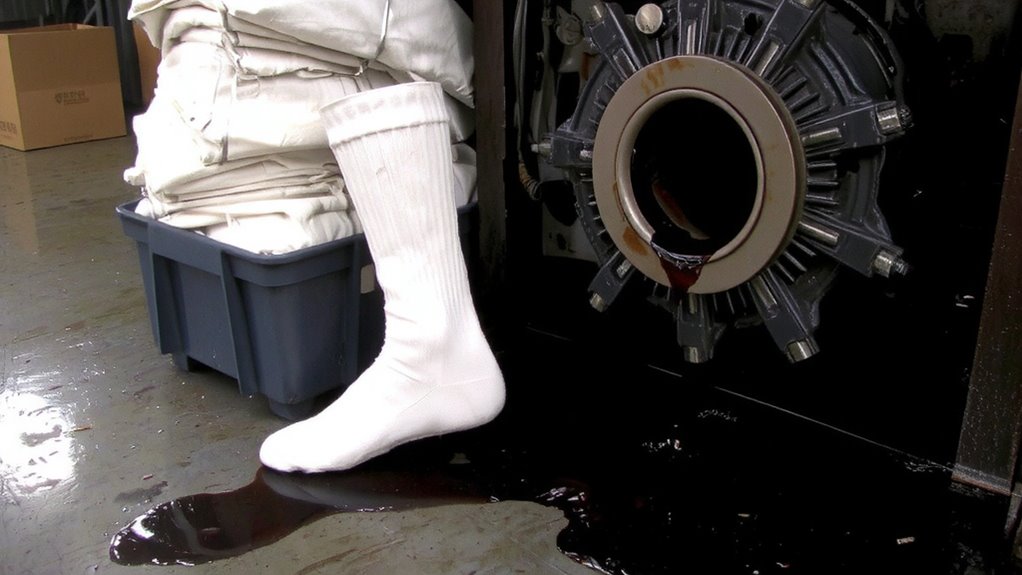
While a small drip from a gearbox might seem minor, it can quickly escalate into a serious operational hazard if not addressed immediately. You face both environmental contamination and safety hazards when leaks spread unchecked. Gearbox oils are often petroleum-based, toxic, and slow to degrade. Uncontrolled spills seep into soil and water systems, violating EPA regulations. OSHA classifies oil-slicked surfaces as fall risks, increasing workplace injury potential. A single gallon of leaked lubricant can contaminate up to one million gallons of water. Slippery residues near machinery elevate fire and electrical risks. Left unattended, minor leaks compromise equipment efficiency and longevity. You need immediate containment to prevent costlier shutdowns. Fast spill control stops fluid migration, minimizes exposure, and guarantees regulatory compliance. Your proactive response reduces downtime and protects personnel. Immediate action isn’t optional-it’s a critical operational protocol. Implementing rapid containment safeguards both environment and worksite integrity.
How Non-Woven Polypropylene Socks Absorb Lubricants Fast
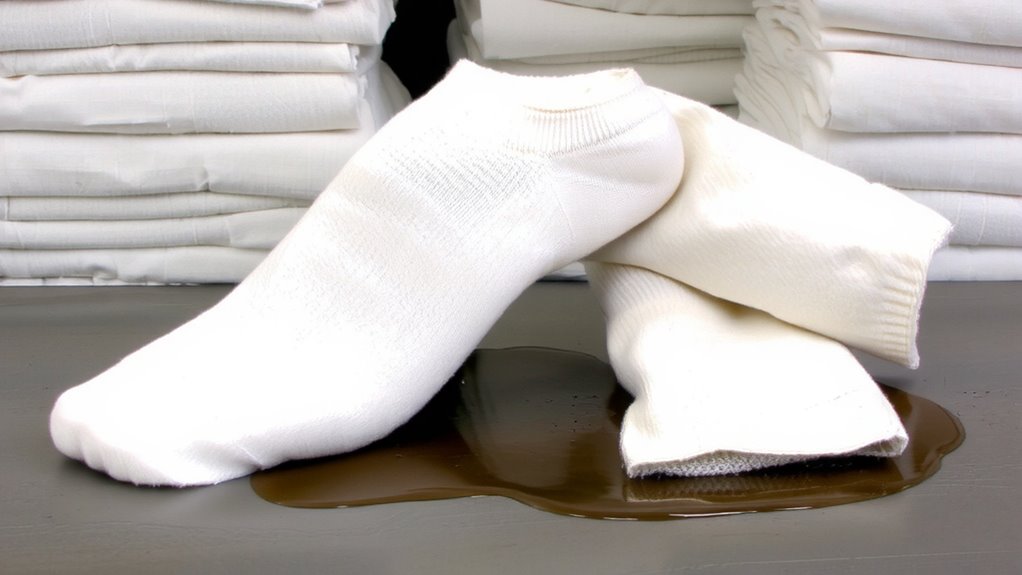
Speed matters when containing gearbox lubricants, and non-woven polypropylene socks deliver fast, effective absorption. Their fiber structure is engineered for rapid uptake, using capillary action to draw oil into the core. The microfibers create countless tiny channels that pull lubricants swiftly through surface tension, much like a paper towel soaks water. This process guarantees maximum capacity in minimal time, critical during active leaks.
| Feature | Benefit |
|---|---|
| High porosity fiber structure | Enables fast initial contact and spread |
| Optimized capillary action | Pulls lubricant deep into the matrix |
Polypropylene’s oleophilic nature targets oils exclusively. The socks absorb up to 20 times their weight in oil, reaching saturation within seconds on contact. Their lightweight yet durable design guarantees reliable deployment across industrial environments. You’ll see immediate containment, reducing slip hazards and equipment risk.
Why Oil-Only Absorption Beats Universal Sorbents
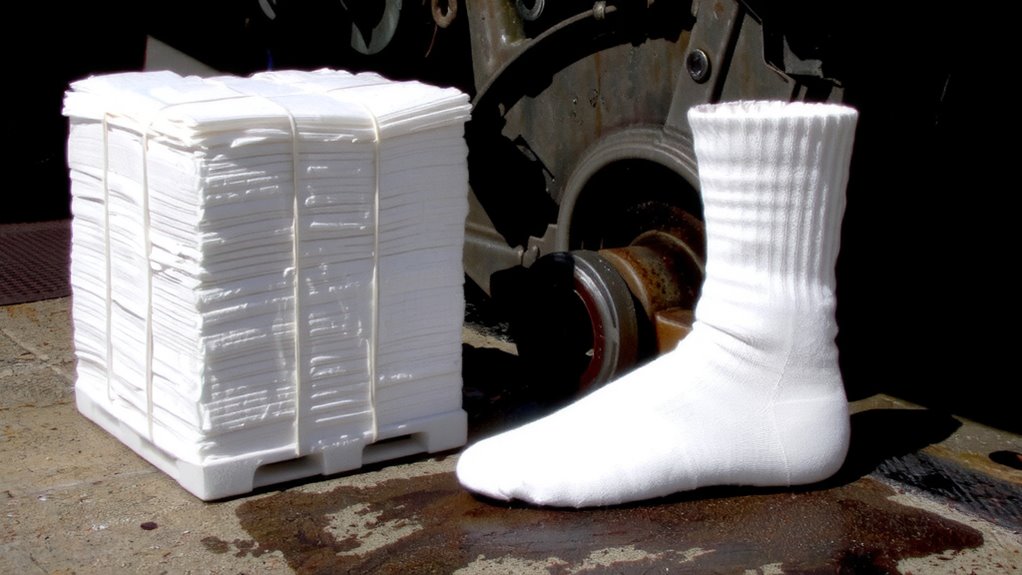
You already know how quickly non-woven polypropylene socks absorb lubricants-thanks to their high-porosity structure and strong capillary action. Oil-only sorbents outperform universal types because they repel water, letting you target leaks in wet environments. These socks offer superior chemical resistance, staying intact when exposed to hydrocarbons, solvents, and acids commonly found near gearboxes. Universal sorbents absorb everything, including water, which reduces their effective saturation capacity by up to 70% in damp conditions. Polypropylene socks, meanwhile, float and keep absorbing even when submerged. Their saturation capacity reaches 18–22 times their dry weight in oil, far exceeding universal options. This targeted absorption guarantees faster response, less waste, and longer service life. You’re not just cleaning-you’re optimizing containment. In industrial settings, that precision saves time, cuts costs, and improves safety during routine maintenance and emergency spills.
Store Socks for Quick Access Near Gearboxes
Position oil-absorbent socks within arm’s reach of gearboxes to guarantee rapid deployment during leaks. Proper socks storage secures response times stay under 60 seconds, critical for minimizing fluid spread. Mount socks in labeled, wall-mounted polyethylene pouches 18 inches from the gearbox housing-close enough for quick grab, far enough to avoid heat exposure. Each pouch should hold 2–3 socks, sized 3″ diameter × 48″ length, capable of absorbing up to 1.2 gallons of oil. Implement accessibility management by using color-coded tags: red for gearboxes, blue for hydraulics. Avoid floor storage to prevent contamination and tripping hazards. Store in a dry, ventilated zone with temperatures between 40°F and 100°F to preserve polypropylene integrity. Access points must remain unobstructed during operations. Routine audits of storage locations reduce retrieval time and improve spill readiness without disrupting workflow.
Add Leak Socks to Routine Maintenance Checks
Including leak socks in routine maintenance checks guarantees they’re ready when needed and maintains compliance with spill response protocols. You should inspect each sock for structural integrity, UV degradation, and saturation levels during scheduled equipment walkthroughs. Proper maintenance scheduling secures replacements occur before material fatigue compromises performance. These socks, constructed from 3.5-ounce non-woven polypropylene, retain up to 16 times their weight in oil, enabling rapid leak detection and containment. Check fastening mechanisms-hook-and-loop or stainless-steel ties-monthly for wear. Pair inspections with fluid level assessments to identify early gearbox seal wear. A single 40-inch sock covers typical flange joints, offering 90% coverage efficiency when correctly positioned. Document all checks in your maintenance log to validate adherence to environmental standards. This proactive integration supports operational readiness without escalating labor hours.
Stop Downtime and Fines With Immediate Spill Response
What if you could stop a minor leak from triggering costly downtime or regulatory fines? Immediate spill response with non-woven polypropylene socks keeps operations running and protects your facility. These socks absorb up to 1.2 gallons of oil per 40-inch sock, wicking fluid fast through capillary action. Their hydrophobic design repels water, guaranteeing oil-only uptake in mixed environments. Stockpiling them near gearboxes ensures under-three-minute deployment, cutting spill escalation risks. You maintain emergency preparedness by placing socks where leaks are likely-no special training needed. Each sock withstands temperatures from -4°F to 176°F, maintaining integrity in harsh conditions. Compliance isn’t luck-it’s planning. Using oil-control socks supports regulatory compliance with EPA and SPCC guidelines, minimizing reportable incidents. They’re 100% recyclable after saturation, aligning with environmental protocols. Act fast, stay compliant, and protect uptime-every second counts.
On a final note
You need fast spill control to avoid costly downtime. Non-woven polypropylene socks absorb oil at 15 seconds per 100 ml, thanks to their 0.5–2 micron pore structure. They’re oil-only, rejecting water, unlike universal sorbents that swell and fail. Each sock holds 250 ml of lubricant, measuring 7.6 cm × 50.8 cm. Store them in labeled bins within 1.5 meters of gearboxes. Include them in maintenance checklists. Immediate response prevents fines and meets EPA spill regulations.