Using a Remote Starter to Bypass Ignition Switch Issues
You can use a remote starter to bypass ignition switch issues by sending a secure 315 MHz or 433 MHz RF signal that activates the starter relay and fuel system directly. It integrates via a bypass module to authenticate the immobilizer, drawing under 5 amps during startup. While it restores function, it doesn’t fix worn contacts or internal switch defects. Quality units include surge protection to prevent damage to control modules. Long-term reliability still favors OEM replacement. There’s more to contemplate about system compatibility and safety trade-offs.
Notable Insights
- A remote starter can bypass a failed ignition switch by directly activating the starter and fuel systems via RF signal.
- It integrates with the vehicle’s ignition sequence using a bypass module, often supporting immobilizer authentication.
- DIY installation is possible but requires expertise to avoid damaging control modules or anti-theft systems.
- Bypassing the ignition switch does not fix underlying electrical issues or worn internal components.
- While functional, a remote starter bypass may compromise safety interlocks and is less reliable than OEM replacement.
How a Remote Starter Bypasses a Bad Ignition Switch
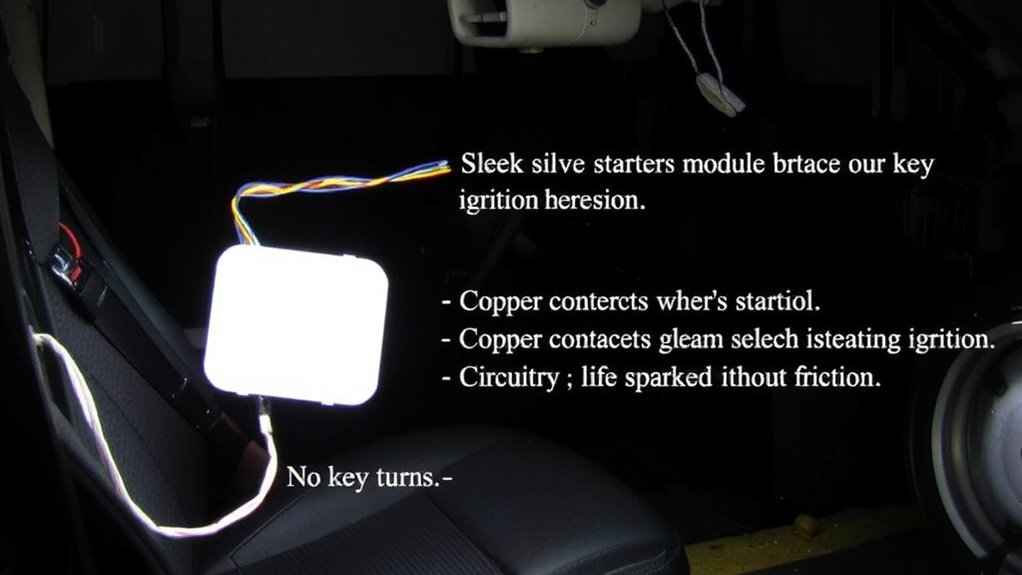
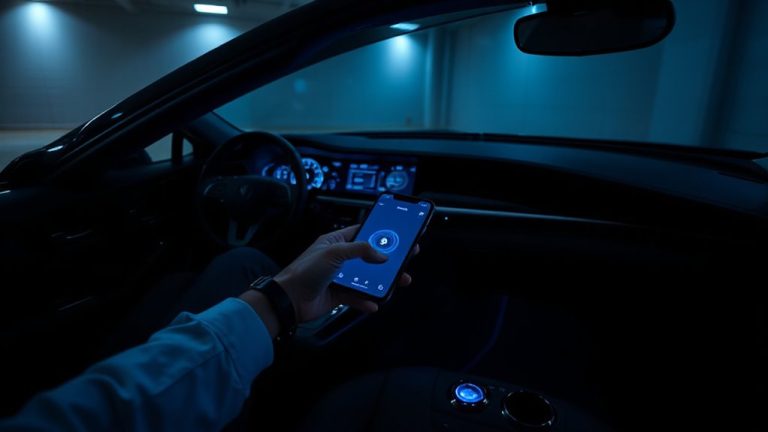
While your car’s ignition switch may fail due to worn contacts or internal mechanical issues, a remote starter can effectively bypass the problem by taking over the electrical sequence needed to start the engine. It communicates directly with the vehicle’s starter relay and fuel system, eliminating reliance on the physical ignition cylinder. The system uses a secure RF signal, typically operating at 315 MHz or 433 MHz, to trigger startup. Signal interference from nearby electronics or structures can disrupt communication, so proper antenna placement is critical. Surge protection built into quality units prevents electrical overload, protecting sensitive control modules. Most remote starters draw less than 5 amps during activation and integrate with factory wiring via a bypass module. They authenticate the vehicle’s immobilizer to maintain security. This allows reliable engine cranking even when the ignition switch is completely unresponsive. Top models like those in the Best Viper Remote Start Systems lineup offer enhanced range and seamless integration for reliable performance.
Is DIY Remote Starter Installation Safe and Practical?
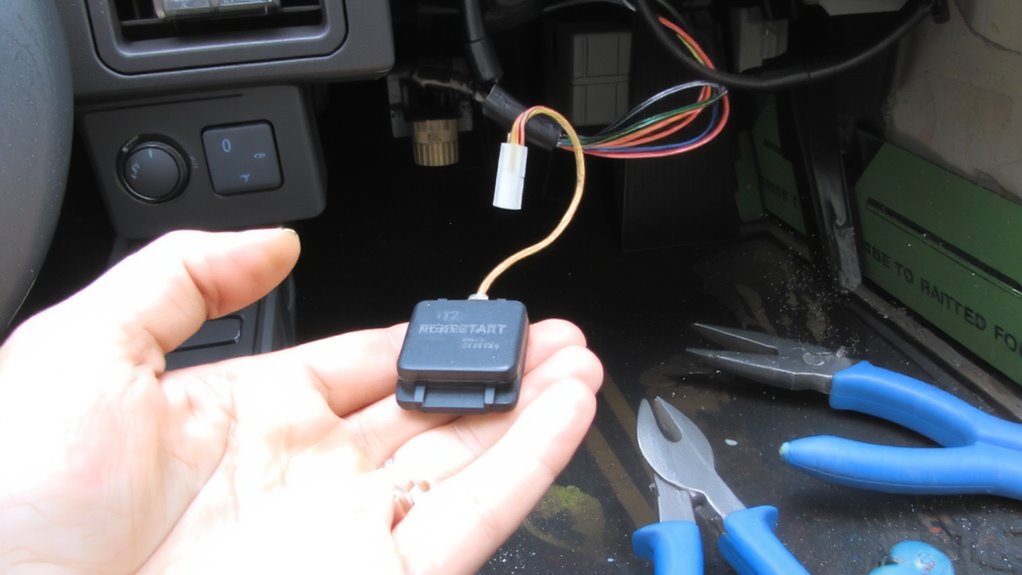
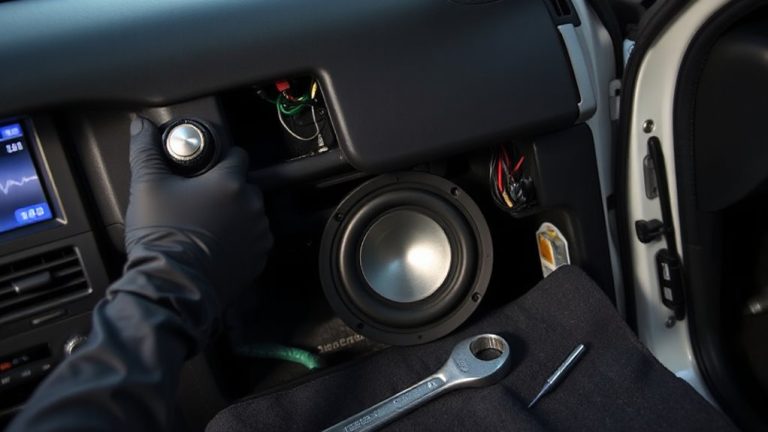
What if you could install a remote starter yourself and save hundreds? DIY installation is possible but demands technical skill. You must verify your vehicle’s wiring compatibility-mismatched circuits can damage control modules or prevent cranking. Factory anti-theft systems like PATS or PassLock require precise integration, often needing additional interface modules. Poor connections risk intermittent starts or complete failure. Signal interference from nearby electronics or building materials can reduce operational range. Most systems operate at 315 MHz or 433 MHz; walls and metal structures weaken transmission. Range typically spans 50–300 feet, depending on environment. You’ll need a multimeter, wiring diagram, and factory service manual. Incorrect splicing causes shorts or blown fuses. Manufacturers like Compustar and Crimestopper design units for specific vehicle platforms, but universal kits require careful customization. Professional installation guarantees reliability and preserves warranty coverage. Safety and precision matter-don’t rush critical connections.
Top Signs Your Ignition Switch Is Failing
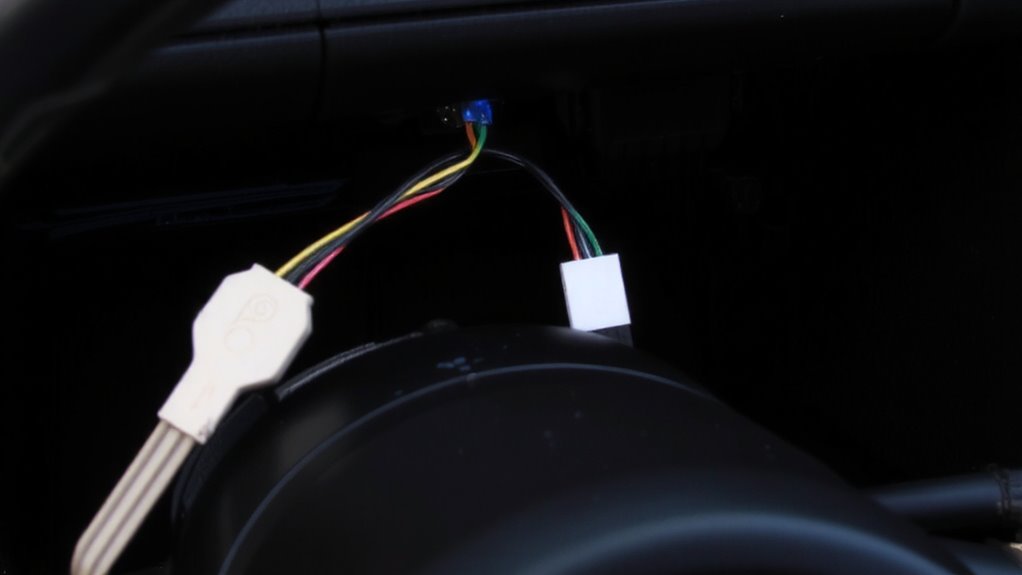
Electrical gremlins in your dashboard could point to a failing ignition switch. You might notice lights flickering or gauges dying while driving-signs of inconsistent power delivery. Intermittent electrical failures often stem from electrical corrosion inside the switch, disrupting circuits. The engine may stall suddenly, especially when driving over bumps, because vibrations break already weak connections. Key wear is another red flag; if your key feels loose or wobbles when inserted, the tumbler mechanism is likely degraded. This wear prevents full contact in the ignition cylinder. You might need to jiggle the key to start the car or keep it in an exact position to run. These symptoms indicate internal switch failure, not just a weak battery. Ignition switches typically handle 10–15 amps; when contacts degrade, resistance rises, causing voltage drops.
Should You Bypass or Replace a Bad Ignition Switch?
If your ignition switch is acting up, you might be tempted to work around it rather than fix it outright-but bypassing a faulty switch isn’t always the safer or smarter choice. Ignition failure can stem from worn contacts, faulty wiring, or internal mechanical defects, all of which degrade switch longevity. While a remote starter may temporarily restore function, it doesn’t address the root cause. Replacing the switch with an OEM-specified unit guarantees proper voltage transmission, typically 12V DC tolerance within ±0.5V, and restores full integration with the vehicle’s anti-theft system. Bypass solutions often bypass safety interlocks, increasing long-term reliability risks. A new ignition switch typically lasts 100,000 to 150,000 miles under normal conditions, compared to inconsistent performance from improvised setups. For lasting function and system integrity, replacement-not bypass-is the technically sound decision.
What Are the Dangers of Ignition Bypassing?
A temporary fix might seem convenient, but bypassing the ignition switch carries serious risks. You risk creating an unsafe electrical path that can lead to an electrical fire. Improper wiring generates excess heat, especially in circuits not rated for continuous current draw. Factory ignition circuits operate at 12 volts but aren’t designed for constant load, increasing fire hazard. Signal interference is another concern-bypass methods can disrupt communication between the ECU and starter relay. This interference may cause unintended restarts or prevent shutdown. Aftermarket remote starters introduce radio frequency signals; if poorly isolated, they induce voltage spikes in nearby wiring. These spikes mimic ignition signals, compromising system integrity. You also bypass safety interlocks like neutral safety switches, raising the chance of accidental vehicle movement. Even brief misuse can damage sensitive control modules costing over $500 to replace. Always prioritize factory-designed systems.
How to Match a Remote Starter to Your Car’s Electrical System
While no two vehicles share identical electrical architectures, selecting a compatible remote starter hinges on matching key specifications to your car’s factory system. Electrical compatibility guarantees the remote starter won’t overload circuits or disrupt existing components. You’ll need to verify voltage requirements-most systems operate at 12V DC-and confirm relay ratings align with your car’s ignition and starter motor draw. Signal integration is equally critical; the remote starter must interpret factory signals like tachometer output, brake switch activation, and door jamb inputs. Modern vehicles use encrypted data buses, so choose a model with OEM-level signal integration, such as a bypass module that mimics your key’s transponder code. Installation often requires a multimeter and wiring diagram specific to your make and model. Incorrect pairing risks error codes or no-start conditions. Always match amperage, protocol type (e.g., CAN or PWM), and immobilizer compatibility to guarantee seamless operation.
On a final note
You can use a remote starter to bypass a failing ignition switch, but it’s not a permanent fix. The system uses relay modules to simulate ignition and starter signals, typically pulling 15–20 amps during crank. Voltage must stay within 12.0–14.4 V to prevent ECU disruption. Bypassing risks electrical shorts or compromised security. Replacing the switch guarantees 100,000-cycle durability and maintains factory safety. Always match amperage and wiring gauge (usually 16–14 AWG) to your vehicle’s specifications.