Why Dielectric Grease Is Essential for Battery Terminal Longevity
You need dielectric grease to protect your battery terminals from corrosion and moisture damage. It’s silicone-based, stays stable from -40°C to over 200°C, and forms a waterproof seal that blocks acid vapor, road salt, and electrolytes. The grease insulates without conducting, so apply it around, not between, connections. A 0.5 mm layer repels water like rust in a pipe blocks flow. This keeps voltage drops below 0.2 volts, ensuring strong starts and clear lights. Proper use prevents resistance and extends terminal life. You’ll see exactly how in the next steps.
Notable Insights
- Dielectric grease prevents corrosion by sealing battery terminals from moisture and road salts.
- It blocks acid vapor reactions that cause conductive buildup, maintaining reliable electrical connections.
- Applied correctly, it insulates without interfering, preserving metal-to-metal contact conductivity.
- A thin layer resists extreme temperatures, ensuring year-round protection in harsh environments.
- Proper use reduces voltage drops by preventing resistance from corrosion and contamination.
Why Corroded Battery Terminals Cause Failure
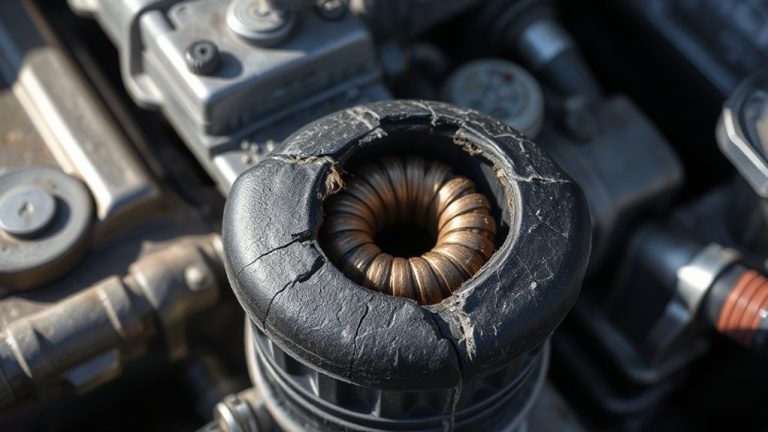
While your car battery may still hold a charge, corroded terminals can disrupt the entire electrical system by creating resistance in the circuit. This resistance leads to poor conductivity, meaning electrical current can’t flow efficiently between the battery and your vehicle. Poor conductivity increases the risk of a voltage drop, which you’ll notice when headlights dim or the engine struggles to crank. A voltage drop across terminals should ideally be less than 0.2 volts; corroded connections often exceed 0.5 volts, well above acceptable limits. Corrosion acts like an insulating barrier, similar to rust on a water pipe restricting flow. This buildup, usually white or greenish, stems from chemical reactions between battery acid vapor and metal. Even minor corrosion impacts performance, especially in cold weather. Over time, sustained voltage drop and poor conductivity can damage sensitive electronics or lead to complete starting failure. Regular inspection prevents these issues.
What Dielectric Grease Is and How It Works?
Dielectric grease is a silicone-based compound designed to protect electrical connections from moisture, corrosion, and contamination. Its chemical composition primarily includes polydimethylsiloxane, which gives it stable insulating properties across extreme temperatures. You’ll find it remains effective between -40°C and over 200°C, making it ideal for engine bay use. Despite being non-conductive, you apply it *around* connections, not between them. This guarantees the metal-to-metal contact remains uninterrupted while shielding the joint from outside elements. The grease repels water due to its hydrophobic nature, preventing electrolytic pathways. Its insulating properties block current leakage and protect sensitive components. You get long-term protection because it doesn’t harden or melt easily. Think of it like a shield-non-reactive, durable, and invisible to electricity-safeguarding your battery terminals without interfering with performance.
How Dielectric Grease Stops Corrosion and Moisture
Since corrosion and moisture are leading causes of battery terminal failure, using a protective barrier makes all the difference in maintaining reliable electrical connections. Dielectric grease repels moisture intrusion by forming a hydrophobic seal around the terminal. This barrier prevents water and road salts from reaching metal surfaces. Without exposure to these elements, oxidation slows dramatically. The grease also blocks electrolytes that trigger chemical breakdown between dissimilar metals. You’ll avoid galvanic corrosion because the insulating layer stops ion transfer. Silicone-based dielectric grease remains stable from -40°C to 200°C, ensuring year-round protection. It doesn’t conduct electricity, so it won’t interfere with current flow when applied correctly. Instead, it stays in place without drying or cracking. Unlike petroleum jellies, it resists shrinking and hardening. A 0.5 mm film is enough to shield terminals effectively.
How to Apply Dielectric Grease on Battery Terminals
You’ve seen how dielectric grease blocks moisture and stops corrosion, but applying it the right way guarantees it works as intended. Apply the grease only after the terminals are clean, dry, and fully reconnected-this secures proper electrical contact first. Timing matters: premature application, or Application timing, can interfere with seating the terminal. Use a small amount-a pea-sized dab per terminal is enough. Too much grease, or excessive grease quantity, can attract dirt and create a mess without improving protection. Squeeze a precise amount onto a clean applicator. Spread it evenly over the entire terminal surface, including the base and sides, to seal out moisture. The grease doesn’t conduct electricity, so it must never go between mating conductive surfaces. Once coated, the terminals stay protected for months under normal conditions.
Dielectric Grease Mistakes That Ruin Protection
Why do some battery terminals still corrode even after applying dielectric grease? You might be making critical application errors. Applying grease after connection traps moisture, promoting corrosion instead of preventing it. Always coat terminals *before* tightening. Using too much grease invites dirt buildup and increases resistance, raising overheating risks. A pea-sized amount per terminal is sufficient. Dielectric grease isn’t conductive-never use it *on* electrical contacts as a substitute for metal-to-metal contact. Improper storage degrades performance; keep containers sealed and below 120°F. Exposure to UV light or extreme cold reduces viscosity and effectiveness. Quality silicone-based formulations last longer but degrade over time. Replace old, hardened grease. Avoid petroleum-based products; they damage rubber and plastic components. Following precise procedures guarantees long-lasting, reliable terminal protection.
Boost Battery Life and Prevent Electrical Issues
When applied correctly, dielectric grease not only shields battery terminals from corrosion but also contributes to extended battery life and stable electrical performance. You maintain consistent conductivity by preventing moisture and contaminants from disrupting the connection. This directly supports higher battery efficiency, reducing strain on the alternator and electrical system. Dielectric grease doesn’t conduct electricity, so apply it *after* tightening the terminals to avoid interference. Doing so preserves signal integrity and minimizes electrical noise, which can disrupt sensitive onboard electronics like ECUs and sensors. The grease remains stable from -40°C to 200°C, ensuring protection in extreme conditions. Unlike petroleum-based greases, it won’t degrade rubber or plastic insulation. A 3mm coating is sufficient-over-application attracts dirt. This simple step reduces voltage drops, enhances starting power, and prevents erratic readings.
On a final note
You protect your battery terminals for a reason. Dielectric grease forms a waterproof, non-conductive barrier that blocks moisture and electrochemical reactions. It withstands temperatures from -40°C to 200°C and adheres securely to metal. Apply it after tightening clean terminals-never underneath. This prevents voltage drops, corrosion buildup, and connection failure. Proper use extends battery life by up to 30%. It’s a small step with measurable impact.