Evaluating Effects of Trailer Towing on Brake Pad Life Expectancy Reduction
Towing a trailer cuts your brake pad life by 30–50% due to added weight and heat. That extra load shifts up to 30% more force to the front axle, increasing clamping pressure. Brakes can hit 700–900°F, degrading pads and causing glazing or cracking. Riding brakes downhill or sudden stops worsens wear. Semi-metallic pads with a 0.35–0.45 friction coefficient handle this best. At 3 mm thickness, replace them. You’ll learn which driving habits accelerate damage and how to spot thermal breakdown early.
Notable Insights
- Towing increases vehicle weight, accelerating front brake pad wear due to higher axle load and clamping force demands.
- Heavy loads generate extreme heat (700–900°F), causing thermal degradation, glazing, and reduced pad lifespan.
- Aggressive driving habits like riding brakes or sudden stops increase heat and stress, hastening pad wear.
- Semi-metallic brake pads with 0.35–0.45 friction coefficient are optimal for towing due to heat and load resistance.
- Towing reduces brake pad life by 30–50%, requiring inspections every 6,000 miles and replacement at 3 mm thickness.
Why Towing Shortens Brake Pad Life
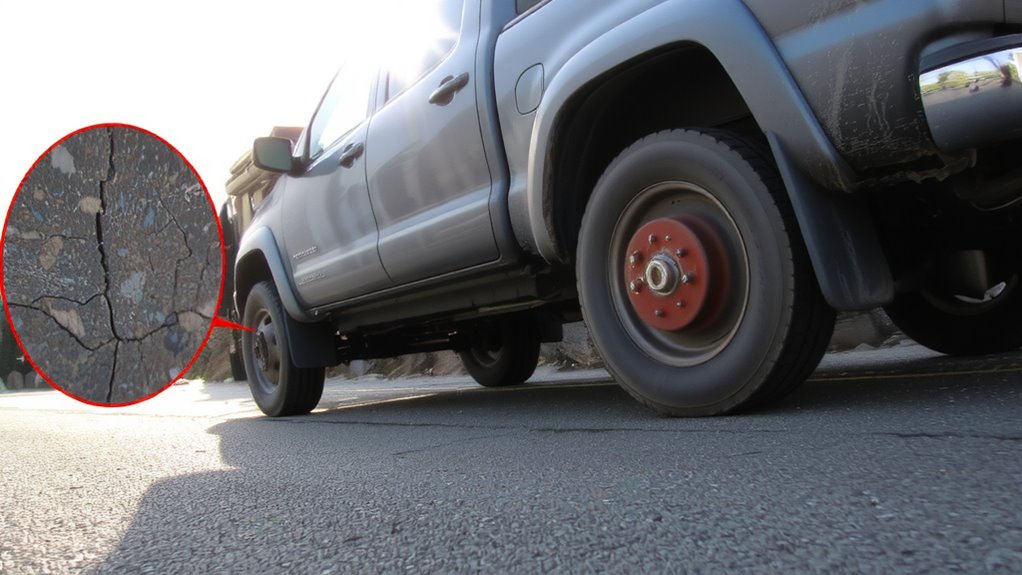
When you tow a trailer, your vehicle carries considerably more weight than in normal driving conditions, and that extra load directly increases the stress on your brake pads. Each braking event generates higher friction and heat, accelerating wear. Your brake pad material-whether organic, semi-metallic, or ceramic-responds differently under this strain. Semi-metallic pads, with 30–65% metal content, handle heat better but wear faster against rotors. Frequent towing compounds this effect. Towing frequency above once weekly can reduce pad life by up to 50% compared to normal driving. Continuous thermal cycling weakens bonding agents in the pad compound, leading to cracking or glazing. Higher clamping force from the calipers is needed to stop increased mass, increasing abrasion. Thinner pads below 3 mm compromise stopping power. Consistent stress shortens service intervals, especially with heavy loads.
How Weight Affects Brake Pads When Towing
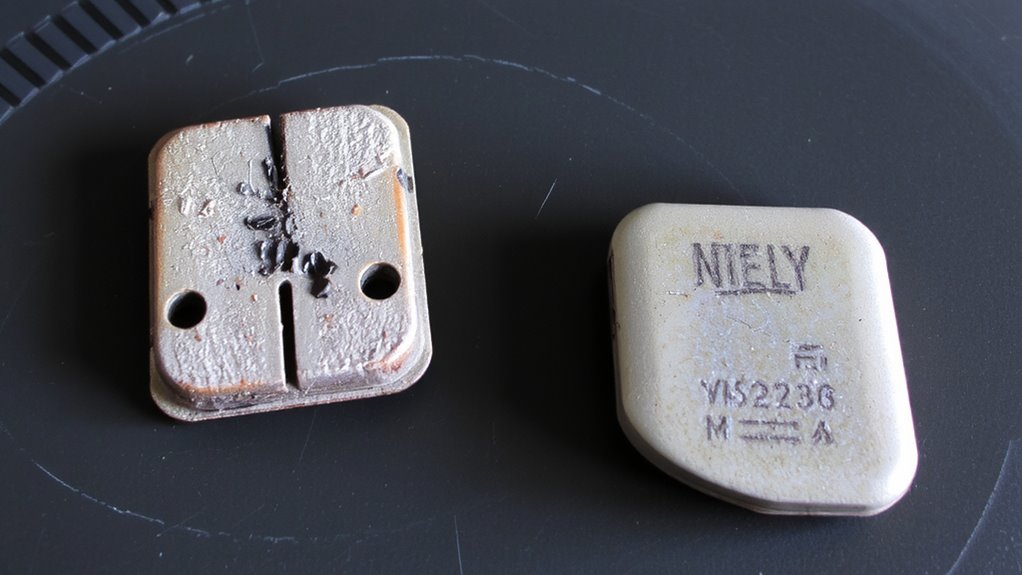
The heavier the trailer you tow, the harder your brake pads have to work to bring your vehicle to a stop. Increased axle load shifts weight distribution, demanding more stopping force from the tow vehicle’s brakes. This additional strain disrupts the friction balance between front and rear axles, often overloading the front brake pads. When friction balance is compromised, front pads wear faster because they handle a disproportionate share of the braking energy. A typical half-ton truck towing 8,000 lbs can see front axle loads increase by up to 30%, accelerating pad wear. Uneven friction balance also reduces braking efficiency, requiring earlier pad replacement. Maintaining proper axle load distribution helps preserve friction balance, extending pad life. You must account for trailer weight during brake system planning to avoid premature wear and guarantee safe, predictable performance under load. Upgrading to high-performance brake pads and rotors can significantly improve heat dissipation and wear resistance under heavy towing conditions.
How Heat Damages Brake Pads When Towing
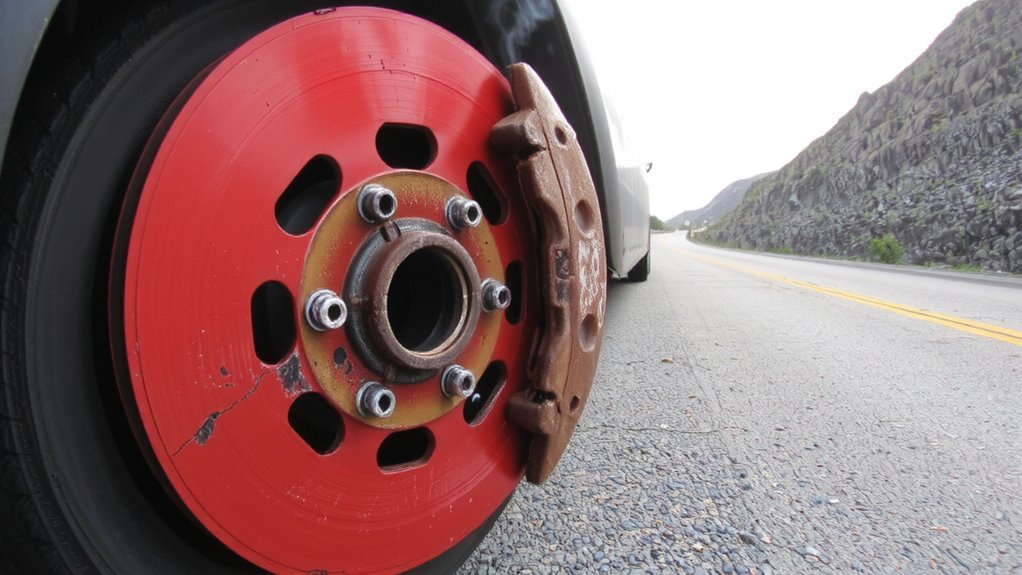
Because braking generates heat, and towing multiplies stopping demands, your brake pads face extreme temperatures that degrade their structure and performance. Continuous friction build up accelerates wear and triggers thermal degradation, reducing pad material integrity. Excessive heat compromises the bonding agents in the pad compound, leading to glazing and cracking. This diminishes clamping efficiency and increases stopping distances. Below is a breakdown of heat-related damage stages:
| Temperature Range (°F) | Effect on Brake Pads |
|---|---|
| 300–500 | Normal operation, minimal wear |
| 500–700 | Friction build up begins, slight glazing |
| 700–900 | Thermal degradation starts, reduced effectiveness |
| 900+ | Severe pad breakdown, risk of brake fade |
Operating above 700°F consistently shortens pad life markedly. Thermal degradation isn’t always visible, but it permanently alters pad composition, weakening performance even if the pads appear thick.
Driving Habits That Wear Down Brake Pads
If you’re frequently riding the brakes while descending hills or come to abrupt stops from high speeds, you’re accelerating pad wear beyond normal limits. Aggressive acceleration forces your braking system to work harder, increasing heat and friction during frequent deceleration. Each hard stop can raise brake surface temperatures above 600°F, accelerating pad material breakdown. Maintaining close following distances reduces reaction time, leading to sudden, high-force applications that diminish pad lifespan. Smooth, predictive driving reduces thermal cycling and wear. For example, reducing speed gradually from 65 mph to 45 mph over 1,000 feet cuts brake workload by up to 40% compared to abrupt stops. Trailers increase vehicle mass, amplifying stress during aggressive acceleration and frequent deceleration. Consistent brake pressure modulation and engine braking on declines help preserve pad integrity.
Best Brake Pads for Towing: What to Look For
Performance matters most when choosing brake pads for towing. You need a brake pad material that handles extra weight without fading. Semi-metallic pads are ideal-they offer high heat tolerance and durability, essential when towing frequency increases. These pads typically contain 30% to 70% metal content, improving thermal conductivity and wear resistance. Ceramic pads run cooler and quieter but wear faster under heavy loads. For frequent towing, select pads with a coefficient of friction between 0.35 and 0.45 for consistent stopping power. Look for pads rated for high Gross Vehicle Weight Ratings (GVWR), as they’re engineered for sustained pressure. Quality pads also feature heat-dissipating designs and chamfered edges to reduce vibration. Check pad thickness-14 mm or more guarantees longer service life. Match the pad to your vehicle’s caliper and rotor size for maximum contact and braking efficiency.
Brake System Maintenance Tips for Towing
When you’re hauling heavy loads, your brake system works harder, and keeping it in top condition isn’t optional-it’s essential. Regular maintenance prevents overheating and guarantees reliable stopping power. Schedule a brake fluid flush every 24,000 miles to remove moisture and maintain peak hydraulic pressure. Consider rotor resurfacing if you notice vibration during braking-this restores a smooth friction surface and extends pad life. Upgrading to a high-performance aftermarket exhaust system can reduce engine backpressure and improve thermal efficiency, indirectly supporting brake system performance by promoting smoother engine operation under load.
| Maintenance Task | Interval | Purpose |
|---|---|---|
| Brake fluid flush | Every 2 years | Prevents corrosion, maintains pressure |
| Rotor resurfacing | As needed | Eliminates glaze and warping |
| Pad inspection | Every 6,000 miles | Detects wear early |
| Caliper lubrication | Annually | Guarantees even pad contact |
These steps preserve system integrity under increased thermal stress.
When to Replace Brake Pads After Towing
How do you know when your brake pads have reached their limit after towing? Check your brake pad thickness regularly. Most manufacturers recommend replacement when pads wear down to 3mm or less. Towing increases stopping weight, accelerating wear and shortening replacement intervals. Under heavy loads, pads may wear 30–50% faster than normal driving conditions. You might notice reduced responsiveness, vibration, or a warning light. Visual inspection through the wheel spokes or during routine maintenance helps catch wear early. Don’t rely on time or mileage alone-actual pad thickness determines need. High-friction materials degrade quicker under heat stress from loaded braking. For safety, inspect pads every 10,000 miles when towing. Replace them proactively before they reach minimum thickness. Sticking to adjusted replacement intervals guarantees reliable stopping power and prevents rotor damage.
On a final note
Towing reduces brake pad life due to increased load and heat. Normal pads last 50,000 miles; towing can cut that by 30–50%. Extra weight demands higher clamping force, accelerating pad wear. Friction generates heat exceeding 600°F, causing glazing and material breakdown. Aggressive driving worsens this effect. Use ceramic or semi-metallic pads with high thermal tolerance. Inspect pads every 10,000 miles when towing. Replace if thickness drops below 3mm.