Understanding Ceramic Coating Chemistry and Its Long-Term Benefits in Car Maintenance
You get lasting protection because ceramic coating bonds chemically with your car’s paint, forming a transparent shield 2–4 microns thick. It’s made of SiO₂, creating a cross-linked, glass-like layer that resists UV, heat, and chemicals. This durable coating lasts 2–5 years, with hydrophobic angles over 110°, blocking dirt, acid rain, and fading. Professional application guarantees uniform thickness and longevity. You’ll see how maintenance choices directly impact performance and lifespan.
Notable Insights
- Ceramic coating uses SiO₂ to form a covalent bond with paint, creating a durable, glass-like protective layer.
- The cross-linked silica structure resists UV damage, preventing paint oxidation and long-term color fading.
- With a thickness of 2–4 microns, the coating adds protection without altering the paint’s appearance.
- Hydrophobic properties repel water and contaminants, maintaining shine and reducing cleaning frequency.
- Professional application ensures longevity of 3–5 years, offering superior durability compared to DIY alternatives.
What Is Ceramic Coating and How Does It Work?
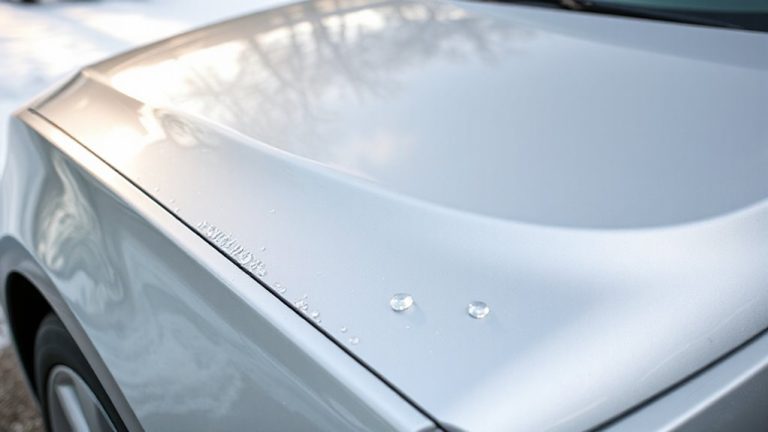
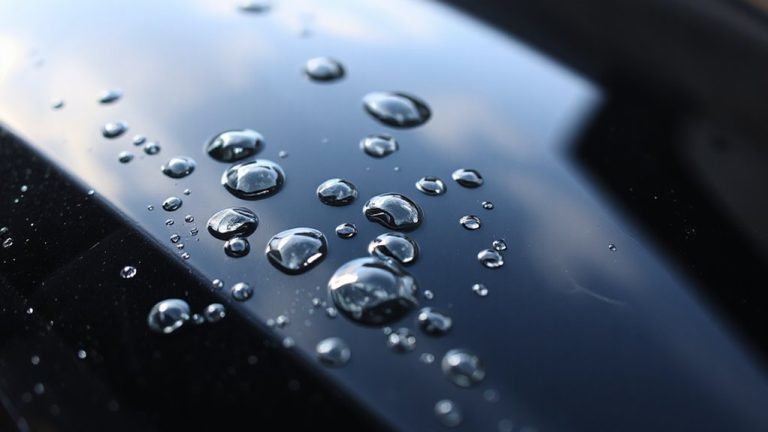
A protective shield for your car’s paint, ceramic coating is a liquid polymer applied by hand to the exterior surfaces. It bonds chemically with the factory clear coat, forming a durable, transparent layer typically 2–3 microns thick. This coating offers exceptional hydrophobic properties, causing water and contaminants to bead and roll off the surface. The contact angle of water often exceeds 100 degrees, minimizing water spotting and simplifying cleaning. You also gain long-term chemical resistance, protecting against etching from acidic pollutants, bird droppings, and road salts. Unlike waxes, which last weeks, ceramic coatings endure 2–5 years with proper care. They don’t scratch-proof your car but greatly reduce surface degradation. The coating’s effectiveness hinges on correct application-surface decontamination and precise curing guarantee strong adhesion. You’re not just adding shine; you’re enhancing molecular-level protection. Many top-performing protection solutions come in the form of ceramic coating kits, which include all necessary prep and application tools for at-home use.
How SiO₂ Creates a Durable Shield on Car Paint
Silicon dioxide-SiO₂-is the backbone of ceramic coatings, and it’s what gives them their remarkable toughness. When applied, SiO₂ undergoes chemical bonding with the car’s paint, forming covalent bonds at the molecular level. This reaction creates a cross-linked, glass-like layer that’s resistant to heat, UV radiation, and minor abrasions. The strength of this bond depends on proper surface preparation-contaminants weaken surface adhesion, compromising durability. Once cured, the coating reaches a hardness of 9H on the pencil hardness scale, markedly harder than factory paint. Its thickness typically ranges from 2 to 4 microns, offering protection without altering the paint’s appearance. Unlike waxes or sealants, SiO₂ doesn’t wash away. It gradually wears down instead. This molecular fusion means your car’s surface isn’t just coated-it’s reinforced. Many top-rated products in the best car ceramic coatings category leverage this SiO₂ chemistry to deliver long-lasting protection and gloss.
How Ceramic Coating Protects Against Sun, Dirt, and Chemicals
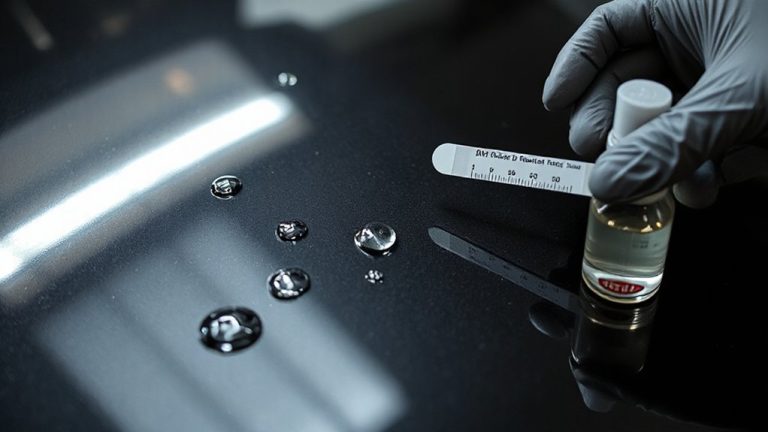
While UV rays and environmental contaminants constantly attack your car’s paint, a ceramic coating acts as a sacrificial barrier designed to take the damage instead. Its molecular structure provides strong UV resistance, preventing oxidation and paint fading over time. The coating bonds covalently with the factory clear coat, forming a cross-linked silica layer typically 2–4 microns thick. This layer resists acid rain, bird droppings, and road grime. A key feature is the hydrophobic layer it forms, causing water to bead and roll off, carrying dirt with it. Contact angle measurements exceed 110°, confirming high water repellency. This minimizes surface dwell time for contaminants. The coating’s density limits chemical penetration, protecting against alkaline and acidic substances. Unlike wax, it doesn’t dissolve in heat. Your paint stays cleaner longer, with reduced washing frequency and less risk of etching or staining. For optimal protection, consider using one of the best ceramic coating kits available on the market today.
How Long Does Ceramic Coating Last?
Most ceramic coatings last between two and five years, with some high-end products claiming up to ten years of protection under ideal conditions. Your coating’s lifespan depends on formulation quality, application precision, and ongoing maintenance. Coating degradation occurs gradually due to UV exposure, pH fluctuations, and abrasive contaminants. Environmental impact accelerates this process-acid rain, road salt, and industrial fallout compromise the silica-based matrix over time. Most coatings measure 2–5 microns thick, forming a hydrophobic, cross-linked layer that resists etching up to pH 11. However, repeated exposure to harsh conditions reduces contact angle performance, diminishing water beading and dirt repellency. Regular decontamination and pH-neutral washing slow degradation. Protective efficacy doesn’t vanish overnight; it declines incrementally. You’ll notice reduced slickness and sheeting action as the coating wears. Proper care maximizes durability, but even under ideal conditions, molecular breakdown is inevitable.
DIY vs Pro: Which Ceramic Coating Option Lasts Longer?
You get what you pay for when it comes to ceramic coating longevity, and that starts with who applies it. Professional installers use a controlled environment and precise application method, ensuring even cross-linking of SiO₂ molecules for maximum durability-typically 3 to 5 years. DIY kits often result in inconsistent layer thickness and premature degradation due to improper surface prep or technique. A professional application takes 1–2 days, includes decontamination, paint correction, and multiple coating layers, while DIY attempts average 4–6 hours with minimal prep. In cost comparison, pros charge $500–$2,500 depending on vehicle size and coating grade, whereas DIY kits range from $50–$200. Despite the lower upfront cost, DIY coatings often last under 18 months, making them less cost-effective over time due to reapplication needs.
How to Maintain Ceramic Coating for Lasting Shine
A single layer of ceramic coating can last years-but only with consistent, correct maintenance. Surface cleaning is critical; use pH-neutral shampoos every two weeks to avoid degrading the SiO₂ bond. Never apply wax-ceramic coatings are non-porous and hydrophobic, making wax application unnecessary and potentially damaging due to solvent content. Instead, maintain protection with silica-based boosters every 3–6 months.
| Routine | Product Type | Frequency |
|---|---|---|
| Surface cleaning | pH-neutral shampoo | Every 2 weeks |
| Decontamination | Iron remover & clay bar | Every 6 months |
| Top-up treatment | Silica spray sealant | Every 3 months |
| Wax application | Not recommended | Never |
Inspect water sheeting behavior monthly. Poor beading indicates contamination or coating wear. For best results, avoid automatic car washes-they trap dirt and degrade the coating surface faster than hand washing.
On a final note
You now understand ceramic coating’s chemistry and long-term value. It forms a covalent bond with paint using SiO₂, creating a hydrophobic, cross-linked silica layer up to 9H pencil hardness. This shield resists UV degradation, chemical etching, and contaminant adhesion. Properly maintained, professional coatings last 2–5 years. Regular decontamination and pH-neutral washing preserve its oleophobic properties. Unlike waxes, it doesn’t break down in 3 months. Your investment protects resale value and reduces maintenance frequency.