Cold Weather Manual Transmission Shifting: Synchromesh & Oil Guide
Cold thickens your gear oil, slowing lubrication to synchromesh components. At -40°C, 75W-90 oil can exceed 150,000 cP, restricting flow. High viscosity hampers synchronizer movement and delays cone engagement. Thick oil increases drag on blocker rings, causing notchy shifts. Metal contraction in freezing temps further reduces clearance. Your transmission needs time to warm up for smooth operation. You’ll discover how the right oil choice and driving habits reduce winter shifting issues.
Notable Insights
- Cold temperatures increase gear oil viscosity, slowing oil flow and delaying lubrication to synchromesh components.
- Thickened oil reduces synchromesh efficiency by impeding blocker ring and cone surface synchronization.
- High viscosity at low temperatures causes notchy shifting due to delayed synchronizer engagement.
- Standard 75W-90 gear oil can exceed 150,000 cP at -40°C, severely limiting cold-weather performance.
- Modern transmissions with tight synchronizer clearances experience increased drag and shift difficulty in cold starts.
Why Your Manual Transmission Feels Stiff in Cold Weather
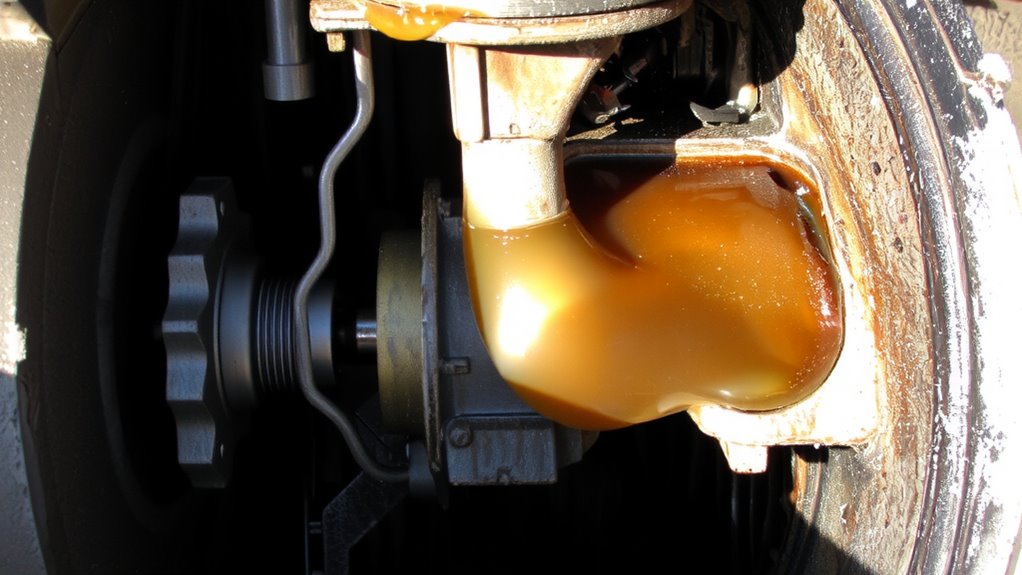
Your transmission’s stiffness in cold weather starts with the gear oil. When temperatures drop, oil viscosity increases, reducing flow and delaying lubrication to critical components. This thickened oil hampers synchromesh engagement, forcing you to apply more force during shifts. Poor shift timing results as synchronizers struggle to match gear speeds. Over time, inadequate lubrication accelerates gear wear, especially on blocker rings and cone surfaces. Standard 75W-90 gear oil can thicken to over 150,000 cP at -40°C, exceeding design specifications for smooth engagement. Even modern manual transmissions, designed for 1.5–2.0 millimeter synchronizer clearance, face increased drag. You’ll notice notchy shifts until operating temperature is reached. Extended cold operation degrades shift feel and promotes metal-to-metal contact. Using a low-viscosity synthetic oil improves cold-flow properties, maintaining shift precision. Proper maintenance reduces wear and preserves shift timing.
How Cold Thickens Gear Oil and Slows Lubrication
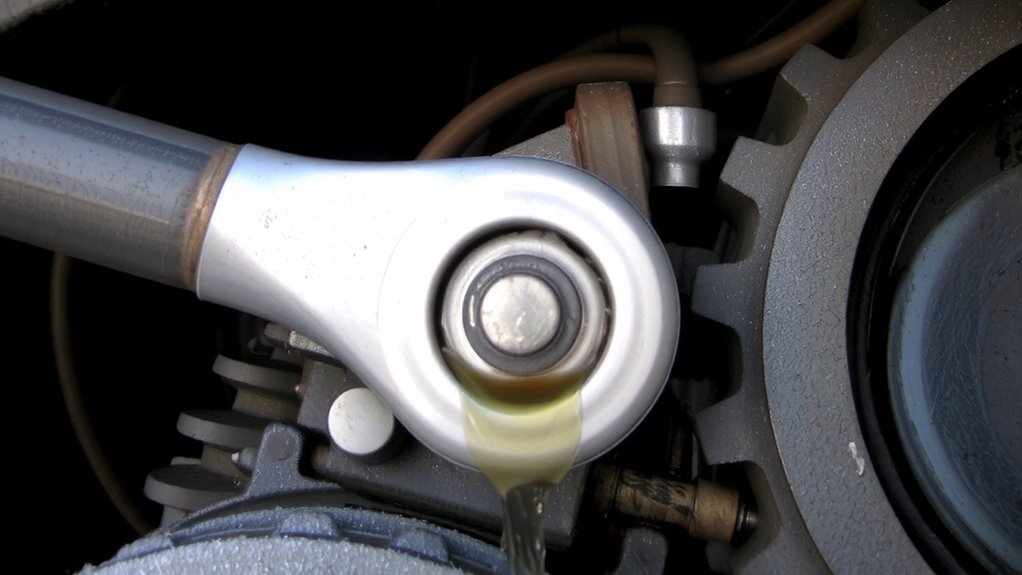
When temperatures drop, gear oil thickens considerably due to increased viscosity, reducing its ability to flow freely through the transmission. You’ll notice this as sluggish shifting because high oil viscosity impedes proper synchromesh engagement. At 0°F (-18°C), some conventional 80W-90 oils can reach viscosities over 150,000 cP, far exceeding ideal flow rates. This diminished cold flow means lubricant pools instead of coating gears and bearings efficiently. Multi-grade oils like 75W-90 maintain better cold flow, with winter ratings indicating performance at low temperatures-75W oils must pass MRV tests at -40°C, guaranteeing pumpability. Poor cold flow delays lubrication, increasing wear during startup. Synthetic oils outperform mineral-based counterparts, maintaining stable oil viscosity across wide temperature ranges. You’re better protected when using properly rated fluids, as they guarantee consistent cold flow and reduce the risk of inadequate lubrication during critical warm-up periods.
Why Cold Metal Causes Gear Crunching
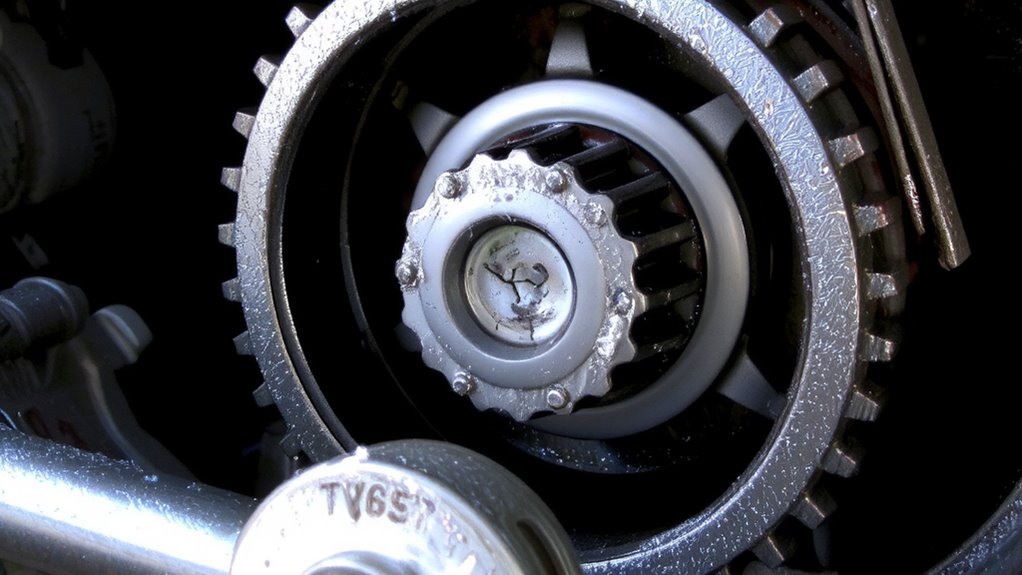
Cold metal components in a manual transmission contract markedly as temperatures fall, altering the precision gaps between gears, shafts, and synchronizers. Metal contraction reduces critical tolerances-often designed to operate within ±0.05 mm-causing misalignment during shifts. As aluminum housings and steel gears cool, they shrink at different rates due to distinct thermal coefficients, disrupting synchronization. This mismatch prevents smooth engagement, leading to gear crunching. While gear expansion occurs when warm, cold conditions negate this balance. Synchronizer rings can’t compensate for abrupt dimensional changes, especially below -10°C. The result? Abrasive metal-on-metal contact during shifts. Even minor contraction interferes with cone clutch coupling, increasing drag torque. You feel it as a harsh grind. These tight, cold-clearance issues persist until operating temperature restores design specifications.
What Poor Oil Flow Does to Shifting
How does thickened oil undermine shift quality in freezing conditions? Cold, viscous oil flows sluggishly, delaying lubrication to critical synchromesh components. You’ll notice rough shifts and increased resistance when changing gears. Without proper flow, oil can’t form a protective film, accelerating gear wear over time. Metal-on-metal contact rises, especially in first and second gears, where torque loads exceed 150 Nm during normal shifts. That lack of cushioning also leads to shift shock-sudden, jarring engagement that stresses the entire drivetrain. Shift shock isn’t just uncomfortable; it can damage splines and synchronizer rings, reducing transmission lifespan by up to 30% under repeated stress. Original equipment manufacturers typically specify 75W-90 GL-4 oil, but in sub-zero temps, even this grade can thicken beyond ideal viscosity-exceeding 150,000 cP at -40°C. Poor flow means poor protection.
Best Winter Driving Habits for Manual Transmissions
You can minimize transmission wear in winter by adjusting how you drive. Begin with engine preheating: let the engine idle for 30–60 seconds after startup to allow oil to circulate and reduce cold-shifting resistance. This improves synchromesh engagement by guaranteeing adequate lubrication reaches gear synchronizers. Avoid aggressive revving; instead, drive gently in first and second gears to promote clutch warming. A warmed clutch disc engages more smoothly, reducing slippage and wear. Maintain engine RPM slightly above idle-around 1,500–2,000-during gear changes to match input and output shaft speeds. Use short-shift techniques to limit drivetrain shock. Guarantee full clutch depression before shifting to prevent grinding. Allow extra time between shifts in extreme cold, letting components synchronize gradually. These habits extend transmission life by supporting oil flow and reducing mechanical stress during thermal transients.
The Right Gear Oil for Freezing Temperatures
Many drivers underestimate the impact of viscosity on gear operation in subzero conditions, but selecting the right gear oil can make a critical difference. You need a lubricant with low-temperature synthetic viscosity to guarantee smooth flow at -40°C. Traditional mineral oils thicken drastically in cold, slowing synchromesh engagement and increasing wear. High-quality synthetic oils maintain consistent fluidity due to uniform molecular structure. Check for 75W-90 or 75W-85 ratings-these indicate peak winter performance. The “W” stands for winter, and lower numbers mean better cold-flow properties. Oil additives like molybdenum disulfide reduce friction and protect gears during cold starts. These additives also prevent sludge buildup over time. Always verify compatibility with your transmission manufacturer’s specifications. Using the correct synthetic blend guarantees rapid oil flow rate, immediate lubrication, and reliable shifting. Don’t risk damage-your transmission depends on it. For dependable performance, consider one of the Best 75W90 Gear Oil Picks that meet strict low-temperature and wear protection standards.
On a final note
Cold reduces synchromesh efficiency by thickening oil. Thicker 75W-90 gear oil flows slower, delaying lubrication to brass synchronizers. Metal gears contract, increasing clearances and causing crunching. Poor oil flow raises shift effort by up to 40% at -20°C. Use a synthetic 75W-80 oil for faster cold-flow-measured viscosity under 150,000 cP at -40°C guarantees reliable pumpability. Pre-warm the transmission for 2–3 minutes. Shift smoothly until operating temperature reaches 80°C.