Maximizing Engine Efficiency Through Regular Maintenance Tasks: Tips for Keeping Valves Clean, Adjusting Timing Belts, and Performing Other Critical Upkeep Measures
You keep your engine efficient by cleaning valves to maintain proper compression and airflow, boosting volumetric efficiency by 7–12%. Replace the timing belt every 60,000 to 100,000 miles and maintain 18–22 pounds of tension. Change air filters annually and clean the throttle body every 30,000 miles. Use detergent-rich fuel and clean injectors every 15,000 miles to prevent carbon buildup. There’s more to optimizing performance just ahead.
Notable Insights
- Clean valves improve sealing and airflow, boosting combustion efficiency and volumetric efficiency by 7–12%.
- Replace timing belts every 60,000 to 100,000 miles and check tension regularly to prevent catastrophic engine failure.
- Maintain a clean air intake system by replacing filters annually and cleaning the throttle body every 30,000 miles.
- Replace spark plugs at manufacturer-recommended intervals and verify proper gap and torque for optimal ignition.
- Prevent carbon buildup with fuel additives and perform periodic fuel injector cleaning every 15,000 miles.
How Clean Valves Boost Engine Efficiency
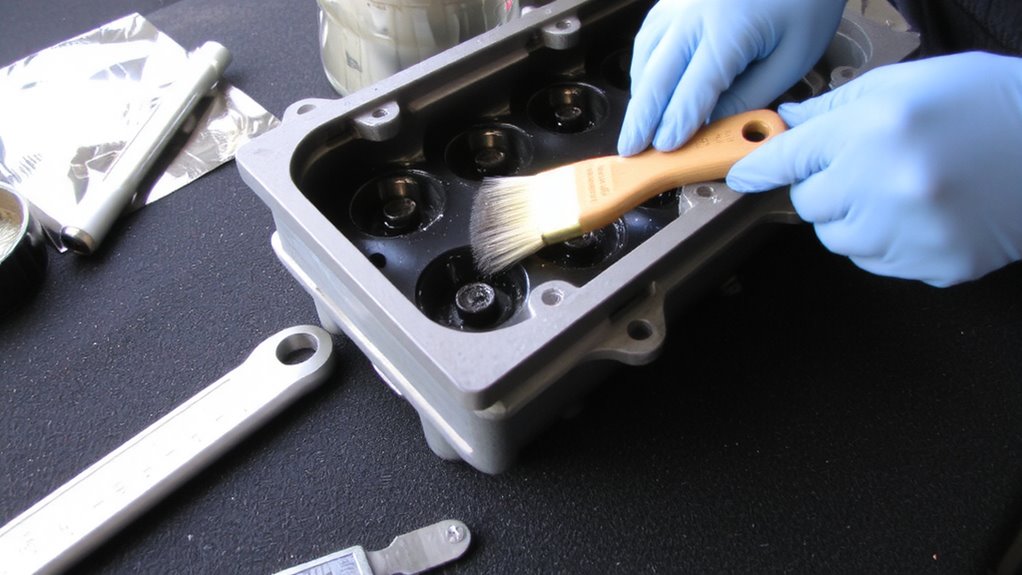
When your engine’s valves stay clean, they seal tightly and maintain proper compression, which is critical for efficient combustion. Deposits disrupt valve operation, reducing compression and combustion efficiency. A protective valve coating minimizes carbon buildup, preserving lift and duration specifications. This guarantees precise timing and peak cylinder filling. Clean valves improve airflow dynamics, allowing smoother intake and exhaust flow. Improved airflow dynamics translate to a 7–12% increase in volumetric efficiency, as verified in dynamometer tests on multi-cylinder engines. Turbulence decreases, promoting better fuel atomization and flame propagation. Valve stem deposits can increase operating temperature by up to 50°F, accelerating wear. Regular use of detergent-rich fuels combats this. A clean valve train maintains design tolerances-typically 0.002–0.006 inches lash-and sustains factory lift profiles. Over time, this preserves power output, reduces emissions, and extends component life.
Stop Timing Belt Failure Before It Happens
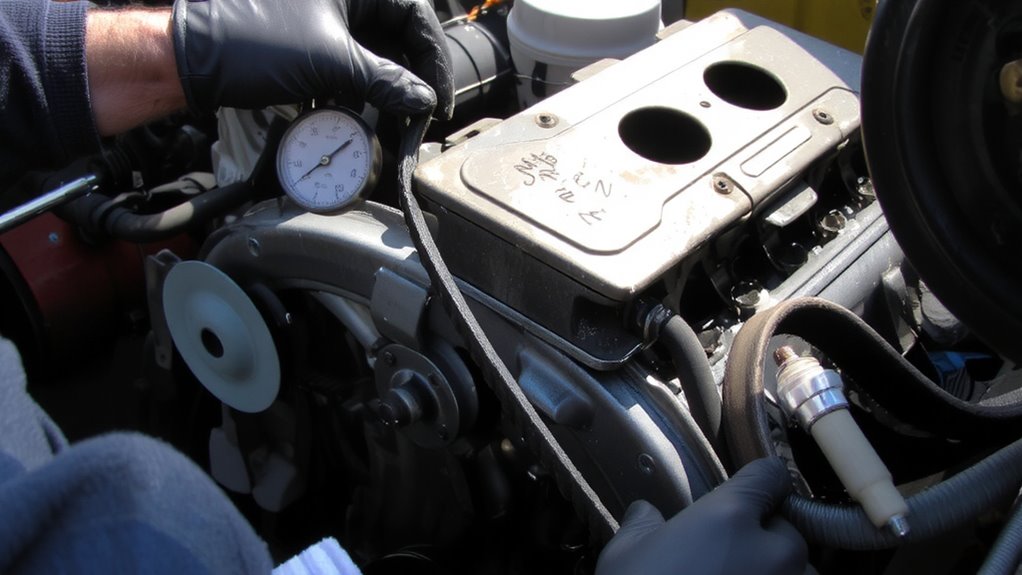
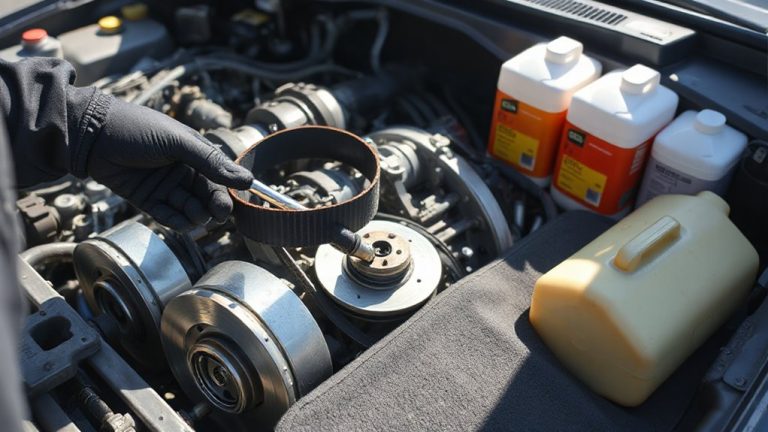
Why do timing belts fail just when you least expect it? Because wear happens gradually, but failure strikes suddenly. You can prevent it with regular belt tension and alignment check routines. Ignoring these leads to cracked teeth, skipping, or snapped belts-costing you downtime or engine damage. Replace your belt every 60,000 to 100,000 miles, depending on manufacturer specs. Use a tension gauge for accuracy-typically 18–22 pounds of force. Perform an alignment check with a straightedge tool.
| Inspection Step | Tool Required | Specification |
|---|---|---|
| Belt tension check | Tension gauge | 18–22 lbs force |
| Pulley alignment check | Straightedge | <0.03" deviation per inch |
| Visual damage check | Flashlight | No cracks, fraying, glazing |
| Mileage verification | Service records | Replace at 60k–100k miles |
Keep Air Intake Systems Clean for Better Combustion
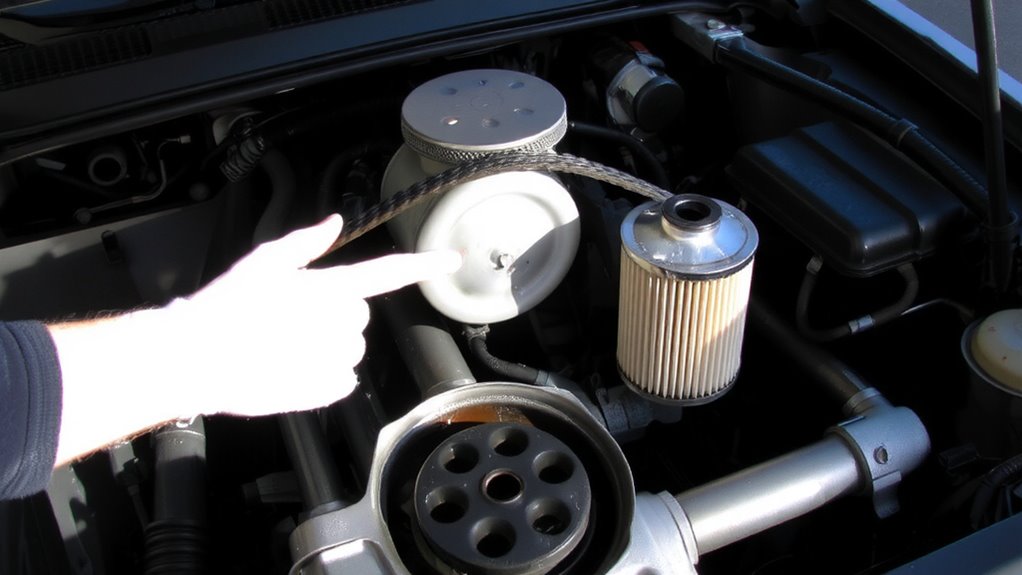
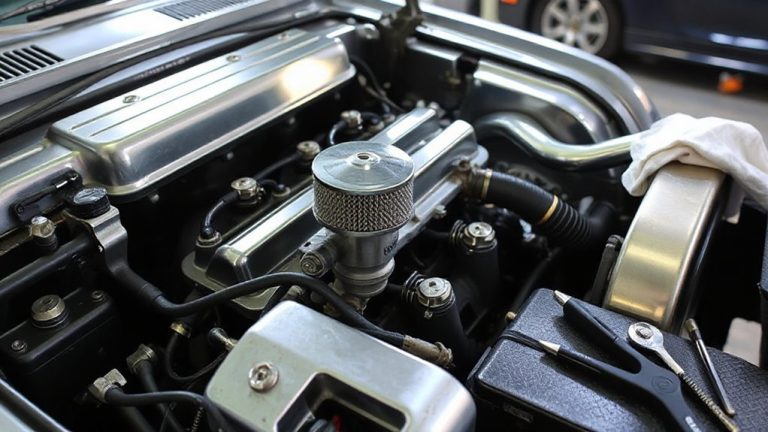
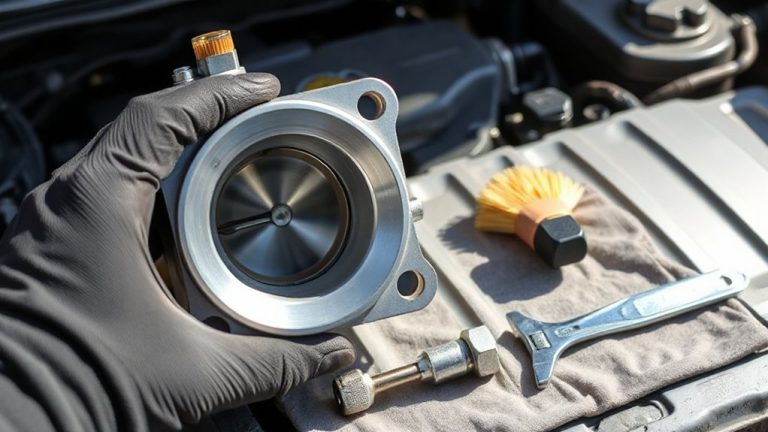
A clean air intake system keeps your engine running at peak efficiency, just like regular timing belt checks prevent catastrophic failure. Dirty air filters restrict airflow, reducing combustion efficiency and increasing fuel consumption by up to 10%. Replace your air filters every 12,000 to 15,000 miles, or every 12 months, to maintain maximum airflow. A clogged filter forces the engine to work harder, decreasing horsepower and increasing emissions. The throttle body, responsible for regulating air entering the engine, accumulates carbon deposits over time. These deposits disrupt airflow and can cause rough idling or poor acceleration. Clean the throttle body every 30,000 miles using a manufacturer-approved cleaner. Proper maintenance guarantees accurate air-fuel mixture ratios, improving combustion efficiency and engine performance. Preventative care of air filters and the throttle body directly supports consistent power delivery and long-term engine reliability.
Replace Spark Plugs for Optimal Engine Efficiency
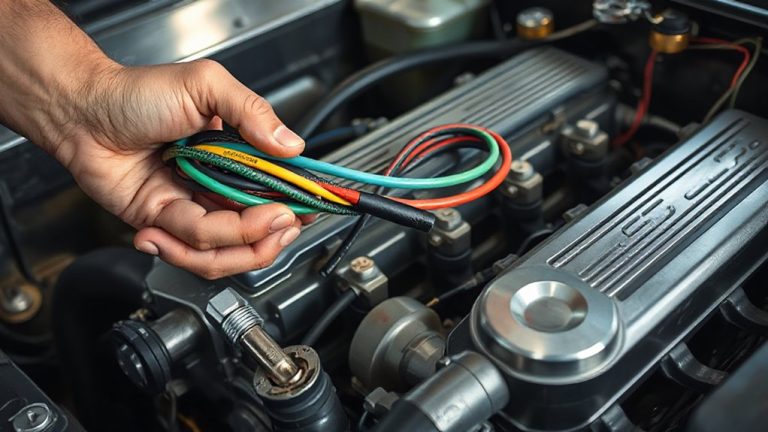
Spark plugs are the heartbeat of your engine’s ignition system, and keeping them in top condition guarantees each cylinder fires with precision. Worn or fouled spark plugs disrupt combustion, leading to ignition misfires and reduced power. You should replace them every 30,000 to 100,000 miles, depending on type-copper, platinum, or iridium. Over time, electrode wear widens spark plug gaps, weakening spark intensity. Most modern engines require gaps between 0.028 and 0.060 inches, per manufacturer specs. Use a gap tool to verify spacing before installation. Properly gapped plugs guarantee maximum spark energy and combustion efficiency. Ignition misfires increase emissions and strain the catalytic converter. Installing the correct heat range plug prevents pre-ignition and carbon buildup. Following factory torque specs-usually 10–20 ft-lbs-avoids thread damage. Fresh, correctly installed spark plugs restore throttle response, improve fuel economy by up to 4%, and maintain peak engine efficiency. For Mercedes C300 owners, selecting the best spark plugs for Mercedes C300 ensures compatibility and optimal performance.
Remove Carbon Buildup That Hurts Performance
Over time, even well-maintained engines accumulate carbon deposits in the combustion chamber, on intake valves, and around the piston crowns-especially with frequent short trips or low-quality fuel. Left unchecked, these deposits reduce combustion efficiency, increase emissions, and diminish horsepower. You need effective valve decarbonization methods to restore airflow and proper valve sealing. Professional walnut-shell blasting removes stubborn intake valve buildup without damaging components. For combustion chamber cleaning, use chemical decarbonizing agents introduced through the induction system or oil filler port. These dissolve carbon while the engine runs, freeing deposits without disassembly. Some treatments reduce carbon mass by up to 85% after one application. Follow manufacturer intervals-typically every 30,000 to 50,000 miles-to maintain peak efficiency. Proper cleaning restores compression balance and helps prevent pre-ignition, preserving engine longevity and performance. Using a high-quality engine flush product can enhance the effectiveness of chemical decarbonization by loosening sludge and contaminants before the main treatment.
Fix Common Fuel Injector Problems Early
When fuel injectors start to malfunction, your engine’s precision suffers-immediate action prevents escalating damage. You’ll notice rough idling, decreased fuel economy, or failed emissions tests. Most issues stem from clogged nozzles, inconsistent fuel pressure, or electrical faults in the injector’s solenoid. Fuel pressure must stay within specs-typically 35 to 60 psi, depending on your engine-because low pressure starves the combustion chamber, while high pressure causes flooding. Electrical faults disrupt the injector’s opening and closing timing, leading to misfires. Use a noid light to test signal reception and a multimeter to check resistance-most injectors read between 11 and 16 ohms. Clean deposits with a high-quality injector cleaner every 15,000 miles. Replace faulty units promptly to maintain ideal spray patterns and engine efficiency. A top-tier fuel injector cleaner can restore performance and prevent costly repairs.
Build a Maintenance Schedule to Save Gas
Since engine efficiency depends on consistent care, creating a structured maintenance plan helps you save gas and avoid costly repairs down the road. Monitoring fuel pressure guarantees injectors deliver the right amount of fuel. Low pressure wastes gas; high pressure leads to carbon buildup. Restricted exhaust flow increases backpressure, reducing power and efficiency. Regular checks keep emissions low and performance high. Follow this simple schedule to maintain peak efficiency:
| Task | Frequency |
|---|---|
| Check fuel pressure | Every 30,000 miles |
| Inspect exhaust flow | Every 15,000 miles |
| Replace air filter | Every 12,000 miles |
Use a fuel pressure gauge rated for your system’s PSI range. A properly flowing exhaust shows under 1.25 psi backpressure at idle. Staying on schedule improves combustion, boosts mileage, and extends engine life.
On a final note
You keep your engine running efficiently by sticking to precise maintenance. Clean valves maintain proper airflow-critical for combustion efficiency. A timing belt replaced every 60,000 to 100,000 miles prevents catastrophic camshaft failure. Fresh spark plugs guarantee complete fuel burn, boosting mileage. Carbon deposits clog combustion chambers; remove them every 30,000 miles. Clean fuel injectors deliver exact fuel volumes-typically 0.1 to 0.3 milliliters per cycle.