Reinforcing Exhaust System Seals to Detect Carbon Monoxide Leaks in Winter
Cold weather makes your exhaust system’s metal parts contract, stressing old joints and raising carbon monoxide (CO) leak risks. Check for cracks, rust, or soot, then use a smoke test or gas analyzer to detect leaks as small as 5 ppm. Replace worn gaskets with 1/16”–1/8” graphite or multi-layer steel versions rated to 1,200°F. Apply anaerobic sealant on bolted flanges and use aluminum-reinforced exhaust tape for minor reinforcement-only on pre-sealed joints. Tape adds 0.003” per wrap and requires yearly checks. Proper alignment with feeler gauges guarantees gaps stay under 0.015”. Frost can trap moisture and worsen corrosion, especially in systems over 80,000 miles. Weak seals may experience up to 5 psi from ice buildup. You’ll find the right tools and timing for the next steps based on your vehicle’s age and exposure.
Notable Insights
- Cold weather causes metal contraction and ice buildup, increasing stress on aging exhaust joints and raising the risk of carbon monoxide leaks.
- Perform visual inspections and smoke tests to detect hidden exhaust leaks, especially in systems over 7 years old or with 80,000+ miles.
- Use high-temperature graphite or multi-layer steel gaskets with anaerobic sealants instead of RTV silicone for durable, vibration-resistant exhaust seals.
- Reinforce aligned exhaust joints with aluminum-reinforced tape as a temporary fix, ensuring gaps are less than 0.015 inches before application.
- Install UL 2034-compliant CO alarms with low-temperature ratings and test monthly to detect dangerous CO levels from undetected exhaust leaks.
Why Cold Weather Raises CO Risk
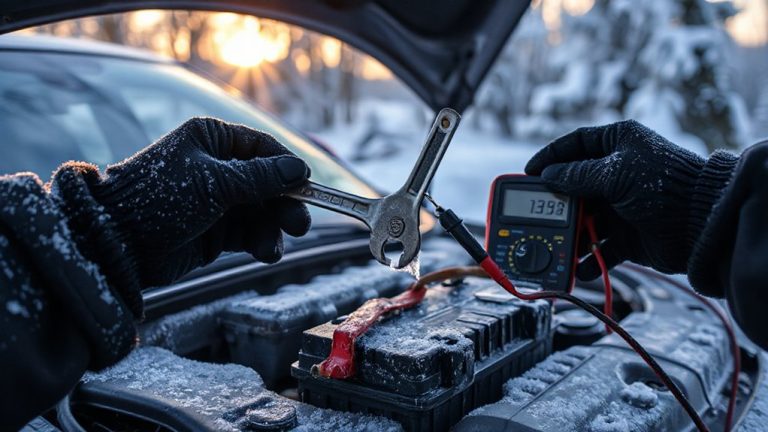
When temperatures drop below freezing, the metal components of your exhaust system contract, increasing stress on aging joints and welds. This thermal contraction can create microfractures as materials like mild steel shrink up to 0.006 inches per foot at –20°F. Over time, repeated expansion and contraction weaken structural integrity. Frost buildup exacerbates the issue by trapping moisture in seams, promoting corrosion. Ice accumulation adds mechanical load, sometimes exceeding 5 psi on weak seals. Damaged areas may allow exhaust gases, including carbon monoxide, to infiltrate the cabin. Unlike visible smoke, CO is odorless and colorless, making leaks especially dangerous in enclosed spaces. Your vehicle’s exhaust operates under negative pressure during idle, increasing suction at compromised joints. Older systems, particularly those over seven years or with over 80,000 miles, are most vulnerable. Reinforcing seals with high-temperature resistant gaskets rated to 1,200°F reduces risk.
How to Find Exhaust System Leaks
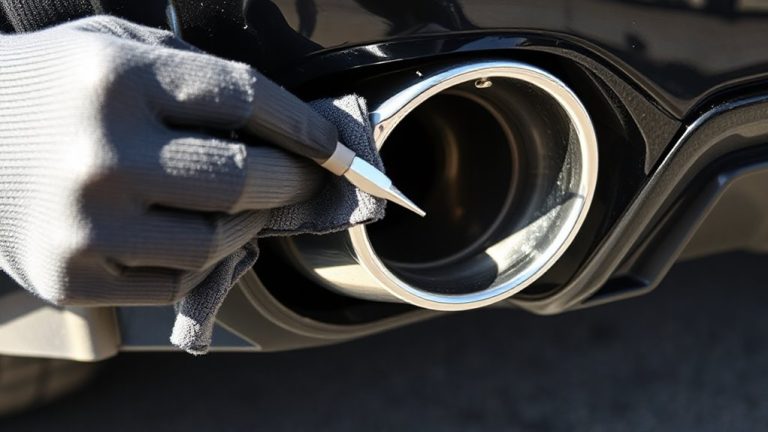
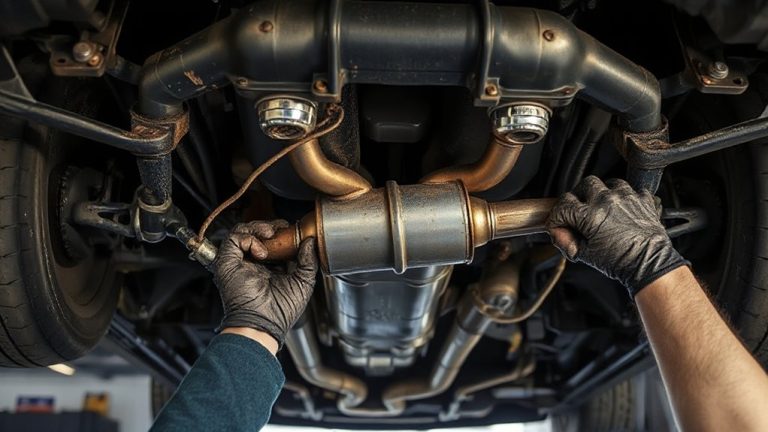
You can’t afford to ignore the signs of a failing exhaust system, especially after repeated exposure to freezing temperatures. Visual inspection is your first defense. Check for rust, cracks, or holes along the manifold, catalytic converter, and muffler. Look for sooty residues or staining-these indicate leaks. Pressure testing confirms hidden faults. Technicians pump low-pressure air into the exhaust and monitor for drops, revealing leaks not visible by eye. Combine both methods for accuracy. Use a mirror and flashlight to inspect tight spaces. Listen for hissing during engine operation.
| Method | Tool Required | Detects |
|---|---|---|
| Visual Inspection | Flashlight, mirror | Cracks, corrosion, soot |
| Pressure Testing | Air compressor, gauge | Internal leaks, weak seals |
| Auditory Check | None | Hissing near joints |
| Smoke Testing | Smoke machine | Small leaks under pressure |
| Gas Analyzer | CO detector | Elevated emissions levels |
Sealants and Gaskets That Prevent CO Leaks
A well-sealed exhaust system starts with the right materials-and not all sealants or gaskets are built to handle extreme thermal cycling. You need high-temperature exhaust gaskets rated for at least 1,200°F, made from graphite composite or multi-layer steel. These maintain integrity through repeated expansion and contraction. Proper flange alignment is critical; even slight misalignment causes uneven pressure and premature failure. Use alignment bolts to guarantee accuracy before tightening. High-silicone or ceramic-based sealants work temporarily, but only where exhaust welding isn’t feasible. Anaerobic flange sealants cure without air and resist vibration, making them ideal for bolted joints. Never rely on RTV silicone alone-it degrades under constant heat. Replace compressed fiber gaskets with modern perforated steel core versions for durability. Correct sealing prevents carbon monoxide infiltration, especially during cold idle periods. Match gasket thickness to manufacturer specs-usually 1/16” to 1/8”-to guarantee full contact without crushing.
DIY Exhaust Seal Reinforcement
How solid is your exhaust system’s integrity when the temperature drops below freezing? Cold weather causes metal to contract, potentially widening gaps at pipe joints. You can reinforce these seals yourself, but proper technique is critical. Start by verifying correct pipe joint alignment-misaligned connections create uneven stress and leak paths. Use a straight edge and feeler gauge to confirm joint gaps are under 0.015 inches. Then apply exhaust tape correctly: wrap clockwise around threaded or slip-fit joints, overlapping each layer by 50%. Use aluminum-reinforced exhaust tape rated for 1,200°F; standard tapes fail under high heat. Each wrap adds about 0.003 inches thickness, improving compression seal. Exhaust tape usage isn’t permanent, but it buys time and reduces micro-leak risks in moderate conditions. This method works best on pre-sealed joints, not structural repairs. Always inspect annually. Upgrading to a high-performance aftermarket exhaust system can improve overall durability and reduce long-term leakage risks.
When to Call a Pro for CO Safety
Why risk guessing when invisible, lethal gas could be accumulating in your vehicle? Carbon monoxide (CO) has no odor or color, making self-diagnosis unreliable. If you’ve recently reinforced exhaust seals but still notice symptoms like dizziness or nausea while driving, it’s time to call a professional. Mechanics with CO detectors and exhaust gas analyzers can measure concentrations down to 5 parts per million, identifying leaks DIY methods miss. Certified technicians also perform thorough gas appliance inspections, checking heaters and engines for faulty combustion. Install carbon monoxide alarms near the cabin’s interior for real-time warnings-opt for models with electrochemical sensors and low-battery alerts. These alarms must meet UL 2034 standards and trigger at 70 ppm within one hour. Don’t rely on guesswork when precision tools and expert assessments are available. Pro evaluations guarantee safety, especially during winter when enclosed spaces increase exposure risks.
CO Detectors That Work in Winter
What good is a carbon monoxide detector if it can’t handle the cold? Many fail in winter due to poor battery performance and unreliable sensor calibration. Cold temperatures reduce battery output, causing detectors to shut down or give false readings. Look for models rated for operation below 40°F (4°C), ideally as low as -10°F (-23°C). Lith Officers perform best in frigid conditions, maintaining voltage when alkaline cells falter. A stable sensor calibration guarantees accurate CO detection at 70 ppm, 150 ppm, and 400 ppm levels over time. Units with electrochemical sensors recalibrate automatically, reducing drift. NFPA 720-compliant detectors provide maximum safety, with sensors designed for indoor and unheated environments. Test monthly. Replace every five years. Choose detectors with low-temperature certification-your life depends on reliability when the mercury drops.
On a final note
You must act now to protect your exhaust system from winter CO leaks. Cold contraction stresses joints, increasing leak risks. Reinforce with high-temp silicone sealant (rated to 600°F) or layered graphite gaskets (3mm thickness, 50 psi compressibility). Inspect flanges every 6,000 miles. Install a CO detector with a digital readout and 70-decibel alarm. Proper sealing maintains exhaust integrity, preventing deadly carbon monoxide intrusion.