How to Properly Dispose of Used Motor Oil and Filters Safely and Legally
You must recycle used motor oil and filters-it’s fast, free, and required by law. AutoZone and O’Reilly accept up to 5 gallons; municipal centers take 10. Store oil in sealed HDPE or steel containers labeled “Used Motor Oil.” Drain filters upside down for 12–24 hours, then recycle separately. Never mix fluids-contamination causes rejection. One gallon can contaminate a million gallons of water. Proper handling guarantees re-refining and steel recovery. There’s more to get right.
Notable Insights
- Recycle used motor oil for free at AutoZone, O’Reilly, or municipal centers in sealed, labeled containers.
- Store used oil in HDPE plastic or steel containers, never in food or drink bottles.
- Drain oil filters upside down for 12–24 hours before recycling to prevent water contamination.
- Never mix oil with antifreeze, solvents, or water-contamination causes recycling rejection.
- Recycle used filters separately after puncturing and crushing to recover steel and residual oil.
Recycle Used Motor Oil: Fast, Free, and Legal
While it might seem easier to pour used motor oil down the drain or toss it with the trash, doing so is both illegal and harmful to the environment. Recycling used motor oil is fast, free, and legally required in most jurisdictions. You can protect ecosystems by properly storing oil in sealed, labeled containers-typically 1-gallon or 5-gallon jugs made of high-density polyethylene. Many facilities accept up to 5 gallons per visit. Recycling one gallon of oil conserves 42 kWh of energy and prevents 250 gallons of clean water from contamination. Numerous programs offer oil rewards, such as discounts on auto services or retail gift cards. Check for local incentives, including cash payments or tax deductions, which vary by municipality. These incentives promote compliance and environmental responsibility. Recycling reduces dependence on crude oil extraction and supports sustainable lubricant production. Always handle oil with gloves and avoid mixing with solvents.
Where to Recycle Used Motor Oil for Free
Drop-off centers, auto parts stores, and service stations are your best bet for recycling used motor oil at no cost. These free recycling locations accept up to five gallons per visit, provided the oil is uncontaminated. Most local drop off centers require the oil to be in a sealed, leak-proof container with no debris or gasoline mixed in. Check your city’s waste authority website for verified points. Below are common options:
| Location Type | Holds Up to |
|---|---|
| AutoZone | 5 gallons |
| O’Reilly Auto Parts | 5 gallons |
| Municipal center | 10 gallons |
| Quick Lube station | 5 gallons |
Facilities reuse every quart-recycling one gallon saves enough energy to power a 60-watt bulb for 8 hours. Always call ahead to confirm hours and container rules.
How to Collect and Store Used Oil Safely
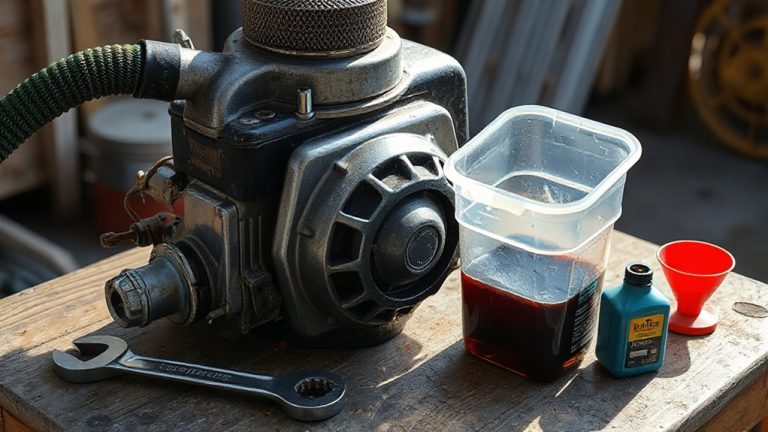
You’ve found out where to take used motor oil-now it’s time to get it there safely. Use only containers designed for oil storage to guarantee container compatibility. Never use food or drink bottles, as they risk contamination and confusion. Approved containers should be clean, leak-proof, and made of HDPE plastic or steel, typically rated for 55 gallons max. Label each container clearly with “Used Motor Oil” in bold, visible text. Store upright, away from sunlight and extreme temperatures, ideally between 40°F and 90°F. Spill prevention is critical-place drip pans under drain points and use funnels with locking seals. Keep absorbent pads and a spill kit nearby. Do not mix oil with solvents or antifreeze. Overfilling causes leaks, so leave at least two inches of headspace. Transport securely in your vehicle’s trunk or bed, separated from passengers and cargo.
How to Prep Oil Filters for Recycling
After draining the engine oil, you’ll need to properly prepare your oil filter for recycling, as it still contains roughly 8 to 10 ounces of residual oil-enough to contaminate up to two million gallons of water if not handled correctly. Begin with filter draining: place the used filter upside down in a sealed container for at least 12 to 24 hours to allow residual oil to drip out. Proper draining reduces hazardous waste and improves recycling efficiency. Next, use approved puncture methods: electric or manual filter crushers safely pierce the filter’s body to extract trapped oil. Some devices operate at 1,500 psi to compress filters and minimize volume. Puncturing guarantees near-complete oil recovery, meeting EPA-recommended practices. Always wear protective gear when handling filters. Store drained, punctured filters in a labeled, leak-proof container. Most recycling centers require filters to be drained for at least 24 hours and processed via certified puncture methods before acceptance.
5 Common Recycling Mistakes to Avoid
While proper preparation is essential, even well-intentioned recycling efforts can fail if common mistakes aren’t avoided. Pouring used oil into containers that previously held chemicals risks contamination, leading to contaminated oil rejection by recycling centers. Always use clean, leak-proof containers labeled for used motor oil only. Mixing oil filters with oil in the same container causes spills and violations; store them separately in sealed bags. Leaving filters to drain less than 12 hours retains excess oil, increasing disposal weight and environmental harm. Never dump oil on the ground or in trash-illegality brings significant improper disposal penalties, including fines up to $10,000. Transport containers securely to prevent leaks. Recycling facilities use strict purity standards; even small amounts of water or antifreeze trigger rejection. Keep oil dry and isolated. These steps guarantee compliance, protect ecosystems, and maintain the recycling stream’s integrity.
What Happens to Your Old Oil and Filter
Once collected, your used motor oil and filters enter a tightly regulated recycling stream designed to recover valuable materials and prevent environmental contamination. Your old oil undergoes re-refining, where impurities are removed through a precise filtration process and vacuum distillation. The recovered base stock retains much of its original chemical composition, allowing it to be blended with additives to meet API specifications. Re-refined oil performs as well as virgin oil, with identical viscosity grades like 5W-30 or 10W-40. Used filters are drained and crushed, then sent to metal recyclers. Steel from each filter-about 90% of its weight-is recovered for reuse. The remaining residue is treated to extract residual oil, minimizing waste. Filters processed correctly release almost no harmful emissions. Your contribution guarantees these materials re-enter industrial cycles safely, efficiently, and to exacting standards.
Why Recycling Motor Oil Protects the Planet
Every drop counts when it comes to protecting the environment-and recycling your used motor oil is one of the most effective ways you can prevent widespread ecological damage. Proper disposal markedly reduces environmental impact and supports long-term pollution prevention. One gallon of used oil can contaminate one million gallons of water. Recycling just one quart of oil saves enough energy to power a 100-watt lightbulb for 24 hours.
| Benefit | Technical Detail |
|---|---|
| Energy Conservation | Recycled oil requires 70% less energy to re-refine than crude oil distillation |
| Pollution Prevention | Keeps toxic heavy metals like lead and cadmium out of soil and water |
| Environmental Impact | Over 1.3 billion gallons of used oil are recycled annually in the U.S. alone |
On a final note
You must recycle used motor oil and filters-they’re hazardous waste. Pour oil into a sealed, leak-proof container-like a clean plastic gallon jug with a screw cap-label it “Used Motor Oil.” Keep filters drained for 24 hours; store in a sealed metal container. Never mix oil with solvents or antifreeze-it contaminates batches. Recycling re-refines oil to API 1509 standards, usable again. One gallon reprocessed saves 2.5 quarts of crude. This practice cuts pollution, conserves resources, and complies with EPA regulations.