How to Choose the Right Wheel Finish for a Show-Quality Restoration
Choose a wheel finish that matches your car’s original factory specs to meet show standards. Chrome plating, at 0.0002–0.0003 inches thick, delivers a mirror shine above 90 gloss units but requires minimal upkeep. For period accuracy, use baked enamel or powder coating at 2–3 mils thickness, matching factory color codes. Authenticity matters-judges verify finishes within ±5 microns. Polished aluminum needs sealing to prevent oxidation. Your car’s era, storage, and use determine the best balance of shine, durability, and authenticity. More details follow on matching each finish to your vehicle’s exact year and model.
Notable Insights
- Match the wheel finish to the vehicle’s original decade and model specifications for visual and historical accuracy.
- Use factory-correct finishes like gold anodized or stainless inserts for classic cars such as a 1957 Chevrolet Bel Air.
- Choose chrome or polished finishes for high reflectivity, but apply clear coat to polished aluminum to prevent oxidation.
- Opt for painted or powder-coated finishes when authenticity is key, matching OEM color codes and gloss levels.
- Ensure finishes meet show standards by replicating original metallurgy, coating thickness, and gloss readings within strict tolerances.
Match Your Wheel Finish to Your Car’s Era and Style
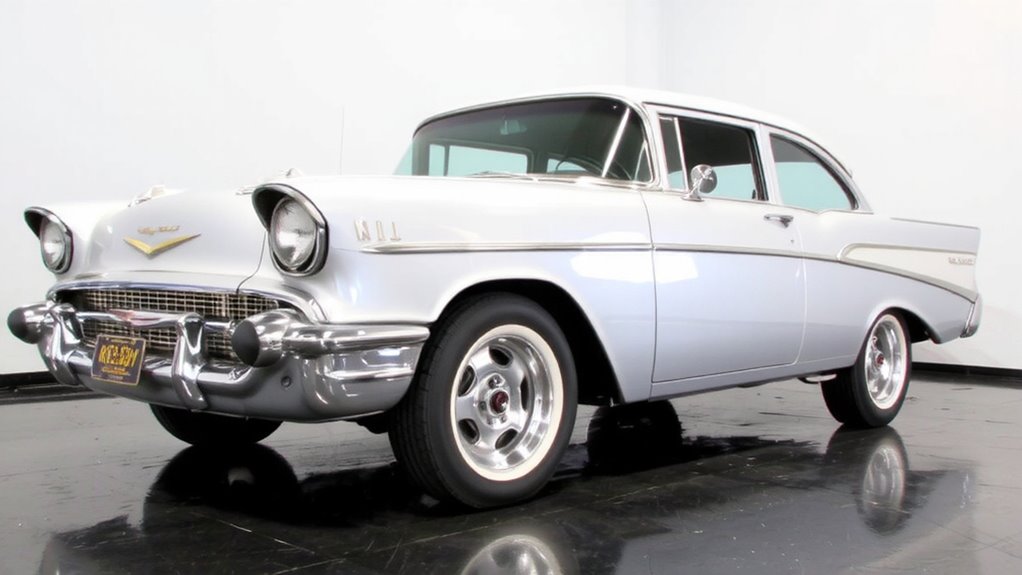
Your car’s character hinges on details like the wheel finish, and matching it to the vehicle’s era guarantees visual harmony. Achieving vintage accuracy means selecting finishes common to the decade and model you’re restoring. A 1957 Chevrolet Bel Air, for example, demands a factory-correct gold anodized or stainless steel insert, not a modern matte black. Deviating disrupts stylistic harmony and reduces authenticity. Wheel finish codes from original documentation guarantee precision. Steel wheels from the 1940s often had baked enamel with a slight texture; replicating the correct sheen matters. Chrome was rare before 1955 due to plating limitations. Polished alloys became common in the late 1960s. Modern coatings can mimic period-correct appearances but must match original reflectivity and grain. Correct lug nut finish and hubcap design further support period accuracy. Attention to these details defines a show-quality restoration.
Choose Chrome or Polished Wheel Finishes for Maximum Shine
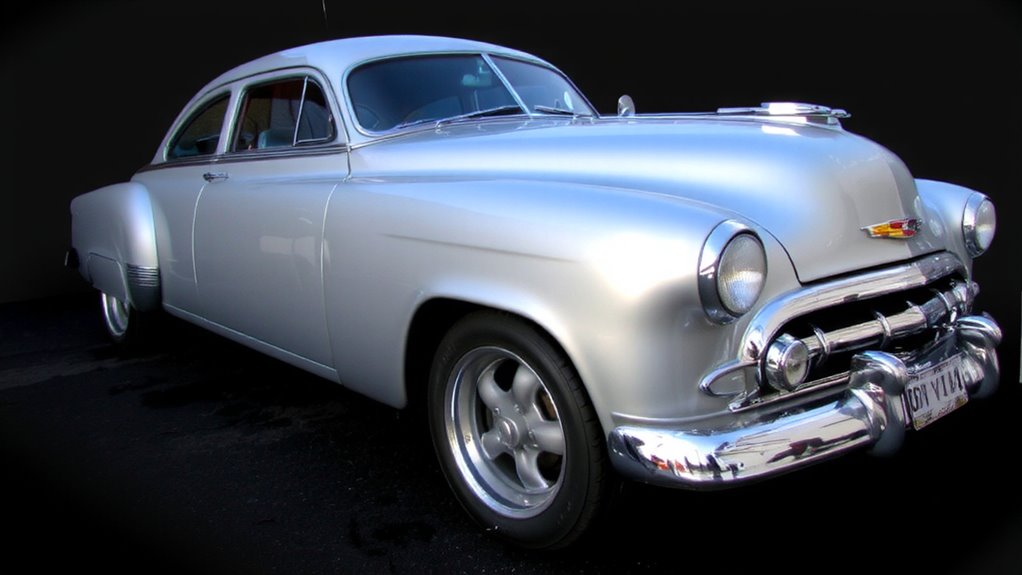
A chrome or polished wheel finish delivers the highest level of reflectivity, making it the top choice for show cars and custom builds focused on visual impact. You’ll notice a dramatic difference in shine intensity between chrome vs polished finishes. Chrome plating involves a multi-layer electroplating process-typically 0.0002 to 0.0003 inches of chromium-creating a mirror-like surface highly resistant to corrosion. Polished finishes rely on mechanical buffing, followed by clear coating to protect against oxidation. Without that coating, polished aluminum will tarnish. Chrome maintains its luster longer with minimal upkeep. Shine intensity on chrome measures above 90 gloss units at 60-degree incidence, outperforming most polished equivalents. While both offer high reflectivity, chrome’s hard surface and deeper mirror effect make it ideal for concours-level restorations where perfection is expected. Choose based on durability needs and finish authenticity. To preserve polished aluminum’s mirror finish, regular maintenance with a dedicated aluminum wheel cleaner is essential.
Use Painted or Powder-Coated Finishes for Period Accuracy
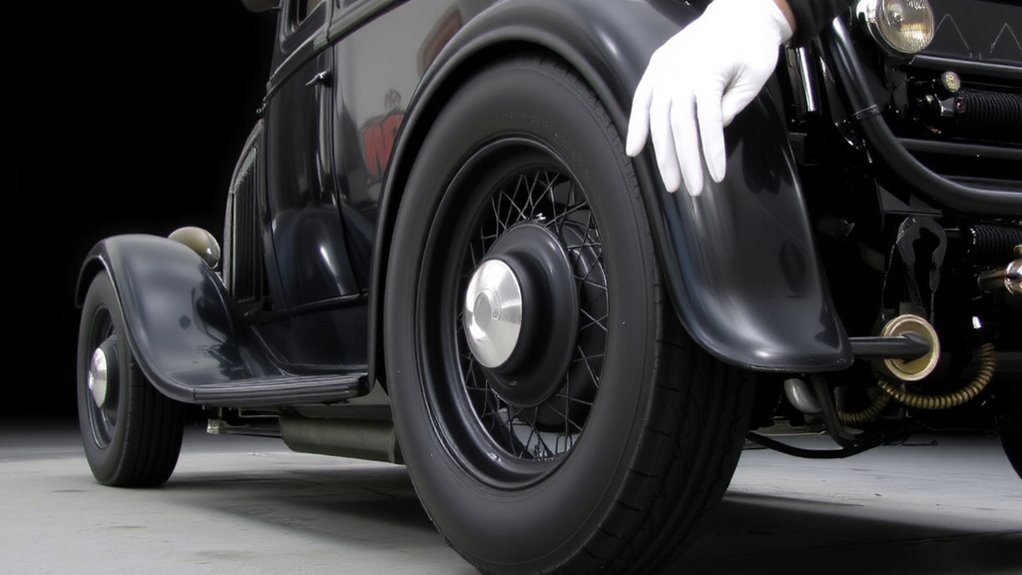
Painted and powder-coated wheels offer the most authentic representation for vintage and classic vehicle restorations where period-correct finishes are essential. You need period accuracy to reflect how the vehicle originally left the factory. Many OEMs used painted steel wheels with specific color codes and finishes-matching them is critical. Factory matching guarantees your restoration aligns with manufacturer specifications, including correct paint thickness, texture, and sheen. Powder coating provides a durable, uniform finish that mimics original baked-on paints, resisting chipping and fading better than liquid paint. It adheres evenly at 2–3 mils thickness, replicating factory tolerances. For accuracy, use finishes that match documented color standards like Mopar Bright White or GM Silver. These processes offer long-term stability and UV resistance. Choose formulations that duplicate original chemical compositions when possible. This technical fidelity guarantees authenticity without compromising durability.
Meet Show Judging Standards With Correct Factory Finishes
When restoring a vehicle for show competition, matching factory wheel finishes isn’t optional-it’s mandatory. Show judging panels prioritize factory authenticity, and deviations cost points. Original wheel finishes were specified by OEMs with precise methods: single-stage paint, triple-plated chrome, or anodized aluminum, depending on make and model year. You must research factory service manuals or restoration guides to confirm correct finish type, sheen, and trim codes. For example, 1969 Ford Mustang GTs required 14×6-inch wheels with a bright silver paint with a gloss level of 70–80 GU. Reproduction wheels must match original metallurgy and coating thickness-±5 microns. Judges inspect for accuracy using calibrated gloss meters and comparison swatches. Any mismatch in hue, reflectivity, or texture breaks authenticity. Stick to documented specs-your score depends on it.
Pick a Wheel Finish That Balances Looks and Durability
Durability and aesthetics hinge on your choice of wheel finish-pick wrong, and you’ll face fading, corrosion, or peeling within months. Achieving the right aesthetic balance means pairing visual appeal with finish durability. Chrome offers brilliant reflectivity but risks pitting in harsh climates. Powder coat provides excellent chip resistance but varies in gloss retention. Polished aluminum dazzles but demands frequent sealing to prevent oxidation. Upgrading your car suspension for bumpy roads can also preserve wheel finish by reducing impact damage from rough terrain.
| Finish Type | Durability Rating (1–10) |
|---|---|
| Chrome | 7 |
| Powder Coat | 9 |
| Polished Aluminum | 5 |
| Painted | 6 |
Choose based on environment and show frequency. High humidity? Powder coat delivers superior finish durability. Need factory-correct shine? Chrome may suit, if properly backed. Your ideal finish achieves aesthetic balance without sacrificing long-term performance.
Understand Maintenance Needs by Wheel Finish Type
A wheel’s long-term appearance depends as much on maintenance as it does on initial selection. Chrome wheels offer high corrosion resistance but require weekly cleaning to prevent water spots and mineral buildup. Polished aluminum finishes scratch easily and demand bi-weekly washing with pH-neutral soap. Powder-coated wheels are durable, with excellent corrosion resistance, needing cleaning only monthly under normal conditions. Clear-coated finishes protect against UV damage and moisture, yet chip if struck by road debris-inspect them quarterly. Brushed steel requires regular wiping to prevent surface oxidation. Cleaning frequency directly impacts finish longevity; neglect accelerates pitting and hazing. For painted finishes, wax every 90 days to maintain gloss. Always dry wheels after washing to minimize water exposure. Corrosion resistance varies by material and coating thickness-chrome plating typically measures 0.0005 to 0.001 inches, while powder coating ranges from 2 to 4 mils. Match care to these specs for lasting show-quality results.
Match Your Wheel Finish to Driving and Storage Plans
If you’re storing your vehicle long-term or tackling harsh driving conditions, your wheel finish choice directly affects its lifespan and appearance. Driving frequency and storage conditions determine whether corrosion, fading, or pitting becomes an issue. For daily drivers exposed to road salts, painted wheels with clearcoat protection resist corrosion. Alloy wheels with powder-coated finishes endure frequent use. For show cars stored indoors, chrome or polished finishes maintain luster with minimal handling. Uncoated metal degrades faster in humid storage conditions.
| Finish Type | Driving Frequency | Storage Conditions |
|---|---|---|
| Chrome | Low | Indoor, climate-controlled |
| Painted | High | Covered, dry |
| Polished Alloy | Medium | Indoor, low humidity |
| Powder-Coated | High | Sheltered, dry |
On a final note
Choose the right wheel finish to align with your car’s era, show requirements, and usage. Chrome plating, at 0.010–0.015 inches thick, offers high reflectivity and corrosion resistance but requires frequent polishing. Powder coating, cured at 400°F, provides durable, UV-stable finishes ideal for street use. Match factory specifications-often documented in restoration guides-for show accuracy. Prioritize authenticity for concours events; favor durability for driven restorations. Maintenance frequency depends on finish chemistry and environmental exposure.