DIY Guide to Replacing Your Car’s Air Filter: A Simple but Important Maintenance Task for Keeping Your Engine Running Smoothly
Replace your car’s air filter every 12,000 to 15,000 miles under normal conditions, or more often in dusty or stop-and-go driving. Use a Phillips screwdriver or 5–8mm socket to open the plastic or aluminum housing. Remove the old filter and check for debris, tears, or oil saturation. Inspect the housing seal and interior. Install a new filter with the airflow arrow facing the engine, ensuring a snug, gap-free fit. Confirm the housing clamps securely without overtightening. A clean filter restores airflow, improving fuel economy and engine performance by maintaining ideal air intake. Further details on filter types and troubleshooting follow.
Notable Insights
- Replace your car’s air filter every 12,000 to 15,000 miles under normal driving conditions to maintain engine performance and fuel efficiency.
- Inspect the air filter every 6,000 miles; replace it if it’s dark brown with visible debris between the pleats.
- Use the correct replacement filter-paper, foam, or cotton gauze-that matches your vehicle’s manufacturer specifications for proper fit and filtration.
- During replacement, check the air filter housing for cracks, debris, and seal damage to ensure a secure, airtight closure.
- Install the new filter with the airflow arrow pointing toward the engine and secure the housing evenly to prevent unfiltered air intake.
How Often Should You Replace Your Air Filter?
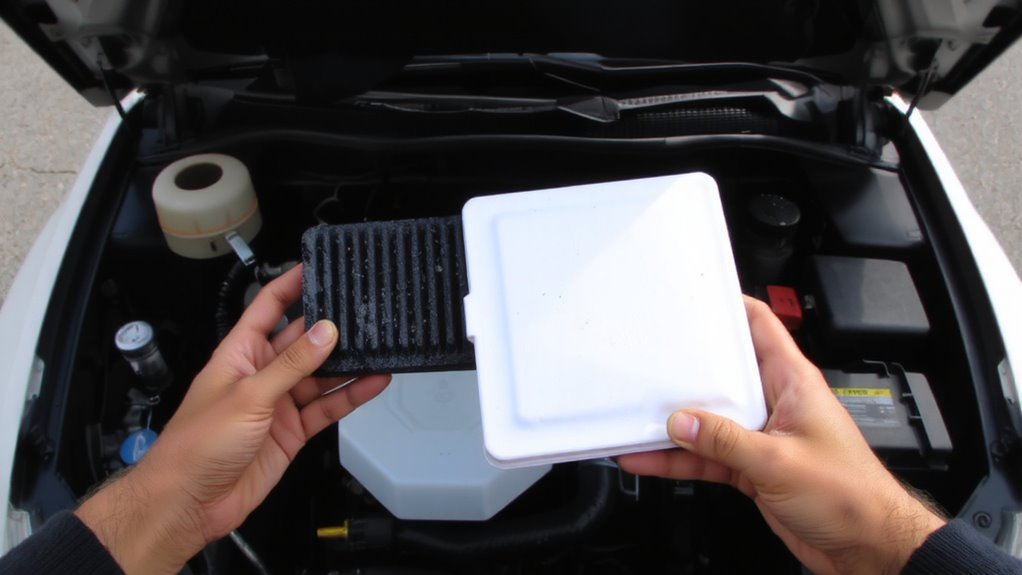
Generally, you should replace your car’s air filter every 12,000 to 15,000 miles, though severe driving conditions may require more frequent changes. Stop-and-go traffic, dusty roads, or frequent short trips restrict airflow and accelerate clogging. You’ll see noticeable drops in fuel economy and engine performance when airflow is reduced by 30% or more. Seasonal changes also affect filter lifespan-cold winter air carries more particulates, while pollen in spring increases contamination. Extreme heat in summer can degrade filter media faster. Always inspect the filter every 6,000 miles. If it’s dark brown and debris is visible between the pleats, replace it. Most OEM paper filters measure 9x12x1 inches and trap 99% of particles 5 microns or larger. Regular maintenance guarantees efficient combustion and prevents premature engine wear.
What Tools You Need to Change Your Air Filter
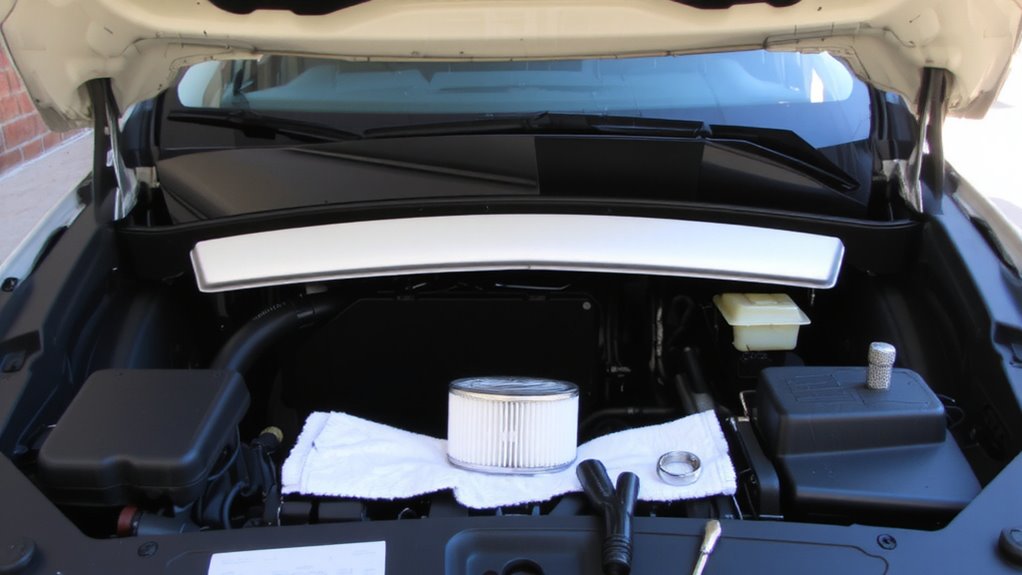
A clean air filter starts with the right tools in your hands. You’ll usually need only a Phillips-head screwdriver or a 5–8mm socket set, depending on your car’s housing design. Some vehicles use wing-tip clamps or push pins, requiring no tools at all. Always consult your owner’s manual to confirm the correct filter types-paper, foam, or performance cotton gauze-since each serves different airflow and filtration needs. Standard paper filters measure 8–12 inches wide and fit most sedans. Performance filters, like reusable K&N units, need cleaning every 50,000 miles. The housing design determines whether you’ll face screws, clips, or tabs securing the box. Plastic housings are common; aluminum ones appear in high-performance models. Check for cracks or warping before reassembly. Having the right tools guarantees a proper seal and prevents unfiltered air intake, which harms engine efficiency.
How to Remove Your Old Air Filter
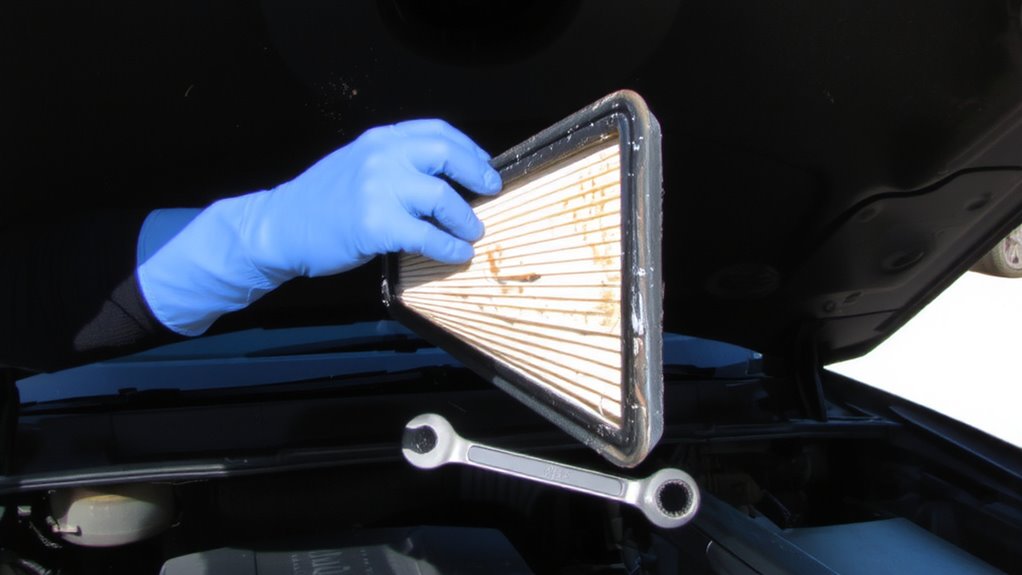
Once you’ve gathered the right tools, open the air filter housing by removing screws, clips, or wing nuts securing the cover, depending on your vehicle’s design. Lift the cover carefully to avoid damaging the housing seal. Remove the old air filter and perform a thorough air filter inspection. Check for dirt buildup, debris, and physical damage like tears or oil saturation. A clogged or damaged filter restricts airflow, reducing engine efficiency. Conduct a housing seal check to guarantee the rubber gasket is intact and free of cracks or warping. A compromised seal allows unfiltered air into the engine, causing wear.
| Component | Condition to Check |
|---|---|
| Filter media | Dirt accumulation, rips |
| Edges and frame | Warping, brittleness |
| Housing interior | Debris, moisture |
| Seal surface | Cracks, compression set |
| Mounting points | Broken clips or stripped threads |
Choosing the Right Air Filter for Your Car
The right air filter keeps your engine breathing efficiently and protects it from abrasive contaminants. Choosing correctly depends on understanding air filter types: paper, cotton gauze, and foam each have distinct filtration efficiency and airflow characteristics. Paper filters, most common, trap 90–95% of airborne particles and suit daily drivers. Cotton gauze filters allow 10–15% more airflow but require oiling and cost more. Foam filters are rare, typically in off-road applications. Always verify brand compatibility-using an OEM-specified part guarantees proper fit and sealing. Aftermarket high-performance filters must meet or exceed AS1055 or ISO 5011 standards. Confirm dimensions match your air box; even a 3mm gap compromises filtration. A mismatched filter risks unfiltered air intake, accelerating engine wear. Match material, size, and performance ratings to your vehicle’s OEM specifications for maximum protection and efficiency. For those seeking enhanced performance and reusability, consider a cone air filter as a popular aftermarket upgrade.
How to Install a New Air Filter Correctly
Engine performance hinges on clean, unrestricted airflow-your new air filter must seal tightly to deliver that. Confirm the filter orientation by checking for the directional arrow printed on the filter’s frame; it indicates airflow alignment and must point toward the engine. Misalignment blocks airflow and reduces efficiency. Most replacement filters measure within 1–2 mm of OEM specs, so verify fitment before closing the housing. Place the filter squarely in the tray, guaranteeing no gaps at the edges. A warped or poorly seated filter invites unfiltered air, risking debris intake. Reinstall the housing clips or screws in sequence to compress the seal evenly. Avoid overtightening plastic fasteners. Once secure, inspect the perimeter: your filter should sit flush, with no light gaps. Proper airflow alignment and correct filter orientation guarantee maximum engine breathing and filtration efficiency.
Why Your Engine Needs a Clean Air Filter
Though it’s small and often overlooked, your car’s air filter plays a critical role in keeping the engine running efficiently. It guarantees clean air intake by trapping dirt, dust, and debris before they reach the engine. A clogged filter restricts airflow, reducing engine efficiency and increasing fuel consumption. Modern engines rely on precise air-to-fuel ratios, typically 14.7:1 for gasoline engines, which depend on unrestricted air intake. When airflow drops, the engine compensates by burning more fuel, lowering performance and mileage. A clean filter maintains peak combustion, supporting consistent power output and emissions control. Filters are rated to capture particles as small as 5–10 microns, protecting internal components like valves and pistons. Replacing the filter every 12,000–15,000 miles preserves engine efficiency. Ignoring it can cause long-term wear and costly damage.
What to Do If Performance Doesn’t Improve
Replacing your air filter should bring a noticeable improvement in throttle response and fuel economy, especially if the old unit was heavily clogged. If you don’t see gains, other issues may be at play. Engine sensors, like the mass airflow (MAF) sensor, can become dirty or fail, delivering incorrect data to the ECU. This disrupts the air-fuel mixture, reducing performance. Inspect the MAF sensor carefully-do not touch the wires; clean it only with approved electronic cleaner. A compromised fuel system could also be the culprit. Clogged fuel injectors or a weak fuel pump limit delivery, mimicking air filter problems. Check fuel pressure against factory specs using a gauge on the fuel rail. Modern engines rely on precise inputs. Even with a clean filter, inaccurate engine sensors or fuel system faults prevent ideal combustion. Address these to restore performance.
On a final note
You should replace your air filter every 12,000 to 15,000 miles under normal conditions. A clogged filter restricts airflow, reducing fuel efficiency by up to 10%. Use a high-efficiency pleated paper filter rated for your vehicle’s make and model. Confirm the filter housing is sealed and latched. A proper fit prevents unfiltered intake, which can cause engine wear.