Differential Fluid Replacement Intervals Based on Towing Load History and Duty Cycle
Your towing load history and duty cycle directly affect how often you should change your differential fluid. Heavy towing generates sustained heat above 250°F, degrading conventional GL-5 75W-90 fluid and reducing its protection. If you regularly haul over 7,000 lbs, cut standard 30,000-mile intervals in half-change every 15,000 miles. Synthetic fluid with high thermal stability resists breakdown better. Frequent towing under load increases gear stress, especially in hypoid differentials. Metal shavings or a burnt smell mean failure is near. Adjust intervals based on load, terrain, and temperature exposure-your rear end’s longevity depends on it. Details on optimizing your schedule follow.
Notable Insights
- Heavy towing increases differential heat and stress, requiring fluid changes as frequently as every 15,000 miles.
- Sustained loads over 7,000 lbs can degrade GL-5 75W-90 fluid, halving standard 30,000-mile change intervals.
- High temperatures from towing accelerate oxidation, reducing fluid viscosity and protective capabilities over time.
- Synthetic differential fluids with high thermal stability extend service life under frequent heavy hauling conditions.
- Driving factors like load frequency, terrain, and trip duration should customize fluid change schedules beyond OEM baselines.
What Defines Severe Duty for Differential Fluid?
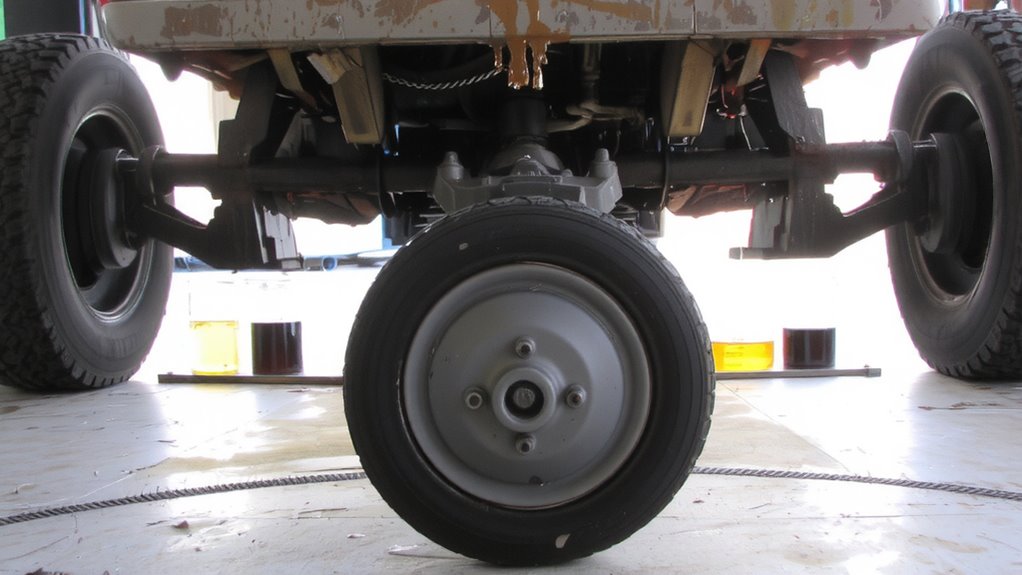
What exactly qualifies as severe duty when it comes to differential fluid? You’re under severe duty if your vehicle regularly faces extreme temperatures or carries high mileage. Frequent exposure to subzero cold or scorching heat above 100°F degrades standard fluids faster. High mileage-typically over 75,000 miles-means internal wear increases metal-on-metal contact, raising fluid contamination. Severe duty also includes stop-and-go driving, off-roading, or frequent short trips where the differential doesn’t reach ideal operating temperature. These conditions accelerate oxidation and reduce lubricity. OEMs define severe service with specific criteria: temperature extremes, extended idling, and dusty environments. Use synthetic differential fluid rated GL-5 or better, with viscosity like 75W-140, to maintain protection. It resists thermal breakdown and provides consistent film strength. Ignore these factors, and you risk premature gear wear or complete differential failure.
How Towing Load Impacts Your Fluid Change Interval
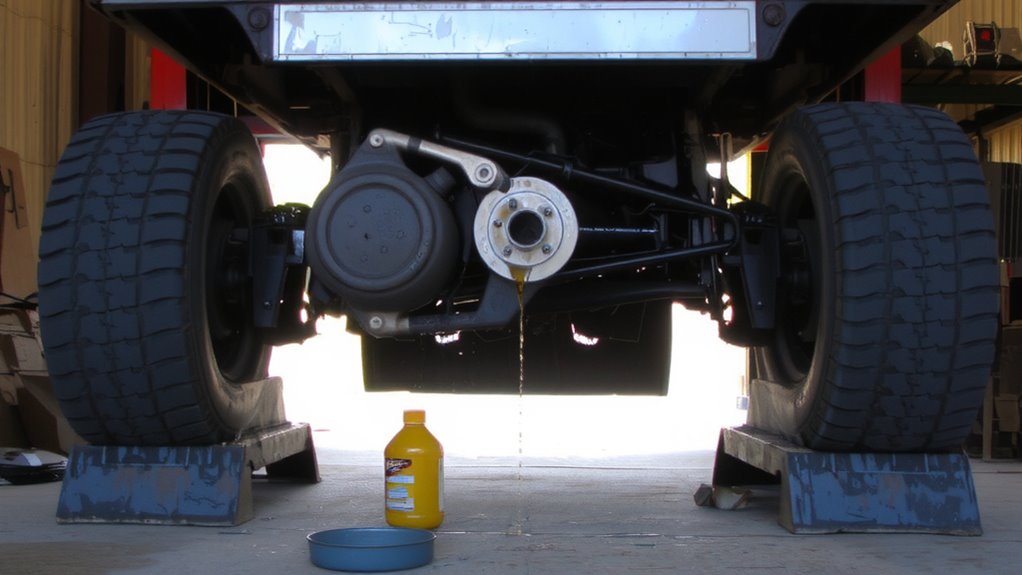
Why does your towing routine demand closer attention to differential fluid changes? Heavy loads increase gear stress, accelerating wear and degrading fluid faster. Each tow subjects the differential to higher torque and heat, breaking down lubricant properties over time. Your towing frequency directly impacts fluid longevity-regular heavy hauling may require changes every 15,000 miles instead of the standard 30,000–50,000. Frequent towing under load raises differential temperatures, often exceeding 250°F, which thins the fluid and reduces film strength. Without proper lubrication, gear surfaces experience micro-pitting and accelerated fatigue. High gear stress demands fluid with enhanced thermal stability and extreme pressure (EP) additives. These protect against metal-to-metal contact during peak loads. Standard service intervals assume light-duty use. If you tow weekly or carry near-max capacity, treat it as severe duty. Cut intervals by up to 50% to maintain protection.
Signs Your Differential Fluid Is Failing
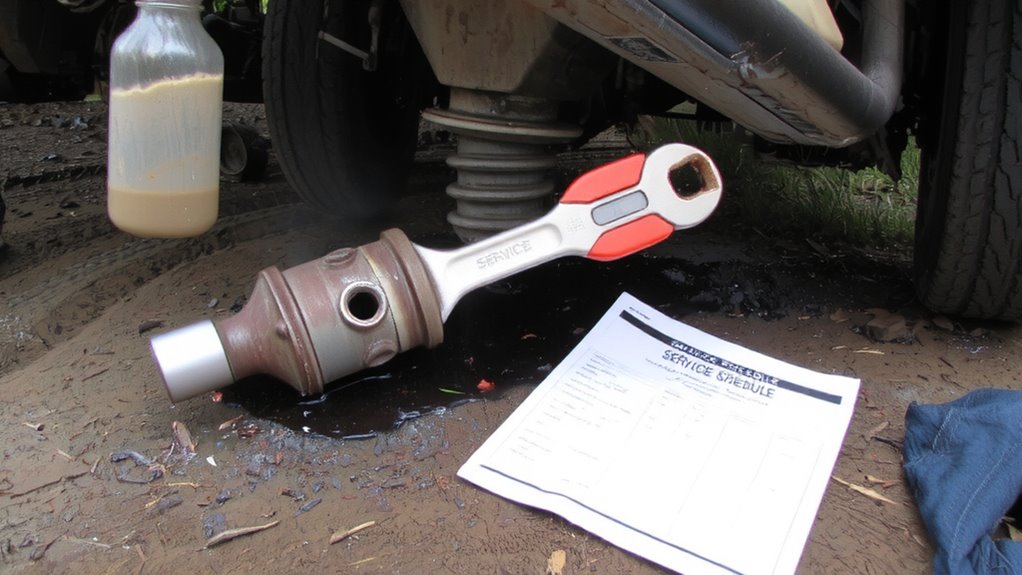
You’ve adjusted your maintenance schedule for heavy towing, but even with shorter intervals, the fluid can still break down under extreme conditions. Signs of failure include a distinct burning smell, indicating thermal degradation from excessive heat. This odor means the fluid has exceeded its thermal stability limit-typically above 300°F for most synthetic gear oils. Dark, gritty fluid suggests oxidation and additive depletion. If you find metal shavings during inspection, it signals internal wear-often from worn bearings or gear teeth. These particles circulate with the lubricant, accelerating abrasion. A whining or growling noise under acceleration correlates with insufficient lubrication. Fluid viscosity degrades over time, reducing its ability to maintain a protective film between moving parts. Checking fluid condition regularly helps prevent catastrophic differential failure. Ignoring these signs risks gear damage and increased downtime. Address them immediately.
When to Change Differential Fluid Based on Driving Conditions
How often should you really change your differential fluid? It depends on your driving conditions. Normal driving allows for longer intervals, but off road usage and frequent temperature fluctuations accelerate fluid breakdown. Contaminants and heat degrade lubricant quality, reducing gear protection. Check your vehicle’s manual for baseline intervals, then adjust based on actual use.
| Driving Condition | Recommended Interval (Miles) | Notes |
|---|---|---|
| Normal City/Highway | 30,000–50,000 | Stable loads, minimal temperature swings |
| Frequent Off Road Usage | 15,000–20,000 | Dust, moisture, and rough terrain increase wear |
| Extreme Temperature Fluctuations | 20,000–25,000 | Thermal cycling degrades viscosity faster |
| Heavy Stop-and-Go | 15,000–20,000 | Heat buildup stresses differential components |
Monitor fluid condition regularly.
Custom Differential Fluid Change Schedules for Heavy Towing
What happens when your truck’s differential operates under the relentless strain of heavy towing? Fluid degradation accelerates due to sustained high temperatures, often exceeding 250°F during prolonged loads. Standard service intervals won’t cut it-you need a custom differential fluid change schedule. Under heavy towing, oxidation breaks down additives, reducing lubricity and increasing friction. This leads to accelerated gear wear, especially on hypoid gears with their high-sliding contact. Manufacturers often rate GL-5 75W-90 fluid for normal duty, but with loads over 7,000 lbs, you should halve the interval-from 30,000 to 15,000 miles. Use synthetic fluid with enhanced thermal stability and a higher viscosity index. Monitor fluid condition via magnetic drain plugs; metal shavings indicate early gear wear. Track load frequency, weight, and terrain to tailor your schedule. Precision beats guesswork-your gears depend on it.
On a final note
You must adjust your differential fluid change intervals based on actual towing load and duty cycle. Severe duty-defined as frequent towing over 80% of max capacity-demands fluid changes every 15,000 miles. Light to moderate towing allows intervals up to 30,000 miles. Use only API GL-5 75W-90 or OEM-specified fluid. Inspect fluid annually; darkening or metallic particles indicate degradation. Failure to adhere risks gear wear and limited-slip clutch failure.