How to Install In-Line Fuel Shut-Off Valves for Safer Long-Duration Parking
You need an in-line fuel shut-off valve to safely isolate your fuel system during long-term parking. Install a brass or aluminum 3/8-inch NPT valve rated for 60 psi near the fuel tank or frame rail, guaranteeing the flow arrow points toward the engine. Use a tubing cutter for clean cuts, secure with 8–10 lb-ft clamps, and pressure-test at 40–60 psi. Check for leaks, verify flow rates, and cycle the valve three times. Proper setup prevents leaks, vapor lock, and fire risks-next steps guarantee lasting reliability.
Notable Insights
- Relieve fuel pressure before cutting the line to prevent leaks during valve installation.
- Use a tubing cutter for clean, kink-free cuts that ensure proper valve and hose alignment.
- Install the valve with the flow arrow pointing toward the engine for correct fuel direction.
- Mount the valve near the fuel tank or frame rail to minimize vibration and heat exposure.
- Test for leaks under pressure and verify no drop over 5 minutes to ensure safe long-term parking.
Why You Need a Fuel Shut-Off Valve
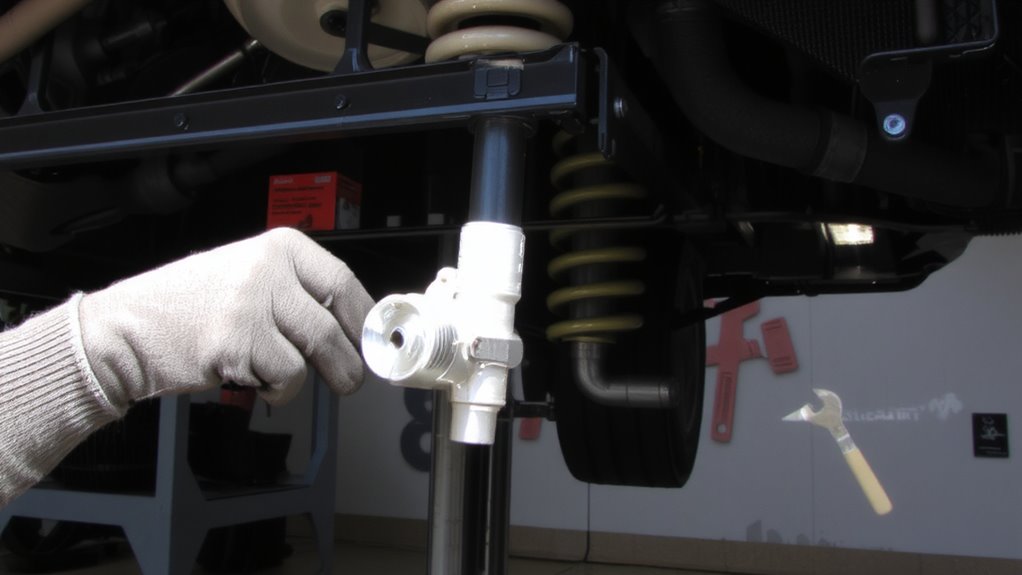
Why worry about fuel leaks or engine damage during maintenance? You need a fuel shut-off valve for reliable fuel safety and engine protection. It isolates the fuel line, stopping fuel flow with a simple turn. Most valves handle up to 60 psi, compatible with gasoline, diesel, and ethanol blends. Constructed from brass or aluminum, they resist corrosion and last over 10,000 cycles. Installing one gives you control-no more relying solely on the fuel pump shutoff. It’s essential for long-duration parking, preventing vapor lock and tank pressure buildup. A 3/8-inch NPT threading fits most factory lines, requiring minimal modification. You reduce fire risks during repairs, especially near hot exhaust components. Think of it as a circuit breaker for your fuel system-simple, proactive, and effective. Fuel safety isn’t optional. Engine protection starts with smart, mechanical interventions. This valve delivers both.
Choose the Right Valve for Your Vehicle
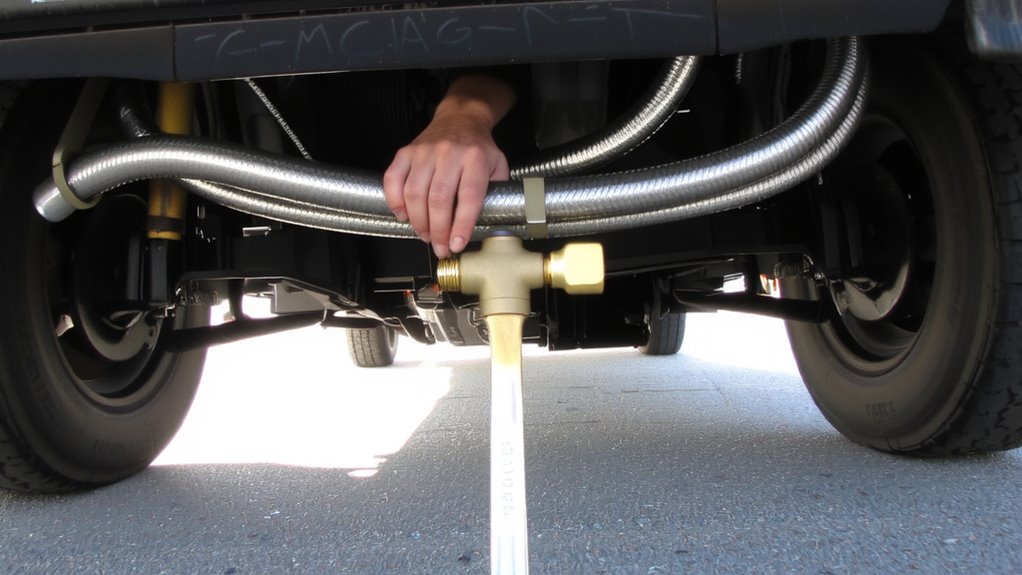
A good fuel shut-off valve starts with choosing the right one for your vehicle’s fuel system. Valve compatibility is critical-make sure the valve matches your fuel line diameter, typically 5/16”, 3/8”, or 1/4”. Using mismatch游戏副本 sizes causes leaks or flow restrictions. You must also consider fuel type. Gasoline, diesel, and ethanol blends react differently with materials. Use a valve with brass or stainless steel bodies if running ethanol-blended fuels to resist corrosion. Plastic or rubber components may degrade over time. Manual ball valves are reliable and simple, offering full on/off control with a quarter-turn. For diesel engines, make sure the valve is rated for high-pressure lines if installed post-lift pump. Always check manufacturer specifications for flow rate, measured in gallons per hour (GPH), to avoid starving the engine. Choosing correctly ensures safety and performance.
Find the Best Spot for Installation
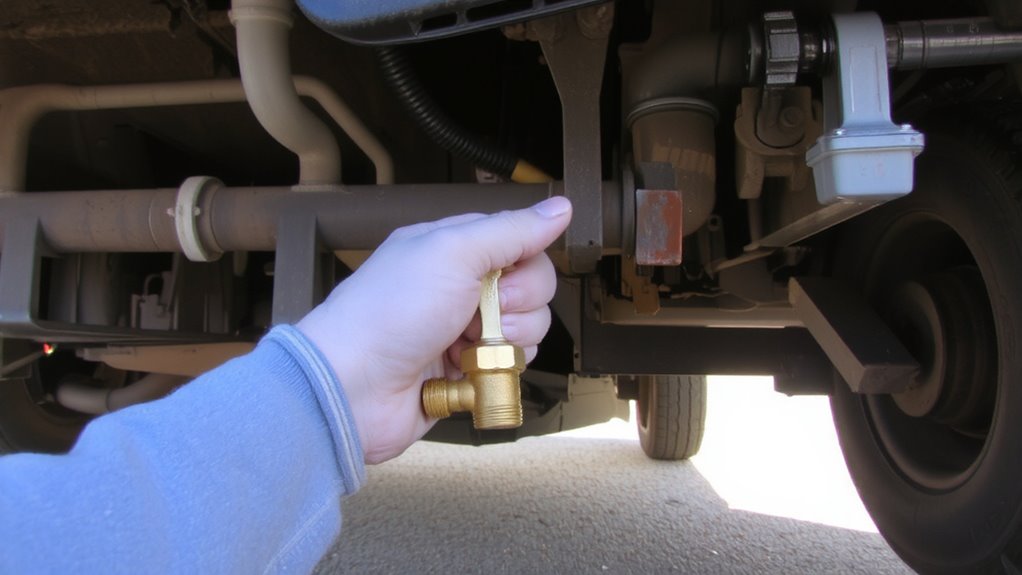
Where should you install the fuel shut-off valve for maximum safety and accessibility? You need to balance valve accessibility with proper fuel line routing. The valve must be reachable but not in a high-traffic or heat-prone area. Ideal spots are along the frame rail or near the fuel tank, before the fuel pump, where vibrations and moisture are minimal.
| Location | Reason |
|---|---|
| Near fuel tank | Reduces pressure exposure; simplifies fuel line routing |
| Along frame rail | Enhances valve accessibility; protects from road debris |
Avoid sharp bends in the line-maintain a minimum 3-inch bend radius to prevent flow restriction. Use nylon or steel-braided lines rated for 75+ psi. Guarantee the valve is mounted upright to prevent fuel pooling. Proper placement improves safety during long-duration parking and streamlines future maintenance.
Install the Fuel Shut-Off Valve
Now that you’ve selected the best location along the frame rail or near the fuel tank, you can proceed with installing the in-line fuel shut-off valve. Relieve fuel pressure before cutting the fuel line to prevent dangerous spray. Use a fuel line quick-disconnect tool or line wrench to avoid damage. Cut the fuel line cleanly with a tubing cutter for a flush fit. Install the valve in-line, ensuring correct valve orientation-arrow marking must point toward the engine to maintain proper flow. Most valves handle up to 80 psi, compatible with standard fuel injection systems. Secure with OEM-spec hose clamps or AN fittings, tightening to 8–10 lb-ft. Position the actuator lever for easy access, ideally upward or rearward. Double-check alignment and support the valve body to prevent stress on connections. A misaligned valve restricts fuel flow like a kinked garden hose, reducing efficiency and safety.
Test for Leaks and Safe Operation
Once the valve’s installed, you’re ready to verify everything works safely and without leaks. Begin with pressure testing the system using a fuel pressure gauge compatible with your vehicle’s specifications-typically 40–60 psi for most gasoline systems. Pressurize the fuel line and monitor for at least five minutes; any drop indicates a leak. Inspect all connections, seams, and hose fittings visually, especially around the valve body and clamps. Next, perform flow verification by reopening the valve fully and allowing fuel to pass while monitoring downstream pressure. Flow rate should match OEM specs-usually between 0.5 and 1.0 gallons per minute depending on engine demand. Confirm the valve opens and closes smoothly without resistance. Repeat tests after cycling the valve three times. Proper testing guarantees reliable performance during long-duration parking and prevents fire hazards.
On a final note
You now have a reliable safety upgrade. An in-line fuel shut-off valve stops fuel flow instantly, reducing fire risk during long-term parking. Use a 3/8-inch brass push-lock valve rated for 80 PSI, compatible with gasoline and ethanol blends. Install it within 12 inches of the fuel tank outlet. Confirm leak-free operation with a 5-minute pressure test. This simple addition enhances vehicle safety without altering factory systems.