Hybrid Electric Vehicle Regenerative Braking Impacts on Clutch Pack Lubricity Needs
Your clutch packs face higher thermal spikes-up to 300°C-during ICE restarts due to regenerative braking. Less frequent engagement reduces oil circulation, cutting lubrication by up to 40% after 72 hours. Cold starts below -10°C thicken conventional oils, but synthetics stay fluid below -40°C with under 5,000 cP viscosity. Dry running increases wear 40% and risks micro-welding. Optimized fluids with friction modifiers, antioxidants, and rust inhibitors are critical. You’ll find advanced solutions engineered specifically for these demands.
Notable Insights
- Regenerative braking increases thermal stress on clutch packs, causing spike temperatures that degrade lubricant film strength and material integrity.
- Infrequent clutch engagement in HEVs reduces oil circulation, leading to inconsistent lubrication and higher wear during sudden activation.
- Extended dry periods between engagements promote dry friction, increasing wear and risk of micro-welding in clutch components.
- Cold temperatures thicken conventional oils, impairing lubricity at startup; synthetic fluids maintain flow and protection below -10°C.
- HEV-specific lubricants require friction modifiers, antioxidants, and rust inhibitors to maintain performance under thermal cycling and humidity.
Why HEV Clutch Packs Wear Out Faster With Regenerative Braking
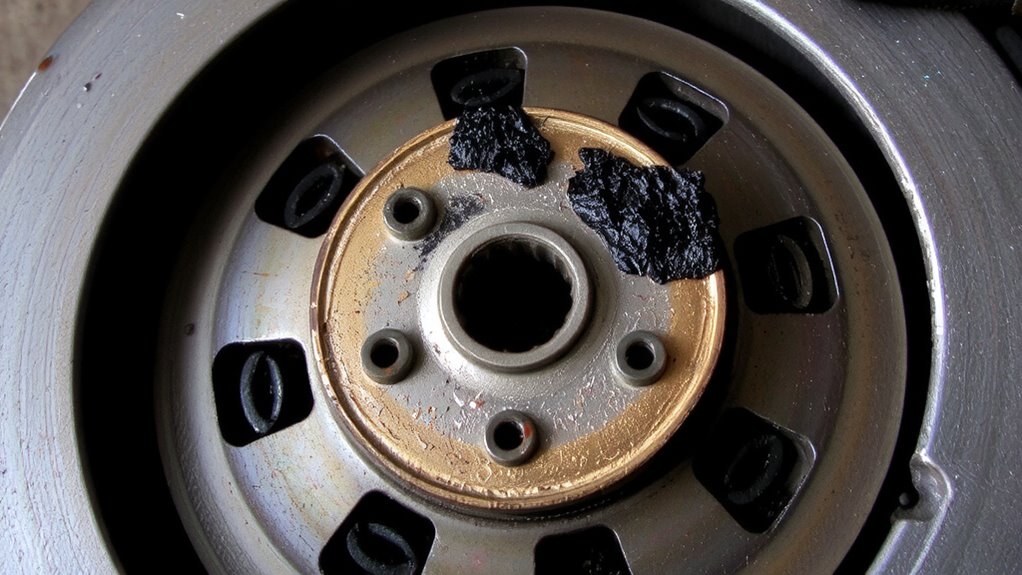
Why do clutch packs in hybrid electric vehicles (HEVs) wear out faster when regenerative braking is involved? Regenerative braking reduces mechanical brake use, causing clutch packs to engage less frequently but under higher thermal stress. When the internal combustion engine restarts, the clutch synchronizes sudden speed differences, generating spike temperatures up to 300°C. This leads to increased heat degradation of friction materials and matrix binders. Repeated thermal cycling weakens material integrity. You get friction material delamination as layers separate due to uneven expansion and bonding fatigue. Delamination reduces effective surface area by up to 40%, impairing torque transfer. Steel plates may warp at 0.05 mm out-of-flat tolerance, accelerating wear. Unlike conventional vehicles, HEVs impose irregular, high-intensity clutch loads. These conditions overwhelm standard lubricity additives. Thermal breakdown of clutch fluids further diminishes protection. Over time, this cycle degrades performance and shortens clutch life.
How Less Clutch Use Starves Lubrication in HEVs
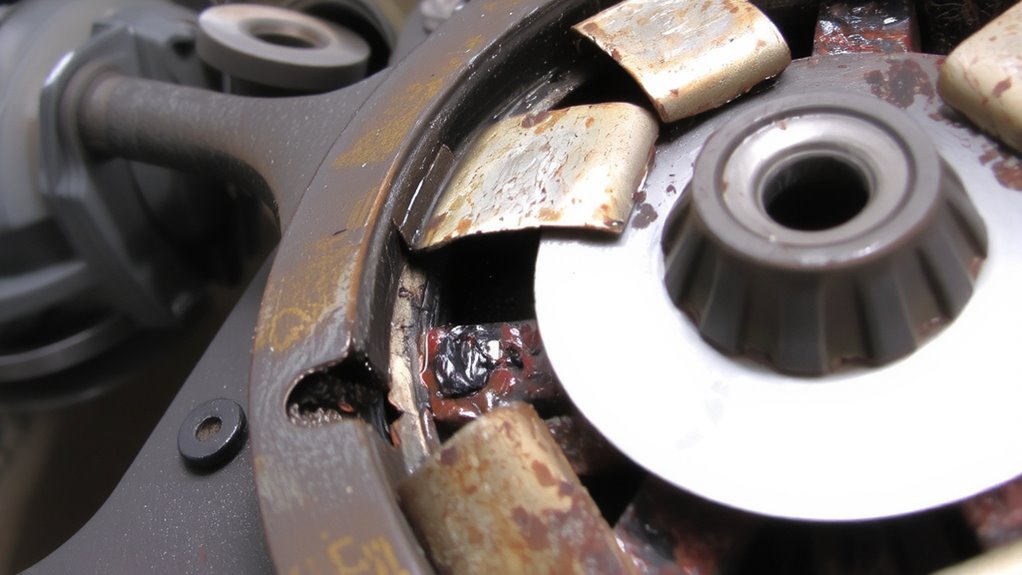
Even though you might think less clutch use would extend its life, infrequent engagement in hybrid electric vehicles actually starves the system of necessary lubrication. Reduced fluid circulation limits the delivery of oil to critical clutch pack components. Without consistent flow, lubricants don’t evenly coat surfaces, increasing the risk of wear during sudden engagement. Infrequent engagement cycles prevent thermal cycling that helps maintain fluid viscosity and film strength. Most HEV clutch packs rely on hydrodynamic lubrication, which depends on regular motion to generate protective oil films. When clutches remain disengaged for long periods-sometimes days or weeks-oil drains away from contact zones. This creates boundary lubrication conditions upon activation, accelerating surface degradation. Laboratory tests show up to 40% less oil retention in clutch plates after 72 hours of inactivity. Reduced circulation also hampers heat dissipation, raising peak temperatures during engagement by as much as 25°C.
Do Cold Clutches Lose Lubrication in HEVs?
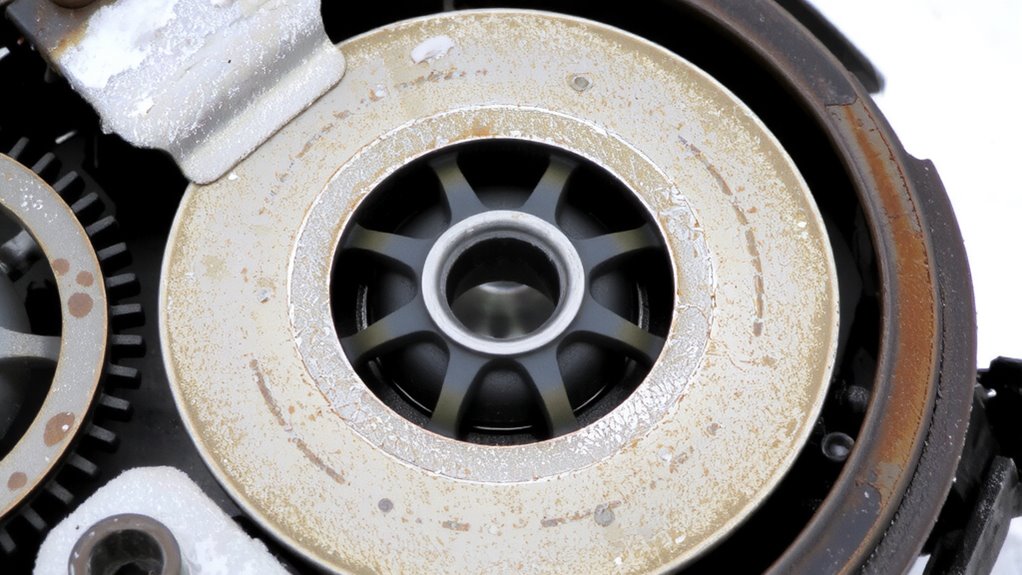
How quickly does lubrication fade when your HEV sits overnight in freezing temperatures? Cold viscosity becomes critical in these conditions. Below -10°C, conventional clutch lubricants thicken, reducing flow and delaying engagement. Your clutch pack may start with inadequate oil film, increasing wear during cold starts. Synthetic lubricants perform better, maintaining fluidity down to -40°C with a cold viscosity under 5,000 cP. Prolonged inactivity in cold environments worsens idle corrosion. Moisture condensation inside inactive clutch housings promotes surface rust on metal plates. Even thin oxide layers degrade friction coefficients, impairing torque transfer. Anti-corrosion additives in advanced lubricants reduce this risk by forming protective molecular barriers. Testing shows oils with ≥5% rust inhibitors suppress idle corrosion by over 70% in 72-hour humidity cycles. Proper lubrication doesn’t just flow-it protects, even when your HEV sits still in the cold.
What Happens When Clutches Sit Dry in HEVs?
What if your HEV’s clutch sits without lubrication for weeks? Prolonged dry periods lead to dry friction during initial engagement, spiking wear rates by up to 40% compared to lubricated starts. Without oil film protection, micro-welding occurs between steel plates and friction materials. This damages surface coatings designed for smooth torque transfer. Extended dry storage also promotes clutch corrosion, especially in humid climates. Moisture condensation accelerates oxidation on metal surfaces, degrading clutch pack integrity. Corrosion pits create roughness, increasing vibration and shudder during engagement. Tests show uncoated clutch steels can corrode within 72 hours in 80% RH environments. Repeated dry starts decrease clutch lifespan by 30–50% over time. Even brief dry operation harms precision tolerances. The absence of consistent lubrication undermines designed performance, accelerating mechanical breakdown.
Best Additives for HEV Transmission Fluids
A high-performance HEV transmission fluid relies on a carefully balanced additive package to meet the demanding needs of hybrid systems. You need additives that guarantee friction stability during frequent clutch engagement and disengagement. Friction modifiers maintain consistent torque transfer, preventing shudder and slippage. Antioxidants combat thermal oxidation, especially critical due to heat spikes from regenerative braking and ICE restarts. Without these, fluids can break down, increasing varnish and deposit formation. Metal deactivators reduce catalytic oxidation caused by copper and iron components. Detergents and dispersants keep clutch surfaces clean, preserving fluidity and lubricity. Zinc dialkyldithiophosphate (ZDDP) offers anti-wear protection but must be balanced to avoid friction instability. Synthetic base stocks enhance thermal and oxidative resistance. These formulations extend fluid life and maintain performance, even under sustained high temperatures.
Engineering Clutch Packs for HEVS With Regenerative Braking
Because regenerative braking shifts much of the deceleration load away from friction brakes, your clutch packs in HEVs must handle more frequent engagement cycles under variable torque conditions. This increases stress on materials, raising risks of thermal degradation and material fatigue over time. To combat this, engineers optimize friction material composition, plate geometry, and cooling pathways. Advanced clutches now use sintered metal or ceramic composites rated for over 2,000 engagement cycles at temperatures exceeding 300°F.
| Feature | Standard Clutch | HEV-Optimized Clutch |
|---|---|---|
| Cycle Life | 1,000 cycles | 2,500+ cycles |
| Max Temp Tolerance | 250°F | 350°F |
| Friction Material | Organic | Sintered Metal |
Your design must guarantee consistent performance despite erratic torque reversals. Enhanced oil flow reduces thermal degradation, while layered substrates resist material fatigue during rapid engagements.
On a final note
You face increased clutch pack wear in HEVs due to reduced mechanical braking. Regenerative braking limits clutch engagement, starving surfaces of lubricant circulation. Without frequent actuation, oil film degrades, increasing cold-start friction. Dry clutches suffer micro-welding, accelerating wear. Use transmission fluids with enhanced anti-wear additives like ZDDP (1,200 ppm minimum) and friction stabilizers. Engineers now design clutches with surface treatments and improved oil channels to maintain lubricity under low-cycle conditions.