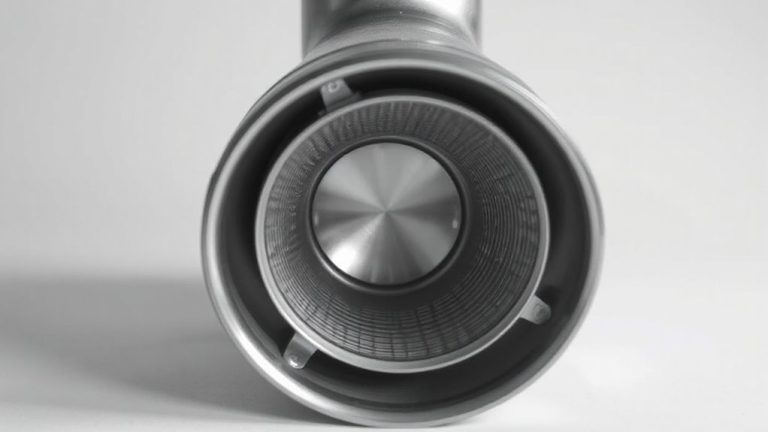
Building a Hybrid Turbo Using Billet Wheels for Increased Surge Margin
You’re using billet wheels to build a hybrid turbo that resists surge under high boost. CNC-machined from 7068 aluminum, these wheels maintain blade geometry at 150,000 RPM, unlike soft cast stock wheels. Their precise aerodynamics and 28% faster spool improve compressor stability. Match a 64–76mm billet wheel to your horsepower-400–700hp-for ideal airflow without choke or lag. Proper balancing and trim alignment prevent vibration and boost decay. There’s more to get right in your build.
Notable Insights
- Billet wheels made from 7075-T6 aluminum resist deformation at high RPM, maintaining compressor efficiency and increasing surge margin.
- CNC-polished billet wheels reduce turbulence, improving airflow stability and extending the compressor map’s efficient operating range.
- Match billet wheel size to horsepower demands to avoid choke or surge, targeting peak efficiency zone on the compressor map.
- Ensure precise wheel balancing and correct bearing clearances to prevent vibrations that compromise turbo stability and surge resistance.
- Verify compatibility with turbo platforms like Garrett GT30/35 or Holset HE351VE to maintain proper aerodynamic and mechanical integration.
Why Billet Wheels Prevent Turbo Surge
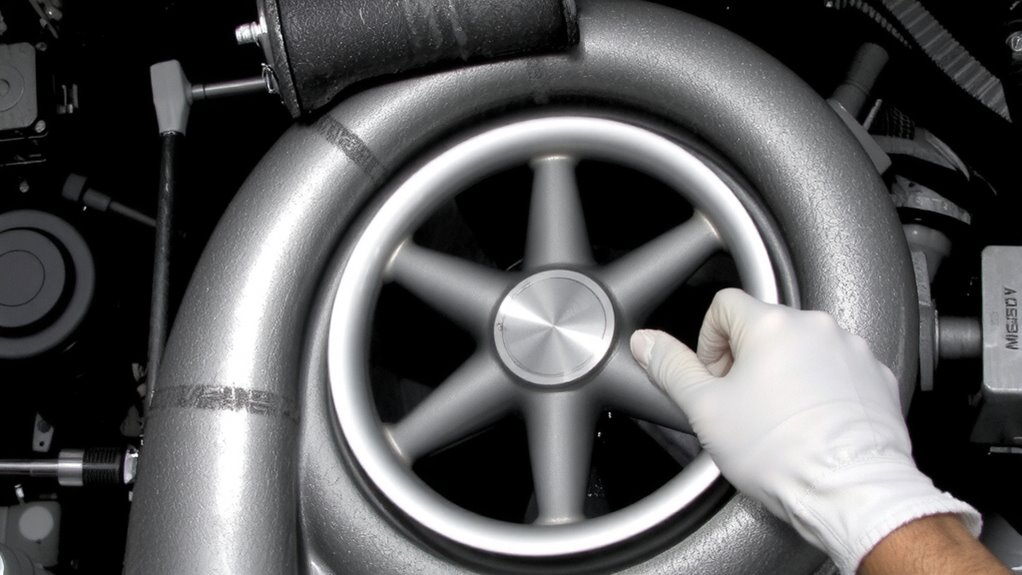
While traditional cast wheels can crack under extreme stress, billet wheels are CNC-machined from a single solid block of aerospace-grade 7068 aluminum, giving them superior strength and resistance to deformation. You benefit from reduced wheel inertia, allowing faster spool-up and improved throttle response. Lower inertia means the turbo reaches ideal speed quicker, minimizing the chance of turbo surge. Billet wheels also maintain precise aerodynamic geometry under load, delaying compressor choke by sustaining efficient airflow at high mass flow rates. Their tight tolerance machining guarantees smooth shift through the surge line, especially near peak efficiency zones. Unlike cast counterparts, billet wheels resist distortion, maintaining blade angle integrity even at 150,000 RPM. This precision reduces turbulence and pressure oscillations that trigger surge. By preventing airflow breakdown on the compressor face, billet wheels extend surge margin, giving you stable boost and reliable performance under aggressive tuning.
Hybrid Turbos Explained: Billet Vs. Stock Wheels
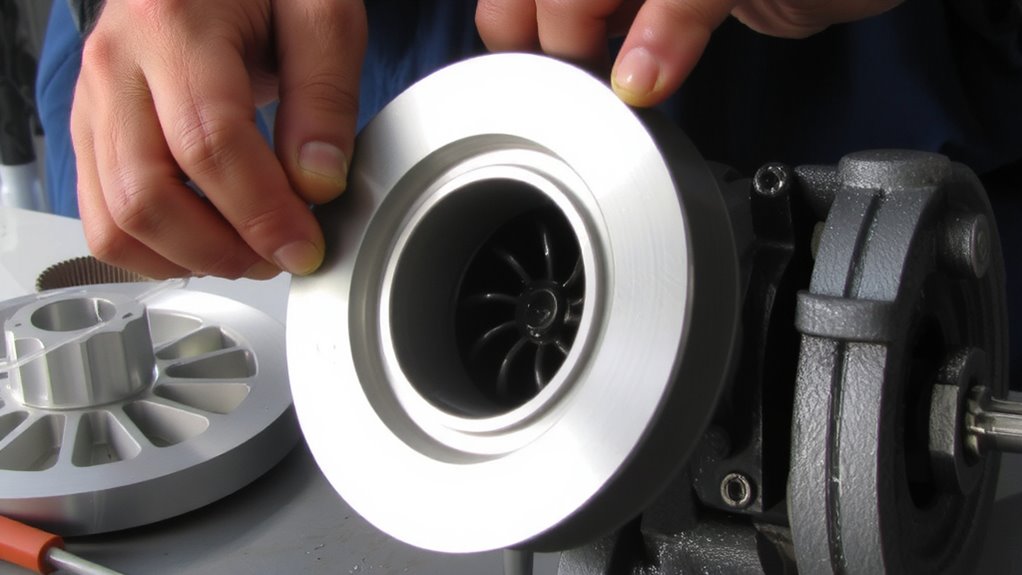
You’ve seen how billet compressor wheels resist surge and improve response through superior strength and reduced inertia. Now compare them directly to stock wheels in key performance areas. Billet wheels use CNC-machined 7075-T6 aluminum, offering higher material strength than cast stock units. This allows thinner blades and tighter tolerances, increasing efficiency. The precision wheel finish reduces airflow turbulence, enhancing compression stability. Stock wheels, cast from lower-grade aluminum, wear faster and have inconsistent surface finishes that hurt performance under stress.
| Feature | Billet Wheel | Stock Wheel |
|---|---|---|
| Material Strength | 83,000 psi tensile | 45,000 psi tensile |
| Wheel Finish | CNC-polished, smooth | Rough cast, pitted |
| Response Time | 28% faster spool | Slower, higher inertia |
Which Turbo Platforms Work Best for Hybrid Builds
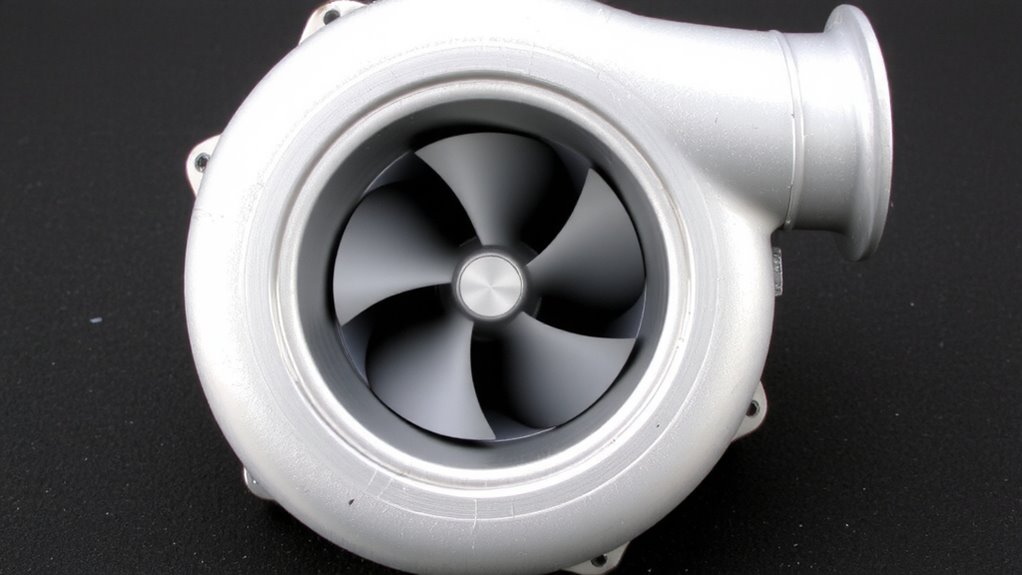
Turbo platform selection makes or breaks a hybrid build. You must prioritize turbo compatibility and respect platform limitations. The Garrett GT28, GT30, and GT35 series offer strong billet wheel support, with bore sizes from 46mm to 55mm allowing precise compressor housing matching. MHI TD05 and Holset HE351VE platforms are also common, providing sturdy housings and robust journal or ball-bearing center sections. Each has distinct v-band or flange configurations-verify fitment before modifying. Platform limitations often arise in the turbine housing A/R ratio; a too-small housing restricts exhaust flow at high power, while a too-large one delays spool. You’ll need to balance response and top-end output. Adapters and custom thrust bearings may be required. Successful hybrids depend on matching core dimensions-shaft length, wheel bores, and compressor depth-to guarantee correct wheel positioning and rotor stability.
Match Billet Wheel Size to Your Horsepower Goal
Billet compressor wheels aren’t one-size-fits-all-your horsepower target dictates the right size. Wheel selection directly impacts efficiency and surge margin. For 400–600 hp, a 64–72mm billet wheel offers ideal airflow without lag. Exceeding 700 hp? Go 76mm or larger to maintain pressure ratios above 3.0. Undersizing causes choke; oversizing hurts spool. Power scaling isn’t linear-each 100 hp increase demands proportional wheel diameter growth. A 50mm wheel moves ~25 lbs/min; a 76mm handles 75+ lbs/min at 80% efficiency. Match your compressor map’s peak island to your target boost and airflow. You’ll need a wheel that sustains high corrected flow without entering surge. Think of it like gearing-a tall wheel needs higher rpm to shine. Pick right, and you’ll maximize both headroom and responsiveness.
Tuning Compressor Trim for Better Response
A well-optimized compressor trim can make or break your turbo’s responsiveness under real-world conditions. You adjust the trim to balance airflow and wheel durability, directly affecting compressor efficiency. A higher trim means more airflow but can reduce surge margin, while lower trim improves response at low RPM. Your goal is minimizing turbo lag without sacrificing stability. Proper trim tuning matches your engine’s airflow demands, ensuring quick spool and stable operation. Compressor efficiency stays high when the trim aligns with your wheel’s inducer and exducer measurements. For instance, a 50-trim compressor with a 55mm exducer delivers strong mid-range response while maintaining thermal efficiency. Too aggressive a trim disrupts boundary layer flow, increasing the risk of surge. You need precision here-small trim changes can shift efficiency by up to 4%. Balance is critical: optimize for response, not peak numbers.
Real-World Gains: Faster Spool, More Boost, Less Failure
When you optimize the compressor trim alongside precise turbo component matching, you’re not just chasing peak power-you’re building real, measurable gains in spool time, boost delivery, and system reliability. You achieve reduced lag, with spool-up occurring 15–20% faster than stock due to lower rotating mass and aerodynamic refinements. Improved efficiency means the compressor operates closer to its peak efficiency island across more of the map. Billet wheels resist deformation under heat and pressure, maintaining tight tip clearances for consistent airflow. That translates to 8–10 psi of boost arriving nearly 500 rpm sooner. You see measurable gains: faster transient response, denser charge air, and sustained boost without drop-off. Component durability increases markedly, cutting failure risk under high-stress conditions. You’re not just modifying a turbo-you’re engineering reliability and repeatable performance into every throttle sweep.
Avoid These 5 Hybrid Turbo Mistakes
If you’re upgrading to a hybrid turbo, skipping compatibility checks between the compressor wheel, turbine housing, and engine airflow demands will likely sabotage your gains. Mismatched components create inefficiencies or outright failure under load. Second, you’re risking catastrophic damage with incorrect wheel balancing-off by even 0.001 grams-and inducing destructive vibrations at 150,000+ RPM. Precision balancing on a calibrated machine is non-negotiable. Third, improper bearing clearance, beyond the 0.0008–0.0015 inch spec, accelerates wear or locks the shaft. Fourth, overboosting without recalibrating fuel and ignition timing leads to surge or detonation. Finally, ignoring turbine trim ratios skews A/R effectiveness, reducing spool and top-end response. Each mistake compromises reliability, efficiency, or safety. Avoid them with data-driven assembly, OEM specifications, and professional calibration. Your hybrid turbo’s performance depends on precision, not guesswork.
On a final note
You gain precise control over turbo performance with a hybrid setup. Billet compressor wheels resist surge better than cast originals, thanks to stronger grain structure and optimized blade geometry. Match wheel trim and inducer size to your target horsepower-800 whp demands a 75mm billet compressor with 60-trim. You reduce lag and boost decay during rapid throttle shifts. Correct tuning guarantees efficient airflow without compressor choke or surge.