How Often to Inspect ABS Wheel Speed Sensors During Routine Tire Rotation
Check your ABS wheel speed sensors every 12,000 to 15,000 miles during tire rotation. This timing lets you inspect them while the wheels are already off. Look for corrosion, wiring damage, or debris on the sensor tip. Maintain the air gap between 0.4 and 1.2 mm. Test AC output with a multimeter-it should read 0.5 to 12 volts when spinning. Catching issues early keeps your ABS working reliably. There’s more to know about keeping these sensors in top shape.
Notable Insights
- Inspect ABS sensors every 12,000 to 15,000 miles during routine tire rotation.
- Sensors are easily accessible when wheels are removed for rotation.
- Check for corrosion, wiring damage, and proper air gap while inspecting.
- Ensure sensor output is 0.5–12 volts AC using a digital multimeter.
- Clean sensor tip with brake cleaner if contaminated with debris or metal shavings.
Why You Should Check ABS Sensors During Tire Rotation
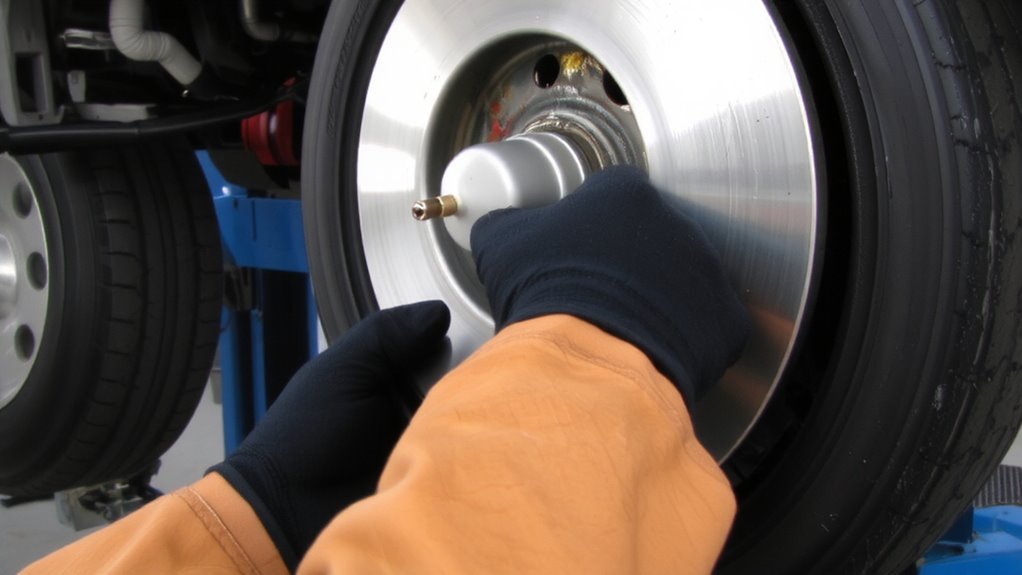
While you’re already rotating the tires, it’s a smart move to inspect the ABS wheel speed sensors since they’re easily accessible and critical to braking performance. Checking them helps maintain ABS functionality, preventing erratic triggering or failure during hard braking. These sensors typically operate within a 0.5 to 15 mm air gap from the reluctor ring; debris or misalignment can disrupt signal output. Contamination from road grime or metallic shavings impairs accuracy, so cleaning the sensor tip improves reliability. You should verify wiring integrity-look for frayed insulation or corroded connectors near the hubs. Most sensors last 80,000 to 100,000 miles, but harsh conditions reduce sensor longevity. Early detection of wear or damage avoids costly repairs and guarantees consistent performance. Think of it like checking spark plugs during an oil change-efficient, logical, and preventive.
Where ABS Wheel Speed Sensors Are Located
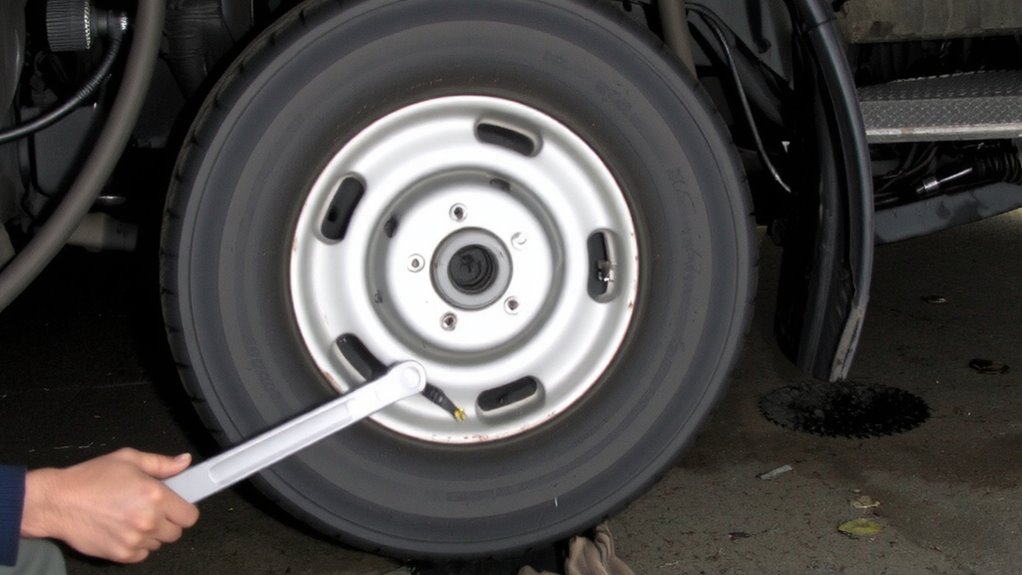
Each ABS wheel speed sensor sits near the wheel hub, precisely mounted to monitor the rotation of a toothed reluctor ring attached to the axle or CV joint. Sensor placement varies slightly by axle type and vehicle design but is consistently located within 0.5 to 1.5 mm of the reluctor ring. This gap is critical-too wide and the signal weakens; too narrow and contact can damage components. You’ll find the mounting position differs by model: front sensors often attach to the steering knuckle, while rear sensors may mount to the hub or axle housing. Most sensors thread into place or secure with a single bolt. They’re positioned to avoid road debris yet remain accessible for service. Accurate mounting position guarantees reliable signal transmission to the ABS module. Misaligned sensors cause false error codes. Knowing exact sensor placement saves time during inspection and prevents misdiagnosis of wheel speed signal faults.
What to Look For: Corrosion, Damage, and Wiring Issues
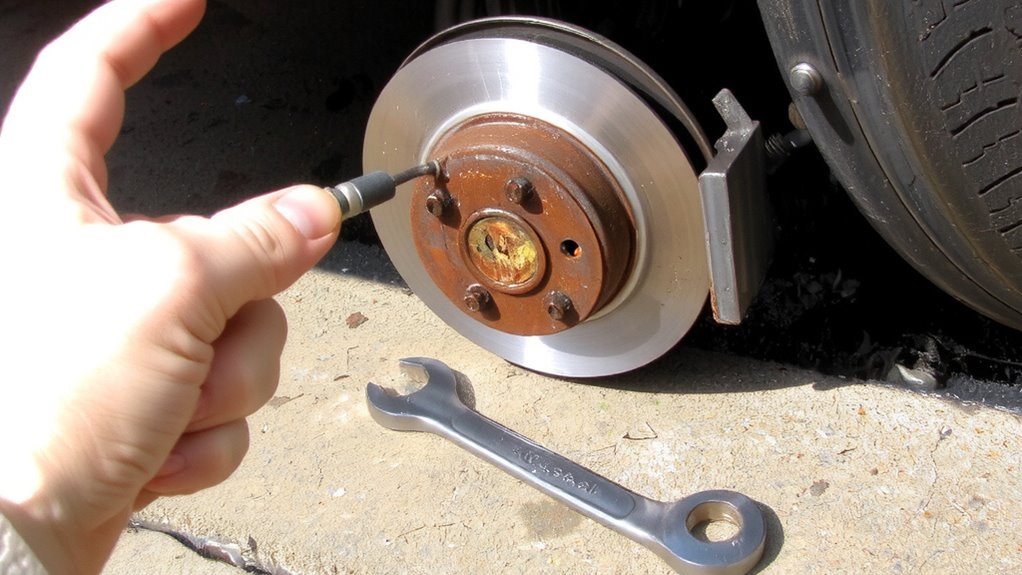
Start your inspection by checking for visible signs of corrosion, especially around the sensor tip and electrical connector. Corros grinding signal transmission and lead to signal interference, triggering false ABS warnings. Examine the wiring harness for cracks, fraying, or insulation wear-common causes of electrical shorts. Damaged wires compromise sensor function and can mimic module failure. Inspect the sensor body for impact damage or bending, which affects mounting alignment. Even slight misalignment alters the air gap-typically 0.4 to 1.0 mm-between the sensor and tone ring, distorting readings. Guarantee the sensor sits flush and secure in its bore. Verify the tone ring teeth are intact and free of debris, as missing or bent teeth generate erratic signals. A clean, properly seated sensor with undamaged wiring maintains signal integrity and system reliability. Address issues now to prevent malfunction during braking events.
Common ABS Sensor Problems Found at Rotation
You’ll often spot recurring issues with ABS wheel speed sensors the moment you rotate the tires during routine service. These problems can disrupt braking performance and trigger dashboard warnings. Signal interference and electrical shorts are among the most common faults detected.
| Problem | Cause |
|---|---|
| Signal interference | Damaged sensor shielding or proximity to magnetic sources |
| Electrical shorts | Cracked insulation or moisture ingress in wiring harness |
| Erratic readings | Loose sensor mounting or air gap deviation |
| Complete failure | Internal coil failure or corrosion at connector |
Sensor air gaps outside the 0.4–1.0 mm range impair signal accuracy. Modern sensors generate AC signals between 0.5–5 volts, depending on wheel speed. Wiring should show no abrasion and maintain 0.5+ megaohm insulation resistance. You’ll prevent cascading ABS faults by catching these early.
How to Clean ABS Wheel Speed Sensors Yourself
A clean ABS wheel speed sensor is essential for accurate signal transmission and reliable braking performance. Contamination from brake dust, road grime, or metal shavings disruptships the sensor’s ability to read the tone ring. For effective DIY cleaning, remove the sensor using a 10mm socket or Torx bit, depending on your vehicle. Gently wipe the tip with a lint-free cloth dampened with brake cleaner-avoid high-pressure sprays. Inspect the sensor’s mounting area and clear debris from the bore. Reinstall the sensor securely, guaranteeing proper air gap (typically 0.4–1.3 mm). After reassembly, perform sensor testing by spinning the wheel and monitoring live data via an OBD2 scanner. A stable, increasing signal confirms correct operation. Proper maintenance prevents false ABS triggers and guarantees system reliability. No lubricants or oils should contact the sensor.
When to Replace a Faulty ABS Wheel Speed Sensor
Why does your ABS warning light stay on even after cleaning the sensors? Because you might have a sensor failure or persistent signal interference. Cleaning helps, but it won’t fix internal damage or wiring faults. If the ABS light remains on, check for consistent error codes using a scan tool-repetitive codes for one wheel indicate a failing sensor.
A faulty sensor disrupts speed signal transmission, compromising braking performance.
| Symptom | Likely Cause | Action Needed |
|---|---|---|
| Intermittent ABS light | Signal interference | Inspect wiring and connectors |
| Constant ABS light | Sensor failure | Test sensor output (typically 0.5–2V AC) |
| Traction control issues | Weak signal | Replace sensor if output is below spec |
Replace the sensor if readings fall outside tolerance or physical cracks are evident.
How Often to Inspect ABS Sensors With Tire Maintenance
Regularly inspecting ABS wheel speed sensors during tire maintenance helps catch issues early. You should check them every 12,000 to 15,000 miles, coinciding with tire rotation. This interval guarantees sensor calibration remains accurate. Even slight misalignments can disrupt readings, leading to false ABS warnings. Inspect for physical damage, corrosion, or debris buildup on the sensor tip-common causes of signal interference. The air gap between the sensor and tone ring must stay within 0.4 to 1.2 mm; exceeding this range distorts signal transmission. A damaged or loose sensor mount alters this spacing, affecting performance. Use a digital multimeter to verify output voltage matches manufacturer specs, typically 0.5 to 12 V AC under rotation. Maintaining clean, secure connections prevents electrical noise. Proper sensor calibration and minimizing signal interference are essential for reliable ABS function.
On a final note
You should inspect ABS wheel speed sensors every 5,000 to 7,500 miles during routine tire rotation. These sensors, typically mounted near the hub or knuckle, operate within a critical air gap of 0.4 to 1.3 mm. Debris, corrosion, or wiring faults can disrupt the magnetic or hall-effect signal. Clean the sensor face with electrical contact cleaner. Replace damaged sensors to maintain ABS functionality and prevent false trigger events in braking systems.