Exploring Solvent Types and Their Applications in Car Maintenance Chemistry
You should choose solvents based on surface type and soil level. Acetone removes tar and adhesives in 10–15 seconds but damages clear coat and plastics. Mineral spirits, with 55–65 Kauri-Butanol units, safely degrease engines at $10 per gallon. Isopropyl alcohol at 70% cleans dashboards; 99% works on electronics. Biodegradable solvents use plant-based esters and pH 6.5–8.5 formulas to protect wax and clear coats. Using the wrong solvent can cause swelling, cracking, or hazing-knowing each type’s limits guarantees safe, effective cleaning every time.
Notable Insights
- Biodegradable solvents use plant-based esters and alcohols, safely cleaning car surfaces without harming clear coats or waxes.
- Acetone rapidly removes grease and adhesives but damages plastics and paint, requiring careful, limited use on metal or glass.
- Mineral spirits effectively degrease engines, are reusable, and safe for most automotive materials due to moderate solvency and flash point.
- Isopropyl alcohol cleans electronics and interiors, evaporating quickly without residue, with concentration adjusted for surface sensitivity.
- Harsh solvents like toluene or xylene risk damaging paint, rubber, and vinyl; always spot-test and avoid high solubility parameter solvents near sensitive parts.
What Solvent Should You Use for Car Cleaning?
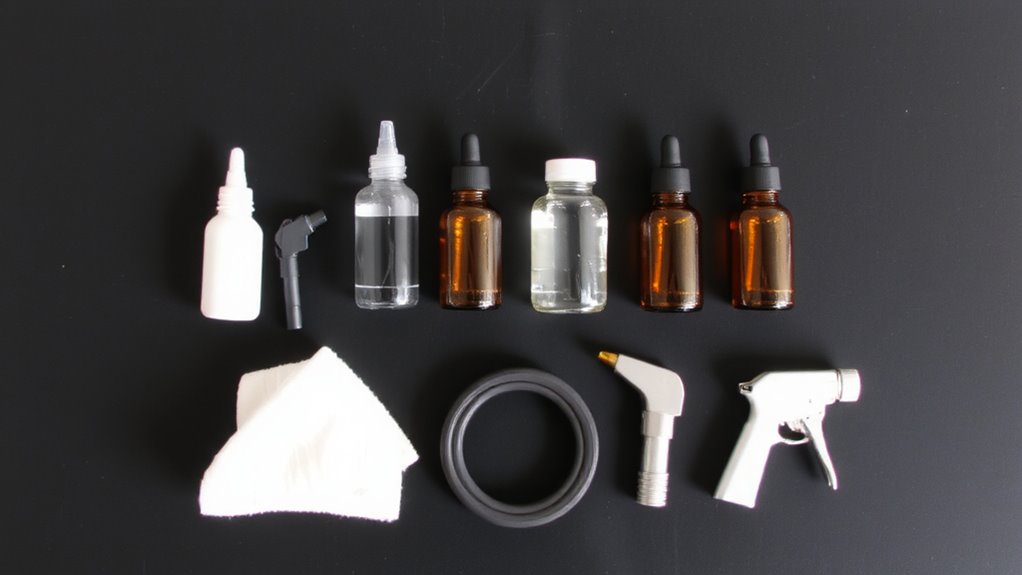
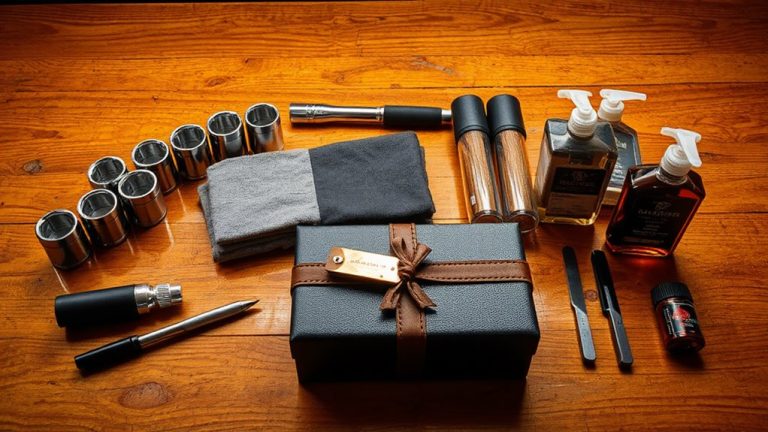
Why do some solvents leave your car’s surfaces streak-free while others damage the finish? The answer lies in solvent chemistry and surface compatibility. You should choose biodegradable solvents when possible-they break down naturally, reducing environmental impact without sacrificing cleaning power. These solvents often use plant-based esters or alcohols with a pH between 6.5 and 8.5, making them safe for clear coats. For quick detailing, waterless washes are effective, especially when applied to lightly soiled surfaces. A typical waterless formulation contains 10–15% biodegradable surfactants, 5% lubricity agents like isopropyl myristate, and moisture-dispersing alcohols. Spray evenly, use a microfiber towel with minimal pressure, and wipe in straight lines to prevent micro-scratching. Unlike harsh petroleum distillates, these solutions lift dirt without dissolving protective waxes. Selecting the right solvent guarantees residue-free cleaning and preserves long-term paint integrity.
Acetone: Best for Tough Grease, Worst for Plastics
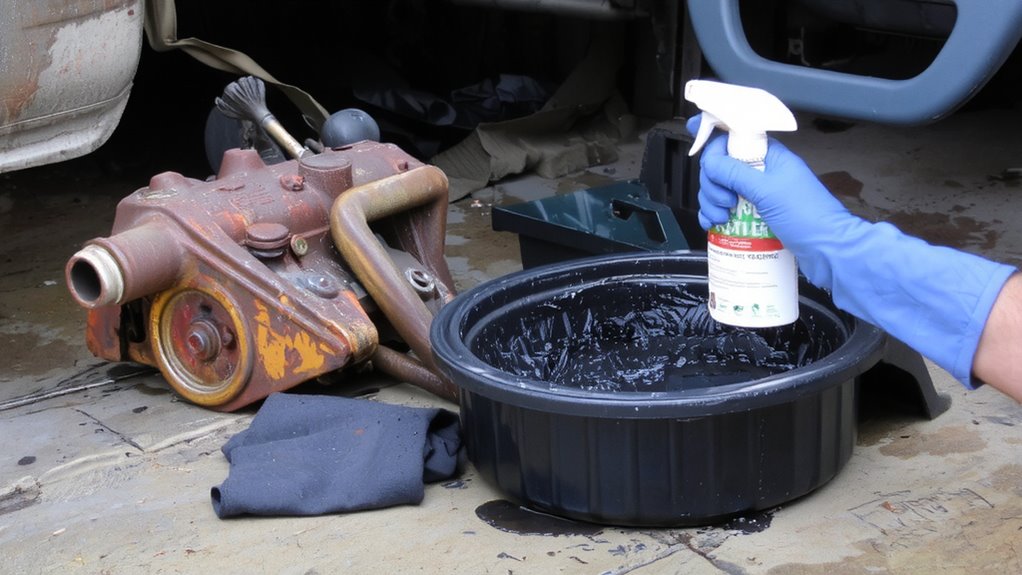
Acetone stands apart from everyday cleaning solvents due to its exceptional ability to dissolve heavy grease, tar, and adhesive residues. You’ll find it effective on stubborn contaminants that resist milder agents. Its high surface reactivity allows rapid penetration into organic deposits, breaking molecular bonds efficiently. Acetone evaporates quickly-within 15 to 30 seconds under standard conditions-leaving no residue. However, its aggressive nature demands caution. Poor chemical compatibility with many plastics means it can craze, warp, or dissolve materials like polycarbonate and ABS. It may also damage paint finishes and rubber seals. Always test on a small, inconspicuous area first. Use it sparingly with lint-free cloths for targeted cleaning. Never soak rubber or plastic components. While ideal for metal parts and glass, acetone’s lack of material selectivity limits broad use. Handle it in ventilated areas, wearing nitrile gloves.
Mineral Spirits: Safe Engine Degreasing Without Damage
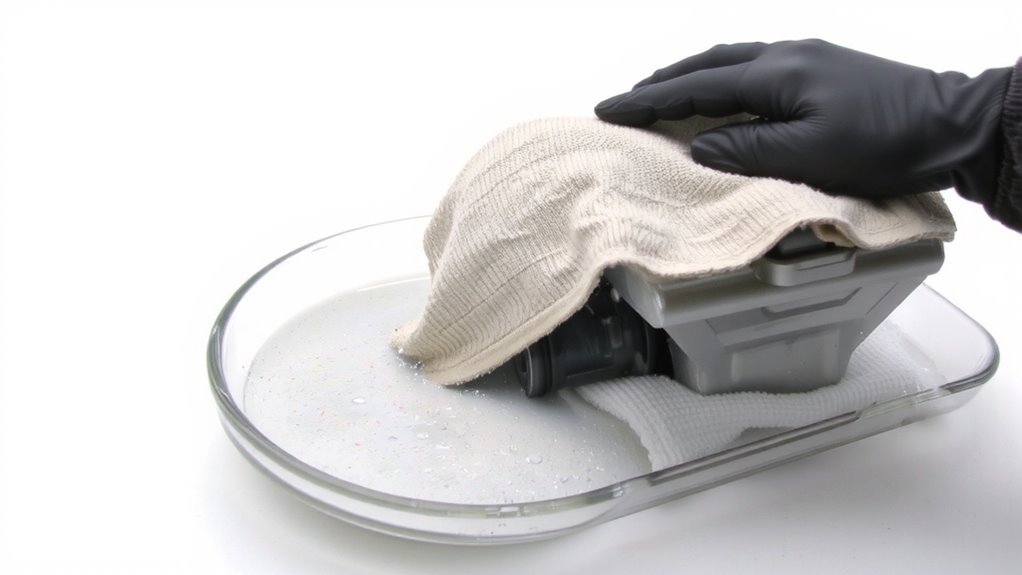
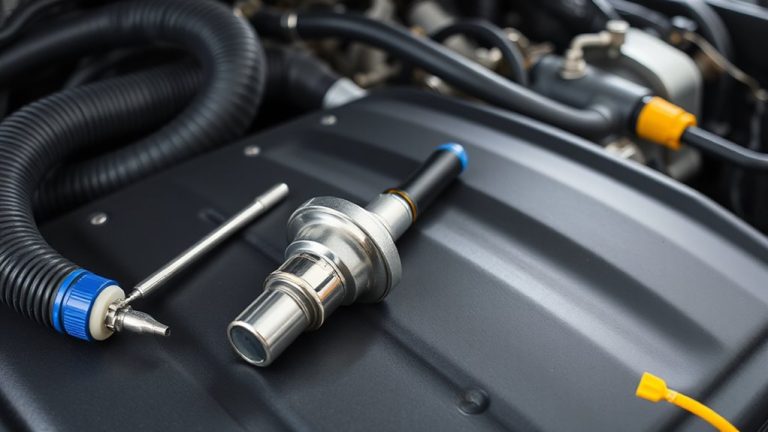
Mineral spirits offer a balanced solution for degreasing engine components without risking damage to surrounding materials. You can use them safely on metal, rubber, and most plastics, making them ideal for precision cleaning. With a flash point of 105°F (40.5°C), they’re less flammable than acetone but still require ventilation. Their solvency power, measured at 55–65 Kauri-Butanol units, cuts through grime effectively while allowing thorough residue removal. Unlike harsher solvents, mineral spirits leave minimal film behind, ensuring parts dry clean. Though not fully biodegradable, they’re more environmentally considerate than many options-especially when compared to chlorinated solvents. For eco-conscious users, mineral spirits act as a bridge until biodegradable alternatives with equal performance become widely available. Always dispose of used solvent properly. Use in well-ventilated areas with gloves, and avoid prolonged skin contact. They’re cost-effective, typically priced under $10 per gallon, and reusable after settling contaminants. A top-performing option in this category is the best automotive degreaser, suitable for tackling heavy buildup while maintaining material compatibility.
Isopropyl Alcohol: Clean Electronics and Dashboards Safely
Isopropyl alcohol is your go-to solvent for safely cleaning sensitive electronics and interior surfaces like dashboards without causing damage. It evaporates quickly, typically within 30 seconds, leaving no residue. At concentrations of 70% or higher, it effectively dissolves grease, fingerprints, and smudges. You can use it on circuit boards, sensors, and connectors without risking electronic corrosion, as it lacks conductive ions. Unlike harsher solvents, it won’t lead to dashboard discoloration when applied properly with a microfiber cloth. Always apply it sparingly-flooding components increases moisture exposure and short-circuit risks. For best results, use 90–99% isopropyl alcohol on electronics where faster drying is critical. On plastic dash surfaces, 70% reduces the chance of cracking or fading. Never mix it with ammonia-based cleaners, as chemical reactions may compromise material integrity. It’s non-greasy, cost-effective, and widely available in volumes from 8 oz to 1 gallon. Some of the most effective car dashboard cleaners combine isopropyl alcohol with UV protectants to enhance surface durability and prevent premature aging.
Which Solvents Damage Paint, Rubber, or Vinyl?
Certain solvents can permanently damage your car’s paint, rubber seals, and vinyl surfaces if used improperly. Acetone, toluene, and methylene chloride are highly aggressive and cause paint erosion by dissolving clear coat resins. Even brief exposure can strip protective layers, leaving metal vulnerable. Chlorinated solvents and strong ketones also promote rubber swelling, especially in door seals and hoses made of nitrile or EPDM. Swelling deforms these parts, reducing elasticity and sealing ability over time. Petroleum-based solvents like xylene degrade vinyl trim, making it brittle and discolored. For safe cleaning, avoid anything with a solubility parameter above 10.5 (Hildebrand units) near sensitive surfaces. Instead, use water-based or alcohol solutions below 70% concentration. Always spot-test in inconspicuous areas. You’ll prevent unintended damage while maintaining material integrity across diverse automotive components.
Avoid Fumes, Fires, and Mistakes When Using Solvents
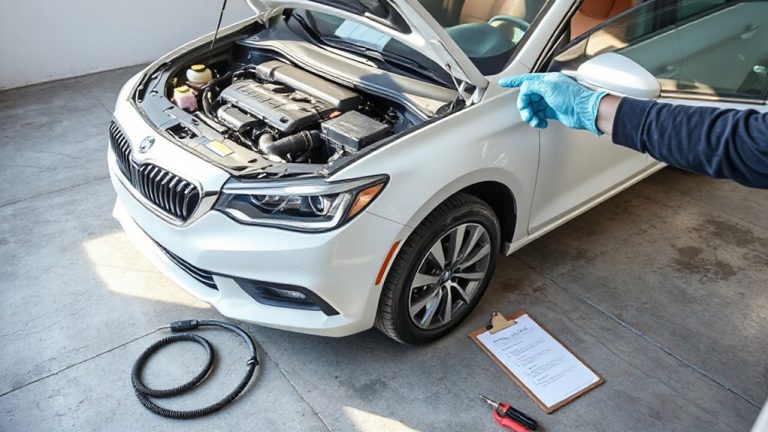
Why risk a fire or health hazard when handling solvents? Proper handling is essential. Ventilation importance can’t be overstated-always work in a well-ventilated area to disperse flammable vapors and reduce inhalation risks. Fire prevention starts with eliminating ignition sources like sparks, open flames, or hot surfaces near solvent use zones. Use only approved containers and grounding equipment when transferring flammable solvents.
| Solvent Type | Flash Point (°F) | Ventilation Required |
|---|---|---|
| Acetone | -4 | Yes – High |
| Isopropyl Alcohol | 53 | Yes – Moderate |
| Mineral Spirits | 105 | Yes – Standard |
Store solvents away from heat and direct sunlight. Wear chemical-resistant gloves and ANSI-approved safety goggles. Never mix solvents unless specified. Follow manufacturer guidelines for safe exposure limits and disposal methods.
On a final note
You must choose solvents carefully to avoid damaging automotive materials. Acetone removes heavy grease but harms plastics and paint. Mineral spirits, with a flash point of 105°F, safely clean engines without harming rubber seals. Isopropyl alcohol-90% concentration-dissolves grime on dashboards and electronics without residue. Always guarantee ventilation and avoid open flames due to flammable vapors.