Torque-to-Yield Bolt Reuse Policies in Factory-Rebuilt Performance Engines
You should never reuse torque-to-yield (TTY) bolts in factory-rebuilt performance engines-they’re designed to stretch permanently during first installation. This stretch creates consistent clamping force, typically achieved by tightening to spec and then rotating an additional 90–120 degrees. Once stretched, the bolt loses 15–30% of its clamp load and suffers microstructural damage. Reuse risks head gasket leaks, thread galling, or bolt failure under high cylinder pressures. OEMs universally prohibit reuse due to precise yield calibration. There’s more to learn about proper installation techniques and failure prevention.
Notable Insights
- Factory-rebuilt performance engines require new torque-to-yield bolts for each assembly to ensure proper clamping force.
- Reusing torque-to-yield bolts is prohibited by OEMs due to permanent elongation and loss of elasticity.
- Used TTY bolts exhibit 15–30% reduced clamping force, increasing the risk of head gasket failure.
- Plastic deformation alters the bolt’s microstructure, reducing tensile strength and fatigue resistance.
- Manufacturers specify single use only, with strict torque-angle procedures to maintain engine integrity.
What Are Torque-to-Yield Bolts and How Do They Work?
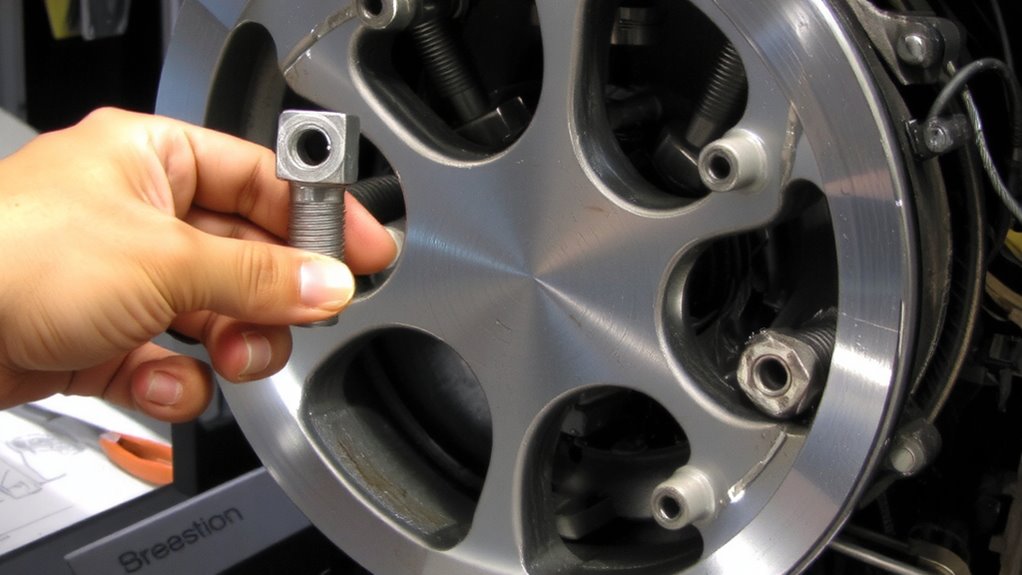
While most bolts rely on clamping force from simple torque, torque-to-yield (TTY) bolts work differently by stretching slightly during installation to maintain consistent preload. You tighten them to a specific torque specification, then apply additional angle rotation-often 90 to 120 degrees. This causes controlled bolt elongation beyond elastic deformation, entering the yield zone. The result? Greater clamping force uniformity under thermal and mechanical loads. Unlike standard bolts, TTY fasteners behave like a spring under tension, maintaining joint integrity at high stress. You’ll find them in modern engines, especially head, flywheel, and main bearing applications. Their design guarantees peak clamp load across aluminum cylinder heads where thermal expansion varies. Bolt elongation is intentional here, not a sign of failure. Accuracy matters-use a calibrated torque wrench and angle gauge. Over-tightening risks immediate fracture; under-tightening compromises clamping force. For precise torque application, consider using a digital torque wrench to ensure consistent and repeatable results.
Why Reusing TTY Bolts Risks Engine Reliability
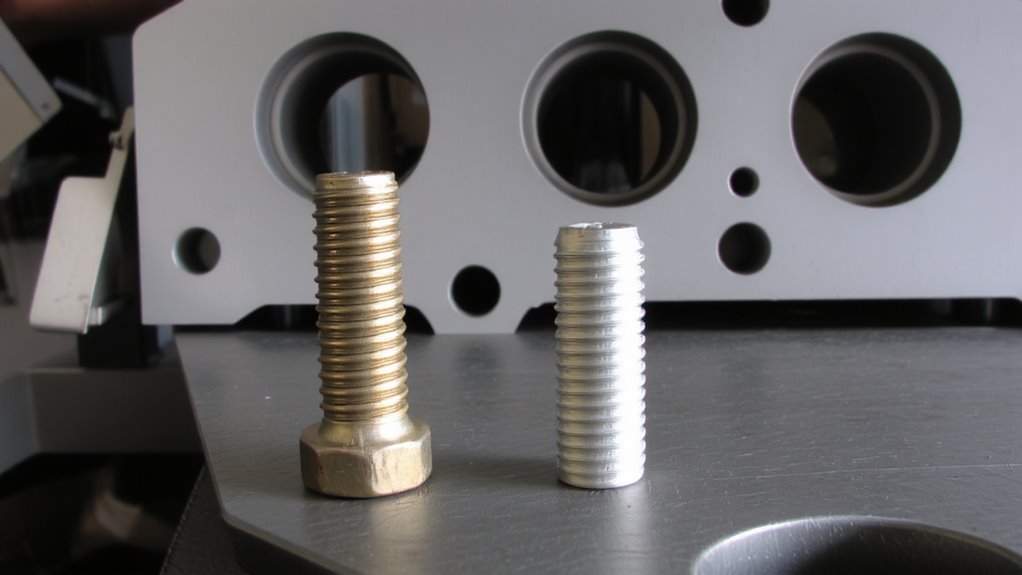
Deformation is permanent. Once you stretch a torque-to-yield (TTY) bolt, it doesn’t return to its original length. You’re relying on that precise elongation to maintain correct clamping force. Reusing it compromises material fatigue resistance. The microstructure has already undergone plastic deformation, reducing its ability to withstand stress. Even slight reuse increases the risk of bolt failure under operating loads. Clamping force drops if the bolt can’t maintain tension, leading to head gasket leaks or component misalignment. Think of it like a spring you’ve stretched too far-it won’t snap back. OEM specs often limit elongation to 0.003–0.006 inches per use. Exceeding that once is irreversible. Subsequent use accelerates material fatigue, creating weak points along the shank. Without consistent clamping force, engine reliability plummets. You’re gambling with critical joint integrity. Reuse may seem cost-effective, but the performance risk isn’t worth it.
Manufacturer Guidelines on Torque-to-Yield Bolt Reuse
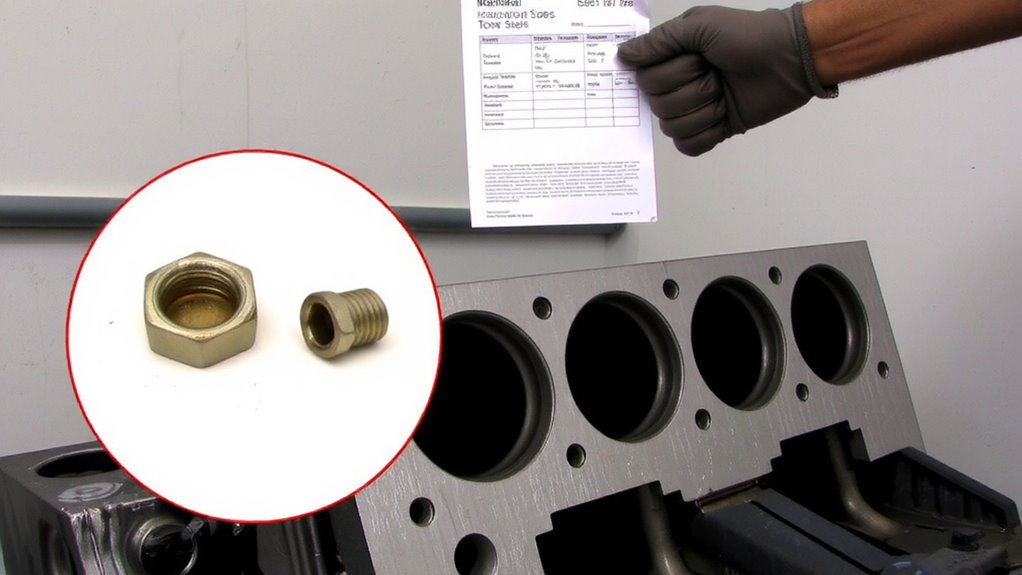
When it comes to torque-to-yield bolts, manufacturers are clear: reuse isn’t approved. These fasteners stretch permanently during installation, and once unloaded, they can’t maintain proper clamping force. Material fatigue degrades their structural integrity, making them prone to failure under high stress. Your engine’s reliability depends on following OEM specs precisely. Even if a bolt looks fine, its installation history matters-each use alters its mechanical properties. Always assume TTY bolts are single-use unless documentation states otherwise. Below is a comparison of key factors:
| Factor | New TTY Bolt | Reused TTY Bolt |
|---|---|---|
| Clamping Force | 100% design spec | Reduced by 15–30% |
| Material Fatigue | Minimal | Greatly increased |
| Installation History | None (factory fresh) | Alters yield behavior |
Stick to factory guidelines-your engine’s life depends on it.
When Rebuilding Performance Engines, Are TTY Bolts Ever Reused?
Why risk engine failure on a rebuild by reusing critical fasteners meant for one-time use? Torque-to-yield (TTY) bolts stretch permanently during initial installation, designed to achieve peak clamp load through controlled deformation. Once stretched, they lose elasticity and tensile strength, increasing bolt material fatigue under thermal and mechanical stress. Reusing them compromises clamping force, especially in high-output engines where cylinder pressures exceed 1,000 psi. You also face thread deformation risks, as worn or galled threads reduce friction control and torque accuracy. Even minor damage alters load distribution, potentially leading to head gasket blowouts or bearing walk. Factory service manuals universally advise against reuse. These bolts are calibrated to precise yield points-typically 75% to 90% of ultimate tensile strength. Substituting them risks integrity. Always use new TTY bolts to guarantee consistent preload and long-term reliability.
Best Practices for Installing TTY Bolts in Factory Rebuilds
Though proper installation begins before the wrench even turns, you can’t afford to overlook the details that guarantee a TTY bolt achieves its engineered preload. Always follow the manufacturer’s specified torque sequence and angle tightening procedure-deviations compromise clamping force. Bolt lubrication importance can’t be overstated: use only the recommended lubricant, as incorrect types alter friction and yield inaccurate stretch. Apply lubricant precisely to the threads and under the bolt head to secure consistent preload. Socket fit accuracy is critical; a worn or loose socket causes slippage, leading to uneven torque. Use a high-quality, six-point socket that fits snugly. Never reuse a TTY bolt in a factory rebuild-each bolt is stretched once to meet design specs. Install with a calibrated torque wrench and angle gauge, adhering strictly to OEM procedures.
How to Spot Signs of TTY Bolt Failure Before It’s Too Late?
You already know that installing torque-to-yield bolts correctly starts with clean threads, the right lubricant, and a precise torque-angle sequence. Even then, failure can sneak up if you’re not watching for early signs. Bolt stretch beyond specification means the metal’s yield point has passed-permanent deformation means it won’t maintain clamp load. That leads to joint relaxation, where the connection loosens over time, risking gasket leaks or worse. Catch it early with these indicators:
| Symptom | What It Means |
|---|---|
| Uneven clamp force | Bolt stretch is inconsistent |
| Fluctuating torque readings | Early joint relaxation occurring |
| Visible thread galling | Lubrication failed or reuse beyond spec |
| Gasket seepage | Loss of clamping due to relaxation |
| Repeated misfires | Head movement from failed bolt stretch |
Inspect carefully-once stretched, TTY bolts can’t go back.
On a final note
You should never reuse torque-to-yield (TTY) bolts in performance engine rebuilds. These bolts stretch permanently during initial installation, losing clamp force when retorqued. Manufacturer specs require replacement to maintain cylinder head sealing. Typical stretch values range from 0.003″ to 0.008″, beyond which reuse risks head gasket failure. Always use new, OEM-specified TTY fasteners. Proper lubrication and torque sequences are critical. Replacing them guarantees maximum preload and long-term engine integrity.