How to Fit 35-Inch Tires on a Truck Without Major Modifications
You’ll need at least 6.5 inches of clearance from the wheel center to the closest obstruction, measured at both axles with tires inflated to 32–35 psi. Install a 1–3 inch leveling kit using torsion keys or spacers to raise the front. Choose wheels with 4.5 to 5.5 inches of backspacing and the correct bolt pattern. Trim inner fender liners and pinch welds where contact occurs. Test-fit tires at full lock, droop, and under load, ensuring ½ inch of clearance at all points-further refinements can improve fitment and performance.
Notable Insights
- Measure fender clearance to ensure at least 6.5 inches from wheel center to obstruction before installing 35-inch tires.
- Install a leveling kit to raise the front end 1–3 inches for improved tire clearance without major suspension changes.
- Choose wheels with 4.5 to 5.5 inches of backspacing to properly center 35-inch tires within the fender wells.
- Trim inner fender liners and pinch welds only where contact occurs to minimize rubbing during full suspension travel.
- Test fit tires at recommended pressure, checking clearance during full steering lock and suspension articulation.
Measure Your Truck’s Clearance for 35s
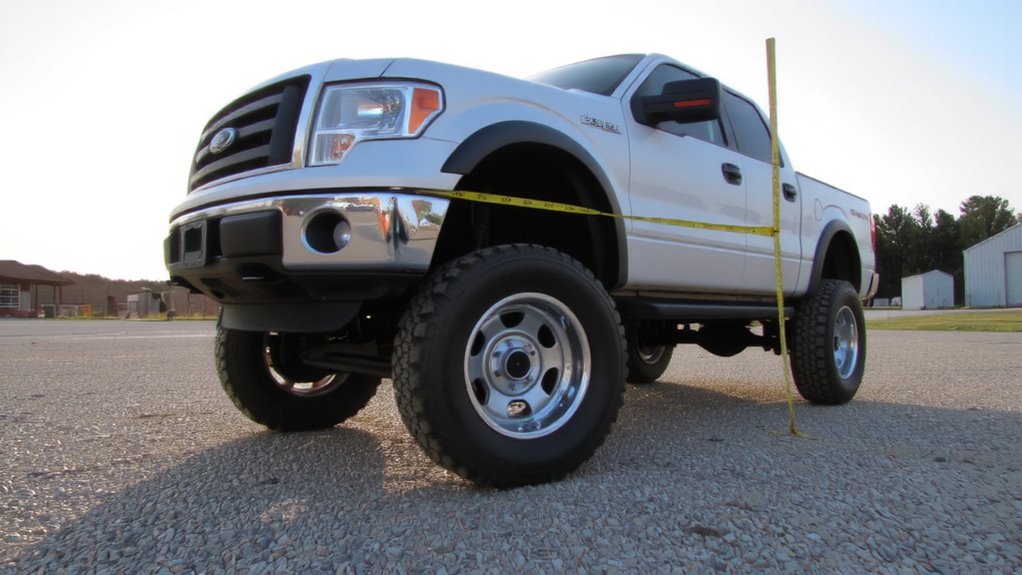
Your truck’s ability to handle 35-inch tires starts with adequate clearance. Measure from the center of the wheel to the closest obstruction-minimum 6.5 inches of fender clearance is required. Without it, tire rub occurs during turns and suspension compression. Check both front and rear axles, as clearance varies. Tire pressure affects clearance slightly; lower pressure increases contact patch and sidewall bulge, raising the risk of friction. Guarantee proper inflation-typically 32–35 psi-for accurate measurements. Load capacity also influences clearance. At max load, the suspension compresses, reducing space by up to 1.5 inches. Confirm your truck’s GVWR and tire load rating match. A 35-inch tire on a half-ton truck must support 2,500–3,000 lbs per tire. Mismatched load capacity compromises safety and clearance accuracy. Measure under real-world conditions to prevent fitment issues. For Toyota Tacoma owners, installing a quality lift kit can provide the necessary clearance to run 35-inch tires without major modifications.
Add a Leveling Kit for Front Lift
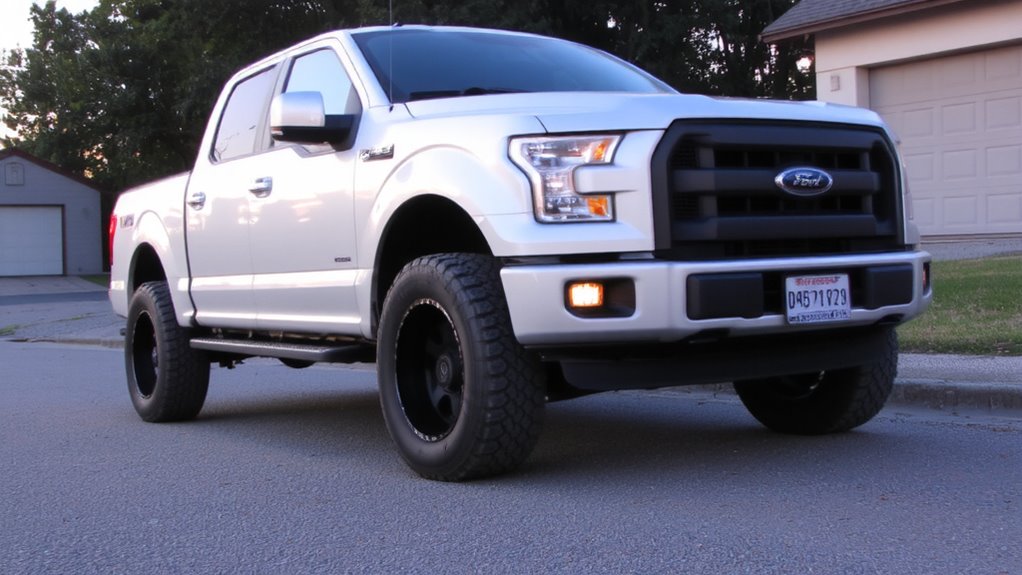
Clearance issues often start up front, where factory suspension geometry limits tire fitment. A leveling kit corrects this by raising the front 1–3 inches, letting 35-inch tires clear without major trimming. This suspension upgrade balances your truck’s stance and improves approach angles. Kits use adjustable torsion keys, spacers, or strut extensions, depending on your model-commonly for IFS or solid axle setups. Most retain factory ride quality while increasing front ride height. After installation, an alignment adjustment is critical. Improper caster or camber leads to uneven wear and poor handling. Set caster between 4°–6° and camber within ±0.5° for ideal tracking. Torque all hardware to spec-over- or under-tightening risks failure. Quality kits use forged steel or high-grade alloys, lasting over 50,000 miles. You’ll gain clearance and maintain drivability-all without a full lift. For GMC Sierra 1500 owners, choosing the best leveling kits can ensure optimal performance and compatibility.
Pick Wheels With Proper Backspacing
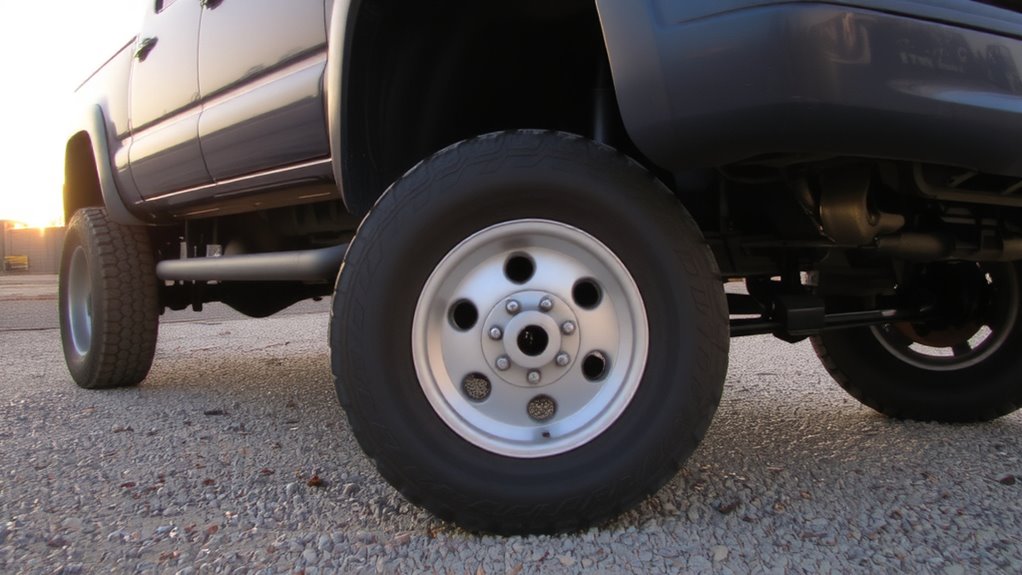
Every wheel choice you make must align with precise fitment specs, starting with backspacing-the distance from the wheel’s mounting surface to its inner edge. Backspacing affects how far the wheel sits inside or outside the fender well. For 35-inch tires, aim for 4.5 to 5.5 inches of backspacing to avoid rubbing. Too much causes clearance issues with suspension parts; too little pushes tires beyond the fenders, risking damage. Wheel offset, measured in millimeters, works alongside backspacing-positive values tuck the wheel inward, negative ones push it out. Match your truck’s bolt pattern and hub bore exactly. Wider wheels (10–12 inches) suit broader tire width (typically 12.5”), improving stability. Incorrect backspacing strains steering and reduces usable clearance, even with a lift. Choose wisely-the right setup keeps your 35-inch tires turning smoothly without modifications.
Trim Fenders and Liners for Fit
While installing 35-inch tires often demands more than just the right wheels, you’ll likely need to modify factory fenders and inner liners for full clearance. Trim the inner plastic liners and pinch welds where the tire contacts during turns or suspension compression. Use a rotary tool or snips for precision. Factory fender flares often restrict movement; removing or replacing them with wider aftermarket versions improves fit. Aggressive steering angles may require minor sheet metal work. Always verify suspension alignment post-modification-misalignment accelerates tire wear and impacts handling. Proper alignment guarantees even tread contact and maintains stability. Fender trimming isn’t cosmetic-it’s mechanical necessity. Without it, rubber meets metal under load. Clearance gaps should measure at least ½ inch at all points through full travel. Check both loaded and unloaded states. Small adjustments prevent catastrophic interference.
Test Fit 35s and Adjust Clearance
Once you’ve made initial modifications, it’s time to install the 35-inch tires and verify real-world clearance. Mount the tires and inflate them to the recommended tire pressure-usually 35 to 40 psi-for accurate measurements. Turn the steering wheel fully left and right to check for rubbing against fenders, suspension, or frame components. Lift the truck slightly off the ground to simulate unloaded conditions and reassess clearance. Then, let the suspension hang to test full droop. Load capacity affects sidewall bulge; a loaded truck reduces clearance by up to 0.75 inches. Adjust accordingly. If contact occurs, fine-tune with minor trimming or reposition components like fender liners. Recheck tire pressure after adjustments to maintain peak performance. Consistent clearance across full suspension travel guarantees durability and prevents premature wear.
On a final note
You can fit 35-inch tires on your truck without major modifications. A 2-inch leveling kit lifts the front, reducing tire-to-fender contact. Install wheels with 4.5 inches of backspacing to center tires under the fenders. Trim plastic fender liners and minor pinch welds for clearance. Test drive over bumps to check rub. Properly installed, 35×12.50R17 tires fit many trucks with minor trimming and no structural changes.