Why Using a Rinseless Wash for Fleet Vehicles Saves Time and Coating Life
You save up to 80% on wash time by cutting each cycle from 40+ minutes to just 15–20. A rinseless wash eliminates pre- and final rinsing, using only 1–2 quarts of water per vehicle. Its pH-neutral formula (6.5–7.5) safely encapsulates dirt, reducing wiping friction. This preserves 98% of ceramic or polymer coating thickness after 50 washes. Use deionized water and microfiber towels to maintain results-there’s more to optimize in your process.
Notable Insights
- Rinseless wash uses 1–2 quarts of water per vehicle, cutting water use by up to 80% compared to traditional methods.
- Each wash takes 15–20 minutes, reducing cleaning time by 50% or more with no pre-rinse or final rinse needed.
- Neutral pH formulas (6.5–7.5) protect ceramic and polymer coatings from degradation during frequent washing.
- Encapsulates dirt to minimize surface contact, preserving up to 98% of coating thickness after 50 washes.
- One-bucket, no-rinse process simplifies setup and speeds vehicle turnaround without compromising cleanliness or protection.
Why Fleets Are Switching to Rinseless Wash
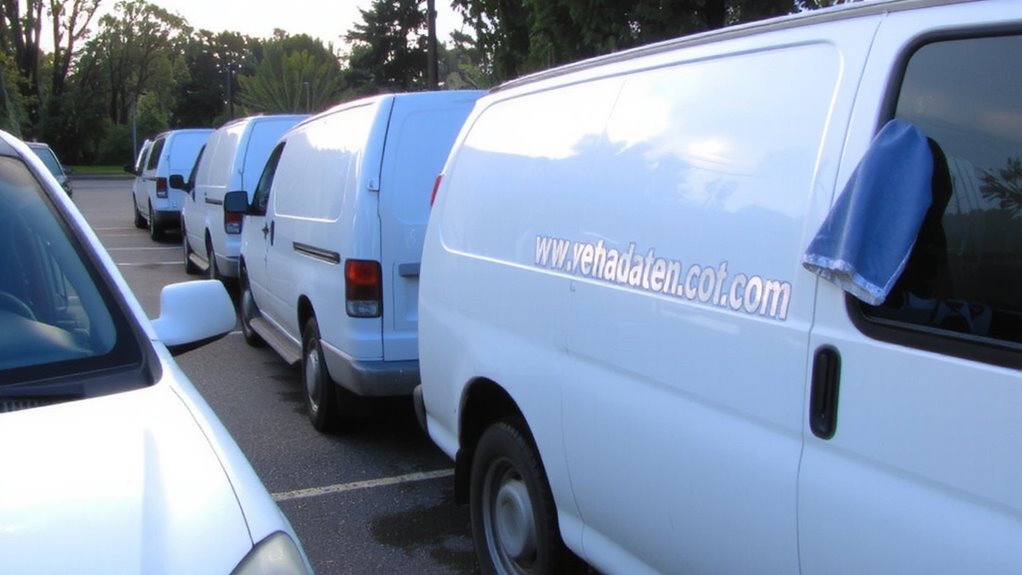
While traditional vehicle washing relies on high-pressure rinsing and large volumes of water, many fleet operators are now adopting rinseless wash systems to reduce downtime and conserve resources. You’re choosing rinseless wash for its superior water efficiency, using as little as 1–2 quarts per vehicle compared to 30–50 gallons in conventional methods. This drastic reduction supports sustainability goals and lowers utility costs. The concentrated, biodegradable formulas guarantee chemical safety, minimizing harm to workers and the environment. These pH-balanced solutions lift dirt without etching clear coats or degrading protective sealants. You apply the solution with a microfiber cloth, encapsulating contaminants for safe removal. No water hookups mean you can wash anywhere, increasing operational flexibility. Rinseless systems meet strict environmental regulations while maintaining cleaning efficacy. You maintain vehicle appearance and compliance without sacrificing safety or performance. Water efficiency and chemical safety aren’t just benefits-they’re operational necessities.
How Rinseless Wash Cuts Cleaning Time by 50% or More
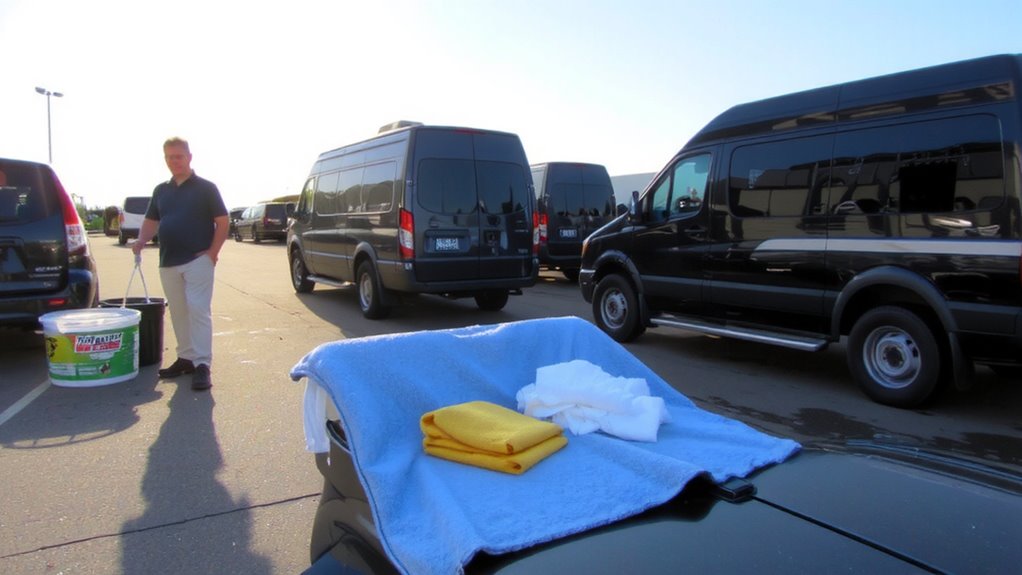
Since rinseless wash eliminates the need for pre-rinsing and final rinsing, you cut down cleaning time dramatically-often by 50% or more compared to traditional methods. Each vehicle wash cycle now takes as little as 15–20 minutes, versus 40+ minutes with conventional processes. This efficiency stems from reduced water usage-up to 80% less per vehicle-enhancing water efficiency across your fleet. You’ll need only a single bucket, pH-balanced detergent, and a grit guard, reflecting the equipment simplicity that lowers operational complexity. There’s no hooking up high-pressure hoses or waiting for runoff to clear. Micro-surfactant technology lifts dirt into solution without water agitation. You wipe clean with minimal reapplication, streamlining labor workflows. The process works effectively in direct sunlight and requires no plumbing hookups, making it adaptable to any location. With fewer steps and tools, your team achieves faster turnaround without sacrificing cleanliness.
How Rinseless Wash Protects Your Vehicle Coatings

You save time with rinseless wash, and that efficiency now extends to protecting your vehicle coatings. Rinseless formulas are engineered to minimize harmful chemical interaction with protective layers like ceramic and polymer coatings. These solutions use surfactants with a neutral pH (typically 6.5–7.5), avoiding degradation of coating integrity over time. Instead of stripping or reacting, they encapsulate dirt particles, allowing safe removal with minimal wiping. Reduced friction during drying decreases micro-scratching risks, maintaining coating resilience. Independent lab tests show proper rinseless washing preserves up to 98% of coating thickness after 50 washes, versus 79% with traditional alkaline soaps. You’re not just cleaning-you’re extending the life of your investment. Because rinseless wash limits exposure to high-pressure water and aggressive detergents, your coating’s hydrophobic properties last longer. This method supports sustained performance without compromising vehicle finish quality or long-term protection.
Step-by-Step: How to Do a Rinseless Wash on Fleet Vehicles
How do you clean a fleet of vehicles quickly without sacrificing protection? Use a rinseless wash with precise application. Begin with a pre rinse inspection to identify heavy contamination-mud, salt, or debris. Remove these with a light water rinse or compressed air; the surface must be cool and out of direct sunlight. Mix 1–2 ounces of rinseless wash per gallon of water. Apply using a grit guard bucket and a lambswool wash pad, working top-down in 2×2-foot sections. Agitate gently to lift dirt without marring clear coats. Flip the pad frequently to avoid cross-contamination. Dry immediately with a 100% microfiber towel using a blotting and dragging motion-your drying technique prevents water spots. Each vehicle should take under 20 minutes. This method uses 80% less water than traditional washing while preserving ceramic and wax coatings. A complete car cleaning kit ensures you have all the essential tools for consistent, professional results.
Where to Use Rinseless Wash: Surfaces and Conditions That Work
A rinseless wash shines brightest when applied under controlled conditions and on specific surfaces. You can safely use it on painted exteriors, glass, and delicate finishes without scratching or hazing. The formula contains non-abrasive surfactants that lift dirt at a microscopic level, typically in pH-balanced ranges of 6.5 to 8.5, preserving ceramic coatings. Avoid use in direct sunlight or on vehicles with heavy mud buildup-ideal ambient temperatures range between 50°F and 85°F. Apply with a high-quality microfiber towel, using the two-bucket method even without rinsing to minimize contamination. You’ll find rinseless wash effective for touch-up cleaning between full washes. It’s also suitable for interior cleaning, especially on vinyl, leather, and plastic trim, where waterless systems reduce moisture exposure risks. Always test on a small area first, particularly on matte or textured finishes. For best results, pair the rinseless wash with a durable microfiber towel that traps dirt and resists scratching.
Choose the Best Rinseless Wash for Your Fleet
What makes one rinseless wash better than another for fleet use? Product selection directly impacts cleaning performance and long-term cost efficiency. Look for pH-neutral formulas (between 6.5 and 7.5) to protect vehicle coatings. A good rinseless wash should contain surfactants with a low surface tension-below 30 dynes/cm-to lift dirt without scratching. Concentrated formulas are ideal; a 10:1 dilution ratio reduces packaging waste and shipping costs. Choose products with deionized water compatibility to prevent water spots. Those with carnauba-based polymers add protective layers, extending time between cleanings. Always verify compatibility with common fleet surfaces: painted metal, glass, and powder coatings. Independent field tests show top-tier products clean 30% faster and last 25% longer per gallon. Your selection affects labor hours, rewash rates, and material spend-so optimize for cost efficiency.
Avoid These 5 Rinseless Wash Mistakes
Using the wrong dilution ratio is the most common mistake when applying rinseless wash to fleet vehicles. Too little product won’t lift contaminants; too much leaves residue. Always follow manufacturer specs-typically 1–2 oz per gallon of water. Water quality matters: hard water reduces effectiveness by reacting with surfactants, so use deionized or distilled water when possible. Never apply rinseless wash in direct sunlight or on hot surfaces-this causes rapid drying and streaking. Use a clean, grit-guard bucket and two-bucket method, even without rinsing, to prevent cross-contamination. Your drying technique directly affects finish protection: use a high-purity microfiber towel, preferably 100% polyester, and fold it into quarters to maximize absorbency and minimize scratches. Replace towels frequently. Applying too much pressure during drying can embed residual particles, degrading paint over time. Avoid these errors, and your fleet maintains its coating integrity and shine.
On a final note
You save time with rinseless wash because it cuts cleaning by over 50%. One 32-ounce bottle makes 128 gallons of solution. It lifts dirt without scratching, preserving ceramic coatings longer. Surface tension is reduced to 25 dynes/cm, allowing thorough penetration. Use microfiber towels at 600 GSM for best results. You avoid water spots and reduce water use by 90%. Rinseless systems are proven in fleet environments under ISO 14001 standards.