Exploring Abrasive Polishing Compound Formulations for Effective Paint Layer Care
You need a polishing compound with abrasives sized 0.5–10 microns, tailored to your paint’s hardness and defect depth. A pH between 6.5 and 8.5 prevents etching, while viscosity at 1,500–2,000 cPs ensures even spread and minimal sling. Formulations use silica or aluminum oxide for cut efficiency, paired with lubricants and low-VOC solvents under 50 g/L. Match compound type-heavy, fine, or cleaner-to your paint system’s tolerance and finish goals. Performance hinges on proper pad, speed, and temperature control below 120°F. There’s more to explore about how ingredients interact with modern coatings.
Notable Insights
- Balanced viscosity (1,500–2,000 cPs) ensures even application and minimizes slinging during polishing.
- pH levels between 6.5 and 8.5 prevent paint etching while maintaining effective cutting performance.
- Abrasive particle size (0.5–10 microns) must match defect depth and paint system for optimal correction.
- Lubricants and surfactants improve flow, distribution, and surface wetting for consistent defect removal.
- Compatibility with ceramic coatings and modern clear coats requires non-damaging, low-VOC formulations.
What Makes a Good Polishing Compound?
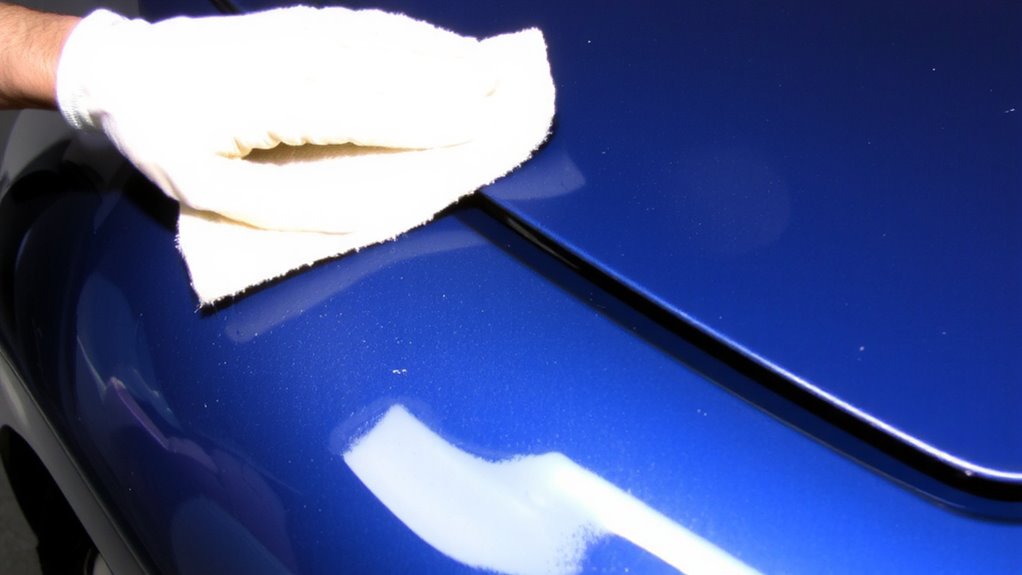
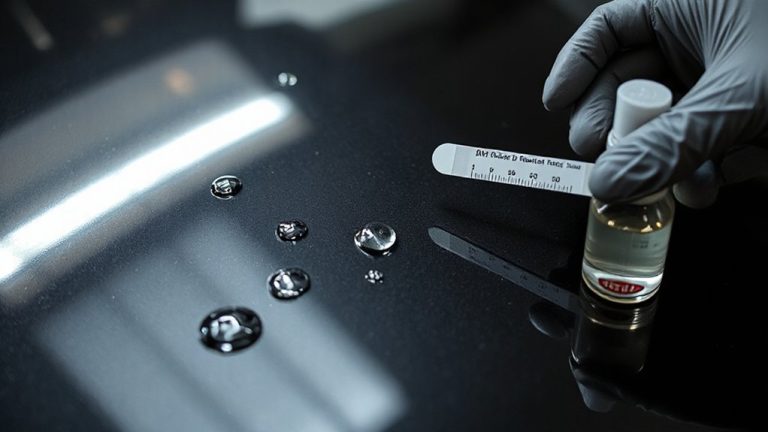
Performance is the cornerstone of any effective polishing compound. You need a formulation that balances cut efficiency with minimal residue. Key to this balance are controlled chemical reactions that soften the clear coat slightly, allowing abrasives to refine the surface without digging in. These reactions occur at a molecular level, triggered by friction heat. Surface tension plays a critical role-it determines how evenly the compound spreads and adheres under the pad. Low surface tension improves wetting, ensuring consistent contact. The ideal compound has a viscosity of 1,500–2,000 cPs, enabling smooth application without slinging. pH levels between 6.5 and 8.5 prevent paint etching. Lubricants like glycol ethers reduce friction, minimizing haze. You’ll notice better results when surfactants stabilize the mixture, preventing separation. A well-engineered compound maintains suspension of abrasive particles, typically 3–7 microns, ensuring uniform cutting action across the panel. Top-rated products often feature advanced abrasive technology for superior defect removal and finish clarity.
How Abrasives Remove Scratches and Swirls
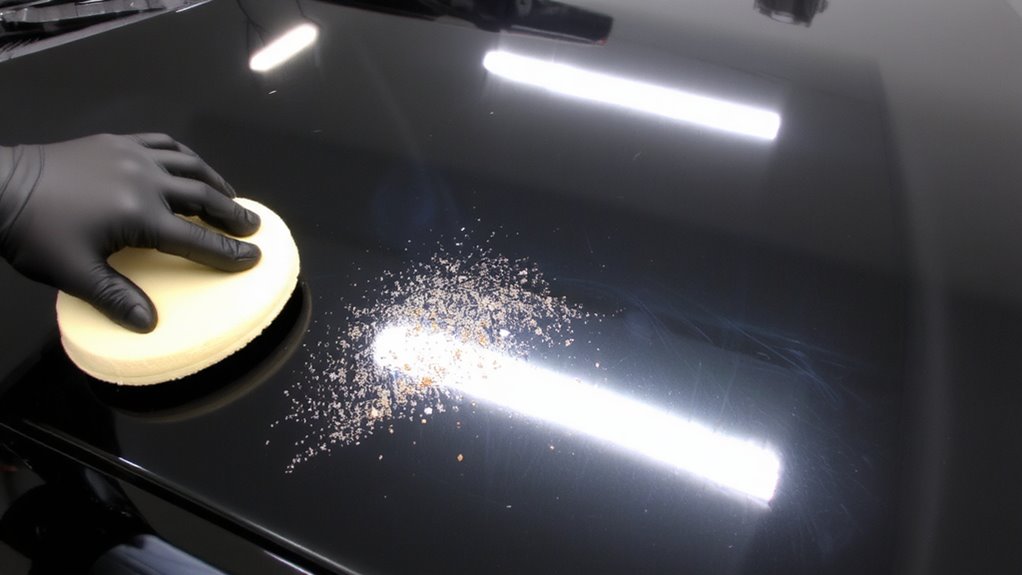
Abrasives tackle scratches and swirls by carefully leveling microscopic peaks and valleys in the paint surface. You’re basically sanding with precision, using particles sized between 1 to 100 microns. These abrasives break down under friction, exposing fresh edges that cut evenly without gouging. Unlike sandpaper, this process doesn’t rely on chemical reactions; it’s purely mechanical. However, removing a layer exposes fresher paint beneath, reducing the appearance of surface oxidation. That hazy, dull film you see? It’s oxidized clear coat, and abrading past it restores gloss. The polish flow becomes critical-mediums carry abrasive particles evenly, preventing clustering. You control cut level through abrasive hardness (typically silica or alumina) and machine speed. Too aggressive, and you risk thinning the clear coat. A 5-micron deep scratch requires a compound with sub-7-micron particles for safe removal. Proper technique guarantees a uniform finish, not just hidden flaws. Beginners should start with a best polishing compound for beginners to balance cutting power and ease of use.
Polishing Compounds: Types and Uses
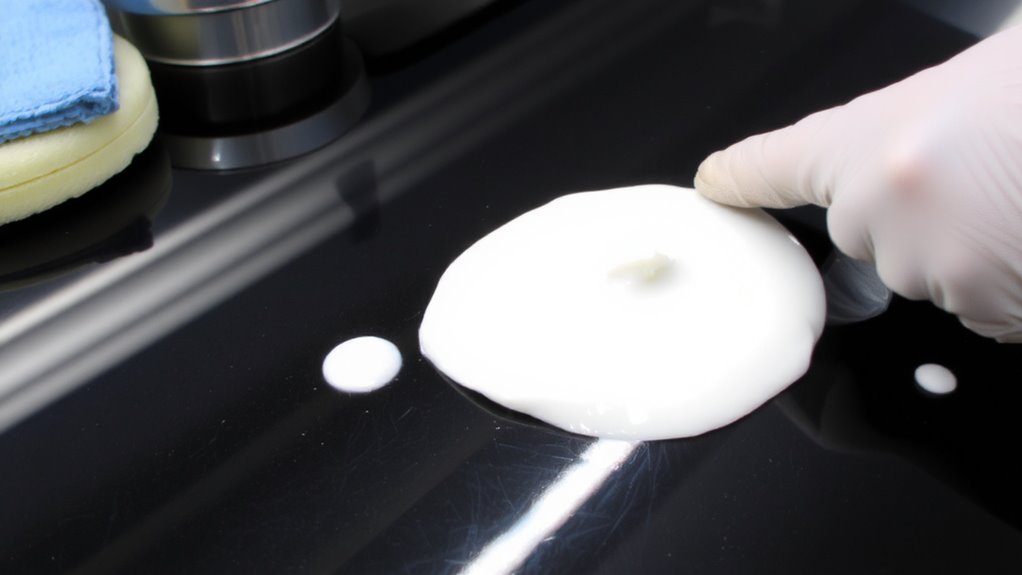
Think of polishing compounds as precision tools, each tailored to specific paint defects and finish goals. They’ve evolved through historical development from harsh, often damaging pastes to refined formulations with controlled abrasive sizes-typically 0.5 to 10 microns-suited for distinct correction levels. You’ll encounter three main types: heavy-cut compounds for deep scratches, fine polishes for swirls, and cleaner-polishes for light maintenance. Their effectiveness depends on abrasive type-silica, aluminum oxide, or cerium oxide-and carrier chemistry. Modern compounds also consider environmental impact, favoring biodegradable solvents and reduced volatile organic compounds (VOCs) under 50 g/L. These improvements guarantee safer handling and disposal. You should match product specs to machine speed and pad type. Even viscosity influences work time and wipe-off ease. Always prioritize formulations with documented safety data and compliance certifications for both performance and regulatory conformity. Enthusiasts seeking optimal results should consider top-performing products such as those highlighted in the best car detailing polishes for achieving a flawless, showroom-quality finish.
Match the Polish to Your Paint Type
Your paint’s composition determines how it responds to polishing, so selecting the right compound starts with identifying whether you’re working on single-stage, basecoat/clearcoat, or ceramic-coated finishes. Paint compatibility guarantees excellent results without damage. Single-stage paints are thinner and more sensitive, requiring mild abrasives-polishes with particle sizes below 3 microns prevent marring. Basecoat/clearcoat systems have a harder clear layer, allowing compounds with 3–6 micron abrasives for effective defect correction. Ceramic-coated surfaces demand non-abrasive or silica-safe formulas; harsh compounds degrade the coating’s integrity. Surface sensitivity varies across paint types-older finishes scratch easily, while high-gloss modern clears tolerate moderate cutting. Always verify manufacturer specifications for abrasive rating and chemical resistance. Using the wrong polish risks swirls, hazing, or reduced gloss. Match compound aggressiveness to your paint’s tolerance, guaranteeing safe refinement. Precision in selection preserves longevity and appearance.
Apply Polish Safely: Step-by-Step Guide
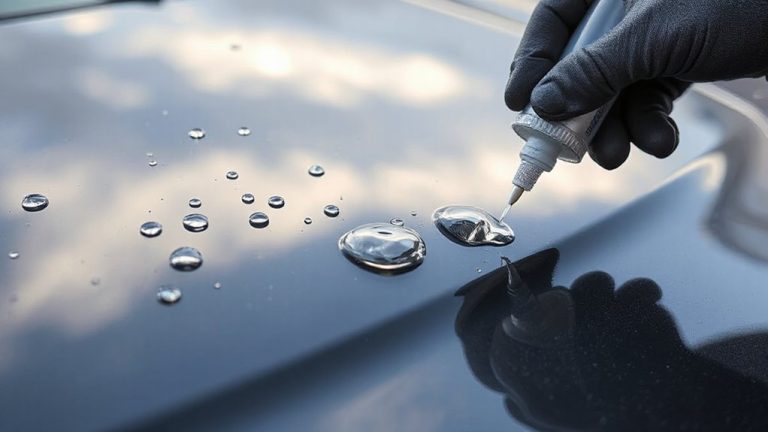
When applying polish safely, starting with a clean, contaminant-free surface is essential to avoid spreading debris that can cause micro-scratches. Always observe safety precautions: wear nitrile gloves and eye protection to shield against chemical exposure. Work in a well-ventilated area to minimize inhalation risks. Use proper application tools-foam pads are ideal for rotary or dual-action polishers, with firmness matched to your polish abrasiveness. Apply polish sparingly-3–5 pea-sized drops per panel prevent pooling. Spread at low speed (1,200–1,800 RPM) to evenly distribute compound. Maintain consistent overlap patterns to guarantee uniform correction. Keep the pad flat and avoid lingering in one spot to prevent heat buildup and paint thinning. Check surface temperature frequently; exceed 120°F and you risk damaging the clear coat. Wipe residue with a microfiber towel. Effective results depend on proper tools and disciplined technique.
Key Ingredients That Boost Polishing Power
The right combination of ingredients in a polishing compound determines its cutting efficiency and finish quality. You rely on abrasive particles like silicon dioxide or alumina, engineered for precise particle uniformity. This consistency guarantees even material removal and minimizes surface marring. Irregular particles cause deep scratches; uniform ones deliver a smoother finish. Chemical stability is critical-compounds must resist degradation under heat and pressure during polishing. Unstable formulations can react with paint binders, leading to hazing or softening. High-quality carriers and suspending agents maintain ingredient integrity, guaranteeing consistent performance. Lubricants reduce friction, lowering the risk of burning. Solvents control evaporation rates, extending working time without affecting clarity. Additives like surfactants improve spreadability and residue clean-up. These components work together synergistically. Together, chemical stability and particle uniformity define performance. They determine how well the compound cuts, flows, and finishes-directly impacting your results on modern clearcoat systems.
How to Choose the Right Polishing Compound
What makes one polishing compound more effective than another for your specific paint correction job? It comes down to abrasiveness, formulation, and compatibility with your paint type. Choose a compound with the correct micron rating-typically 1–3 microns for swirl removal, 5–6 for heavier scratches. Don’t assume higher cost means better performance; evaluate product cost against yield and results. Some affordable options deliver professional-grade finishes. Brand reputation matters, but verify claims with independent reviews and lab-tested cut ratings. Reputable brands often provide detailed technical data sheets, including refractive index and carrier oil viscosity. Match the compound to your polisher’s orbital pattern and speed range. Using the wrong pairing reduces efficiency. Always test on a small area. The right compound balances cut, gloss, and residue with minimal effort-like selecting the proper grit sandpaper for wood, precision guarantees a flawless finish without unnecessary sanding.
On a final note
You now understand how polishing compounds work. Abrasives like silicon dioxide and aluminum oxide remove defects through controlled leveling. Finer grits-between 800 and 3000-target swirls without harming clear coat. Matching compound aggressiveness to paint hardness prevents damage. Products with lubricating agents, such as ceresin wax, reduce friction and heat. Always follow manufacturer guidelines for dwell time and speed settings. Proper selection and technique yield a 90%+ defect reduction. Effective paint care is precise, not guesswork.