How to Clean Matte Black Wheels Without Restoring Shine Accidentally
Use a pH-neutral cleaner (6.5–7.5) and soft nylon brush with bristles under 0.2 mm to avoid scratching. Matte black wheels trap grime in their micro-rough surface, so aggressive scrubbing or acidic cleaners below pH 5.0 strip protective layers. Rinse with water under 1,200 PSI, then dry with a 300–400 GSM polyester microfiber. Apply a matte-specific sealant with UV inhibitors to maintain protection. Incorrect products cause micro-cracking or sheen buildup. Details on ideal products and step-by-step maintenance follow.
Notable Insights
- Use pH-neutral cleaners (6.5–7.5) to prevent chemical damage and preserve the matte finish.
- Clean with soft-bristle nylon brushes under 0.2 mm to avoid scratching the micro-rough surface.
- Avoid wax removers, solvents, and abrasive products that strip protective layers or cause shine.
- Rinse with low-pressure water and dry by blotting with a 300–400 GSM microfiber towel.
- Apply a matte-specific sealant every 3–4 months to protect without increasing gloss above 15 GU.
Why Matte Black Wheels Are Tricky to Clean
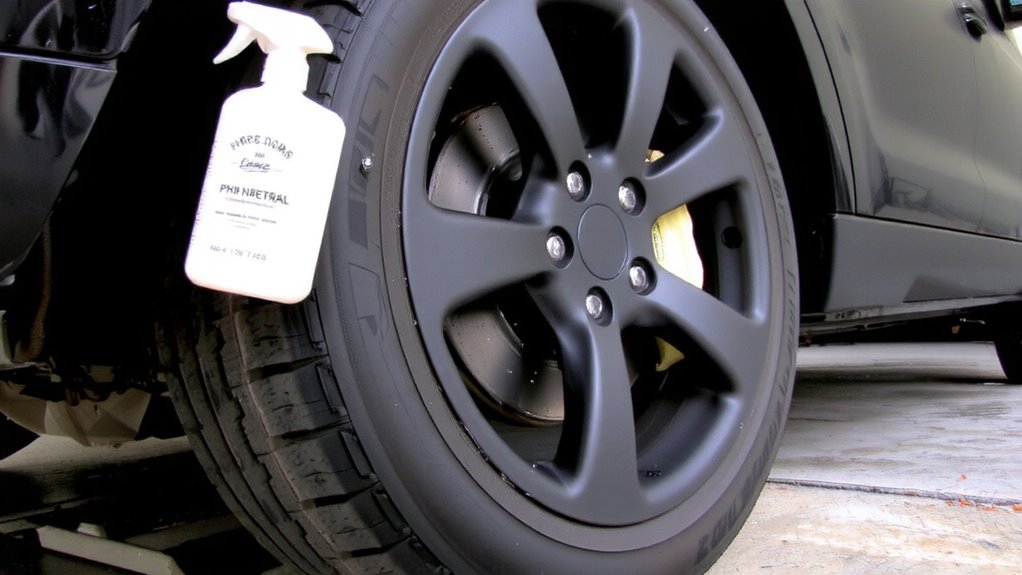
While matte black wheels offer a bold, modern look, they’re far more demanding to clean than standard finishes. Their surface texture is intentionally micro-rough to scatter light and eliminate shine, but this also traps brake dust and grime deep within microscopic peaks and valleys. Unlike polished surfaces, where contaminants sit on top, matte finishes hold debris in the texture, making removal harder. You’ll need precise tools-soft-bristle brushes with nylon filaments less than 0.2 mm in diameter-to avoid marring. Matte coatings also have high chemical sensitivity. Most contain urethane- or acrylic-based resins that degrade when exposed to pH levels below 5.0 or above 9.0. Even mild automotive cleaners can strip the protective layer, leading to uneven sheen or premature wear. Proper maintenance isn’t just about frequency-it’s about using chemically neutral (pH 7.0) solutions and non-abrasive techniques to preserve both finish and function. For best results, use a dedicated black wheel cleaner that’s specifically formulated for sensitive matte finishes.
Avoid These Cleaners on Matte Finish Wheels
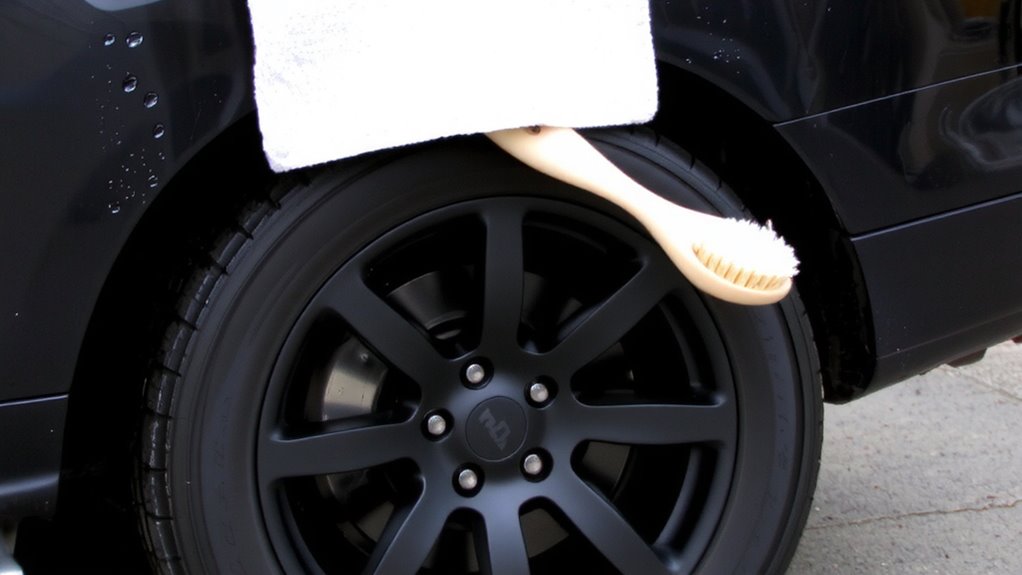
Because they seem effective on regular wheels, you might be tempted to use acidic or alkaline cleaners on matte black finishes-but doing so risks permanent damage. These cleaners strip the protective layer, leading to uneven texture and gloss spots. Avoid any product containing chemical abrasives, as they degrade the matte coating’s integrity. Even light scrubbing with abrasive pads accelerates surface erosion. Solvent exposure-like acetone or strong alcohol-based solutions-causes micro-cracking and delamination. Matte finishes rely on a precisely engineered texture; solvents disrupt this structure irreversibly. Never use wheel cleaners with a pH below 5 or above 9. They’re too aggressive. Degreasers designed for metal parts often contain chlorinated solvents, which compromise polymer binders in matte clearcoats. Wax removers are equally harmful, since they break down silicon dioxide or ceramic sealants. Always check ingredient labels. When in doubt, test on a small hidden area. Harsh chemicals may not show immediate effects, but long-term exposure dulls finish depth over time.
Best Products for Cleaning Matte Black Wheels
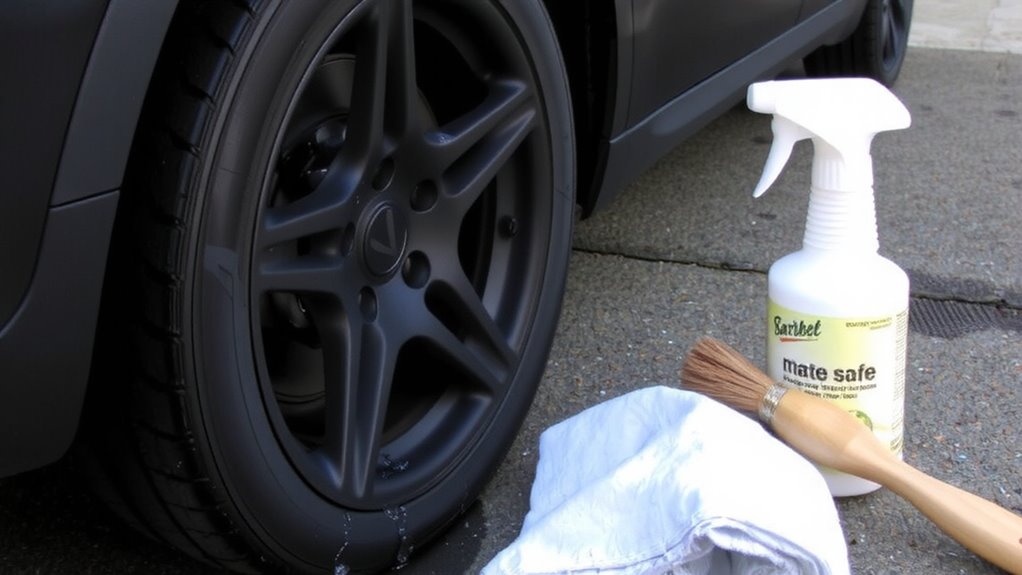
Stick with pH-neutral cleaners specifically made for matte finishes. These formulations prevent gloss restoration by avoiding chemical reactions that alter the surface. Look for products labeled matte-safe with a pH between 6.5 and 7.5. Use microfiber towels with a weight of at least 300 g/m² to prevent micro-scratching. Matte sealants are essential-they bond at a molecular level, offering hydrophobic protection without changing reflectivity. Apply them in thin, even layers using a foam applicator with 40–60 PPI density. Non abrasive polishes can remove light contaminants if they have a particle size below 1,000 nanometers and no silicon additives. Avoid dual-action polishers; hand application guarantees control. Brands like CarPro and Chemical Guys offer matte-specific systems tested for consistent texture retention. Always verify product compatibility with your wheel’s coating type-urethane, clear coat, or factory matte finish-using manufacturer datasheets.
How to Clean Matte Black Wheels Safely
Start by rinsing your matte black wheels with low-pressure water to remove loose debris. High water pressure can damage the matte finish, so keep settings below 1,200 PSI. Use a dedicated matte-safe wheel cleaner and apply it with a soft-bristle brush to avoid micro-scratches. Let the solution dwell for no more than 2–3 minutes to prevent drying on the surface. Rinse thoroughly using the same low water pressure to guarantee all residue is removed. After rinsing, use a dedicated drying technique: blot gently with a clean, plush microfiber towel-don’t rub. This prevents marring the texture. For best results, use a 100% polyester microfiber cloth with a 300–400 GSM weight to absorb moisture without friction. Avoid compressed air or drying in direct sunlight, as both can alter the finish. Proper technique preserves the intended non-reflective appearance.
How to Remove Brake Dust Without Adding Shine
A proper brake dust removal routine keeps matte black wheels looking factory-fresh without compromising their non-reflective surface. Brake dust abrasion can dull finishes if harsh tools are used. Always use soft microfiber cloths and pH-neutral cleaners to preserve texture. Cleaning technique precision guarantees grime lifts without scratching. Avoid stiff brushes; opt for foam applicators designed for matte surfaces. Selecting the right product plays a crucial role in maintaining the wheel’s intended finish, so consider using a best auto wheel cleaner specifically formulated for matte surfaces.
| Factor | Incorrect Approach | Correct Approach |
|---|---|---|
| Tool Pressure | High (causes shine) | Low (maintains matte) |
| Solution Type | Acidic (damages coating) | pH-balanced (safe removal) |
Inspect wheels under indirect light to detect residual dust. Rinse thoroughly with low-pressure water to prevent spot formation. Dry immediately with a clean, non-abrasive towel. This method removes contamination efficiently while safeguarding the original finish.
How to Protect Matte Black Wheels After Cleaning
Your wheel’s finish depends on proper protection after cleaning to maintain its intended matte appearance. Apply a matte-specific sealant to guarantee finish protection and prevent accidental gloss. These sealants use non-glossy polymers that bond at a microscopic level, forming a clear, satin-like barrier. Unlike traditional waxes, they contain no silicone oils or reflective agents. For maximum wheel preservation, use a water-based, pH-neutral protectant with a 5–7 micron thickness. This ensures durability without altering surface texture. Avoid silicon-dampening sprays-they degrade the coating over time. Instead, choose products labeled “matte-safe” with UV inhibitors to resist fading. Reapply every 3–4 months or after 8–10 washes. Test on a small area first. Proper finish protection maintains low-light reflectivity below 15 GU (gloss units), preserving the authentic matte look. Consistent application extends coating life up to 12 months.
On a final note
Always use pH-neutral cleaners specifically designed for matte finishes. Products with wax or silicone cause irreversible shine. Apply Matte Wheel Cleaner with a soft microfiber mitt at 40 PSI mist pressure. Rinse thoroughly with distilled water to prevent mineral deposits. Dry using a 100% suede cloth to avoid micro-abrasions. Finish with a non-gloss sealant rated for matte surfaces, applying 2–3 microns per coat for maximum protection without altering finish.