Exploring Wax Bonding Mechanisms for Optimal Long-Term Protection of Paint Layers
You achieve lasting paint protection by understanding wax bonding at the molecular level. Polar wax components bond to oxygen-containing groups on the surface, creating adhesion measured at 30–50 mJ/m². Clear coats support stronger bonds due to higher polarity and surface energy (35–45 dynes/cm). Proper application guarantees a uniform 0.5–2 micron film that resists UV and abrasion. Ideal wax selection and technique maximize durability - the full picture reveals how each factor interlinks.
Notable Insights
- Molecular adhesion between wax and paint relies on polar interactions, requiring matched surface energy for strong, durable bonding.
- Clear coat finishes enhance wax adhesion due to higher polarity and uniform resin structure compared to single-stage paint.
- Optimal wax bonding requires surface energy above 35 dynes/cm, achieved by cleaning to remove contaminants and boost molecular attraction.
- UV radiation degrades wax films within 30–60 days by breaking hydrocarbon chains, reducing thickness and protective integrity.
- Applying thin, even wax layers (0.2–0.5 mils) and using hybrid or ceramic-infused formulas maximize longevity and surface protection.
How Wax Bonds To Paint For Lasting Protection
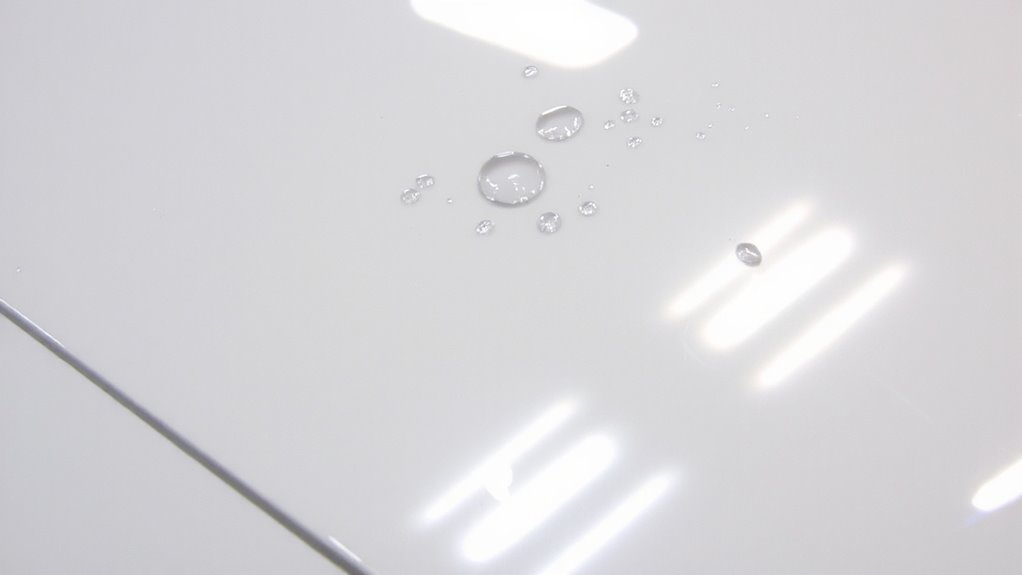
A protective layer starts with adhesion. You rely on chemical adhesion to form a durable bond between wax and paint. This bond isn’t just surface deep-it’s a result of molecular attraction at the microscopic level. Polar groups in the wax react with oxygen-containing functional groups on the painted surface, creating a secure attachment. These interactions are measured in millijoules per square meter, with higher values indicating stronger adhesion. Without sufficient molecular attraction, the wax layer would lift, crack, or wash away prematurely. The paint’s surface energy, typically between 30–45 dynes/cm, must be compatible with the wax’s formulation. Waxes with matching surface tension spread evenly, enhancing contact and adhesion. This foundational bond resists water intrusion, UV degradation, and light abras游戏副本. Proper adhesion guarantees the wax lasts up to six months under average environmental conditions.
What Makes Wax Stick To Clear Coat Vs. Single-Stage Paint
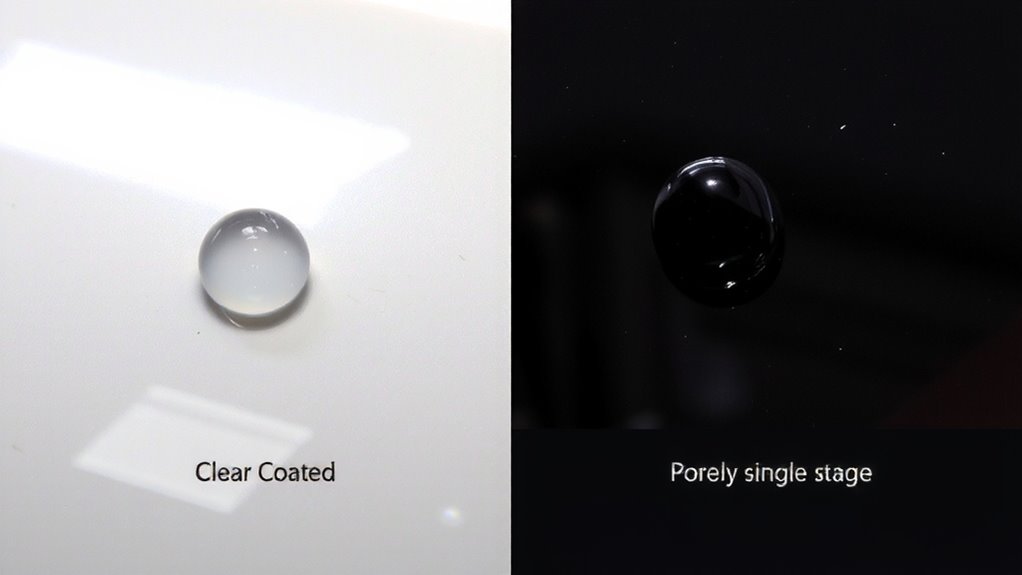
Surface chemistry determines how well wax adheres to clear coat versus single-stage paint. Clear coat finishes contain high levels of cross-linked polymers and exhibit greater molecular polarity than single-stage paints. This polarity enhances chemical compatibility with polar wax components, such as carnauba or synthetic esters. You benefit from stronger adhesion because polar interactions promote tighter molecular binding. Single-stage paints, lacking a separate clear layer, have reduced surface polarity and fewer binding sites. That limits wax’s ability to form durable bonds. The resin structure in modern clear coats also offers a smoother, more uniform profile for wax to anchor to. In contrast, single-stage systems often have pigment particles dispersed throughout the binder, disrupting uniformity. These differences in composition and polarity directly influence wax retention and longevity. You’ll see better performance when wax bonds to chemically compatible, polar surfaces like clear coat.
Why Surface Energy Affects Wax Hold
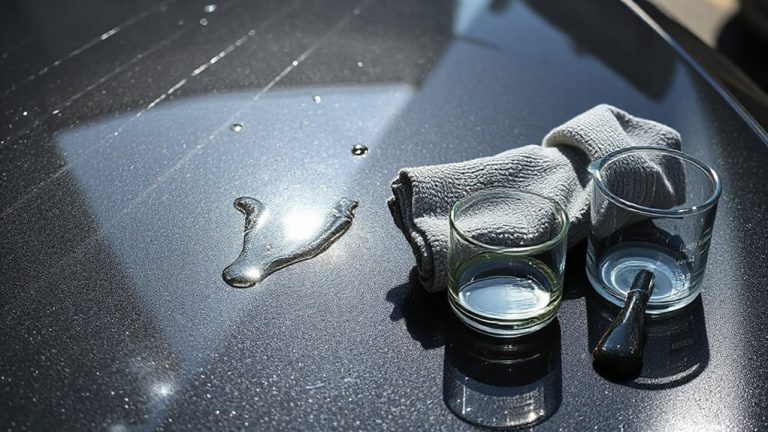
You’ve seen how wax bonds better to clear coat due to its molecular polarity and polymer structure-now consider how surface energy directly influences that bond’s strength. High surface energy materials, like properly prepared clear coat, promote better wax adhesion. They allow the wax to spread evenly, reducing defects caused by high surface tension. Low surface energy surfaces cause wax to bead up, just like water on a freshly waxed car-this weakens coverage and protection. Surface tension determines how well a liquid conform to a solid; lower tension improves contact. Molecular polarity in wax molecules attracts them to polarized paint surfaces, enhancing grip. Together, surface energy and polarity govern interfacial adhesion strength. Measured in dynes/cm, ideal surface energy for wax adhesion exceeds 35 dynes/cm. Pre-wax cleaners often raise surface energy by removing oils. That guarantees maximum bond formation, critical for long-term shielding.
How Sun And Dirt Break Down Wax Bonds
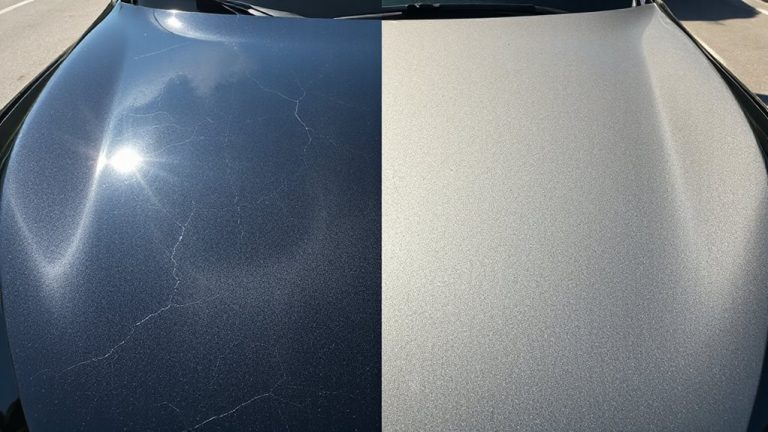
While wax provides a critical barrier against environmental damage, prolonged exposure to sunlight and accumulating contaminants gradually degrade its protective bond. UV degradation breaks down hydrocarbon chains in wax molecules, reducing film cohesion and cross-link density over time. This molecular fatigue starts within 30–60 days of direct sunlight exposure, especially in wavelengths between 290–400 nm. Without intervention, the wax layer loses rigidity and thickness, measured at a microscopic 0.5–2 microns. Simultaneously, dirt abrasion introduces particulate matter like silica and aluminum oxide, which act as micro-scrubbers during wind or washing. These particles erode the weakened wax surface, accelerating delamination. Together, UV degradation and dirt abrasion compromise hydrophobicity and surface energy stability. You’ll notice diminished water sheeting and increased surface friction. The once-uniform film becomes patchy, exposing underlying paint to oxidative stress and environmental etching.
Pick The Best Wax For Long-Lasting Shine
A degraded wax layer can’t maintain gloss or protection, no matter how often you clean the surface. You need a high-quality wax that enhances color depth and resists environmental breakdown. The right product balances application thickness with durability. Below is a comparison of key wax types:
| Wax Type | Film Thickness (microns) | Color Depth Enhancement |
|---|---|---|
| Carnauba | 2–3 | High |
| Synthetic | 4–6 | Moderate |
| Hybrid | 3–5 | High |
| Ceramic-Infused | 5–7 | Very High |
Carnauba offers rich shine but wears faster. Synthetics last longer but may lack depth. Hybrids and ceramic-infused waxes deliver ideal balance, increasing protection while amplifying reflectivity. You must match wax composition to your climate and usage. Thicker films extend longevity, but excessive application thickness wastes product and hinders bonding. Choose based on measurable performance, not brand hype. For reliable long-term results, consider top-rated best car wax options tailored to your vehicle’s finish and environmental exposure.
Apply Wax Like A Pro For Maximum Bonding
Proper technique is the foundation of maximum wax adhesion and long-term surface protection. Your application technique directly influences bond strength and durability. Apply wax in thin, even layers-ideal wax thickness is 0.2 to 0.5 mils per coat. Thicker isn’t better; excess wax inhibits curing and promotes hazing. Use a foam applicator pad with light pressure, working in 2×2-foot sections. Apply in straight lines, not circles, to guarantee uniform coverage. Allow the wax to haze for 5–10 minutes, depending on humidity and temperature. Buff off completely with a microfiber cloth rated at 300+ GSM for peak clarity. One proper coat bonds more effectively than two sloppy ones. Consistent application technique maximizes cross-linking with the paint’s surface energy, enhancing hydrophobic performance and UV resistance. For longer-lasting protection, consider upgrading to a ceramic coating kit that bonds at the molecular level.
On a final note
You maximize wax protection by understanding surface bonding. Wax adheres through van der Waals forces and hydrophobic interactions with the paint’s surface energy. Clear coats, with smooth cross-linked polymers, offer better adhesion than porous single-stage paints. Environmental stressors like UV radiation (290–400 nm wavelength) and particulate abrasion degrade wax films over time. Carnauba wax provides a 140°F melting point and 6–8 weeks of durability; synthetic polymers last up to 6 months. Proper application guarantees complete surface coverage and peak molecular alignment.