Engine Block Strengthening Techniques for High-Boost Applications
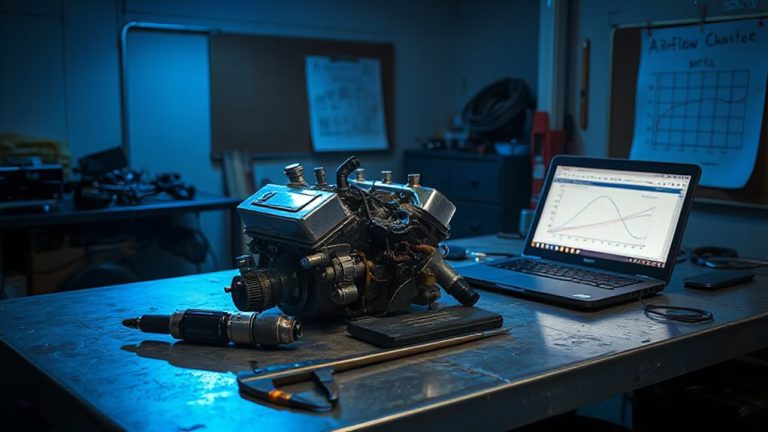
You need a stronger engine block to handle over 1,500 psi combustion pressure and 15+ psi boost. Factory aluminum blocks often fail due to deck lift and cylinder wall flex. Reinforce walls with ductile iron sleeves-0.180 to 0.250 inches thick-for durability and improved heat transfer. Upgrade to four-bolt or splayed main caps and add a billet steel girdle for crank stability. Use torque plates during honing to maintain bore roundness under load. Sonic testing guarantees even wall thickness, critical for sealing. A full-width girdle made from 40,000 PSI steel boosts block rigidity and keeps main caps aligned within ±0.001″. Optimizing ribbing, gussets, and material balance increases strength up to 30% with minimal weight gain. There’s more to explore about matching components for peak reliability.
Notable Insights
- Use reinforced engine blocks with ductile iron sleeves to withstand cylinder pressures exceeding 1,500 psi in high-boost applications.
- Install four-bolt or splayed main caps with billet steel girdles to reduce block flex and maintain crankshaft alignment.
- Employ torque plates during cylinder honing to prevent bore distortion under high clamping loads and boost pressure.
- Perform sonic testing to ensure adequate cylinder wall thickness and minimize ovality for improved ring seal and durability.
- Optimize block strength-to-weight ratio using ribbing, finite element analysis, and high-strength materials like ductile iron.
Why High Boost Requires a Stronger Engine Block
While stock engine blocks work fine under factory conditions, they often can’t handle the extreme stress of high boost levels. You’re pushing 15+ psi or more, and that introduces forces stock castings weren’t designed for. Material fatigue becomes a real concern-repeated cylinder pressure cycles weaken the block’s structure over time, especially around the main caps and cylinder bores. You’ll see cracks form, particularly in areas with casting thin sections. Thermal expansion also plays a role: aluminum expands nearly twice as fast as steel, creating uneven clearances and potential warping. In iron blocks, uneven heating leads to distortion, compromising ring seal and alignment. Under sustained high load, the block deck can lift, stretching head bolts and causing head gasket failure. That’s why aftermarket blocks use higher-grade materials-like billet steel main caps or ductile iron sleeves-to resist deformation. These upgrades maintain geometry and reliability when you’re running serious boost.
Reinforcing Cylinder Walls Against Pressure Spikes
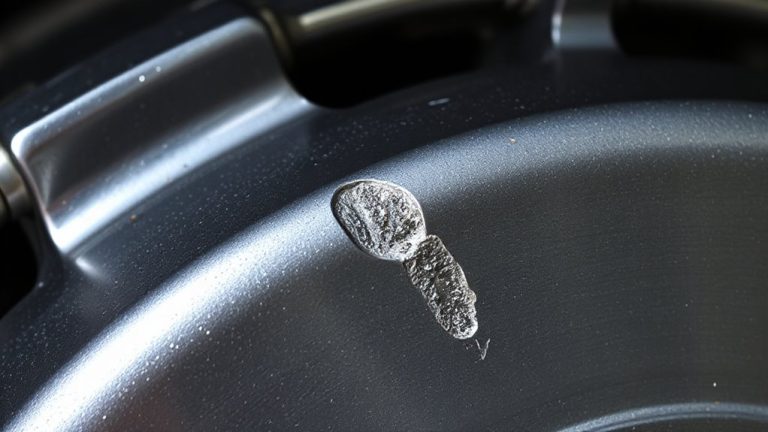
When combustion pressures spike past 1,500 psi under high boost, your cylinder walls take a serious beating-especially in aluminum blocks with thin wall sections. You need to reinforce them to prevent failure. Cylinder wall crowning occurs when high pressure deforms the top of the bore, compromising ring seal and durability. To fight this, you’ll machine the deck surface with controlled relief or install thicker cylinder sleeves. Bores distortion management is critical-use torque plates during honing so the block simulates clamped conditions. This guarantees accurate roundness and size under load. Consider ductile iron sleeves for added strength; they resist deformation better than aluminum alone. Even minor ovality-over 0.0005”-hurts ring sealing and increases blow-by. Some builders use sonic testing to verify wall thickness before modifications. A well-supported bore maintains geometry, prevents cracks, and delivers consistent performance under extreme load. You’re not just building power-you’re preserving precision under stress.
Upgrading Main Caps and Adding Girdles for Stability
Strengthening the engine’s foundation starts with the main caps-your block’s backbone under high-torque and high-RPM loads. Upgrading to four-bolt or aftermarket splayed main caps improves main cap alignment and boosts rigidity. Adding a main girdle ties caps together, reducing flex and harmonics. Billet steel girdles with optimized girdle bolt patterns distribute clamp load evenly, minimizing cap walk.
| Feature | Benefit | Example Spec |
|---|---|---|
| Splayed Cap Design | Resists rotation under load | 7/16″ ARP studs |
| Full-Width Girdle | Increases block stiffness | 40,000 PSI steel |
| Precision Alignment | Guarantees crank clearances | ±0.001″ tolerance |
| Optimized Girdle Bolt Patterns | Improves load distribution | Six bolts per cap |
Proper installation guarantees consistent main cap alignment and long-term strength.
Installing Ductile Iron Sleeves for Extreme Durability
Ductile iron sleeves offer one of the most effective upgrades for engines enduring extreme cylinder pressures and elevated temperatures. You rely on these sleeves to reinforce cylinder walls and prevent deformation under high-boost conditions. Material selection is critical-ductile iron provides superior tensile strength, typically around 60,000–90,000 psi, compared to stock cast iron. Its nodular graphite structure enhances durability and crack resistance. The sleeves are usually 0.180 to 0.250 inches thick, pressed into precisely honed cylinder bores. Proper interference fit guarantees metal-to-metal contact for maximum heat transfer. Thermal expansion characteristics closely match those of common block materials, minimizing distortion during rapid temperature swings. Coated or plasma-treated variants further reduce friction and wear. Once installed, they allow safe power levels exceeding 1,000 horsepower in performance builds.
Choosing the Right Balance of Cost, Weight, and Strength
While durability matters, you’ve got to weigh cost, weight, and strength to make the smartest upgrade choice for your build. Material selection directly impacts all three factors. Forged steel sleeves add strength but increase weight and cost. Aluminum blocks save weight but require careful design optimization to handle high boost. Ductile iron offers a middle ground-high tensile strength at a moderate price, with minimal weight gain. Design optimization enhances structural integrity without excess mass. Ribbing, gusset placement, and wall thicknesses should be calculated to resist cylinder pressure up to 1,200 psi. Finite element analysis helps refine these features, reducing weak points. A well-optimized block might weigh only 5–10% more than stock but withstand 30% greater pressure. Balance material costs with machining and labor. Your build’s purpose-street, track, or race-defines what compromise makes sense. Prioritize data over assumptions.
On a final note
You need a stronger block to handle high boost. Cylinder wall flex causes cracks under pressure spikes above 20 psi. Reinforced walls with ductile iron sleeves withstand up to 30% more stress. Upgraded main caps with four-bolt patterns improve rigidity. Steel main girdles reduce crank flex by 15%. Balancing cost and weight matters-stroker kits add strain; prioritize strength where it counts.