Detecting Previous Vinyl Wrapping by Peeling Edge Lifts at Window Perimeters
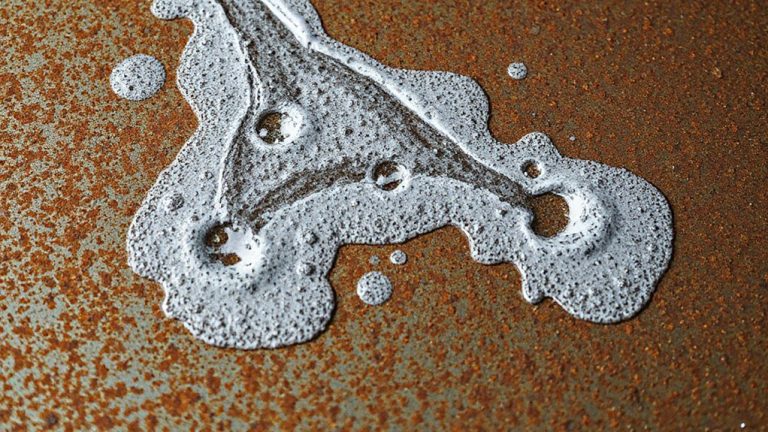
Check the window perimeters for peeling edge lifts-you’ll often find curled vinyl edges near door glass. These lifts occur due to UV degradation and repeated window cycling, exposing degraded adhesive residue. The bond weakens over 6–12 months, especially on sun-exposed surfaces. Sticky, amber-tinged remnants resist cleaning and leave hazy shadows. Gloss differentials up to 15 GU units confirm prior coverage. Residue disrupts refinishing, requiring full stripping-knowing this helps avoid costly adhesion failures down the line.
Notable Insights
- Peeling edge lifts at window perimeters often indicate prior vinyl wrap application due to adhesive failure at high-stress seams.
- Look for curling vinyl edges near windows where thermal cycling and window movement accelerate separation.
- Sticky, amber-tinged adhesive residue along window seals confirms previous wrap exposure and incomplete removal.
- Inconsistent gloss levels between window trim and adjacent panels suggest concealed prior vinyl coverage.
- Isopropyl alcohol test can reveal hidden residue or film fragments along window perimeters after apparent cleaning.
Where to Check for Vinyl Wrap Edge Lifts
Start by inspecting along the edges of exterior body panels, since that’s where vinyl wrap lifts most often occur due to exposure and stress. Focus on door edges, fender flares, and rear quarter panels-common failure points. Look closely for slight curling or separation at the seam where the vinyl meets bare metal or paint. Even small gaps can reveal the underlying vinyl texture, which often differs from factory finishes. Check for trapped dirt or moisture underneath lifted sections. Adhesive residue frequently remains after partial removal, appearing as a sticky, cloudy film that resists typical cleaning. Use a fingernail or plastic tool to gently probe suspect areas-real paint won’t lift, but degraded adhesive bonds will. UV exposure weakens adhesives over time, especially along vertical and angled edges. These zones endure thermal cycling, accelerating edge delamination. Inspect every panel systematically; edge lifts are early indicators of prior wrap history, even if cosmetic touch-ups were applied. High-quality car vinyl wraps resist edge lifting longer due to advanced adhesive formulations and UV stability.
Edge Lifts = Proof of a Past Vinyl Wrap
Those edge lifts you’ve spotted aren’t just cosmetic flaws-they’re hard evidence a vinyl wrap was once applied. When vinyl degrades over time, especially along window perimeters, it contracts and loses adhesion, causing the edges to lift. This vinyl degradation results from prolonged UV exposure and thermal cycling, weakening the material’s bond. Upon close inspection, you’ll often find adhesive residue clinging to the paint or glass-residue that standard paint doesn’t leave. This sticky remnant, typically translucent or amber-tinged, confirms a wrap once covered the surface. The residue resists simple wiping, requiring isopropyl alcohol or adhesive removers for full removal. These signs occur even if the wrap was professionally installed and later removed. The presence of both edge lifting patterns and adhesive residue provides conclusive, physical proof of prior vinyl application-no other surface treatment produces this combination.
Sun, Rain, and Rolling Windows Cause Wrap Edges to Peel
While environmental exposure and mechanical stress accelerate degradation, the edges of vinyl wraps are especially vulnerable to peeling over time. Sun exposure leads to UV degradation, breaking down the vinyl’s polymers and weakening adhesive bonds. Prolonged UV radiation compromises edge integrity within 6–12 months, especially on south-facing surfaces. Rain introduces moisture at lift points, promoting delamination. Water seepage corrodes the substrate-adhesive interface, reducing bond strength by up to 40%. Rolling windows compounds this-each cycle applies 2–5 Newtons of shear force along the wrap’s edge, encouraging further separation. Micro-movements during operation prevent re-adhesion. Once lifting starts, it progresses rapidly. You’ll often find cracked edges, hazing, or curling-clear signs of fatigue. Even after full removal, adhesive residue frequently remains, particularly in window channels where heat and friction concentrate. This combination of UV degradation and mechanical wear makes window perimeters the most failure-prone zones.
Signs Someone Recently Removed a Wrap
You can spot a recently unwrapped vehicle by examining the surface for inconsistencies in gloss, texture, and contamination. Areas once covered by vinyl often retain a protective effect, leaving adjacent paint slightly faded. You’ll notice a sharp contrast at panel edges or near windows. Look closely for vinyl residue-sticky, uneven patches that resist standard cleaning. Residue often clusters near seams, corners, and window perimeters where adhesive was most applied. An adhesive shadow may remain even after residue removal-a hazy outline where UV exposure degraded the bond. This shadow indicates prolonged film presence and differs chemically from the surrounding finish. Use a 10x magnifier to detect micro-textural differences. Gloss readings typically vary by 5–15 GU units between covered and exposed zones. These discrepancies confirm recent removal. Clean surfaces with isopropyl alcohol to reveal hidden patterns. Any lingering stickiness or film fragments confirms intervention.
How Edge Lifts Affect Resale and Repainting
Why do edge lifts matter when selling or repainting a wrapped vehicle? They signal prior vinyl application, which affects buyer trust and future paintwork. If edge lifts occurred, contaminants likely remained along window perimeters, compromising surface priming during removal. Residual adhesive or microabrasions disrupt paint adhesion, increasing risk of peeling or blistering. When repainting, untreated edges lead to poor coating bonding, especially with modern urethane-based paints requiring 50+ psi adhesion strength. You must abrasive-blast or chemically strip affected zones to guarantee bare-metal contact. Surface priming then becomes critical-apply epoxy primers at 0.8–1.2 mils wet film thickness to seal pores and prevent osmotic corrosion. Skimping causes premature failure. For resale, untouched edge damage cuts value by 15–20%, signaling neglect. Buyers assume hidden flaws. Properly repaired seams-feathered, primed, and clear-coated-restore integrity. Ignore edge lifts, and you risk costly rework or rejection.
On a final note
You can confirm prior vinyl wrapping by inspecting window perimeters for edge lifts. These small separations-typically 1–3 mm wide-form at control surfaces where adhesive degrades. Sun exposure weakens polymeric adhesives; rain introduces moisture; window movement creates mechanical stress. Together, they compromise bond integrity. Edge lifts persist after wrap removal, leaving visible print-through. This compromises paint prep and affects refinish adhesion. Always document these areas before repainting.