Lubricating Steering Gearbox Shafts on a 2007 Ford F-250 Super Duty
You need to lubricate your 2007 F-250’s steering gearbox shafts to prevent premature wear and maintain precise steering. Use NLGI #2 grease meeting Ford ESA-M1C75-B, applied via a grease gun to the zerk fittings on the sector and pitman shafts. Clean the fittings first, then inject grease until fresh lube emerges-avoid over-pressurizing. Ford recommends MERCON® LV ATF for internal fluid, checked every 12,000 miles. There’s more to know about keeping your steering system running smoothly.
Notable Insights
- Use NLGI #2 chassis grease with EP additives to lubricate the steering gearbox shafts on a 2007 F-250.
- Locate the zerk fittings on the input and output shafts of the gearbox mounted behind the front axle.
- Clean grease fittings before applying grease to prevent dirt from entering the steering system.
- Pump grease until fresh lube appears at the sector shaft and pitman arm connection points.
- Avoid over-greasing by stopping when resistance increases to prevent damaging internal seals.
Why Your 2007 F-250 Needs Steering Gearbox Lubrication
While Ford designed the 2007 F-250 Super Duty’s steering gearbox to be durable, it still relies on proper lubrication to function correctly over time. You need regular lubrication to maintain smooth operation of the pitman shaft and internal gears. Without it, friction increases, leading to premature wear. This wear disrupts steering alignment, causing the truck to pull to one side. Misaligned steering directly accelerates uneven tire wear, especially on the front tires. Proper lubrication preserves gear mesh accuracy and reduces play in the sector shaft. Ford specifies MERCON® LV or an equivalent ATF for the gearbox, about 10 ounces capacity. You should inspect fluid levels every 12,000 miles. Clean fluid guarantees precise steering response and protects against internal corrosion. Maintaining lubrication isn’t optional-it’s critical for alignment stability and maximizing tire life.
Symptoms of a Dry or Worn Steering Gearbox
What does a failing steering gearbox feel like? You’ll notice a loose steering feel, especially when initiating turns or driving on uneven roads. This slack means the gearbox’s internal components have excessive play, often due to worn gears or insufficient lubrication. You might also experience steering wheel vibration, particularly at higher speeds or under load, signaling friction and wear inside the gearbox. The vibration transmits through the steering column directly to your hands. Without proper lubrication, metal-on-metal contact accelerates wear, reducing gearbox lifespan. A dry sector shaft increases resistance and heat, worsening performance. These symptoms compromise control and safety. Ignoring them can lead to sudden steering failure. Early detection and lubrication prevent costly damage. Check for these signs regularly, especially on high-mileage trucks like your 2007 F-250 Super Duty.
Where to Find the Sector Shaft and Pitman Arm
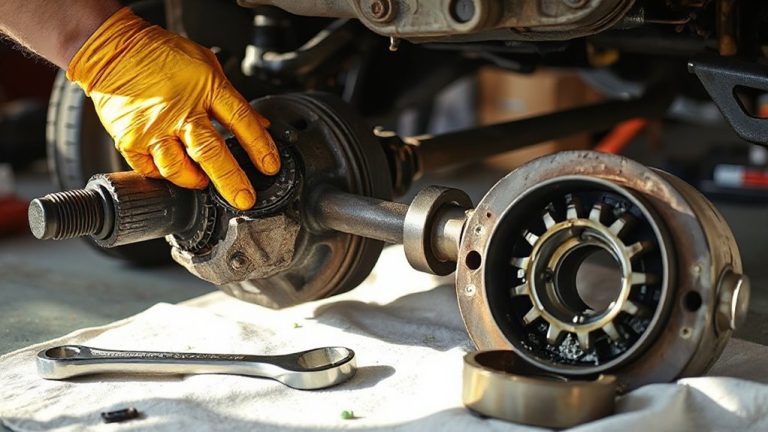
The steering gearbox is mounted on the frame rail just behind the front axle, and that’s where you’ll find the sector shaft and Pitman arm. The sector shaft extends from the bottom of the gearbox and connects directly to the Pitman arm. You’ll notice the Pitman arm bolts perpendicularly to the sector shaft’s splined end, transferring rotational movement to the steering linkage. Correct steering column alignment guarantees the sector shaft operates within design specifications, minimizing wear. The suspension linkage position affects the Pitman arm’s sweep angle, so inspect it with the wheels straight ahead. Misalignment can cause premature binding or uneven lubrication. The Pitman arm’s base fits snugly over the sector shaft with a large castellated nut, typically 1-5/16 inches, secured by a cotter pin. Clearance between the arm and nearby components should be at least 1/2 inch during full articulation to prevent interference. Always verify both sector shaft stability and Pitman arm positioning before lubrication.
Tools and Grease Needed for F-250 Gearbox Lubrication
You’ve located the sector shaft and Pitman arm, and now it’s time to prepare for proper lubrication. Use a high-quality chassis grease with an NLGI #2 grease consistency to guarantee effective flow and adhesion under heavy loads. This viscosity resists breakdown at operating temperatures common in the F-250’s gearbox. You’ll need a hand-operated grease gun with a rigid coupler-guarantee tool compatibility by checking for a standard 1/8-inch NPT fitting, which connects directly to the zerk fitting on the gearbox. Don’t use battery-powered guns unless they offer precise pressure control, as over-pressurization risks seal damage. Include a clean lint-free cloth to wipe the fitting before greasing, preventing contaminant ingress. Verify grease compatibility with EP (extreme pressure) additives to protect gears and bearings. Proper tool compatibility and grease consistency guarantee effective lubrication without component damage.
How to Lubricate the Steering Gearbox Shafts
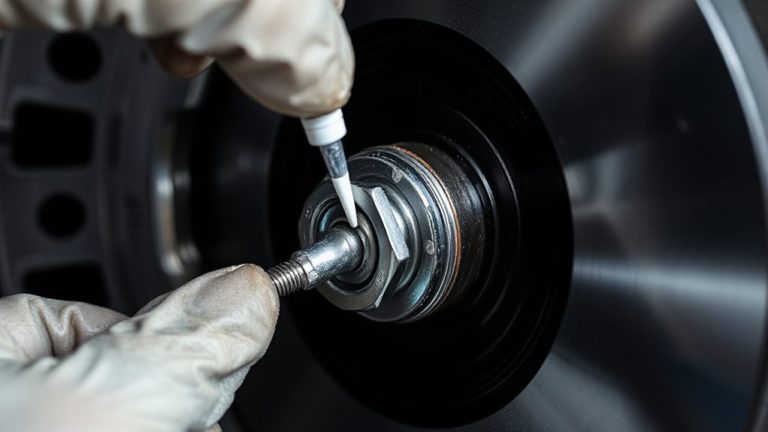
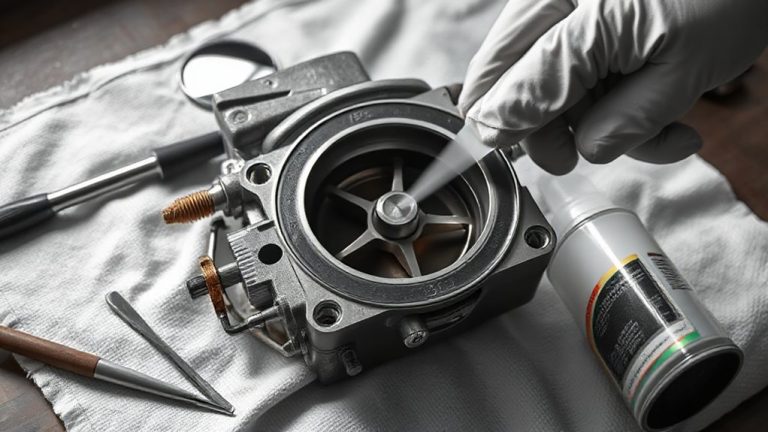
One drop of grease doesn’t fix anything-proper lubrication guarantees long-term gearbox function. Begin by raising the front of your F-250 and securing it on jack stands. Locate the steering gearbox and identify the pitman arm connected to the steering linkage. Clean the grease fittings thoroughly to prevent contamination. Using a high-pressure grease gun, steadily inject grease into the input shaft seal and output shaft zerk until fresh grease emerges. This guarantees the internal gear mesh is fully lubricated, reducing wear and maintaining precise steering response. Over-greasing can damage seals, so stop once resistance increases and grease appears at joints. Check all linkage points-including the drag link and tie rod ends-for proper lubrication to support smooth gear mesh operation. Confirm full steering travel without binding. Properly lubricated shafts reduce friction, extend component life, and maintain vehicle control.
Best Grease for F-250 Steering Gearbox
Choosing the right grease guarantees your steering gearbox operates smoothly and lasts longer, especially after properly lubricating the input and output shafts. Use a high-quality, lithium-based grease with NLGI #2 consistency-it’s ideal for the F-250’s steering gearbox. Grease compatibility matters; make certain it meets Ford specification ESA-M1C75-B or equivalent to prevent seal degradation and internal wear. Avoid silicone or calcium-based greases-they don’t offer sufficient load resistance. This gearbox requires grease with excellent water resistance and a dropping point above 260°F to handle underhood heat. Apply grease every 30,000 miles unless operating in severe conditions, which increases application frequency to every 15,000 miles. Properly specified grease reduces friction in the sector shaft and worm gear, maintaining precise steering response.
How to Maintain Smooth Steering After Lubrication
Regularly checking your steering system after lubrication guarantees long-term performance and prevents premature wear. Inspect the gearbox shaft seals every 5,000 miles to verify no grease leakage, which can attract dirt and compromise steering efficiency. Proper steering alignment is critical-misalignment causes uneven tire wear and makes steering feel stiff or wandering. Have a technician check alignment annually or after heavy off-road use, aiming for a camber between -0.5° and +0.5° and toe within 0.04 to 0.14 inches. Wheel balance also affects steering smoothness. Unbalanced wheels create vibrations, especially at highway speeds, stressing steering components. Balance wheels to within 0.5 ounce accuracy. Use a digital balancer and recheck after tire rotation. Combined, correct steering alignment and precise wheel balance reduce strain on the gearbox, prolonging service life and ensuring responsive, predictable control.
On a final note
You must lubricate your F-250’s steering gearbox shafts to prevent premature wear. Use a high-quality lithium-based grease with NLGI #2 consistency. Apply via the zerk fitting on the sector shaft-typically 2–3 pumps with a hand-operated grease gun. Over-greasing risks seal damage. Correct lubrication reduces friction in the recirculating ball mechanism, ensuring precise 16:1 gear ratio response. Inspect every 12,000 miles.