Inspecting Lower Control Arm Bushings on a 2014 Chevrolet Equinox
You should inspect your 2014 Chevrolet Equinox lower control arm bushings if you notice clunking over bumps or uneven tire wear. These bushings, located at the inner end of the control arm and secured by two 18mm subframe bolts, are designed to last 70,000 to 100,000 miles. Check for cracked, split, or brittle rubber and test for more than 1/8 inch of play using a pry bar. Excessive movement or visible damage means replacement is needed. Opting for a full control arm assembly, typically $180–$270, often saves labor over bushing-only repairs. OEM units offer longer life, while aftermarket options include 3- to 5-year warranties-your next steps depend on wear severity and driving conditions.
Notable Insights
- Lift the 2014 Equinox safely using jack points and secure with 3-ton jack stands for bushing access.
- Remove the front wheel after loosening lug nuts on the ground to expose the lower control arm.
- Inspect the inner bushings for cracks, tears, or rubber separation from the metal sleeve.
- Check for excessive play by moving the control arm; more than 1/8 inch indicates bushing wear.
- Replace the entire control arm assembly if bushings show significant damage or movement exceeds 0.3 inches.
Why Lower Control Arm Bushings Matter
A failing lower control arm bushing can compromise your 2014 Chevrolet Equinox’s handling, so it’s critical to understand their role. These bushings connect the control arm to the vehicle’s frame, absorbing road impacts and maintaining proper suspension alignment. They’re made of reinforced rubber or polyurethane, designed to last 70,000 to 100,000 miles under normal conditions. Without functional bushings, metal components shift excessively, degrading suspension alignment and increasing tire wear. The result? Reduced steering precision and uneven tread contact. You also lose ride comfort, as unfiltered vibrations transfer into the cabin. Properly functioning bushings allow controlled flex, isolating chassis noise and softening bumps. They’re engineered with specific durometer ratings to balance durability and compliance. When they wear, alignment angles like camber and toe drift out of spec, affecting stability. Replacing them restores factory suspension geometry and guarantees predictable performance.
Spot Symptoms of Worn Bushings in Your 2014 Equinox
That clunking sound when you hit a bump? It’s one of the first signs your 2014 Equinox’s lower control arm bushings are failing. Worn bushings lose their ability to dampen vibrations, allowing metal-on-metal contact. You might also notice steering wander, where the vehicle drifts unpredictably over uneven roads. This happens because degraded bushings can’t maintain proper alignment of the control arm. Tire cupping often follows, appearing as scooped patches on the tread. These irregular wear patterns stem from unstable suspension movement, typically tied to bushing softness or cracking. Factory bushings use rubber-composite materials rated for about 70,000 miles under standard conditions. Once they exceed this lifespan-or face harsh driving-they compress unevenly. The result? Reduced ride quality, compromised handling, and accelerated wear on adjacent components like ball joints and tires. Early detection prevents further damage.
How to Access the Lower Control Arm Bushings
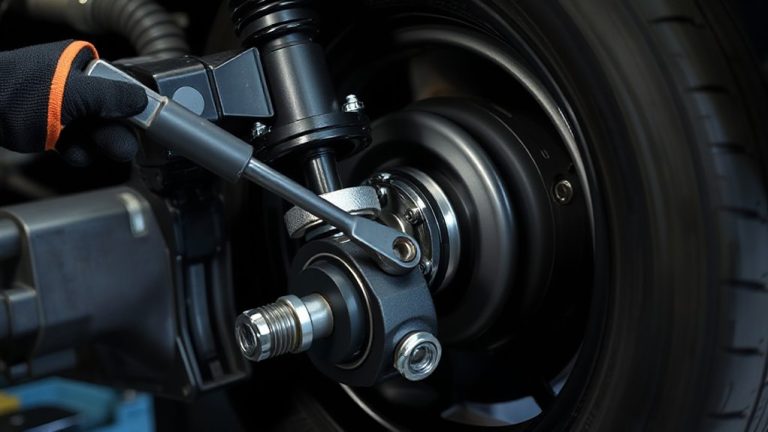
To inspect the lower control arm bushings on your 2014 Chevrolet Equinox, you’ll first need to safely raise and support the vehicle. Use a floor jack to lift vehicle at the manufacturer-recommended lift points, then secure it with jack stands rated for at least 3 tons. Confirm stability before proceeding. Next, remove wheel using a torque wrench to loosen lug nuts while the vehicle is still on the ground-typically 100–120 ft-lb torque specification. Once lifted, finish removing the lug nuts and take off the wheel. This exposes the lower control arm and provides clear access to the bushings. The bushings are located at the inner end of the control arm, where it attaches to the subframe with two 18mm bolts. Guarantee your workspace is well-lit and use a flashlight to view tight areas. Now you’re ready for inspection.
Check for Cracks and Excess Movement
Now that the wheel’s off and the lower control arm is visible, start by closely examining the rubber portion of the bushings for any cracks, splits, or tears. These signs indicate rubber degradation, which compromises structural integrity. The bushings should have a smooth, consistent surface-any brittleness or crumbling means they’ve deteriorated from heat, age, or stress. Next, check for pivot play by grabbing the control arm and attempting to move it back and forth along the bushing axis. Excessive movement-more than 1/8 inch-signals worn bushings. Factory specs allow minimal clearance, so noticeable slack suggests internal separation. Use a pry bar gently against the subframe or control arm to test for hidden play, but avoid forcing components. Clean buildup with degreaser to see fine cracks. Pivot play reduces alignment accuracy and increases suspension noise. Left unchecked, it accelerates wear on related parts like ball joints and tires.
Decide: Replace, Repair, or Monitor
How do you know when bushings need action versus observation? Minor cracks with no excess movement-up to 0.2 inches deflection-can be monitored every 6,000 miles. You’re not losing alignment or causing premature tire wear yet. Severe cracking, visible separation, or movement exceeding 0.3 inches demands replacement. A full lower control arm assembly for your 2014 Equinox averages $180–$270; labor adds $150–$220. Do a cost analysis: replacing just the bushing is rare and often not cost-effective due to press-fit requirements. Most opt for the complete arm. Check warranty options-many aftermarket arms include 3- to 5-year coverage. OEM units last 100,000 miles; polyurethane upgrades offer longer life but firmer ride. Monitor minor issues closely. Replace decisively when specs exceed tolerance. Safety and suspension integrity aren’t areas to delay.
On a final note
Inspect your Equinox’s lower control arm bushings regularly to maintain alignment and ride quality. Worn bushings cause uneven tire wear and loose handling. Check for cracks, splits, or excessive movement-over 1/8 inch play means replacement is needed. GM specifies torque of 85–105 lb-ft for mounting bolts. Replace with OEM-grade rubber or polyurethane bushings. Proper installation guarantees suspension geometry stays within spec.