Maintaining Serviceability of Wiring Harness Connectors Post-Insulation Wrap
You keep connectors serviceable after insulation by using split loom tubing or wrap-around foam that allows access without cutting. Maintain 15 mm tool clearance and use translucent, UL 94 V-0 rated materials rated for -40°C to 125°C. Seal polyolefin sleeves at 120°C–150°C to block moisture while allowing vapor escape. Label within 2 inches of connectors using UV-resistant, color-coded heat-shrink sleeves. Incorporate service loops with 10–15% extra length and space access points every 24 inches. Breakaway wraps let you reconnect or inspect quickly. Proper technique guarantees reliability and sets the stage for advanced protection strategies.
Notable Insights
- Use split loom tubing or wrap-around foam to allow connector access without cutting insulation.
- Apply polyolefin-based sleeves with 30%–50% overlap to prevent moisture entrapment during wrapping.
- Leave service loops with 10–15% extra wire length to reduce strain during maintenance.
- Label connectors within 2 inches of the shell using heat-shrink sleeves with UV-resistant ink.
- Position access points every ≤24 inches using breakaway wraps for easy inspection and repair.
Why Serviceability Fails After Insulating Connectors
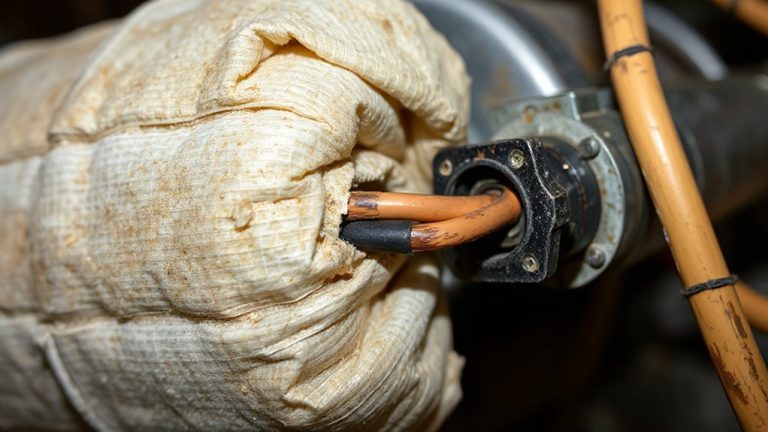
Why do so many wiring harness systems fail shortly after technicians insulate the connectors? You trap moisture when you wrap connectors improperly, creating the perfect environment for connector corrosion. Even minimal humidity, around 60% RH, can condense inside non-vented wraps, accelerating oxidation on copper terminals. Corrosion increases contact resistance-often rising from 0.002 Ω to over 0.5 Ω-disrupting signal integrity. Poor sealing also allows contaminants like road salt or dust to penetrate, further degrading connections. When resistance climbs, heat builds at the contact point. That heat can initiate electrical arcing, especially under load cycles above 12V and 15A. Arcing erodes metal surfaces, creates carbon tracks, and may lead to catastrophic short circuits. Standard vinyl tape or heat-shrink without adhesive seals don’t prevent this. You need fully encapsulated, IP67-rated protection to maintain long-term serviceability and prevent premature system breakdown.
Use Insulation That Allows Easy Connector Access
How do you protect wiring harness connectors without turning them into permanent fixtures? Use insulation sleeves designed for quick access. These materials must balance protection with serviceability. Choose split loom tubing or wrap-around foam that opens without cutting. Maintaining connector visibility guarantees you can inspect terminals and seals without removing insulation. Look for translucent or UV-resistant covers that let you spot corrosion or disconnections instantly. Tool clearance is critical-allow at least 15 mm around each connector to fit standard wrenches or pullers. Rigid insulation blocks access; instead, use flexible, self-extinguishing (UL 94 V-0 rated) materials with operating ranges from -40°C to 125°C. Avoid overwrapping. Strategic placement preserves access points. Think modular: insulate wire runs but leave connectors exposed or lightly covered. This guarantees rapid diagnostics and repair. Serviceability begins with smart insulation choices.
Wrap Harnesses Without Trapping Moisture
While protecting your wiring harness from moisture is critical, wrapping it improperly can trap water and accelerate corrosion. Always inspect the harness for moisture before wrapping. Use breathable, moisture-resistant materials like polyolefin-based sleeves that allow vapor escape. If you seal the harness with heat sealing, make certain the bond is complete but not overly tight-typical sealing temperatures range from 120°C to 150°C. Avoid overlapping wraps excessively; a 30% to 50% overlap makes certain coverage without trapping humidity. For long-term storage or high-humidity environments, consider vacuum packing. Vacuum packing removes ambient air, reducing condensation risk during temperature shifts. Seal the packed harness in metallized moisture-barrier bags with a moisture vapor transmission rate below 0.05 g/m²/day. These steps prevent internal moisture accumulation, preserving connector integrity and making certain reliable conductivity in demanding operational conditions.
Label Connectors for Quick Identification
Ever struggled to tell which connector goes where in a complex harness? Labeling connectors guarantees quick, accurate identification during maintenance. Proper tag placement is critical-position labels within 2 inches of the connector shell for visibility without obstructing mating. Use heat-shrink sleeves with printed identifiers to withstand vibration and fluids. Color coding complements labeling by grouping related circuits, such as power (red), ground (black), and data (blue), per standard conventions. This dual strategy reduces diagnostic time by up to 40%. Below are recommended materials:
| Material | Temperature Rating |
|---|---|
| Polyester tags | –40°C to +150°C |
| Nylon ties | –40°C to +125°C |
| Fluorescent labels | –40°C to +85°C |
Use UV-resistant inks to maintain legibility. Consistent labeling improves serviceability, especially after insulation wrapping limits access.
Add Access Points for Serviceable Connectors
Labeling connectors improves identification, but without proper access, even the best tags are useless during troubleshooting or replacement. You must plan connector placement to allow full access after insulation wrapping. Position connectors where they’re reachable without unwrapping large harness sections. Use service loops-typically 10–15% extra wire length-to provide slack for disconnection and testing. A 6-inch loop is standard for most aerospace and automotive harnesses, enabling connector removal even in tight spaces. Service loops prevent strain during maintenance and reduce wire fatigue. Place accessible service points at intervals no greater than 24 inches in long runs. Use breakaway wraps or split loom tubing at these points to allow quick entry. Proper access guarantees connectors remain serviceable post-wrap. You can’t afford downtime because a labeled connector is buried under layers of insulation. Design with access in mind-it’s as critical as the wiring itself.
Stop Contamination After Wrapping
Your harness’s reliability hinges on keeping contaminants out after wrapping. Contaminants like moisture, dust, and chemicals compromise performance if they reach exposed connectors. Effective connector sealing prevents intrusion, guaranteeing long-term function. Use heat-shrink boots with adhesive liners rated for 135°C operating temperatures to create watertight seals. Verify material compatibility between wrap materials and connector housings-PVC wraps shouldn’t be paired with polycarbonate connectors due to chemical degradation risks. Instead, use polyethylene-based tapes for sensitive housings. Sealant tapes with a 0.5 mm thickness provide maximum conformability around irregular shapes. Guarantee 360-degree coverage at connection points to block wicking. Avoid silicone-based adhesives if downstream painting occurs-they outgas and reduce paint adhesion. Properly sealed connectors maintain IP67 ratings post-wrap. Material compatibility and robust sealing collectively prevent corrosion, signal loss, and premature failure in harsh environments.
Test and Maintain Wrapped Harness Connectors
How can you be sure a wrapped harness connector will perform under stress? Test each connection using a digital multimeter to verify resistance below 0.5 ohms-any higher suggests poor contact or early connector corrosion. Inspect for physical gaps or moisture ingress, which accelerate degradation and risk electrical arcing under load. Perform a continuity check after subjecting the harness to thermal cycling between -40°C and +125°C to simulate real-world conditions. Use insulation resistance testing at 500V DC to confirm values exceed 100 MΩ, ensuring dielectric integrity. Recheck connectors every 6 months in harsh environments. If you notice discoloration, pitting, or burnt odor, disassemble and inspect closely-signs often point to micro-arcing or oxidation. Prevent further damage by rewrapping with abrasion-resistant tape and sealing with adhesive-lined heat shrink tubing rated at 135°C.
On a final note
You preserve connector serviceability by using breathable, non-absorbent insulation like closed-cell foam or silicone-coated wraps with a dielectric strength of at least 750 V/mil. Wrap harnesses spirally with 30% overlap to block moisture ingress while allowing access. Label each connector with UV-resistant, alphanumeric tags. Install removable inspection panels near high-use junctions. Test insulation resistance regularly with a 500 VDC megohmmeter; maintain values above 100 MΩ.