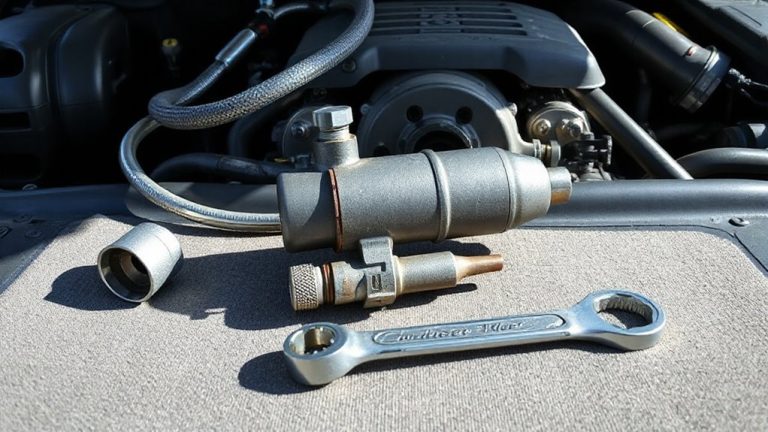
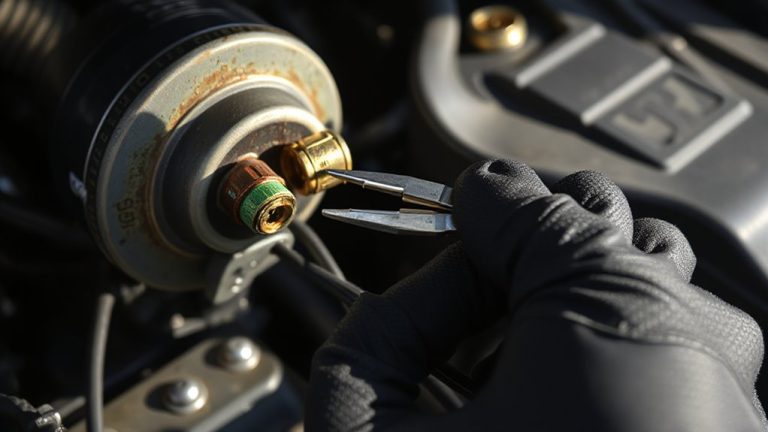
Calibrating Real-Time Data Alarms for Critical Parameters Like Oil Pressure
You need real-time oil pressure alarms that adjust dynamically, because static thresholds fail under changing conditions. Sensor drift up to 3–5 psi and thermal effects of ±1.8 psi at 300°F skew results. Diesel engines demand 40–80 psi under load; gasoline runs 25–65 psi-calibration must match combustion type. Set low alarms 15–20% below normal, high alarms 10–15% above. Use shielded cables, proper placement in the main gallery, and hysteresis of 5–10% to stop false triggers. There’s a proven method to refine these alarms in actual operating environments.
Notable Insights
- Use real-time calibration with engine load, temperature, and RPM to detect pressure shifts as small as 3–5 psi.
- Set low-pressure alarms 15–20% below normal operating range to avoid false alerts while ensuring safety.
- Install sensors in the main oil gallery to accurately reflect true system pressure and reduce signal distortion.
- Apply alarm hysteresis of 5–10% to prevent chattering during transient pressure fluctuations.
- Calibrate separately for diesel and gasoline engines, accounting for combustion type and typical pressure ranges.
Why Oil Pressure Alarms Fail Without Smart Calibration
Why do oil pressure alarms still miss critical failures despite constant monitoring? You’re relying on sensors that degrade over time. Sensor drift skews readings, causing false normals even during pressure drops. Without smart calibration, your system won’t detect shifts of as little as 3–5 psi-critical in high-load engines. Calibration lag delays corrections, letting errors persist for weeks. Traditional systems recalibrate quarterly, but pressure thresholds can shift daily. A sensor reading 42 psi instead of 45 may not trigger alarms, yet it indicates early pump wear. Smart calibration adjusts in real time, using reference baselines from engine load, temperature, and RPM data. It compensates for thermal expansion effects-up to ±1.8 psi at 300°F-and syncs multiple sensor inputs within 150ms. You avoid missed warnings. Without this, your monitoring is just guesswork with data. Stay precise. Stay protected.
How Engine Type Changes Oil Pressure Alarm Needs
While diesel and gasoline engines both rely on oil pressure for critical lubrication, your alarm thresholds must differ considerably due to their inherent design and operating demands. Diesel engines endure higher compression ratios and stronger internal forces, demanding greater oil pressure for protection. Your system must account for this engine design difference. Gasoline engines typically operate at 25–65 psi, but diesels often require 40–80 psi under load. The combustion type directly influences pressure needs-diesel’s compression-ignition creates more stress than gasoline’s spark-based system. Failing to adjust alarms based on combustion type risks premature wear or false alerts. You’ll need engine-specific calibration curves, not one-size-fits-all settings. Always reference manufacturer specs for startup and operating pressure bands. Matching alarm triggers to these technical parameters guarantees timely, accurate responses.
What Normal and Dangerous Oil Pressure Ranges Look Like
Oil pressure readings give you a real-time window into engine health, and knowing what’s normal versus dangerous helps you act before damage occurs. For most engines, normal idle pressure ranges from 10 to 20 psi, rising to 40–60 psi at operating speed. If pressure drops below 10 psi, immediate action is needed-low readings often signal poor oil viscosity or clogged passages. High pressure exceeding 80 psi can stress seals and indicate a faulty regulator. Thin oil or degraded additives reduce viscosity, leading to inadequate lubrication and accelerated mechanical wear. Consistently abnormal readings suggest internal damage, like worn bearings or pump issues. You must interpret pressure in context-cold oil thickens, spiking pressure temporarily. But persistent extremes compromise engine life. Monitoring guarantees early detection of developing faults, letting you intervene before catastrophic failure. Recognizing these ranges helps maintain peak performance and longevity.
How to Set Oil Pressure Alarm Limits Accurately
How do you know when an oil pressure reading demands immediate attention? You set accurate alarm limits based on your engine’s specifications and operating conditions. Start by consulting the manufacturer’s recommended pressure range-typically 25–65 psi at operating speed. Account for sensor accuracy, which should be ±2% of full scale or better, to avoid missing critical changes. A sensor with poor accuracy might misreport a dangerous 18 psi as 22 psi, delaying response. Also, monitor for calibration drift, where readings shift over time due to temperature or wear. Check calibration every 3–6 months or per OEM guidelines. Set low-pressure alarms at 15–20% below minimum normal operating pressure. Use high-pressure alarms cautiously, typically 10–15% above normal. These thresholds catch real issues early without overreacting to noise.
Avoid False Alarms While Catching Real Problems
Why do some oil pressure alarms trigger when nothing’s wrong, while others miss the real threats? Poor sensor placement is often the culprit. Mounting sensors near vibrating components or in low-flow zones distorts readings. For reliable detection, install sensors directly in the main oil gallery, where pressure fluctuations reflect actual engine conditions. Environmental interference also skews data. Electromagnetic noise from alternators or ignition systems can corrupt signals, especially with unshielded wiring. Use twisted-pair, shielded cables grounded at one end to reduce interference. Set alarm hysteresis to 5–10% to prevent chattering during transient drops. Combine stable mounting, proper shielding, and clean signal paths. You’ll suppress false triggers without sacrificing responsiveness. Real problems emerge clearly when noise is eliminated. Accuracy isn’t just about thresholds-it’s about signal integrity from source to controller.
Why Oil Pressure Alarms Must Account for Temperature and Load
Nearly every engine operates under varying conditions, and failing to adjust oil pressure alarms for those changes risks both false alerts and missed failures. You must account for temperature because it directly affects oil viscosity. Cold oil is thicker, causing higher pressure readings that might trigger unnecessary alarms. As the engine warms, oil thins, reducing pressure. If your alarm threshold is fixed, you could overlook low pressure once the oil reaches operating temperature. Load also matters-higher RPMs and increased torque demand more oil flow. Under heavy load, even normal pressure drops can signal trouble if not properly calibrated. Ignoring these variables accelerates engine wear over time. Adaptive alarms, tuned to real-time temp and load, maintain accuracy. They distinguish between safe operating ranges and true faults. You protect critical components by aligning alarms with actual conditions, not static numbers.
Test and Refine Alarms in Real-World Engine Scenarios
Field testing is the only way to validate that your oil pressure alarms respond accurately under actual operating conditions. You need real engine loads, temperature swings, and vibration to see how your system truly behaves. Sensor placement matters-mount too far from the main gallery and you’ll get delayed, inaccurate readings. Below is how adjustments affect alarm reliability:
| Factor | Impact on Alarm Performance |
|---|---|
| Poor sensor placement | Delayed response, false alarms |
| Low calibration frequency | Drifting thresholds, missed faults |
| High engine load | Reveals lag in pressure response |
| Cold start | Tests alarm sensitivity and accuracy |
Calibrate often-every 500 hours or annually, whichever comes first. Use data from these tests to refine threshold values and response times. Real-world validation catches issues simulations miss. You can’t assume lab conditions reflect the field. Adjust based on observed performance, not theory.
On a final note
You must calibrate oil pressure alarms to engine-specific conditions. Default thresholds often cause false alarms or missed failures. Set low-pressure limits at 10 psi (69 kPa) at idle and 40–60 psi (276–414 kPa) at operating speed for most diesel engines. Account for oil viscosity, load, and temperature-pressure drops 5 psi (34 kPa) per 20°F (11°C) oil temp rise. Test alarms under real loads. Refine until alerts trigger only for true anomalies, ensuring reliability without desensitization.