How to Grease Steering Idler Arm on a Ram 1500 for Extended Component Life
Locate the idler arm on the passenger side, just forward of the oil pan, where it connects the frame to the center link. Check for over 1/8 inch of play or clunking noises-signs of wear. Use a grease gun with NLGI #2 lithium-based grease and deliver 10–12 shots at 2,500 psi through the cleaned zerk fitting. Support the front end safely, then torque mounting bolts to 70–80 ft-lbs after greasing. Proper lubrication maintains ball joint integrity under 300 pounds of lateral force and prevents premature failure-understanding each step guarantees long-term reliability.
Notable Insights
- Locate the idler arm on the passenger side, behind the lower control arm and just forward of the oil pan.
- Inspect the zerk fitting for damage and clean it thoroughly before attaching the grease gun.
- Use NLGI #2 lithium-based grease compatible with rubber seals to prevent leakage and wear.
- Pump 10–12 shots of grease at up to 2,500 psi until fresh grease emerges from the joint.
- Lower the vehicle and torque the mounting bolts to 70–80 ft-lbs to maintain proper alignment and extend component life.
Find the Idler Arm on Your Ram 1500
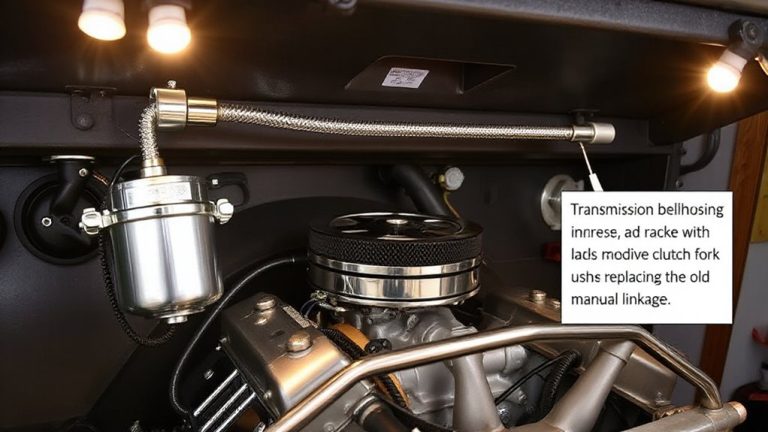
Your Ram 1500’s idler arm plays a critical role in maintaining proper front-end alignment and steering stability. It mirrors the pitman arm’s movement, guaranteeing the tie rod stays level during suspension travel. You’ll find it on the passenger side of the front suspension, just behind the lower control arm. It connects from the frame to the center link, with a ball joint at the end for pivot motion. The bolt location at the frame mount uses a 15mm fastener, typically requiring a socket and ratchet to access. This area collects road grime, so cleaning around the grease fitting is essential. The idler arm sits just forward of the engine oil pan, making it visible from underneath. Locate the zerk fitting on the ball joint-this is where you’ll attach the grease gun. Proper identification guarantees accurate maintenance and prevents damage to adjacent steering components.
Check for Worn Idler Arm Symptoms
What would make your Ram 1500 pull to one side or respond sluggishly to steering input? Worn idler arm symptoms often mimic alignment issues, but the real culprit may be excessive steering play. Inspect for lateral movement at the idler arm pivot-any wiggle over 1/8 inch signals internal wear. Ball joint wear compromises steering geometry, reducing control and accelerating tire wear. The idler arm supports the passenger-side pitman arm linkage; when worn, it fails to maintain precise centering of the steering linkage. You might notice vague steering response or a slight delay when turning. Check for clunking noises during low-speed turns-this often accompanies advanced wear. Steering play beyond factory tolerance (typically more than ½ inch at the wheel) demands immediate inspection. Ignoring these signs risks unsafe driving conditions and damage to related steering components. Address wear early to maintain factory steering precision.
Gather Your Greasing Tools and Grease
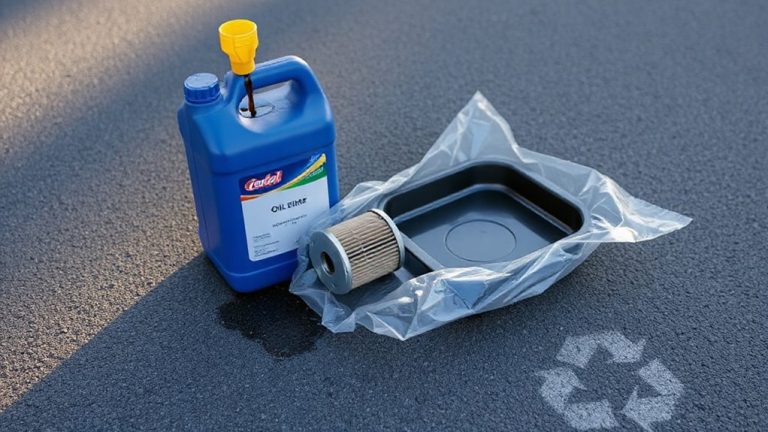
A worn idler arm undermines steering accuracy, but proper lubrication can extend its service life and restore smooth operation. You’ll need a high-quality chassis grease rated NLGI #2, with lithium complex or polyurea thickeners for heat and water resistance. Check grease compatibility with your idler arm’s seals-mineral-based greases suit most OEM rubber components. Use a hand-operated or electric grease gun with a 4,000 psi output to guarantee full zerk fitting penetration. Fit a flexible hose no shorter than 18 inches for tight spaces. Inspect the grease fitting for damage; replace if stripped. Clean fittings before attaching the gun to avoid injecting contaminants. Always practice tool maintenance: purge air from the gun, clean after use, and store grease in sealed containers. Proper prep ensures effective lubrication and maximum component longevity. For increased efficiency in frequent greasing tasks, consider using a cordless grease gun.
Grease the Ram 1500’s Idler Arm in 5 Steps
Begin by positioning the Ram 1500 on a level surface and securing the vehicle with wheel chocks to prevent movement. Lift the front end with a floor jack and support it with jack stands for safety. Locate the idler arm beneath the passenger side of the frame rail, connected to the pitman arm and center link. Proper steering alignment depends on this component’s smooth operation. Lubrication guarantees vehicle stability and responsive steering.
| Step | Action | Lubricant Used |
|---|---|---|
| 1 | Attach grease gun to the zerk fitting | Multi-purpose lithium-based grease (NLGI #2) |
| 2 | Pump grease until fresh output appears | ~10–12 pumps, 2,500 psi max |
| 3 | Inspect for boot damage or wear | Replace if cracks or tears are present |
| 4 | Lower vehicle and retighten mounting bolts | Torque to 70–80 ft-lbs |
Recheck steering alignment afterward to maintain handling precision.
Why Lubricating Your Idler Arm Prevents Failure
While consistent lubrication may seem like routine maintenance, skipping it can lead to premature idler arm failure and costly steering repairs. Without grease, the idler arm’s pivot point generates excessive friction, accelerating ball joint wear and reducing component lifespan. OEM specifications require NLGI #2 grease applied every 5,000 miles to maintain peak performance. Proper lubrication minimizes steering linkage stress by ensuring smooth articulation under load. Under normal driving, the idler arm supports up to 300 pounds of lateral force; inadequate lubrication increases metal-on-metal contact, risking bushing deformation. Over time, this leads to play in the steering system, creating imprecise handling and uneven tire wear. Greasing the idler arm maintains factory tolerances, preventing premature fatigue. A well-lubricated joint operates within safe thermal limits, avoiding heat buildup that degrades rubber seals. You’re not just adding grease-you’re preserving system integrity, ensuring reliable steering response and extended service life.
On a final note
You should grease the idler arm every 5,000 miles using NLGI #2 lithium-based grease. This prevents premature wear in the ball socket, which supports up to 1,200 pounds of lateral load. A well-lubricated joint reduces friction and corrosion, extending service life beyond 75,000 miles. Dry joints increase play, leading to alignment drift and tire wear. Proper maintenance guarantees steering precision and front-end reliability.