What Every Car Owner Must Know About Suspension System Components and Their Functions
Your suspension keeps tires in contact with the road by balancing comfort and control. Springs-coil or leaf-support weight and compress 1–3 inches under load. Shocks and struts dampen bounce, using hydraulic resistance of 300–1,200 pounds to stabilize motion. Control arms and bushings maintain alignment within 0.5–1.5 degrees of ideal. Sway bars reduce body roll in turns. Worn parts cause uneven tire wear, poor handling, or increased stopping distances. Replace shocks at 75,000–100,000 miles-or sooner if leaking or clunking. Issues often start subtly, but the full picture becomes clearer with closer inspection.
Notable Insights
- Springs absorb road impacts and support vehicle weight, typically compressing 1–3 inches under normal driving conditions.
- Shock absorbers dampen spring motion to control bouncing and maintain tire contact with the road.
- Struts combine shock absorbers with structural support, improving stability and handling in modern suspension systems.
- Control arms and bushings keep wheels aligned, preventing uneven tire wear and maintaining steering precision.
- Regular inspections every 50,000 miles can detect wear in suspension components before safety or performance is compromised.
What a Car Suspension System Actually Does
While your car’s engine gets most of the attention, it’s the suspension system that quietly guarantees your wheels stay in contact with the road. It balances ride comfort and handling stability through precise engineering. Springs absorb impacts from bumps, typically compressing 1–3 inches depending on load and road conditions. Shock absorbers dampen spring motion, preventing excessive bouncing. Together, they keep tires firmly planted, improving traction. Control arms and stabilizer bars maintain alignment and reduce body roll, especially during cornering. Most modern suspensions use a MacPherson strut or multi-link design, each optimized for specific performance metrics. Suspension geometry maintains camber and toe angles within 0.5 to 1.5 degrees of ideal, even on uneven surfaces. This system directly affects braking distance, steering response, and overall safety.
Signs of Suspension Trouble (And What They Mean)
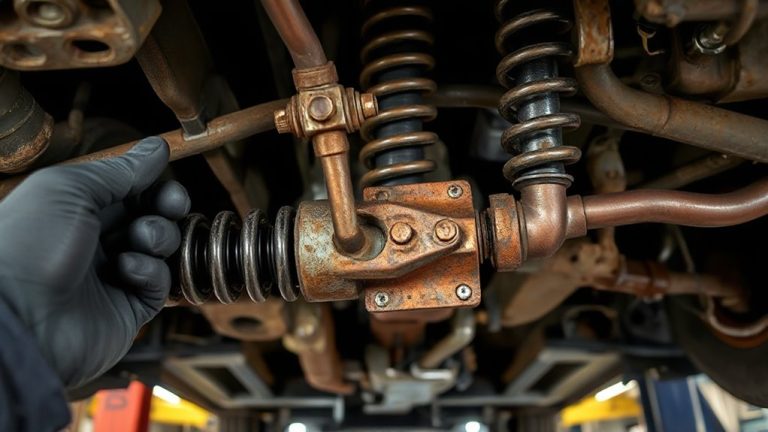
A well-designed suspension system keeps your car stable, comfortable, and in control-but when components begin to fail, the symptoms are both measurable and noticeable. You’ll feel a bumpy ride, especially over potholes or rough pavement, indicating worn springs or degraded mounts. Tires may develop uneven tire wear-feathering or cupping-due to improper wheel alignment from damaged control arms or bushings. The vehicle may pull to one side or nose dive during braking, signaling compromised suspension geometry. You might notice increased body roll in corners, reducing stability and grip. These issues affect handling, tire longevity, and braking efficiency. Measurable indicators include excessive vertical wheel travel beyond 2–3 inches or visible fluid leaks near joints. Steering response becomes delayed or vague, reducing control precision. Ignoring these signs risks safety and performance. Regular inspection of suspension components guarantees peak function and extends vehicle lifespan. Address problems early to maintain ride quality and control. Upgrading to the best car suspension for bumpy roads can significantly improve comfort and handling on rough terrain.
Shocks and Struts: How They Keep Your Ride Smooth
Why does your car settle smoothly after hitting a bump instead of bouncing uncontrollably? The answer lies in your shocks and struts. These components control spring movement using hydraulic damping to resist oscillations. Without them, your wheels would bounce off the road, reducing traction and hurting ride comfort. Shocks contain a piston and fluid-filled chamber; as the piston moves, hydraulic fluid flows through valves, creating resistance. Struts are more complex, combining a shock with structural support. Most vehicles use monotube or twin-tube designs, each offering different damping efficiency. Damping force typically ranges from 300 to 1,200 pounds, depending on application. Worn shocks reduce stopping distances on rough surfaces by up to 20%. Maintaining them guarantees consistent handling, tire contact, and ride comfort. For optimal performance, consider choosing the best shocks based on expert testing and real-world conditions.
Springs: Supporting Weight in Your Suspension System
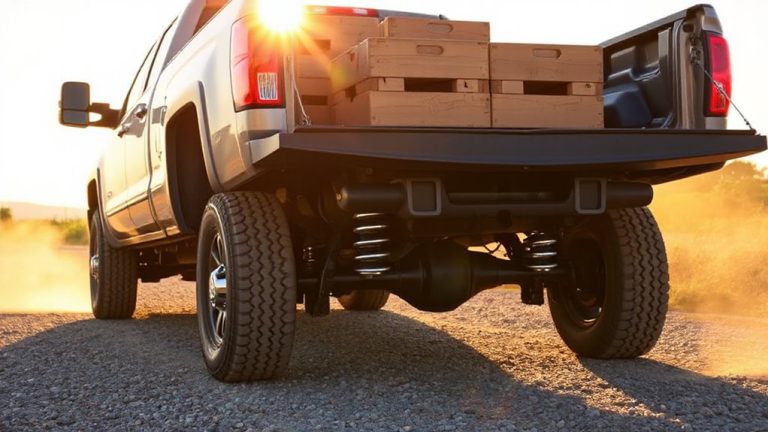
Think of your car’s springs as the backbone of the suspension-always working, never complaining. They bear the vehicle’s weight and absorb road impacts. Coil springs, commonly used in modern cars, are tightly wound metal spirals that compress and expand with load changes. They’re made from cold-wound or hot-wound steel, typically lasting 100,000 miles before sagging. Leaf springs consist of layered steel strips bound together, often found in trucks and older models. They handle heavier loads-up to 2,000 pounds or more-making them ideal for towing. Both types maintain ride height and support shocks, but don’t dampen motion-that’s the strut or shock absorber’s job. Coil springs offer smoother handling; leaf springs deliver durability. Over time, metal fatigue reduces spring effectiveness, leading to uneven tire wear and poor alignment. Regular inspection guarantees your springs keep supporting your car properly. Top suspension brands like Bilstein and KYB offer high-performance options that enhance durability and ride quality.
Control Arms and Bushings: Keeping Your Wheels Aligned
Your control arms are the unsung heroes of wheel alignment, linking the suspension to the vehicle’s frame while allowing precise movement. Over time, control arm wear can shift alignment angles beyond acceptable limits-typically more than 0.5 degrees off factory specs-leading to uneven tire wear. Bushing deformation, often due to age or stress, reduces suspension accuracy by allowing unintended movement. This softening can increase deflection by up to 3mm, compromising handling.
| Component | Function | Common Failure |
|---|---|---|
| Upper Control Arm | Controls camber angle | Control arm wear |
| Lower Control Arm | Supports suspension load | Bent or cracked arms |
| Control Arm Bushings | Absorbs vibration, maintains position | Bushing deformation |
| Mounting Bolts | Secures arm to frame | Corrosion or looseness |
Regular inspection helps detect early signs of failure.
Sway Bars: Why Your Car Stays Flat in Turns
Sway bars play a key role in maintaining vehicle stability during cornering, building on the alignment precision provided by control arms and bushings. They connect the left and right wheels, reducing body roll when you turn. This added resistance is called roll stiffness, which improves handling by keeping the car flatter. Without sufficient roll stiffness, the vehicle leans excessively, shifting weight and upsetting lateral balance. Sway bars counteract this by transferring load across the chassis. Most are made of hardened steel, with diameters ranging from 18mm to 35mm depending on vehicle size and performance needs. A thicker bar increases roll stiffness but may reduce comfort on uneven roads. Properly tuned, it preserves lateral balance, ensuring even tire contact and predictable steering response. The bar works silently, yet its effect is critical for control.
When to Inspect or Replace Suspension Parts
How often should you check the parts that keep your ride stable and safe? Inspect your suspension system every 50,000 miles or when you notice uneven tire wear. Have an alignment check performed annually to detect subtle shifts in camber, toe, or caster angles. These shifts can cause poor handling and premature tire degradation. Look for wear patterns on your tires-inside or outside edge wear often signals ball joint or control arm issues. Shock absorbers typically last 75,000 to 100,000 miles but should be replaced if they leak fluid or allow excessive bounce. Struts, which support the vehicle’s weight, should be evaluated every 60,000 miles. A clunking noise over bumps? That’s usually a failed bushing or worn strut mount. Replace components in pairs for balanced performance. Early detection prevents damage to related parts and maintains ride stability.
On a final note
Your suspension system guarantees control, comfort, and safety. It absorbs road impacts, maintaining tire contact and stability. Shocks and struts dampen spring motion, with typical damping forces ranging 300–600 lbs. Springs support vehicle weight, with coil rates from 150–400 lb/in. Control arms position wheels, using bushings rated for 50,000–100,000 miles. Sway bars reduce roll, up to 1.5 inches in diameter. Inspect components every 50,000 miles or if handling changes occur.