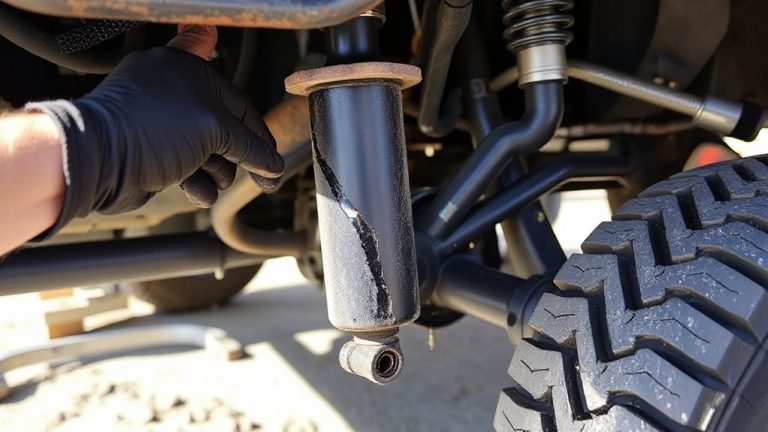
Lubricating Caliper Bridge Bolts With Silicone Paste to Prevent Galling During Removal
You should lubricate caliper bridge bolts with silicone paste to prevent galling during removal. Stainless steel bolts galling occurs under clamping loads up to 25 Nm, especially when paired with aluminum. Silicone paste creates a thermally stable barrier up to 400°F (204°C), reducing friction and blocking moisture. It stays in place without migrating, unlike oils. Use a thin film of NSF H-1 registered grease like Permatex Dielectric Tune-Up Grease on clean threads. Over-lubrication risks contamination. Proper application guarantees consistent torque and easier disassembly. Corrosion resistance extends bolt life. You’ll discover superior techniques and product recommendations that improve long-term reliability.
Notable Insights
- Stainless steel bridge bolts are prone to galling due to adhesive wear under high torque, especially above 22–25 Nm.
- Silicone paste prevents galling by creating a durable, heat-resistant barrier that eliminates direct metal-to-metal contact.
- Apply a thin, even layer of high-temperature silicone paste to clean bolt threads and seating surfaces before installation.
- Proper lubrication ensures accurate torque application and reduces breakout torque increases caused by corrosion.
- Avoid over-lubrication and contact with friction surfaces, brake fluid, or rubber components to maintain safety and effectiveness.
Why Bridge Bolts Gall Without Silicone Paste
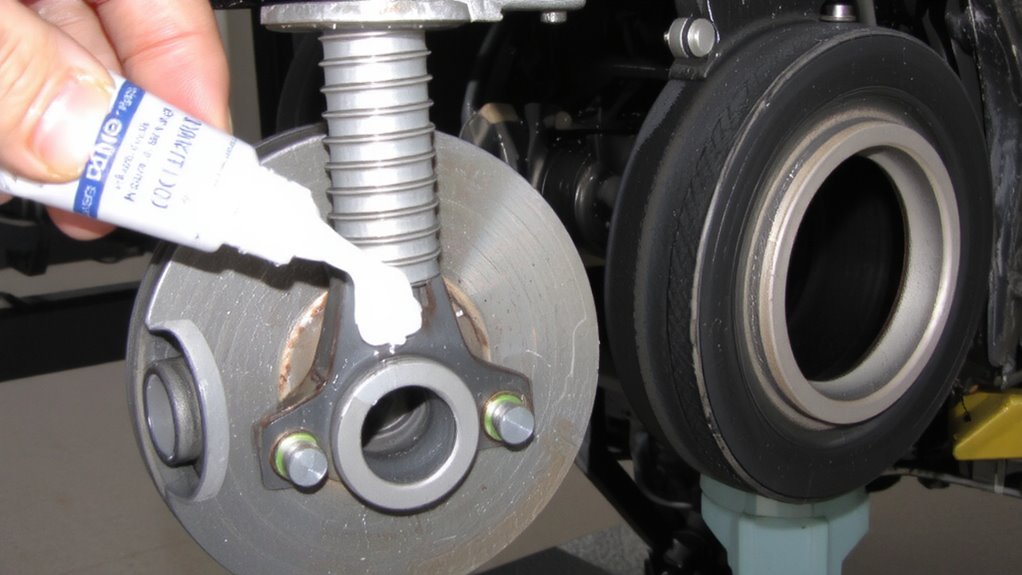
When you don’t use silicone paste on caliper bridge bolts, the risk of galling increases markedly-especially with stainless steel components. Material incompatibility between bolt and caliper metals causes surface adhesion under high clamping loads. Without lubrication, microscopic welding occurs during tightening, leading to cold-welding and thread seizure. Stainless steel bolts, though corrosion-resistant, are prone to galling due to their chromium oxide layer’s low shear strength. This effect worsens when torque specs exceed 22–25 Nm, common in performance brake systems. Corrosion buildup further exacerbates the issue, as moisture and road salts penetrate thread interfaces, creating iron oxide deposits that lock threads in place. These deposits increase breakout torque by up to 40%, raising the likelihood of bolt failure during removal. Thread deformation becomes likely, especially in M10x1.25 or M8x1.25 hardware. Preventing this requires a thermal-stable lubricant rated for 500°F+-but that solution is for the next section.
How Silicone Paste Stops Thread Seizing
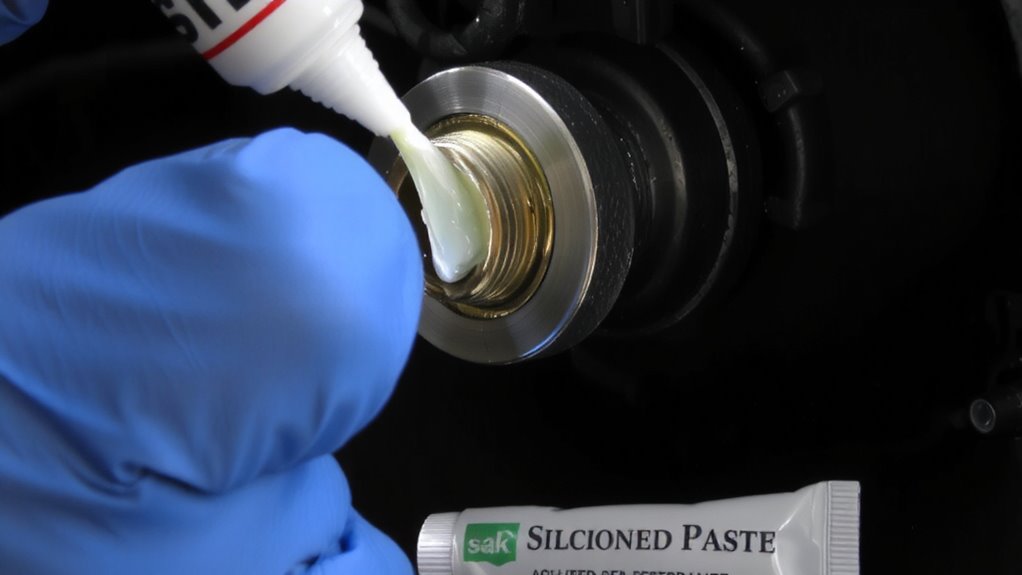
Because silicone paste acts as a thermal-stable barrier between mating threads, it prevents direct metal-to-metal contact that leads to seizing. You achieve reliable friction reduction, allowing precise torque application during installation. The paste remains stable under high heat, avoiding breakdown that oils or greases might suffer. This stability guarantees long-term corrosion inhibition, protecting threads from moisture and contaminants. Over time, unprotected bolts can fuse due to oxidation and pressure-silicone paste stops that.
| Benefit | Technical Impact |
|---|---|
| Friction Reduction | Lowers galling risk during tightening and removal |
| Corrosion Inhibition | Blocks moisture, preventing rust and pitting |
You maintain thread integrity across repeated service cycles. Unlike liquid lubricants, silicone paste doesn’t migrate or drip, staying where applied. It supports consistent clamping force by eliminating drag during threading. This means accurate torque transfer without false readings from binding. With silicone paste, you’re not just lubricating-you’re building a durable, protective interface that preserves critical brake components.
Best Silicone Pastes for Brake Applications
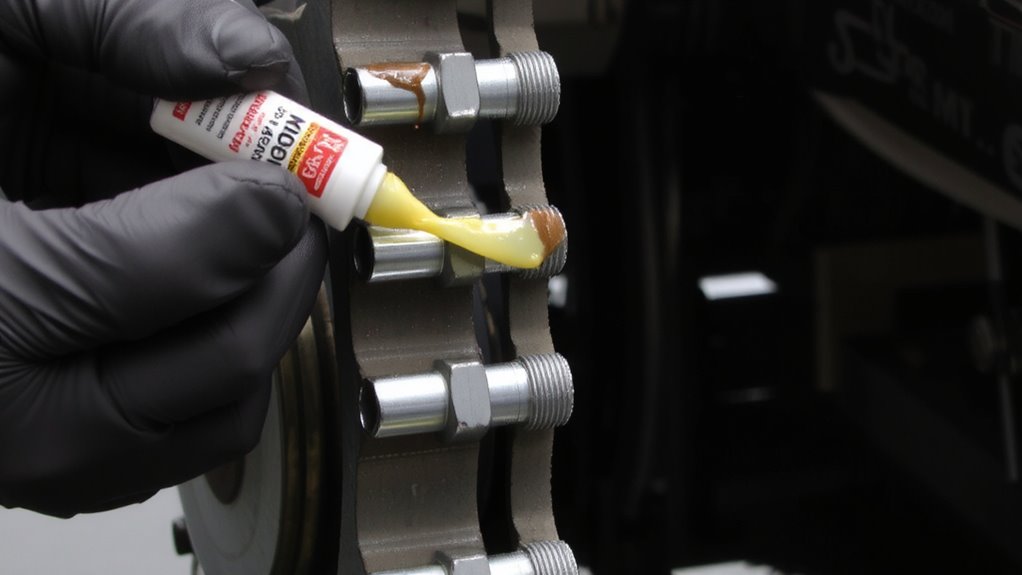
While not all silicone pastes are suited for brake systems, the right choice guarantees reliable performance under extreme conditions. You need a product with high thermal stability, resisting temps up to 400°F (204°C) without breaking down. Top-tier pastes use pure silicone grease with a稠 consistency to stay in place under vibration. Chemical resistance is critical-quality formulas resist brake fluid, moisture, and road salts without washing out or corroding. Look for NSF H-1 registration, indicating safety near incidental food contact and purity. Brands like Permatex Dielectric Tune-Up Grease and Dow Corning High Performance Silicone Lubricant deliver proven results. They’re non-conductive, non-migrating, and compatible with rubber and metal. Their稠 formula fills microgaps in threads, reducing friction. You’ll get smoother disassembly later, even after years of exposure. Always verify specs before use-your brake system demands nothing less.
Lubricating Bridge Bolts the Right Way
Though often overlooked, properly lubricating bridge bolts is critical to maintaining brake caliper function and longevity. Applying silicone paste correctly guarantees consistent bolt tension and reliable torque consistency during assembly. Use only a thin film-excess lubricant can attract debris and compromise performance. Always clean the bolt threads and seating surface before application to guarantee proper adhesion and load distribution.
| Lubrication Step | Purpose |
|---|---|
| Clean threads | Removes contaminants that hinder torque accuracy |
| Apply thin coat | Guarantees even paste distribution without buildup |
| Use finger spread | Controls amount and prevents over-lubrication |
| Recheck tension | Verifies torque consistency after installation |
Correct lubrication minimizes galling and preserves bolt integrity. You maintain precise bolt tension across thermal cycles, preventing loosening or seizing. Torque consistency is essential for even caliper alignment and peak brake performance.
5 Mistakes Applying Silicone Paste
How often do you ruin a precision application just by squeezing too hard? Applying too much pressure on the applicator gun leads to excessive silicone paste, causing an uneven application. You only need a 0.5 mm bead along the bolt shank-any more wastes material and increases contamination risk. Uneven application leaves areas unprotected, raising the chance of galling during disassembly. You must cover the full contact zone between the bolt and caliper bridge, especially in stainless steel or aluminum interfaces. Over tightening bolts after lubrication distorts thread engagement and squeezes out the paste, reducing effectiveness. Torque specs matter: typically 22–25 Nm for M8 bridge bolts. Apply paste before threading, using a non-fiber applicator. Never let the paste reach the rotor or pad area. Precision prevents failure.
When Not to Use Silicone Paste on Brakes
Even with its high-temperature stability and corrosion resistance, silicone paste isn’t suitable for every brake component. You shouldn’t use it where chemical incompatibility can degrade rubber or plastic parts, like ABS sensors or brake piston seals. Silicone may swell or weaken certain elastomers, leading to seal failure or system leaks. You must also respect its temperature limits-while most silicone pastes handle up to 400°F (204°C), brake calipers can exceed 600°F (316°C) under heavy use. At that point, the paste may break down, losing lubricity and increasing friction. Never apply it on friction surfaces like pads or rotors; it reduces stopping power and creates safety hazards. Also, avoid using it near brake fluid reservoirs-silicone isn’t miscible with glycol-based fluids and can contaminate the system. Always verify material compatibility and operating conditions before application. Using the right tools, such as a brake bleeder kit, can help maintain a clean and contamination-free brake system during service.
How Silicone Paste Extends Caliper Bolt Life
Silicone paste notably extends the life of caliper bolts by forming a durable, heat-resistant barrier that prevents corrosion and seizing. Its high heat resistance maintains stability up to 400°F, ensuring performance under extreme braking temperatures. Unlike oil-based greases, it doesn’t degrade quickly or attract dirt. The paste provides reliable corrosion inhibition by sealing out moisture and road salts, which commonly attack steel fasteners. This protection reduces pitting and thread degradation over time. You’ll find the paste remains effective for years, even in wet or high-humidity environments. It adheres tightly to bolt shanks and threads without running or dripping. With a consistency similar to toothpaste, it stays precisely where applied. Properly lubricated bolts resist galling during installation, minimizing thread damage. Reassembly becomes easier during future brake jobs. Using silicone paste is a simple step that markedly improves long-term bolt integrity and serviceability.
On a final note
You prevent galling by applying silicone paste to caliper bridge bolts. It reduces metal-to-metal adhesion under high torque, typically 22–25 ft-lbs. Use dielectric silicone paste rated for 400°F+ to maintain stability. Apply a thin 0.5 mm film to threads only-avoid the bolt head or mating surfaces. This practice extends bolt life by minimizing fretting corrosion. Never substitute with oil-based lubricants; they attract debris and compromise clamping force.