Wheel Well Degreasers Compatible With ABS Plastic and Brake Line Coatings
You need a wheel well degreaser safe on ABS plastic and brake line coatings. Choose pH-neutral formulas (6.5–8.5) to prevent cracking or swelling. Avoid toluene, xylene, and methylene chloride-they reduce ABS impact resistance by over 50%. Opt for biodegradable, non-corrosive blends with 48-hour salt spray protection. Tested products show zero dimensional change after prolonged exposure. For best results, use low-pressure rinse and nylon brushes. Top performers maintain material integrity while delivering strong cleaning-discover which ones meet strict OEM durability standards.
Notable Insights
- Use pH-neutral degreasers (6.5–8.5) to prevent ABS swelling and brake line coating damage.
- Avoid chlorinated solvents like methylene chloride, which degrade ABS and cause PVC brake line blistering.
- Choose biodegradable, non-acidic formulas with surfactants that lift grime without harming plastics or coatings.
- Limit solvent exposure to 10 minutes to preserve ABS impact resistance and prevent microfractures.
- Apply foam-spray degreasers, dwell 5–10 minutes, then rinse with low-pressure water to protect joints.
Why Your Wheel Well Degreaser Can Damage ABS Plastic
While many wheel well degreasers effectively cut through brake dust and road grime, some contain aggressive solvents that can compromise ABS plastic over time. You expose your vehicle to chemical reactions that initiate material degradation. ABS plastic, composed of acrylonitrile, butadiene, and styrene, is susceptible to swelling or cracking when exposed to chlorinated or aromatic hydrocarbons. These solvents disrupt polymer chains, weakening structural integrity. Prolonged contact accelerates embrittlement, reducing impact resistance from 22 ft-lb to under 10 ft-lb in severe cases. Manufacturers specify a maximum solvent exposure duration of 10 minutes for safe handling. Even brief exposure with repeated applications causes cumulative damage. You won’t see immediate failure, but microfractures develop, leading to premature part failure. Always verify solvent composition-non-polar solvents like isoparaffins pose less risk. Avoid products listing toluene, xylene, or methylene chloride.
Safe vs. Unsafe Degreasers for ABS and Brake Lines
Because not all degreasers react the same way with sensitive materials, choosing the right one matters when cleaning near ABS plastic and brake lines. Safe degreasers offer high chemical resistance and proven material compatibility with both ABS and rubber-coated brake lines. They use pH-neutral formulas, typically between 6.5 and 8.5, preventing corrosion or swelling. Chlorinated solvents and strong alkalis are unsafe-they degrade ABS by breaking polymer chains, leading to cracks. Always check manufacturer specifications for compatibility ratings; look for third-party testing data showing no dimensional change after 72-hour exposure. A compatible degreaser won’t compromise the structural integrity of ABS, which has a tensile strength of about 40–50 MPa. Brake line coatings, often PVC-based, resist limited solvent exposure, but aggressive degreasers can cause blistering. Use only water-based or citrus-derived cleaners tested for automotive use to guarantee long-term safety and reliability of critical components.
7 Must-Have Features in a Wheel Well Degreaser
A reliable wheel well degreaser starts with targeted formulation chemistry. You need a formula engineered for chemical resistance to protect ABS plastic and brake line coatings. Harsh solvents cause swelling or cracking-avoid them. Look for pH-neutral or mildly alkaline blends (8.5–10.5) that cut grime without corrosion. Biodegradable surfactants enhance soil lift while minimizing environmental impact. Your chosen degreaser must maintain material integrity after repeated exposure. Chemical resistance guarantees longevity; verified compatibility with nylon, rubber, and ethylene-propylene seals is essential. Application method matters-foam sprays cling vertically, boosting dwell time on grimy surfaces. Trigger sprayers deliver precision; pressure-trigger bottles offer better control than aerosols. Some formulas require a five- to ten-minute soak. Rinse with low-pressure water to avoid forcing debris into joints. Fast-drying action prevents water spotting. Always follow manufacturer-recommended dilution ratios-typically 5:1 or 10:1 with water.
Top 5 Wheel Well Degreasers That Protect Brake Coatings
You now know what to look for in a high-performance wheel well degre ambition, from pH balance to application method. Here are five top formulas that guarantee brake line coating protection. Chemical Guys Signature Series CIT Soft Touch maintains a neutral pH of 7.2, offering excellent corrosion resistance without harming ABS plastic. Meguiar’s Super Degreaser, with a pH of 9.5, uses biodegradable surfactants, minimizing environmental impact while cutting through grime at 10% dilution. Sonax Engine Degreaser works at a safe pH 8.0, featuring anti-corrosion additives proven in salt spray tests up to 48 hours. Griot’s Garage Wheel & Tire Cleaner operates at pH 7.8, safe on coatings and tested for zero VOC emissions. In conclusion, Adam’s Polishes Orange Wheel Cleaner uses a non-acidic, citrus-based formula with chelating agents for metal protection and low environmental impact. Each delivers reliable performance without compromising brake line integrity.
How to Clean Wheel Wells Safely – Step by Step
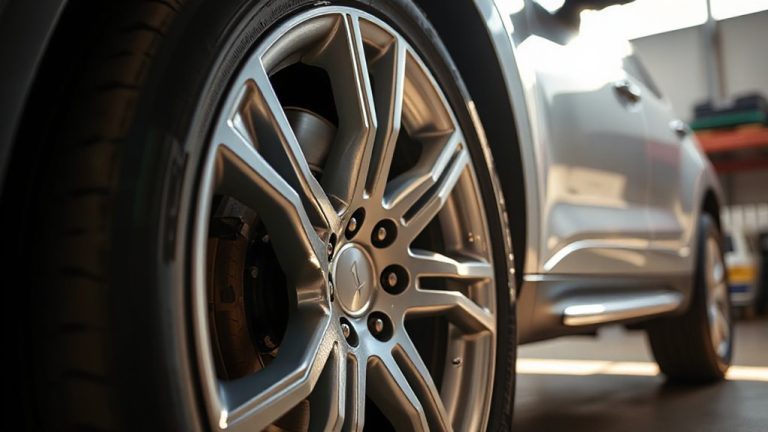
While cleaning wheel wells might seem straightforward, doing it safely requires the right approach and attention to material compatibility. Start by rinsing loose debris with low-pressure water to avoid forcing contaminants into joints. Apply a degreaser compatible with ABS plastic and brake line coatings, letting it dwell for 3–5 minutes. Use designated wheel well tools-nylon brushes with stiff bristles-to agitate grime without scratching surfaces. Avoid metal tools; they can damage protective coatings. Rinse thoroughly with water at 40–60 psi to guarantee residue removal. Cleaning frequency depends on driving conditions: monthly for daily drivers, every 6–8 weeks for occasional use. Over-cleaning can strip protective layers, while infrequent maintenance risks corrosion. Always work in shaded, well-ventilated areas to prevent premature evaporation and guarantee even cleaning performance. Proper technique preserves material integrity and guarantees consistent results over time.
Long-Term Wheel Well Protection Without Damage
After cleaning, maintaining long-term protection of wheel wells hinges on applying the right coatings without compromising ABS plastic or surrounding components. You need solutions designed for material compatibility to avoid cracking or fading. Opt for water-based, non-acidic undercoatings with elastomeric polymers-these resist UV degradation and thermal cycling from 40°F to 200°F. Corrosion prevention starts with sealants that block moisture, road salts, and acidic contaminants. Use coatings with ≥0.5 mm dry film thickness for maximum barrier protection. Products should be tested per ASTM B117 salt spray standards, offering at least 500 hours of rust resistance. Avoid solvent-heavy formulas; they may degrade brake line coatings or ABS housings. Instead, choose pH-neutral sprays with proven adhesion on plastic and metal substrates. Proper application guarantees lasting shield integrity. Think of it like a dental sealant-it must adhere fully, stay flexible, and resist environmental attack without harming underlying surfaces.
On a final note
You must choose degreasers safe for ABS plastic and brake line coatings. Harsh solvents like toluene or xylene cause cracking and coating degradation. Opt for pH-neutral formulas (6.5–7.5) with non-ionic surfactants. These preserve rubber, plastic, and metal integrity. Products labeled “brake-safe” meet ISO 6722 electrical standards. Always verify compatibility with manufacturer data sheets. A proper degreaser removes grime without compromising critical components. Prevention beats costly repairs.