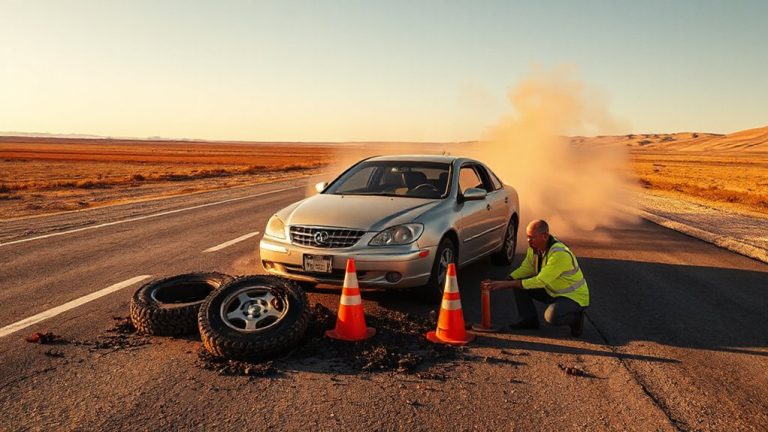
The Ultimate Guide to Flood and Water Hazard Preparedness in Cars
You’re 70% more likely to drown in a flooded vehicle than anywhere else. Inspect door and window seals monthly, and guarantee your air intake sits 20–25 inches above ground. Carry a pealess whistle, a 0.1-micron water filter, and a signal mirror visible up to 10 miles. Never cross more than four inches of moving water-most sedans float in six. Use a ResQMe tool at 7 psi to break front windows if submerged. Survive the initial minutes, then assess electrical corrosion and frame rust later. There’s more you need to act on.
Notable Insights
- Inspect and replace door, window, and sunroof seals monthly to prevent water intrusion during floods.
- Verify your vehicle’s air intake height and wading depth to avoid stalling in floodwaters.
- Equip your car with a flood survival kit including a whistle, signal mirror, and water filter.
- Never drive through flowing water over four inches deep; turn around immediately to stay safe.
- Escape a sinking vehicle within 60 seconds by opening windows before electrical failure or submersion.
Get Your Car Flood-Ready Now
If you live in an area prone to heavy rains or flash flooding, getting your car ready now could prevent costly damage later. Car maintenance is critical-inspect seals around doors, windows, and sunroofs monthly; replace cracked or brittle rubber to prevent water intrusion. Check the air intake height; most sedans draw air from 20–25 inches above ground, making them vulnerable in just 6 inches of moving water. Confirm your vehicle’s wading depth-SUVs average 18–24 inches, trucks up to 30. Test battery connections and electrical grounding points for corrosion, a leading cause of failure in damp conditions. Review manufacturer specifications for waterproofing components. Integrate emergency planning by mapping high-ground evacuation routes and storing digital copies of insurance and registration offline. Perform systems check quarterly, including brake responsiveness and tire tread depth-minimum 6/32 inch recommended for hydroplaning resistance. Flood readiness begins with mechanical preparedness and informed decision-making.
Pack a Flood Survival Kit: Essential Items
A well-stocked flood survival kit could mean the difference between safety and danger when water levels rise. You need reliable tools for emergency signaling and water purification to stay safe. Include a whistle and signal mirror-both are proven emergency signaling devices. The whistle should be pealess, operating in temperatures from -20°F to 140°F. The mirror must have sighting holes and reflect sunlight up to 10 miles. For water purification, carry a 0.1-micron hollow fiber filter. It removes 99.9999% of bacteria and protozoa, purifying up to 1,000 liters before replacement.
| Item | Specification |
|---|---|
| Whistle | Pealess, durable ABS plastic |
| Signal Mirror | 2.5 x 2.5 inches, with aiming hole |
| Water Filter | 0.1-micron, gravity-fed, 1,000L life |
What to Do If You See Floodwater Ahead
When floodwater blocks your route, turning around is the safest decision-you won’t know the depth, current, or contaminants lurking beneath the surface. Stay calm and avoid sudden maneuvers that could lead to loss of control. Slowly disengage acceleration and signal before changing direction. Assess danger by scanning upstream for rising levels and noting water movement-just six inches of fast-moving water can destabilize most sedans. Never attempt to cross flowing water deeper than four inches, as it may float your vehicle. Use GPS rerouting cautiously; many systems don’t account for temporary flooding. If no alternate route exists, return to your last known safe location. Visibility often degrades near flood zones due to spray and fog. Standard tire tread (10/32 inch) offers minimal traction on submerged roads. Concrete surfaces lose 70% of grip when covered. Turn around, don’t drown-your best defense is timely, informed avoidance.
How to Escape Floodwater in a Sinking Car
How do you get out when your car’s already going under? Act fast-most vehicles stay afloat 30 to 60 seconds, sometimes up to 2 minutes. Open doors immediately; electrical systems often work briefly. Break side windows with a spring-loaded rescue tool like the ResQMe (penetrates laminated glass at 7 psi force). Center and rear windows won’t open, so target front side windows. Escape before water reaches chin level. Once submerged, equalize pressure by opening a window. Underwater navigation requires tactile orientation-feel for door handles, window edges. Don’t rely on vision; murky water obscures sight. Signal rescuers with reflective strips or LED emergency signals after exiting. Waterproof signal mirrors boost visibility by 90% in daylight. Use a whistle-audible up to 150 meters. Never waste energy swimming upward blindly. Note: automatic windows may resist but often function until flooded. Exit quickly. Every second counts. A clogged fuel filter can impair engine performance and increase the risk of stalling in critical situations.
Avoid These Flood Survival Mistakes
Don’t wait until water laps at the roofline to act-timing errors cost lives. Every second delays reduce survival odds. A common panic response is freezing or fumbling with seatbelts and doors instead of acting decisively. Water enters rapidly; just 6 inches can cause loss of control, and 12 inches can float most cars. False confidence in vehicle buoyancy worsens outcomes. Many overestimate engine power or ground clearance, thinking they can drive through moving water. But just 18 inches of flowing water can carry away an SUV. Never assume your route is safe-even dry areas can flood quickly. Electronic systems fail within minutes of submersion. Act early: unbuckle, open doors, and prepare to exit. Delaying escape due to indecision or overestimation of safety multiplies risk. Stay alert, stay calm, and move fast-your survival hinges on controlled, immediate action, not hope or hesitation.
Why Your Car Can Float: and How to React
Although your car may seem secure on solid ground, it can begin to float within moments of being submerged in rising water-understanding this risk is critical to survival. Buoyancy principles dictate that vehicles displace water as they sink, creating temporary flotation. Just 12 inches of moving water can lift a car, while 24 inches can carry it away. Most passenger vehicles weigh 3,000–4,000 pounds but experience effective weight loss in water due to displacement. Once water reaches the door seals, pressure differences delay opening, reducing escape chances. Emergency flotation devices, though not standard, can extend survival time by delaying submersion. You have 30–60 seconds to react after water starts entering. Unbuckle immediately, roll down windows, and exit quickly. Do not wait for the car to fully submerge-by then, buoyancy principles will work against you. Your best chance is acting before emergency flotation fails.
Check for Hidden Damage After a Flood
A flooded vehicle can appear functional after drying out, but hidden damage often compromises safety and performance. Electrical shorts may occur even after minimal water exposure, especially if water reached fuse boxes or wiring harnesses. Moisture trapped in connectors corrodes contacts, disrupting signals to critical systems like ABS or airbags. Rust formation starts within hours, particularly on brake lines, suspension components, and the vehicle’s frame-areas not easily visible during a routine inspection. Over time, rust weakens structural integrity and increases failure risk. Check under floor mats for silt, a sure sign of water intrusion.
| System | Common Damage | Inspection Tip |
|---|---|---|
| Electrical | Shorts, corrosion | Test all switches and lights |
| Brakes | Rust, contamination | Inspect rotors and lines |
| Frame | Rust formation | Check undercarriage for flaking |
On a final note
You now have the tools to survive a flood in your vehicle. A flood survival kit with a 3,000-lumen flashlight, seatbelt cutter, and 120-decibel window-breaking alarm improves escape odds. Never drive into flooded areas-just 6 inches of water can cause loss of control. Two feet lifts most cars. Water pressure disables doors; wait until windows are submerged, then break glass with directed force. Afterward, inspect electrical systems and dry interiors thoroughly.