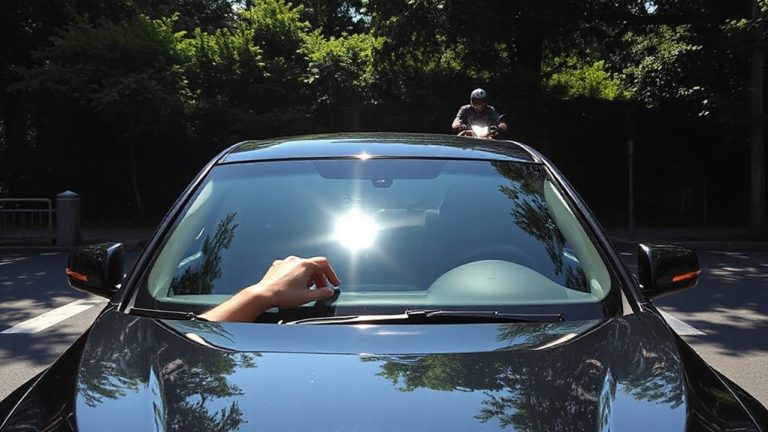
Why Post-Wash Inspection Ensures No Residual Contaminants Remain
You catch what cleaning misses. Post-wash inspection uses 30°, 3000K–5000K cross-lighting to reveal particles as small as 10 microns in surface shadows. ATP swabs detect organic residues above 50 RLU, while 365 nm UV lamps with 4,000 µW/cm² make oils fluoresce. Bore scopes with 4mm diameter access 10cm into joints. These tools confirm removal where microbes like *Pseudomonas* hide. Skipping this risks undetected biofilms in gaps under 2 mm. There’s more to uncover about each detection method.
Notable Insights
- Cross-lighting at 30° reveals microscopic residue in shadows and textured surfaces as small as 10 microns.
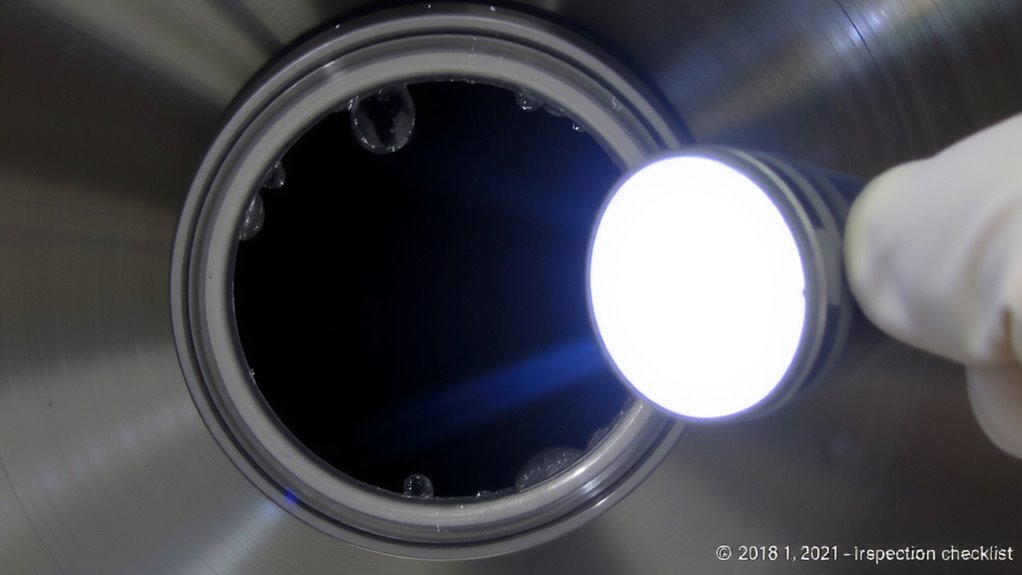
- Bore scopes visually inspect narrow crevices and joints where contaminants hide from standard cleaning.
- ATP swab tests detect organic residue, with readings above 50 RLU indicating inadequate microbial removal.
- UV lighting at 365 nm makes residual oils fluoresce, enabling rapid identification on surfaces.
- Post-wash inspections ensure compliance, prevent cross-contamination, and validate cleaning effectiveness through documented evidence.
How Post-Wash Inspection Uncovers Hidden Contaminants
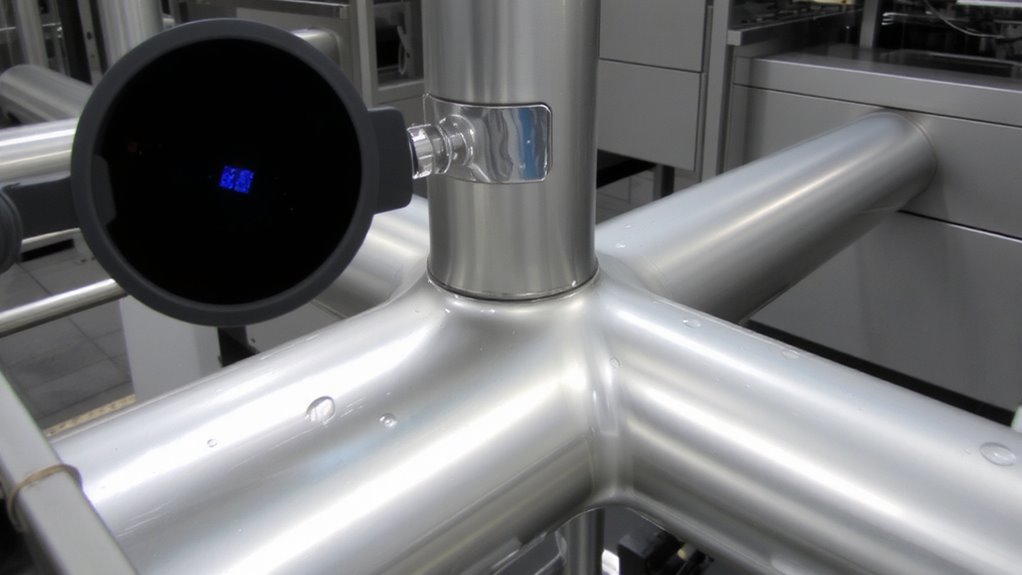
While a surface may look clean after washing, microscopic residues and contaminants often remain undetected without proper inspection. You rely on post-wash checks to reveal what the eye can’t see. Surface shadows mask residue in textured or uneven areas, especially under low-angle lighting. These shadows create optical obstructions, hiding contaminants in plain sight. Blind spots-such as crevices, joints, or recessed seams-evade standard cleaning tools and visual scans. Using 3000K–5000K cross-lighting at 30° angles enhances contrast, exposing particle clusters as small as 10 microns. Bore scopes with 4mm diameter and 10cm depth penetration allow direct visualization inside narrow gaps. ATP swab tests quantify residual organic matter, with readings above 50 RLU indicating incomplete removal. You use these methods systematically, transforming assumptions into evidence. Verification isn’t optional-it’s essential for safety, compliance, and performance. Effective inspection closes the loop in cleaning validation, ensuring every hidden risk is found.
Why Residual Chemicals and Microbes Survive Cleaning
Residual chemicals and microbes often remain after cleaning despite thorough washing, because certain factors compromise the effectiveness of even well-designed protocols. You face chemical resistance when residues bind strongly to surfaces, especially in crevices or porous materials where standard rinses can’t reach. These leftover chemicals aren’t just inert-they can promote microbial adaptation over time. Microbes, particularly biofilm-forming bacteria like Pseudomonas aeruginosa, alter their metabolic activity and develop tolerance to disinfectants. They hide in microscopic surface imperfections, surviving concentrations of biocides meant to eliminate them. Even a 99.9% kill rate leaves viable cells if the initial load was high. Temperature, contact time, and solution pH also affect decontamination success. Without verification, you can’t confirm removal, making survival of harmful residues more likely than you assume.
Best Tools for Detecting Oils and Pathogens on Surfaces
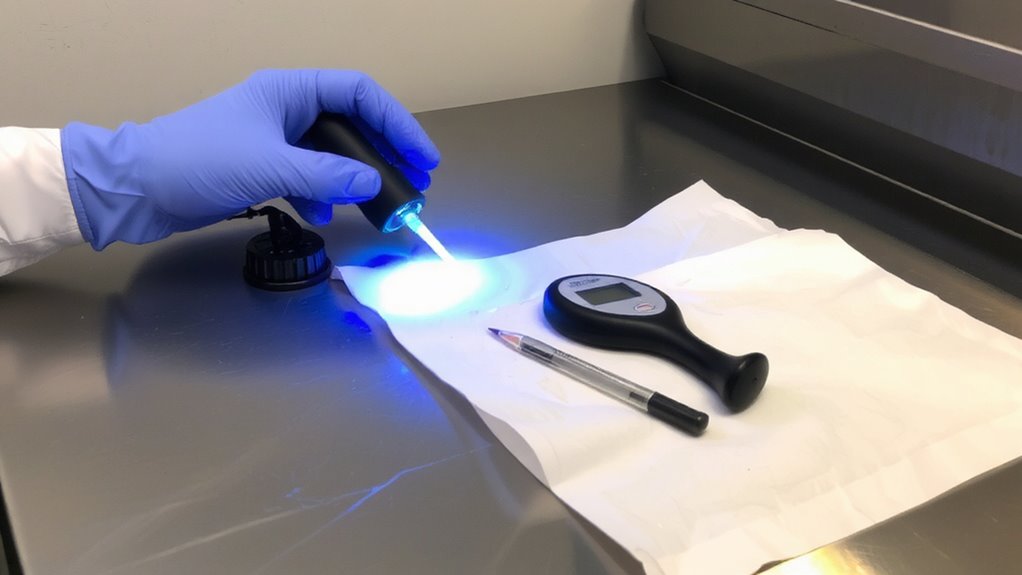
How do you know if invisible oils or dangerous pathogens remain after cleaning? Surface swabbing is your first reliable tool. You collect samples from surfaces using sterile swabs, then send them for ATP testing-levels above 500 RLU indicate contamination. For oils, use solvent wipes and analyze them with infrared spectroscopy; even 0.1 µg/cm² residue is detectable. UV lighting helps too. Shine 365 nm UV light across the surface-residual oils fluoresce visibly, like grease under a blacklight. Pathogens don’t glow, but biofilms often leave behind organic residues that do. Use a UV lamp with at least 4,000 µW/cm² intensity for clear results. Combine both methods: surface swabbing for quantifiable data, UV lighting for rapid visual screening. These tools give you objective proof, not guesses. You’re not just cleaning-you’re verifying.
How to Perform a Post-Wash Inspection Step by Step
One effective post-wash inspection starts with a systematic visual and technical assessment to confirm surface cleanliness. Begin by evaluating surface texture under controlled lighting conditions to detect residue or film. Use consistent angles and intensities to reveal contaminants invisible under normal light. Follow a step-by-step protocol for reliable results.
| Step | Action | Purpose |
|---|---|---|
| 1 | Inspect surface under 100–150 lux lighting | Identify visible residue |
| 2 | Run gloved hand over surface texture | Detect oily or gritty buildup |
| 3 | Perform ATP swab test at multiple points | Confirm microbial reduction |
You should examine all zones, including seams and joints. Lighting conditions must remain stable across inspections to guarantee comparability. Surface texture changes-like increased slipperiness or dullness-may signal leftover contaminants. Always record findings for compliance. This process guarantees thorough, repeatable verification.
What Happens If You Skip Post-Wash Verification?
If you skip post-wash verification, you risk missing hidden contaminants that can compromise hygiene and safety. Undetected biofilms, soil residues, or chemical traces remain on surfaces, increasing the cross contamination risk across equipment and production zones. Pathogens like *Salmonella* or *Listeria* can persist, especially in hard-to-reach joints or crevices under 2 mm in width. Without verification, you lose objective evidence that cleaning was effective, leading to compliance failure during regulatory audits. Standards like FDA 21 CFR or ISO 14159 require documented proof of cleanliness. ATP testing or protein swabs post-cleaning validate results; skipping this step voids validation protocols. Failure to verify doubles the chance of product recalls. In processing environments, unseen residue becomes a contamination vector. You’re not just skipping a check-you’re bypassing a critical control point. Consistent verification guarantees traceability, safety, and operational integrity.
On a final note
You must verify cleanliness after every wash. Post-wash inspection confirms removal of residues that evade visual detection. ATP bioluminescence assays detect microbial load, with readings below 100 RLU indicating acceptable sanitation. Residual oils show under UV-A light (365 nm wavelength) when treated with fluorescent dyes. Skipping verification risks contamination. Use non-porous surface swabs calibrated to ISO 18593 standards. Proper inspection guarantees compliance, prevents cross-contamination, and validates cleaning protocol efficacy.