How to Top Off Fuel Tanks to Minimize Condensation During Cold Weather Storage
Fill your tank completely before winter storage to reduce air space and minimize condensation. Less air means less moisture can accumulate during temperature swings. Leave 5% to 10% empty-about 1 to 2 gallons in a 20-gallon tank-for fuel expansion, as it swells nearly 1% per 15°F rise. Add fuel stabilizer at 1 ounce per 2.5 gallons to prevent oxidation and ethanol separation. Use an OEM cap with a sealed gasket to block humid air. A full, sealed, stabilized system stays dry and ready. There’s more to optimizing long-term fuel integrity than just topping off.
Notable Insights
- Fill the fuel tank completely to reduce air space and minimize condensation during cold storage.
- Leave 5% to 10% of tank capacity empty to allow for safe thermal expansion of fuel.
- Add fuel stabilizer before storage to prevent oxidation and ethanol separation in cold temperatures.
- Ensure the fuel cap seal is intact to block moisture-laden air from entering the tank.
- Inspect fuel for water contamination before use to avoid engine damage from phase-separated fuel.
Fill the Tank Before Winter Storage
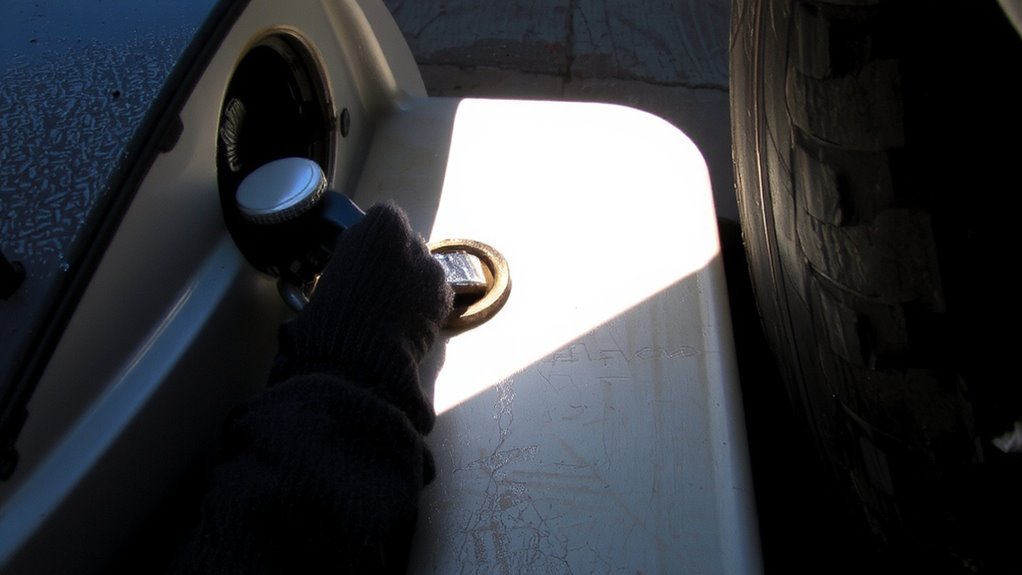
While storing your fuel tank in cold weather, filling it completely before winter sets in helps prevent condensation from forming inside. A full tank reduces air space, minimizing moisture accumulation that degrades fuel quality. You should use stabilized fuel to maintain chemical integrity over months of inactivity. Ethanol-blended fuels absorb water over time, so adding a stabilizer preserves performance and prevents phase separation. Your tank material affects durability and reactivity; steel tanks resist permeation but can rust if water is present, while polymer tanks resist corrosion but may allow slight vapor transfer. Keep fuel in a sealed system to protect both fuel quality and tank material. Always inspect tank caps and vents for proper sealing-pressure differentials can draw moist air into partially filled tanks. A full tank, combined with correct additives and sound tank construction, guarantees long-term reliability and engine compatibility when storage ends.
Why a Full Tank Reduces Condensation
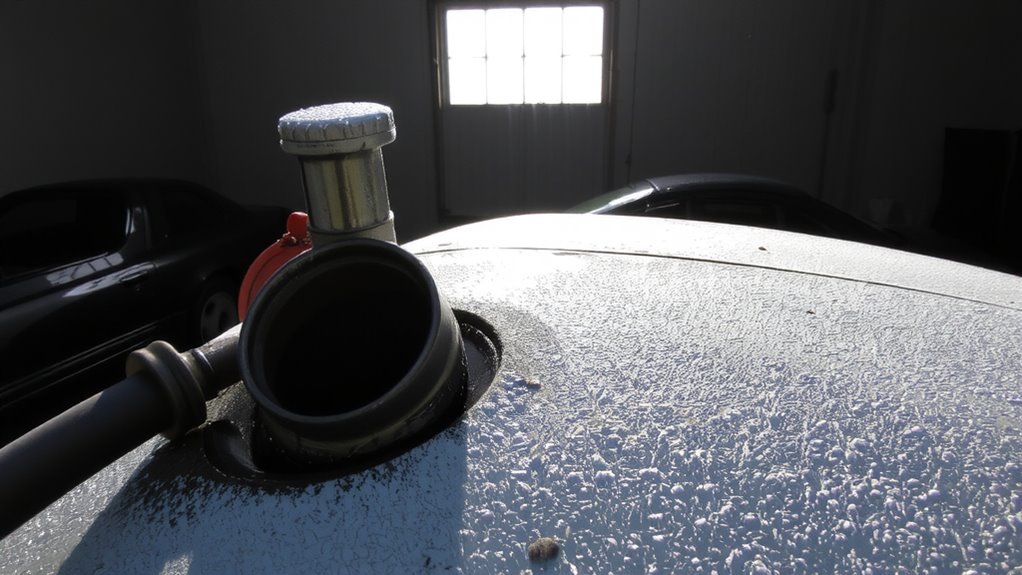
You filled the tank before winter storage to protect fuel quality, and now it’s time to understand why that step makes such a difference. A full tank limits air space, reducing moisture displacement caused by temperature swings. When temperatures drop, any humid air inside a partially filled tank cools and condenses on tank walls, introducing water into the fuel. With less air volume, there’s less moisture available to condense. Fuel also undergoes thermal expansion when warmed, but in a full tank, this effect is minimal and managed safely within system tolerances. The absence of large air pockets suppresses repeated condensation-evaporation cycles. This stable environment preserves fuel integrity over months of inactivity. You’re not just storing fuel-you’re maintaining a closed system where humidity control is critical. Preventing corrosion and microbial growth starts with limiting water intrusion, and a properly filled tank does exactly that.
Leave Space for Fuel to Expand
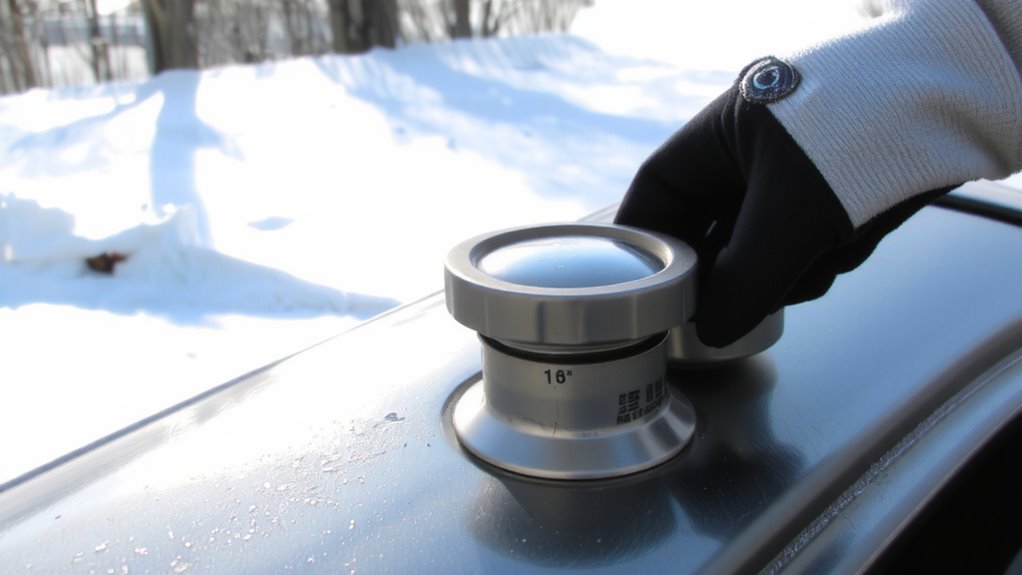
A full tank helps prevent condensation, but leaving 5% to 10% of the tank empty maintains safety and system integrity during cold weather storage. This air space accommodates thermal expansion, preventing pressure buildup as fuel temperature fluctuates. Fuel expands when warmed, even slightly, and without adequate headspace, expanded fuel can stress seals or vents. Most manufacturers design fuel systems with thermal expansion in mind, but exceeding fuel capacity risks leaks or component damage. For example, a 20-gallon tank should hold no more than 18 to 19 gallons during storage. The unused volume acts like a buffer, absorbing volume changes safely. Thermal expansion rates vary by fuel type-gasoline expands about 1% per 15°F temperature rise. Leaving room maintains your tank handles real-world thermal cycles without compromising performance or safety. Never fill to the brim.
Add Stabilizer to Keep Fuel Fresh
Stability begins with prevention-specifically, stopping fuel degradation before it starts. You must add a fuel stabilizer before storage to combat fuel oxidation, which begins as soon as gasoline is produced. Oxidation creates gums and varnishes that clog injectors and carburetors. Ethanol separation is another risk; over time, ethanol absorbs moisture and phase-separates, pulling water from the air and reducing combustion efficiency. A quality stabilizer contains antioxidants that interrupt oxidation and demulsifiers that manage ethanol separation. For best results, use 1 ounce of stabilizer per 2.5 gallons of fuel. Treat the tank immediately after filling to guarantee uniform mixing. These additives extend fuel life up to 12–24 months. Without stabilizer, fuel degrades in as little as 30 days. Protect your engine’s performance and avoid costly repairs-stabilizing isn’t optional, it’s essential maintenance.
Seal the Tank to Block Moisture
Because fuel tanks are vulnerable to temperature swings during cold weather, sealing them properly is essential to prevent moisture intrusion. Maintaining fuel cap integrity guarantees a tight seal that resists humid air entry. A compromised cap can reduce vapor barrier effectiveness, allowing condensation to form inside the tank. Use OEM-spec caps with sealed gaskets rated for -40°F to 140°F. Pair this with a fuel tank desiccant vent cap to enhance moisture blocking.
| Feature | Specification |
|---|---|
| Fuel Cap Re-seal Temp Range | -40°F to 140°F |
| Vapor Barrier Effectiveness | >95% with intact gasket |
| Recommended Material | UV-stabilized polymer with EPDM gasket |
Inspect seals annually and replace caps showing cracks or compression set. A fully sealed system drastically reduces water accumulation, preserving fuel quality without relying on chemical absorption alone.
Test Fuel Before Starting the Engine
Ever wonder what’s really in your fuel after months of cold storage? Test it before starting the engine. Poor fuel quality degrades over time, forming gum and varnish that clog injectors and carburetors. Use a fuel test kit to check for water content-anything above 0.5% by volume risks phase separation in ethanol-blended gasoline. Contaminated fuel compromises engine safety, leading to hard starts or incomplete combustion. Visually inspect a sample in a clear graduated cylinder; water settles at the bottom, visible at the 10-mL mark in a 2-liter sample. If phase separation occurs, discard the fuel. Guarantee volatility remains within ASTM D439 specifications-vapor pressure between 9-15 psi ensures proper atomization. Testing preserves engine integrity and confirms fuel stability. Always prioritize fuel quality-it’s critical for reliable ignition and long-term engine safety. Don’t guess; verify with accurate, on-site testing.
Top Off at the Right Time
When storing your vehicle or equipment during cold weather, topping off the fuel tank at the right time matters more than you might think. You should fill the tank immediately after your last use, while the system is still warm. This reduces condensation risk by minimizing air volume inside the tank. Cooler fuel contracts as temperatures drop, creating voids that attract moisture if filled when cold. Your fuel type affects this process-ethanol blends like E10 absorb more water than pure gasoline. High ambient humidity increases vapor availability, accelerating condensation in unsealed systems. A full tank limits exposed internal surfaces, reducing moisture accumulation. Always use a fuel stabilizer compatible with your fuel type. Seal vents if possible, or use desiccant caps. Doing this at the right moment maintains fuel integrity over months of storage.
On a final note
You should fill your fuel tank before winter storage. A full tank limits air space, reducing condensation risk by minimizing moisture accumulation. Leave 1/16 inch of ullage per gallon for thermal expansion. Add fuel stabilizer at a 1:1000 ratio to prevent ethanol separation and oxidation. Seal the system using a vent cap rated at 2 psi to block external humidity. Test fuel for water content using a reagent test kit before startup. Proper preparation preserves fuel integrity and engine performance.