Understanding the Function of the Catalytic Converter in Modern Engines: How It Reduces Emissions Levels While Maintaining Fuel Efficiency Throughout Your Vehicle’s Operation
Your catalytic converter sits in the exhaust system, reducing emissions through chemical reactions. It uses platinum, palladium, and rhodium on a honeycomb structure to trigger redox reactions. These convert carbon monoxide to CO₂, hydrocarbons to water and CO₂, and nitrogen oxides to nitrogen and oxygen. It operates best between 400°F and 800°F, reaching over 90% efficiency when warm. Proper air-fuel balance keeps it effective without hurting fuel economy. Modern designs support engine performance while meeting emissions standards-discover what affects its lifespan and performance over time.
Notable Insights
- The catalytic converter reduces harmful emissions by converting pollutants like CO, NOx, and hydrocarbons into less harmful substances through redox reactions.
- Platinum, palladium, and rhodium catalysts enable efficient chemical conversion at high temperatures, typically between 400°F and 800°F.
- Positioned near the engine, it quickly reaches operating temperature, ensuring effective emission control during normal driving conditions.
- By working with oxygen sensors, it helps maintain optimal air-fuel ratios, supporting both emission reduction and fuel efficiency.
- A properly functioning converter minimizes exhaust restriction and engine strain, preserving performance and fuel economy over time.
What Is a Catalytic Converter and Where Is It Located?
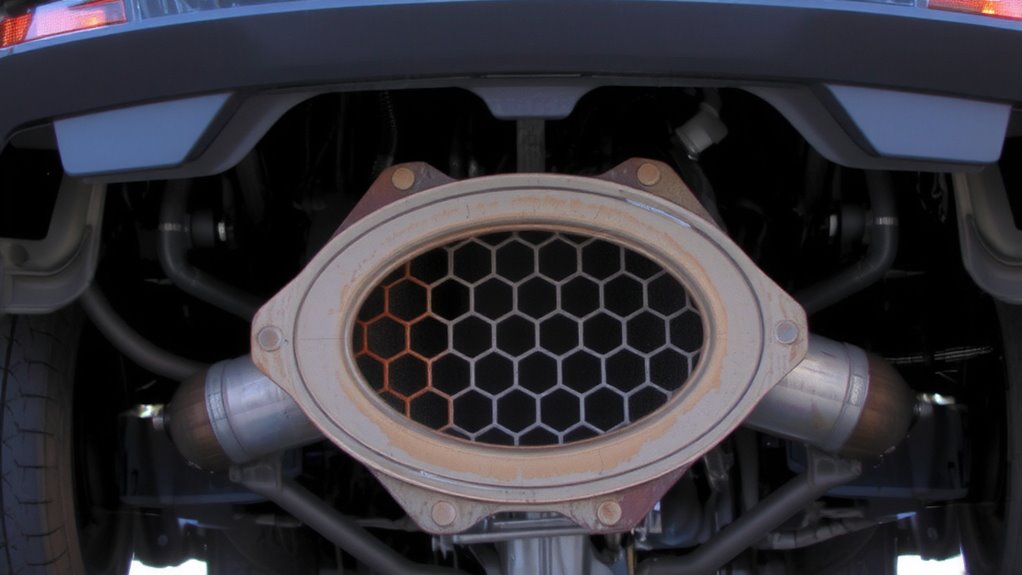
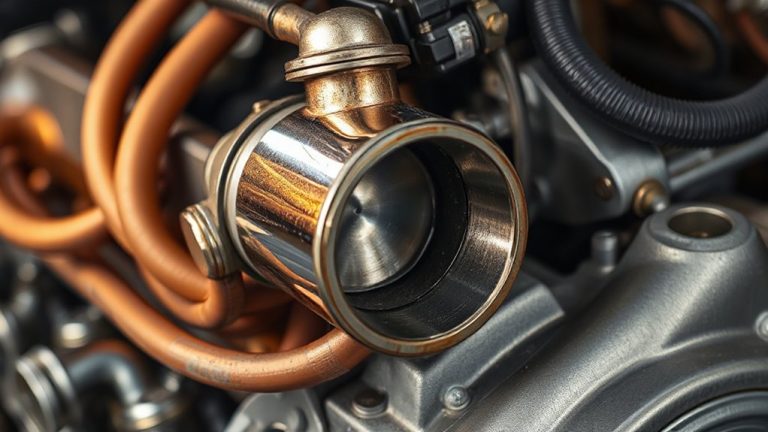
Picture a small chamber hidden beneath your car, working silently to clean the exhaust gases before they escape into the air. That’s your catalytic converter, a critical emissions control device integrated into the exhaust system. It’s typically located between the engine and the muffler, about two feet long and 6 to 8 inches in diameter. The converter’s position guarantees immediate exposure to hot exhaust gases, aiding effective heat management. It must reach 400°F to operate efficiently, often aided by close-coupled placement near the engine. Smooth exhaust flow is maintained through a honeycomb-like ceramic or metallic substrate coated with precious metals. This structure minimizes backpressure while maximizing surface area. Proper heat management prevents thermal degradation, guaranteeing longevity. Your converter handles extreme temperatures-up to 1,800°F during heavy loads-without cracking or melting, sustaining performance across driving conditions.
How a Catalytic Converter Uses Chemical Reactions to Clean Exhaust
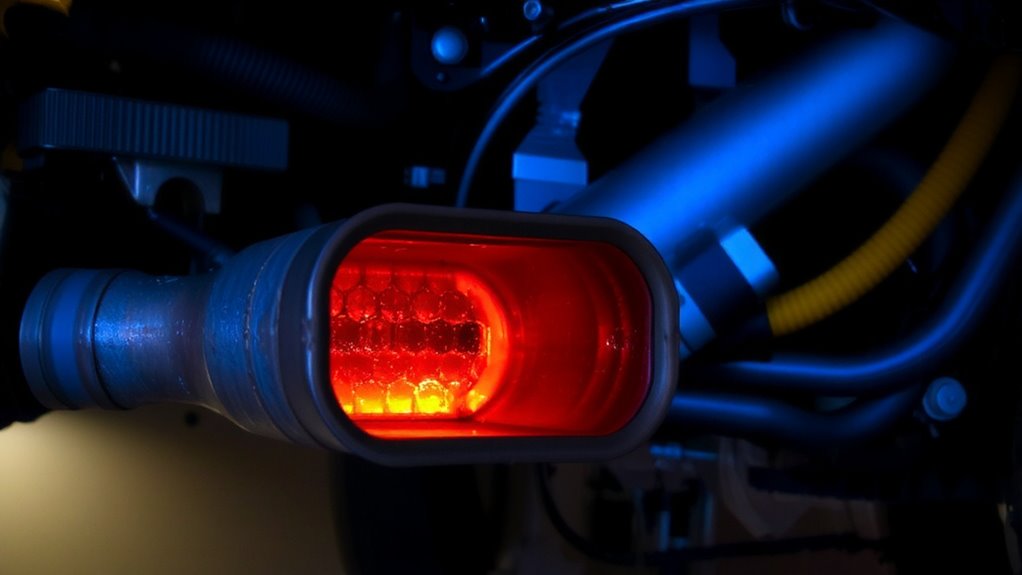
Your catalytic converter doesn’t just trap pollutants-it transforms them through precise chemical reactions. It uses redox reactions to break down harmful gases in your exhaust stream. Oxidation converts carbon monoxide into carbon dioxide and unburned hydrocarbons into water vapor. These reactions occur in the converter’s honeycomb structure, typically made of ceramic or metal with a high surface area-around 50 square meters per gram. Reduction removes oxygen from nitrogen oxides, converting them into harmless nitrogen and oxygen. The entire process enables efficient exhaust purification, reducing emissions by up to 90%. Maximum performance requires exhaust temperatures above 400°F. Below this, conversion efficiency drops sharply. Redox reactions are temperature-dependent and rely on a balanced air-fuel mixture. Your engine’s oxygen sensors help maintain this balance. Without these chemical transformations, modern emission standards couldn’t be met.
Why Platinum and Palladium Make It Work

Although most of the catalytic converter’s function depends on temperature and exhaust composition, its core performance relies on the precious metals inside-specifically platinum and palladium. These rare metals coat the ceramic honeycomb structure, providing active sites for chemical reactions. Platinum excels at oxidizing carbon monoxide and unburned hydrocarbons, turning them into CO₂ and water. Palladium is especially effective in reducing nitrogen oxides under lean-burn conditions. Together, they enable rapid reaction acceleration, slashing emission levels within milliseconds of engine start. Each converter contains 2 to 7 grams of platinum group metals, calibrated precisely based on engine size and output. Their high catalytic activity persists over 100,000 miles, though efficiency drops if contaminated by lead or sulfur. Without these rare metals, modern converters couldn’t achieve over 90% reduction in harmful emissions. Their atomic structure allows molecules to adsorb, react, and desorb efficiently-like a molecular assembly line.
How Efficiency Meets Clean Emissions
When the engine fires up, the catalytic converter begins working within seconds, transforming harmful exhaust gases into less toxic compounds through carefully engineered chemical reactions. You rely on emission optimization to meet strict environmental standards without sacrificing drivability. The converter uses precise ratios of platinum, palladium, and rhodium to catalyze oxidation and reduction reactions, converting carbon monoxide into CO₂, and breaking down nitrogen oxides and unburned hydrocarbons. It operates best above 400°F, reaching peak efficiency around 800°F. Modern units achieve over 90% conversion efficiency under ideal conditions. This performance balance guarantees your engine maintains fuel economy and power output. The onboard computer adjusts air-fuel mixtures in real time, keeping the converter within its narrow operating window. Closed-loop feedback from oxygen sensors enables consistent emission control. No moving parts make it durable, with lifespans exceeding 100,000 miles when properly maintained. Aftermarket units must meet EPA standards to ensure compatible performance with original equipment specifications.
Common Failure Signs and Symptoms
What happens when that once-smooth exhaust note starts hinting at something wrong? You might notice reduced engine performance or a sudden drop in fuel economy. These are common signs your catalytic converter is failing. A failing unit often causes clogged airflow, restricting exhaust flow and increasing backpressure. This can lead to engine stalling or sluggish acceleration, especially under load. You may also see the check engine light illuminate due to contaminated sensors sending incorrect oxygen readings. Misfires or rough idling follow when the engine control module can’t adjust properly. Over time, excessive hydrocarbons or carbon monoxide in the exhaust confirm inefficient conversion. Factory specifications typically allow no more than 1.5 psi of backpressure at 2,500 RPM; exceeding that indicates blockage. Listen for rattling noises-broken catalyst substrates mean replacement is urgent. Early detection prevents damage to the exhaust system and keeps emissions in check.
How Newer Converters Improve Fuel Economy
Efficiency starts at the catalyst. Newer catalytic converters use advanced materials like nano-coated platinum, palladium, and rhodium, which increase surface area and reaction speed by up to 40%. This means more complete combustion byproducts are converted on the first pass. These materials also resist degradation better, maintaining performance over time. Improved thermal efficiency allows the converter to reach ideal operating temperature-about 400°F-faster, often within 60 seconds of startup. That reduces cold-start emissions and improves fuel economy. Design enhancements, such as thinner-walled substrates with 900 cells per square inch, lower exhaust backpressure by up to 15%, helping the engine work less. You get better mileage without sacrificing emission control. Thermal efficiency also means less heat retention in the underbody, reducing cabin heat transfer and improving engine bay airflow. These advancements collectively boost fuel economy by approximately 2–3% under normal driving conditions.
Maintaining Your Catalytic Converter for Longevity
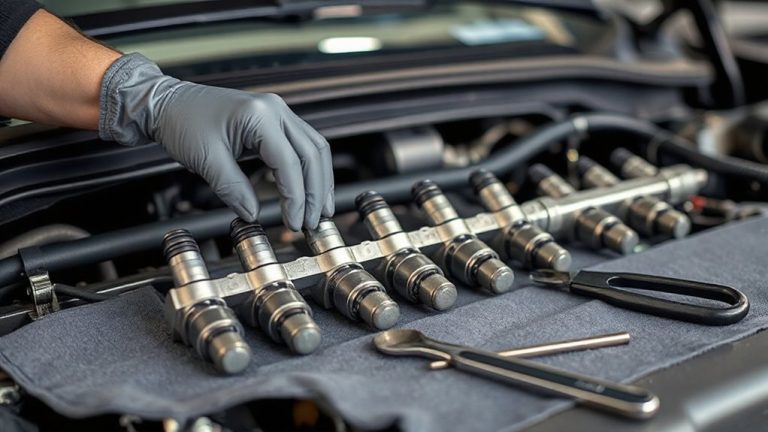
A well-maintained catalytic converter can last over 100,000 miles, but neglect can cut its lifespan in half. Regular maintenance keeps your engine running efficiently and prevents unburned fuel from overheating the converter. Excess hydrocarbons increase internal temperatures beyond the safe threshold of 1,800°F, damaging the ceramic or metallic substrate. You should follow factory-recommended service intervals for spark plugs, oxygen sensors, and fuel injectors to reduce strain on the converter. Proper diagnostics using an OBD-II scanner can identify issues like misfires or rich fuel mixtures before they cause harm. A clogged converter increases backpressure-anything over 1.25 psi at idle indicates a problem. Monitor performance changes, like reduced acceleration or failing emissions tests, as early signs of failure. Replacing damaged components promptly guarantees the converter operates within design specifications, preserving its function and longevity. A reliable car jump starter can prevent repeated short-trip driving that may contribute to incomplete combustion and increased stress on the catalytic converter.
On a final note
You rely on your catalytic converter to reduce harmful emissions. It converts carbon monoxide, hydrocarbons, and nitrogen oxides into less harmful gases like CO₂, nitrogen, and water vapor. Using platinum and palladium catalysts, it operates efficiently at temperatures above 400°F. Modern units integrate with engine management systems, maintaining fuel efficiency. A failing converter increases backpressure, reducing performance. Regular maintenance guarantees peak function and longevity, supporting both emissions control and engine efficiency.