How to Test an Alternator Output With a Digital Multimeter
Set your digital multimeter to DC voltage (20V range). Connect black to COM, red to VΩmA. With engine off, test battery voltage-you should see ~12.6V for a full charge. Start the engine and check again at idle. A healthy alternator outputs 13.8 to 14.7 volts. Readings below 13.8V suggest undercharging; above 15V indicate overcharging. Sustained fluctuations or AC ripple over 50 mV signal internal faults. Further details reveal how load testing confirms performance under real-world conditions.
Notable Insights
- Set your digital multimeter to DC voltage (20V range) and connect the red probe to the positive battery terminal and the black probe to the negative terminal.
- With the engine off, measure battery voltage first; a reading below 12.4 volts may indicate a weak battery affecting alternator test accuracy.
- Start the engine and check the multimeter reading at idle; a healthy alternator outputs between 13.8 and 14.7 volts.
- Watch for voltage fluctuations over two minutes; unstable readings or those above 15 volts suggest regulator or alternator issues.
- Test under load by turning on headlights and A/C; if voltage drops below 13.5 volts, the alternator may not be charging properly.
Test Your Alternator With a Multimeter in 5 Minutes
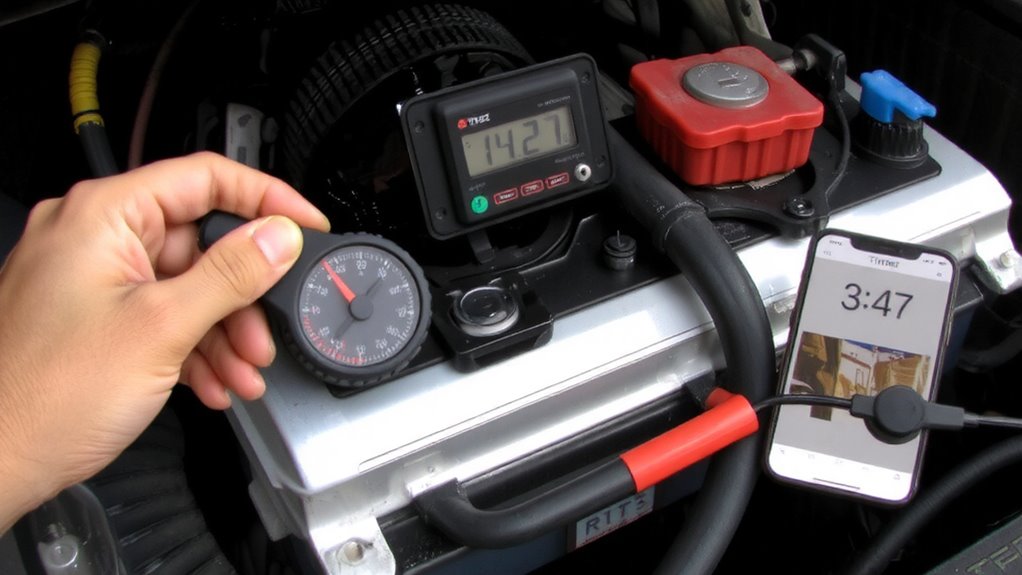
If you’re seeing dim headlights or getting a battery warning light, testing your alternator with a multimeter takes just five minutes and can save you from a roadside breakdown. Set your multimeter to DC voltage. With the engine off, measure the battery voltage-expect around 12.6 volts. Start the engine. A healthy alternator outputs 13.8 to 14.4 volts at idle. Higher readings suggest voltage spikes, which can damage sensitive electronics. Lower readings indicate charging issues. Sudden fluctuations may point to electrical interference or a failing voltage regulator. Run the engine at 2,000 RPM and recheck. Voltage should stabilize within spec. Spikes beyond 15 volts risk frying control modules. Consistent interference patterns on the meter could signal faulty diodes. This test confirms alternator performance without special tools. Immediate deviations from expected values demand further diagnosis. For accurate results, use a reliable car multimeter with at least 50,000-count resolution.
What You Need to Check Alternator Output
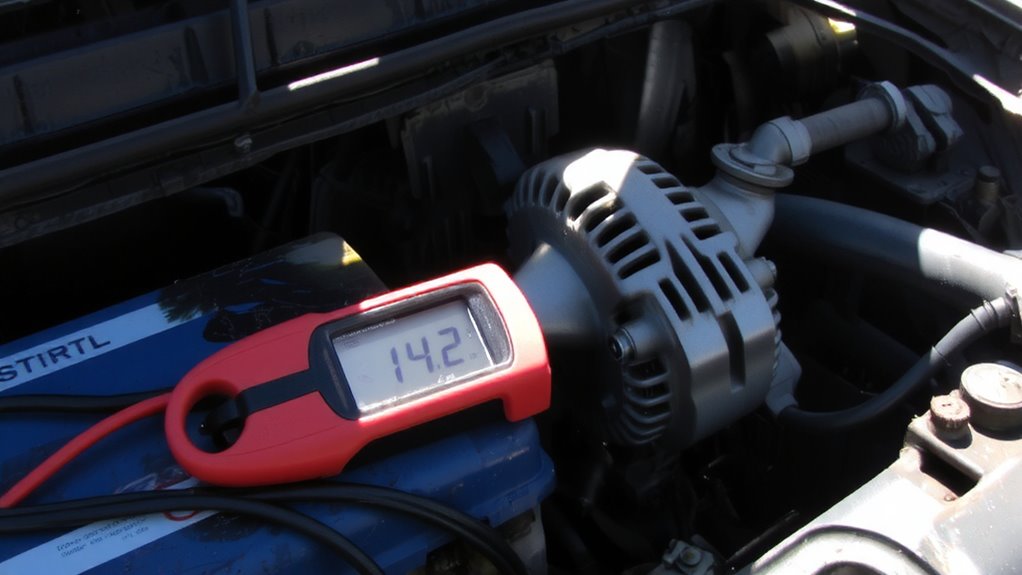
A functioning alternator is essential for maintaining proper vehicle electrical system performance. You need a digital multimeter to measure alternator output accurately. Check alternator efficiency by testing voltage at the battery with the engine off, then running. A healthy alternator delivers 13.8 to 14.4 volts under load. Voltage regulation ensures output stays within this range, preventing undercharging or overcharging. Poor voltage regulation can damage electronics or shorten battery life. Inspect the serpentine belt for wear or looseness-slippage reduces alternator efficiency. Listen for grinding or whining noises, which indicate internal bearing or rotor issues. Guarantee battery terminals are clean and tight for accurate readings. These checks help verify consistent voltage regulation and peak alternator efficiency. Always perform tests with the engine warmed up and electrical accessories off unless load-testing. This process identifies problems early, maintaining system reliability.
Set Up Your Digital Multimeter
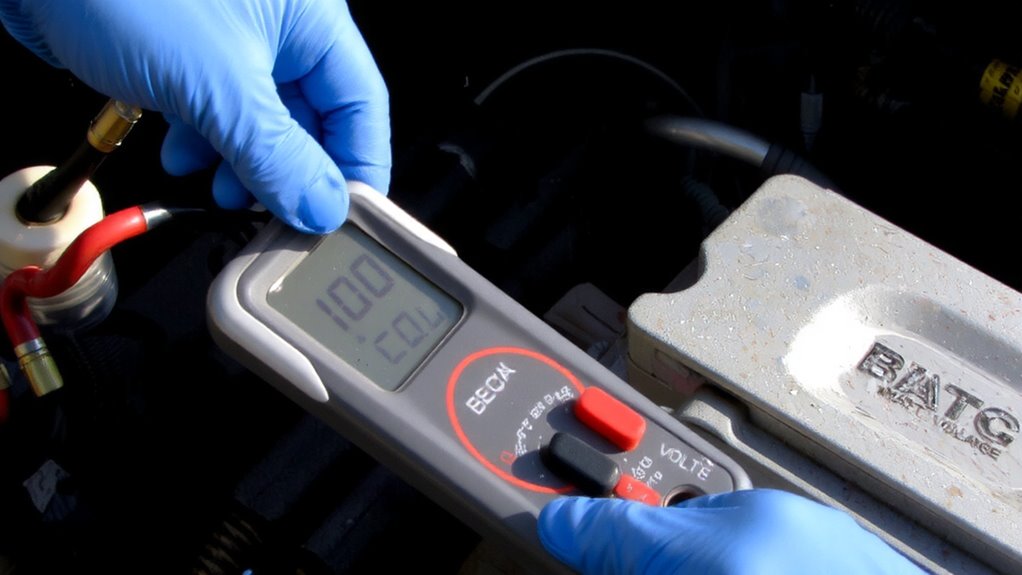
Set the multimeter to measure DC voltage by turning the dial to the V⎓ symbol or the setting labeled “20V” in the DC range. Proper probe placement is critical: insert the black probe into the COM port and the red probe into the VΩmA port. Before testing, confirm multimeter calibration using a known voltage source to guarantee accuracy within ±0.5%. A poorly calibrated tool delivers misleading results. Avoid touching metal probe tips during measurement to prevent reading errors.
| Function | Setting |
|---|---|
| Voltage Type | DC (V⎓) |
| Range | 20V |
| Probe Placement | Red: VΩmA, Black: COM |
Maintain firm contact between probes and terminals. This setup prepares you for precise electrical system evaluation.
Measure Battery Voltage While Engine Off
Begin by measuring your battery’s voltage with the engine off to establish a baseline reading. Set your multimeter to DC voltage, typically the “V” with a straight line. Touch the red probe to the positive terminal and the black probe to the negative. A healthy battery should read around 12.6 volts at rest, indicating full charge and good battery health. If it’s below 12.4 volts, the battery may be weak or discharged. Avoid testing under active electrical load, like headlights or radio, as that skews results. For accuracy, let the vehicle sit overnight before testing. Voltage readings between 12.2 and 12.6 volts suggest partial charge; below 12.0 volts indicates significant discharge. This baseline helps diagnose whether issues stem from the battery or charging system. Guarantee clean, tight connections for reliable contact. This step is critical-you can’t assess alternator performance without knowing the starting condition of the battery.
Test Charging System With Engine Running
Now that you’ve recorded the battery’s resting voltage, start the engine and let it run at idle. Set your multimeter to DC voltage and reconnect the probes the same way as before. A healthy charging system should show a reading between 13.8 and 14.7 volts. This range indicates proper alternator performance. Voltage stability is critical-fluctuations greater than 0.5 volts suggest an issue with the alternator or voltage regulator. Keep the engine at idle and avoid turning on accessories unless testing under load. Sustained voltage outside the normal range means the alternator isn’t maintaining consistent output. Poor voltage stability can degrade battery life and harm sensitive electronics. Monitor the reading for at least two minutes to assess consistency. Steady voltage within spec reflects reliable alternator performance. Any erratic behavior merits further diagnosis.
What Your Voltage Reading Means
If your multimeter shows a voltage reading below 13.8 volts while the engine is running, the alternator isn’t producing enough power to properly charge the battery. This indicates a problem with the charging system. A healthy alternator typically outputs between 13.8 and 14.4 volts at idle with electrical loads off. Voltage interpretation is critical for accurate electrical diagnosis. Readings above 15 volts suggest overcharging, which can damage the battery and sensitive electronics. Extremely low or fluctuating voltages often point to a failing alternator, bad voltage regulator, or wiring issues. You must perform voltage interpretation under consistent conditions-engine running at 2,000 RPM, headlights on-to guarantee reliable results. Accurate electrical diagnosis depends on precise measurements and understanding normal operating ranges. Avoid drawing conclusions from a single test; repeat checks to confirm findings.
Replace or Repair? Signs Your Alternator Is Bad
A consistent voltage reading outside the 13.8 to 14.4 range suggests the charging system isn’t functioning as designed, and the source of the issue may be a failing alternator. You should suspect alternator failure if headlights dim at idle or the battery frequently dies. Alternator noise, such as grinding or whining, often indicates worn bearings or a failing rotor. Listen closely when the engine runs-any abnormal sound warrants inspection. Belt slippage can mimic alternator issues; check belt tension and condition, as a loose or glazed belt reduces charging efficiency. Voltage fluctuations under load confirm instability. If diode testing shows AC ripple above 50 mV, the alternator’s rectifier is likely failing. Repairs are rarely cost-effective. When output drops below 12 volts under load or exceeds 15 volts at peak, replacement is necessary. Test pulley alignment and mounting brackets before installing a new unit.
On a final note
You now know how to test alternator output accurately. Set your multimeter to DC voltage. With the engine off, battery voltage should read 12.6 volts. Start the engine; a healthy charging system outputs 13.7 to 14.7 volts. Readings below 13.5 indicate undercharging; above 15 suggest overvoltage. Consistent results confirm alternator performance. Replace the alternator if voltage stays outside specifications. Always verify connections and meter accuracy before concluding.